• Skip to primary navigation
  • Skip to main content
  • Skip to footer

Dancing Priest

Author and Novelist Glynn Young

  • HOME
  • BLOG
  • BOOKS
    • Brookhaven
    • Dancing Prince
    • Dancing Prophet
    • Dancing Priest
    • A Light Shining
    • Dancing King
    • Poetry at Work
  • ABOUT
  • CONTACT

Writing

A Year of Reading (and Writing) the Civil War

January 3, 2024 By Glynn Young 1 Comment

My story connected to the Civil War has passed the 70,000-word mark, and the ending is in sight. I’m not sure when it was that I realized I was writing about something I had only the most surface understanding of, but I did. The only solution was to start reading and researching.

Many blogs and web sites have been helpful, but two especially so. Emerging Civil War, edited by Chris Mackowksi, is written by historians, National Park guides, and other who know their stuff. Most have published books. Civil War Books & Authors, penned by Andrew Wagonhoffer, posts notices of new books and full-length book reviews focused solely on the Civil War, its causes, and its aftermath. Both sites have been at this work for years, ECW for more than a decade and CWBA since 2005.

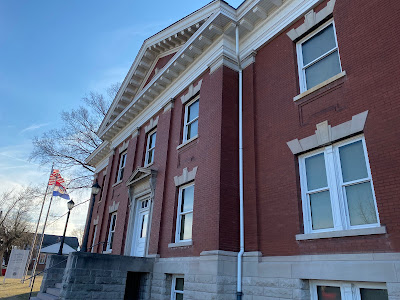
What was also a treat was discovering and visiting the Missouri Civil War Museum, located adjacent to the Jefferson Barracks National Cemetery here in St. Louis.

Missouri Civil War Museum

My reading and research this year has been less about military strategy, tactics, and battles, and more about what both civilians and soldiers experienced. For several decades after the war, officer and soldier memoirs were popular, and several publishers have made them available in digital format. The same is true for civilians, although there seem to be more memoirs by women and mothers on the Southern side than the Northern, likely reflecting the direct experience these women had.

I did pay attention to certain battles. For my story, the battles of Shiloh, Gettysburg, The Wilderness, Franklin, and Petersburg / Appomattox were the key ones, as was the whole surrender of the Army of Northern Virginia at Appomattox. The surrender, in fact, was the scene where the manuscript originally started, even if its now in another place. 

What’s also changed is that I’m reading other fictional accounts of the war – novels, stories, and poetry. Many people turned to fiction and poetry to make sense of what happened in the years between 1861 and 1865. As a friend once said, “Fiction can be truer that history.”

What follows is a list of the books I read in 2023. Given where my own fiction manuscript is, I expect to be reading far fewer in 2024. Then again, maybe not; the Civil War is a difficult subject to walk away from.

The Saddest Words: William Faulkner’s Civil War by Michael Gorda.

Irish-American Civil War Songs by Catherine Bateson.

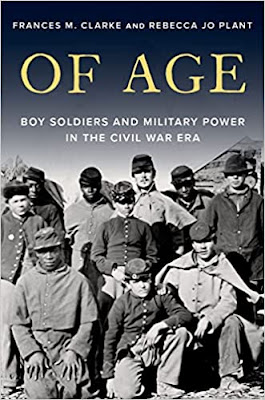
Of Age: Boy Soldiers and Military Power in the Civil War Era by Frances Clark and Rebecca Jo Plant.

An Atlas and a Map of the Civil War

Contemners and Serpents: The James Wilson Family Civil War Correspondence, edited by Theodore Fuller and Thomas Knight.

Four Years with Morgan and Forrest by Col. Thomas Berry.

Grant vs. Lee, edited by Chris Mackowski and Dan Welch.

If We Are Striking for Pennsylvania, Vol. 1, by Scott Mingus & Eric Wittenberg.

Reading John Greenleaf Whittier, the “Abolitionist Poet”, edited by Brenda Wineapple.

A Season of Slaughter: The Battle of Spotsylvania Courthouse, May 8-21,1864 – Chris Mackowski and Kristopher D. White. 

Bear in the Wilderness by Donald Waldemer. 

“No One Want to Be the Last to Die”: The Battle of Appomattox, April 8-9, 1865 by Chris Calkins. 

The Summer of ’63: Vicksburg and Tullahoma, edited by Chris Mackowski and Dan Welch. 

Man of Fire: William Tecumseh Sherman in the Civil War by Derek Maxfield. 

My Dearest Julia: The Wartime Letters of Ulysses S. Grant to His Wife.

The Wartime Journal of a Georgia Girl by Eliza Frances Andrews. 

Recollections of a Confederate Staff Officer by G. Mosely Sorrell. 

The Civil War: The First Year by Those Who Lived It – Library of America.

President Lincoln Assassinated! The Firsthand Story of the Murder, Manhunt, Trial, and Mourning by Harold Holzer.

Bloody Promenade: Recollections on a Civil War Battle by Stephen Cushman. 

Belle Boyd: Cleopatra of the Secession.

If We Are Striking for Pennsylvania, Vol. 2 by Scott Mingus and Eric Wittenberg.

The Civil War: The Second Year Told by Those Who Lived It – Library of America. 

Service with the Sixth Wisconsin Volunteers by Rufus Dawes.

The Civil War: The Third Year Told by Those Who Lived It – Library of America. 

The True Story of Andersonville Prison by James Madison Page.

The Civil War: The Final Year Told by Those Who Lived It – Library of America. 

From Western Virginia with Jackson to Spotsylvania with Lee by Peter Luebke. 

The Story of Camp Douglas by David Keller.

Lee’s Miserables: Life in the Army of Northern Virginia from the Wilderness to Appomattox by J. Tracy Power. 

Belligerent Muse: Five Northern Writers and How They Shaped Our Understanding of the Civil War by Stephen Cushman. 

Hospital Sketches by Louisa May Alcott.

Shiloh, A Novel by Shelby Foote.

John Ransom’s Andersonville Diary.

John Brown’s Body by Stephen Vincent Benet. 

The Red Badge of Courage by Stephen Crane.

The Battle of Franklin by A.S. Peterson.

The Stolen Train by Robert Ashley. 

I also wrote four blog posts that discussed a little of my own great-grandmother’s experience in Union-occupied New Orleans and some of the struggles I had with the research. 

A Little of the Story of Wilhelmina Ostermann

When Research for Your Historical Novel Changes Your Understanding

My Enchantment with (and Addiction to?) the Civil War.

Research Can Teach You a Hard If Useful Lesson.

Top photograph, courtesy Wikimedia Commons: The Wilderness site, sometime after the battle. The dense scrub wasn’t conducive to fighting, but the dry weather made it conducive to being ignited by sparks from artillery fire.

“The Stolen Train” by Robert Ashley

December 27, 2023 By Glynn Young 1 Comment

It didn’t change the course of world history, or even the Civil War. It didn’t even end in success. But the Andrews Raid, sometimes called the Great Locomotive Chase, was certainly notable in its daring and how it almost succeeded.

In 1862, with the blessing of Union military commanders, recruited 20 soldiers. Their mission: capture a Confederate locomotive called The General not far from Atlanta and take it all the way to safety behind Union lines in Tennessee. Along the way, they would tear up track, burn bridges, and do whatever they could to disrupt the Western & Atlantic Railroad Line from Atlanta to Chattanooga. That line was a key supply line for Confederate armies in Tennessee.

It almost worked. Chased by Confederate soldiers upon a train pulled by The Texas locomotive, the raiders made it to within 20 miles of Chattanooga when they had to abandon the locomotive and scatter. Some were caught and imprisoned. Eventually, the survivors were the first to receive the newly created Medal of Honor. 

In 1953, author and historian Robert Ashley published The Stolen Train, a fictional account of the raid. Most of the characters were based on real persons, including the raid’s leader, James Andrews, and the train engineers Andrews had recruited. The primary fictional character was a young, 15-year-old soldier named Johnnie Adams, who has two jobs, lookout atop the train and scrambling up telegraph poles to cut wires.

That a 15-year-old boy is the main character explains who the audience is – squarely aimed at boys in the 10-13 age bracket. I was 10 when I first read it, and even though I thought of myself as a loyal Southerner, I was thrilled by the story. And it is a thrilling story.

Lest you think a 15-year-old would have been too young to enlist, read Of Age: Boy Soldiers and Military Power in the Civil War Era by Frances Clark and Rebecca Jo Plant. They estimate that up to 10 percent of both the Union and Confederate armies were comprised of boys aged 15 and younger. Ashley’s book for boys is more factual than it might appear.

James Andrews, who led the raid

A considerable number of my classmates read The Stolen Train; it was offered by Scholastic Book Service and widely distributed across the country. Rereading it more than half a century later, it’s still a thrilling and riveting read. Despite its ultimate failure, the Andrews Raid made Southern military and railroad authorities look foolish at best and incompetent at worst. But in their defense, who would have expected a raid to begin deep with the Confederacy itself?

The paperback copy I have is from a fifth printing in 1971, with a cover price of 75 cents. I believe my copy in 1961 cost 50 cents. An Amazon Kindle edition was published in 2020 and lists for $1.99, while hardcover and paperback editions were published in 2012 and a mass market paperback edition in 1997.

It’s a good story, and especially for boys. It’s good to see that it’s available.

Top photograph: The General, on display a few hundred yards from where it was stolen in 1862, at the Southern Museum of the Civil War & Locomotive History, Kennesaw, Georgia.

“The Battle of Franklin” by A.S. Peterson

December 20, 2023 By Glynn Young Leave a Comment

I’ve been reading fictional treatments of the Civil War lately: Shelby Foote’s Novel Shiloh; Stephen Vincent Benet’s epic poem John Brown’s Body; Stephen Crane’s novel The Red Badge of Courage; and Hospital Sketches by Louisa May Alcott. I’ve tried to get into E.L. Doctorow’s novel The March, which should be a slam dunk given the subject is Sherman’s march through Georgia, but I’ve started and stopped three times. I’ll give it another go and either succeed or admit defeat. 

The Battle of Franklin: A Tale of a House Divided is a stage play script by A.S. Peterson. With songs (even though it’s not a musical) Patrick Thomas, the play was commissioned by Studio Tenn and produced in 2016. It was a challenge rather admirably met; depicting a battle on the theatrical stage is a difficult feat to pull off, but Peterson does it.

The Battle of Franklin was fought on Nov. 30, 1864, a few miles south of Nashville. The battlefield was the Carter House plantation. A Confederate army under John Bell Hood aimed to take Nashville (occupied by a much smaller army). If they could succeed, they’d cut supply lines to General Sherman’s army in Georgia. 

Peterson tells the battle’s story through members of the Carter family: the patriarch Fountain Carter; his son Tod Carter; his daughter Mary Alice McPhail; German immigrants Albert and Retha Lotz: Henry Carter, a slave and Tod’s friend from boyhood; and Henry’s wife Callie Carter. Non-family roles belong to a Union general and a few soldiers. Through these characters, the playwright threads the story of the war, of slavery, of immigration, of friendship, and of the patriarch’s sense of deep betrayal, first by his son enlisting and second by his slave running away to join the Union army. 

A.S. Peterson

The intensity and ferociousness of the real battle implies that there will be considerable death and destruction in the fictional one. (The actual battle, with a total of 63,000 troops engaged, resulted in almost 8,600 deaths.) One knows from the beginning that the narrator, son Tod (referred to as Mint Julep) is a ghost, but the deaths won’t stop there. What unfolds is a story in which both sides of the conflict, and the roles of master and slave, are shown fairly and true to the historical record.

Peterson is an author, playwright, editor, and speaker. His books include The Fiddler series, Wingfeather Tales, The Timely Arrival of Barnabas Bead, The Oracle of Philadelphia, In the Year of Jubilation, and The Molehill. His plays include the musical Lindenfair, The Battle of Franklin, Frankenstein, and The Hiding Place. He lives in Nashville, where he’s the executive director of The Rabbit Room and Managing Editor of Rabbit Room Press.

The Battle of Franklin is, as its subtitle implies, the story of a country and a house divided. The country, and the house, wouldn’t last in that divided state, and considerable death, destruction, and personal pain was the inevitable price of resolution.

Top illustration: A depiction of the Battle of Franklin, Nov. 30, 1864.

Christmas Oranges

December 7, 2023 By Glynn Young Leave a Comment

I have a new short story, “Christmas Oranges,” published today at Cultivating Oaks. It’s based on a work-in-progress, tentatively entitled Brookhaven. You can read the story here; the entire Christmas issue can be accessed here. 

The story, like the work-in-progress, is historical fiction, set in 1863 to 1865 during the Civil War, the Reconstruction period, and 1915. It is loosely (very loosely) based upon events in my own family, although the characters are entirely fictitious.

Photograph by Leonardo de Assis via Unsplash. Used with permission.

“John Brown’s Body” by Stephen Vincent Benet

December 6, 2023 By Glynn Young 3 Comments

It’s likely the most successful poem in American literary history, selling more than 130,000 copies. And it’s epic in length.

In 1925, the highly regarded poet Stephen Vincent Benet (1898-1943) applied for a Guggenheim Foundation grant to write a long historical poem about the Civil War. The foundation came through with a $2,500 grant that supported Benet and his family. Along with a bit of freelance writing, while he researched and wrote. They moved to Paris for him to write; it was cheaper than living in the United States. He thought the effort would take seven years; in fact, it took only two. John Brown’s Body was published in 1928, catapulting Benet into literary stardom.

John Brown

The poem contributed to Benet being the most read American poet between 1918 and his death in 1943. His other poems and short stories were widely popular as well, including the short story “The Devil and Daniel Webster.” Book One of a planned nine-volume narrative of the settlement of America, entitled Western Star, was published after his death and received the Pulitzer Prize for Poetry.

The epic of John Brown’s Body, or “cyclorama,” as Benet called it, begins with John Brown’s raid on Harper’s Ferry. Even more than the Dred Scott decision, this is the event that the poet indicates was the point of no return. The raid horrified the South and electrified the North; in Benet’s hands, national unity was not possible without a war. In the poem, this first section includes some of the most vivid and dramatic imagery of the entire poem. (And I didn’t know that Brown took hostages, including the great-grandson of George Washington.)

John Brown’s Body seems rather curious today, curious in that it isn’t a rant or filled with pious superiority and virtue signaling. It’s almost scrupulously fair to both sides in the war, depicting both historical and fictional characters as they themselves would have seen and experienced the war. His main fictional characters, Jack Ellyat of Connecticut and Clay Wingate of Georgia, are drawn to popular type, Ellyat being a yeoman Connecticut farmer and Wingate being the son of a large plantation owner in Georgia.  They and their families will experience the war in radically different ways.

Benet moves the story from the Harper Ferry’s raid to the firing on Fort Sumter, battles like Bull Run and Antietam, Gettysburg, and finally the surrender at Appomattox. In addition to the fictional characters living the story, historical characters like Abraham Lincoln, Robert E. Lee, Jefferson Davis and his cabinet, Ulysses Grant and others describe what is happening. Most of the poem covers the period up to an including Gettysburg; the last two years are rather abbreviated, focusing on Appomattox. But Benet does devote a section to Sherman’s march through Georgia to the sea.

Stephen Vincent Benet

It’s rather astonishing that Benet completed the poem in two years. It still makes for an enthralling read as he tells the story of what is (the present moment notwithstanding) the most divisive period in American history, a time when America was torn apart over four years. 

Writing years after the poet’s death, historian Bruce Catton said that if you wanted to understand the Civil War, you could read the 120 volumes of the Official Records of the War of the Rebellion, or you could read John Brown’s Bodyby Benet. Benet makes for much more concise and entertaining read.

Top illustration: A drawing of U.S. Marines storming the engine house at the Harper’s Ferry federal arsenal (National Park Service). 

“John Ransom’s Andersonville Diary”

November 29, 2023 By Glynn Young 2 Comments

Much like the Civil War itself, accounts of prison camps can seem at opposite ends of the spectrum. Some, like Camp Douglas in Chicago, are as obscure as the physical sites themselves, buried under city development. Andersonville, the camp for Union POWs in Sumter County, Georgia, has had the most notorious reputation of any camp during the conflict. And yet some Union prisoners, like James Madison Page, reported a very different experience. 

The facts are stark. Over the 13 months of its existence, some 45,000 Union soldiers were imprisoned there, and 13,000 died. 

John Ransom, an acting quartermaster sergeant for the 9th Michigan Cavalry, was captured on Nov. 6, 1863, in east Tennessee. He was first sent to Belle Island, an island in the James River adjacent to Richmond, then to a tobacco warehouse building in Richmond itself, and finally by train to Andersonville. He survived the experience, but only barely. In 1881, he published Andersonville Diary, a memoir of his experiences, using the almost daily journal he kept as the basis.

What he described is, by any measure, horrible. The Confederates, like the Union, had no experience managing prison camps. By 1864, the Confederates were already being stretched thin with food and medical supplies for their own armies, and Union prisoners were not high on the priority list. Both the food supply and the medical resources at Andersonville were bad, and it wasn’t long before prisoners began to die.

Ransom as a young soldier

Exacerbating the already dire situation were the prisoners who formed gangs, robbing and terrorizing other prisoners for food, clothing, and any objects of value. As Ransom continually mentions, it was no surprise that escape and hope for prisoner exchanges were always on prisoners’ minds.

He describes how a prison economy developed, with various prisoners provided services like letter writing to others. But it was an economy in constant upheaval as the death count rose. He noted that some prisoners became mad.

No matter how sick prisoners became, they all wanted to avoid the prison hospital, because no one survived it. Ransom himself became so sick that, he said, he wanted to die. He was kept alive by a fellow prisoner, who happened to be a full-blooded Comanche Indian. Eventually, he and other prisoners were transferred to a hospital in Savannah, where he did receive decent medical care. 

Ransom in later years

Contrary to his fellow prisoner James Madison Page, he had nothing but condemnation for Captain Henry Wirz, the camp commandant who would be hanged after the war ended. He also understood that prisoner exchanges had stopped, because Union Secretary of War Edwin Stanton opposed exchanging Southern prisoners which would likely replenish Confederate armies.

By any definition, Andersonville deserves its reputation. The scenes Ransom describes in his Andersonville Diary are not unlike the scenes of the Holocaust camps in Europe during World Wat II. Some prisoners may have fared better than others, but the death rate and prison conditions speak directly to what can only be called a horror.

Related:

The Story of Camp Douglas by David Keller.

The True Story of Andersonville Prison by James Madison Page.

Top photograph: A view of Andersonville.

  • « Go to Previous Page
  • Page 1
  • Interim pages omitted …
  • Page 15
  • Page 16
  • Page 17
  • Page 18
  • Page 19
  • Interim pages omitted …
  • Page 46
  • Go to Next Page »

Footer

GY


Meet the Man

An award-winning speechwriter and communications professional, Glynn Young is the author of six novels and the non-fiction book Poetry at Work.


 01_facebook 02_twitter 26_googleplus 07_GG Talk

Copyright © 2026 Glynn Young · Site by The Willingham Enterprise · Log in | Managed by Fistbump Media LLC