• Skip to primary navigation
  • Skip to main content
  • Skip to footer

Dancing Priest

Author and Novelist Glynn Young

  • HOME
  • BLOG
  • BOOKS
    • Brookhaven
    • Dancing Prince
    • Dancing Prophet
    • Dancing Priest
    • A Light Shining
    • Dancing King
    • Poetry at Work
  • ABOUT
  • CONTACT

Writing

What Happens When You Finally Type “The End”?

February 21, 2024 By Glynn Young Leave a Comment

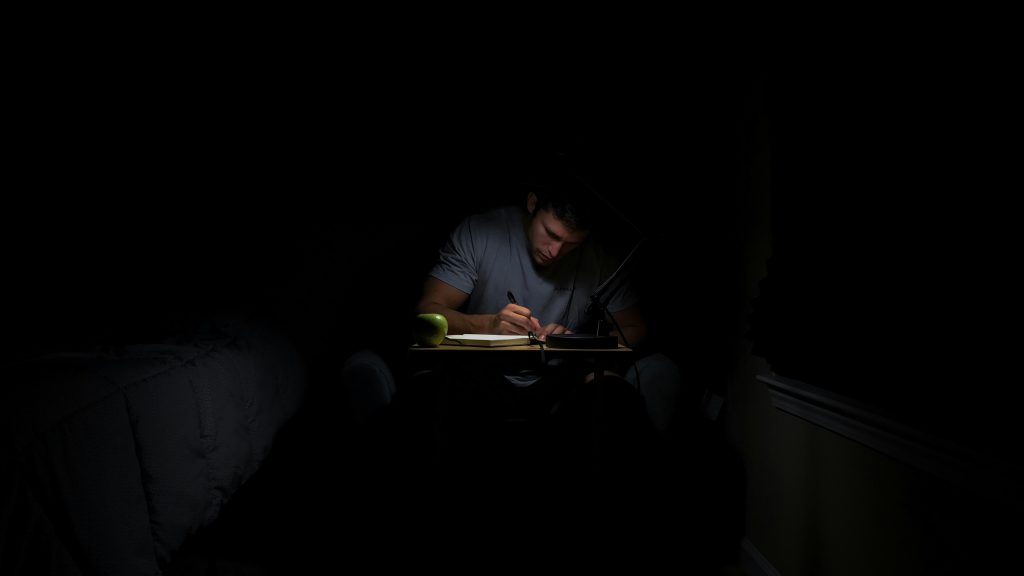
It’s been more than two years since the writing began. It’s been more than four since the research started. A little over a month ago, on Jan. 16, I wrote this in my writing journal: “Reached 87,758 words. First draft completed.” Five days later, I wrote “First reread / editing completed.”

It was there I stopped, almost mentally and emotionally spent. I need to do the second edit, which for me is the most serious one. But I stopped, to catch my breath, reflect and take stock, and consider how the past two years of my life have been devoted to a story that is about 25 percent true and 75 percent fiction. Nd what I thought was mostly true mostly wasn’t.

I’ve published five novels and a non-fiction book. I’ve completed two novel manuscripts that have potential but need considerable reworking. I have at least five different novel ideas, and a dozen short stories, buzzing around my head. 

This story I just finished, this manuscript I’ve labored over, isn’t exactly a labor of love. It’s more a labor of sweat, the story I had to get done. 

To continue reading, please see me post today at the ACFW Blog.

Top photograph by Rui Silva sj via Unsplash. Used with permission.

“Across Five Aprils” by Irene Hunt

February 14, 2024 By Glynn Young Leave a Comment

In 1964, author Irene Hunt (1907-2001) published the middle-grade novel Across Five Aprils. It’s the coming-of-age story of nine-year-old Jethro Creighton, the youngest of five brothers and a sister. They live and work with their parents Matt and Emma on a farm in southern Illinois.

This coming-of-age story is set during the Civil War, beginning in 1861. It’s so well done, and such a good story, that it’s no wonder that it was runner-up to the Newberry Medal in 1965 (her second book, Up the Road Slowly, won the medal in 1966). In 212 pages, Hunt manages to tell both the story of the Creighton family and the story of the Civil War itself. 

Told from Jethro’s perspective, we watch what happens when the reports come of the fall of Fort Sumter. The oldest brother has not been heard from in years, having gone to California for the Gold Rush. Two brothers and the cousin who lives with the family join the Union army; Jethro’s favorite brother Bill joins the Confederate army. Jenny’s beau, the schoolteacher Jethro adores, eventually throws his lot in with the Union. 

While it is the story of the war and how his brothers fare, Across Five Aprils is also Jethro’s story and what happens back home. When Jethro is 10, his father suffers a heart attack, and the boy suddenly finds himself of being head of the family. Through Jethro’s eyes, we see the violence that happens in a region of conflicted loyalties, the impact of the war’s news on the family, and how the war meant unexpected struggles on the home front. 

The characters seem like real people. Hunt had a gift for characterization, and even the minor characters come alive on the page. Hunt based the story on the tales and letters of her own grandfather, who experienced the Civil War much as Jethro does in the novel. She also did extensive research in newspaper reports, government documents, histories, biographies, and memoirs.

Irene Hunt

Hunt, a native of Illinois, taught English and French in Illinois schools and later psychology at the University of South Dakota. She returned to Illinois to become director of language arts at a junior high school. Including Across Five Aprils, she published eight novels between 1864 and 1985, and she won several awards for children’s literature. She died on her 98th birthday in 2001.

After 60 years, Across Five Aprils has stood the test of time. It’s a riveting read as we watch, through a boy’s eyes, as the war unfold. The Creighton family will endure heartbreak and tragedy, fear and violence. But it is the family that endures. 

Top photograph: A farmer and two boys cutting hay in Kentucky during the Civil War.

The First Book I Ever Bought

January 31, 2024 By Glynn Young 3 Comments

It was the summer before I turned seven. A favorite activity for all of us kids in the neighborhood was to ride our bikes up to the TG&Y dime store in the local shopping center and usually just drool over all the toys in the children’s section. The distance between our block and the dime store was about a mile-and-a-half; we’d ride back streets to get there, avoiding the more direct, and busy, nearby U.S. Highway 61.

The shopping center included the TG&Y, a Beall’s department store, a Western Auto, a Mackenzie’s Bakery, and the anchor, the A&P grocery store. A few years later, a Katz & Bestoff (K&B) drug store was added on the western end.

As young as I was, I was reading beyond my years. I liked the dime store’s toys and games as much as anyone, but I also would wander over to where the children’s books were displayed in something like a magazine rack, with staggered rows so you could see all the titles. The books were for all ages, from toddler to young teen.

One Saturday, I rode by myself to TG&Y. I placed my 16-inch red bicycle on the pavement in front, secured by a kickstand. (This was a long time ago, when you didn’t think to have a bicycle lock. Why would you need one?) I made my way to the book display. I’d had my eye on one, and I had just enough money to buy it, including tax. It was all of 59 cents.

It was my first book purchase.

Trixie Belden and the Secret of the Mansion was originally published by Julie Campbell Tatham (1908-1999) in 1948. Officially, it was a “girl detective novel,” so you didn’t exactly want to be with your friends when you bought it. It followed a long line of teen detective stories that had become wildly popular in the 1920s and 1930s – The Hardy Boys and Nancy Drew being among the most well known.

I came to that book, a mystery with two 13-year-old girl detectives, because of television. Through various TV shows, both after-school programs (like the Mickey Mouse Club’s Hardy Boys segment) and primetime TV series, I discovered I liked mysteries. So why not read one? And this one had an added bonus – an old mansion that was probably haunted.

I brought the book to the checkout counter, made my purchase, the salesgirl bagged it, and I was on my way home. I was soon visiting the town of Sleepyside-on-Hudson in New York State, where the Belden family with its four children lived. Brian and Martin were older teens; Trixie was 13; and little brother Bobby was 5 or 6, and often the bane of Trixie’s young life.

Julie Campbell Tatham

It was a fully recognizable family, not unlike Ozzie & Harriet. Kids got into minor trouble, but it was easily resolved. Nobody was dysfunctional. Heroes and villains were easily identifiable, and they were never the same person. I don’t think Trixie’s mother ever vacuumed wearing a nice frock and pearls, like June Cleaver did on Leave It to Beaver, but her character is not unlike Beaver’s mother and Harriet Nelson.

A new family, the Wheelers, had just moved into the nearby large estate next to the Belden’s farm (Mr. Belden also worked at an office job). Also close by is the Frayne mansion, decaying ever since old Mr. Frayne’s wife had died. Mr. Frayne himself has just been taken to the hospital after being found by Trixie’s father at the foot of the long driveway.

I reread the story that I first read some 65 years ago. I wanted to see how much I remembered, how much I didn’t, and if I would like it as much as that kid did back in the late 1950s. I recalled three things: Bobby getting bitten by a copperhead; a fire where the only thing that’s saved (by Trixie, of course) is a mattress; and Mr. Frayne’s 15-year-old nephew Jim, who comes to Sleepyside to get away from a mean and brutal stepfather.

My memory was intact, including the overall arc of the story. Trixie and her new friend Honey Wheeler are a textbook example of opposites attracting. I thought I’d read more about Trixie’s two older brothers, but they’re both away at camp and don’t figure into the story. I remembered that Jim had red hair.

What I didn’t remember was that, while the story ends on a high note, it also ends with a couple of hanging threads, like what happens to Jim? If I want to find out, I have to read the next book in the series, The Red Trailer Mystery. Nice marketing ploy, that.

The author, Julie Campbell Tatham, wrote the first six books in the series. The next 33 were written by a variety of writers, typically using the pen name “Kathryn Kenny.” The books are still in print. Because I read an original edition published by Whitman Publishing in 1958, I don’t know if the more contemporary editions have been “modernized” or not. Some of that has happened with The Hardy Boys and Nancy Drew. Campbell Tatham also wrote the Ginny Gordon series at the same time she was writing the Trixie Belden books.

I found my copy of Trixie Belden and the Secret of the Mansion via a used bookstore online. It is exactly the same edition I bought when I was a kid, the one I carried home on my bike from TG&Y. I’m that almost-seven-year-old kid again, buying and enjoying the first book he ever bought for himself.

Top photograph by Eleanor Brooke via Unsplash. Used with permission.
Finding Hope in a Cemetery

January 29, 2024 By Glynn Young Leave a Comment

I walked into a John Constable landscape and found hope – in a cemetery.

A bit tired of seeing tourist sights on a recent vacation, my wife and I took a Saturday to explore Hampstead in north London. We’d been here in 2015 for a guided walk about the poet John Keats. Walk, perhaps, isn’t the right word. It was more of a brisk run up and down the hills of Hampstead.

One place I wanted to see during this visit was where our Keats Walk had started – St. John-at-Hampstead Church, also known as the “Keats Church,” even though it was the family of his love interest, Fannie Brawn, who were members. Keats himself never attended. The church does have, however, a bust of the poet.

Unfortunately, the church was closed and locked for the day. A few people were walking by; a couple sat talking on a bench. Instead of leaving, we wandered around the churchyard and its cemetery. The original cemetery is adjacent to the church; a larger and newer extension is across the street. 

To continue reading please see my post at Cultivating Oaks.

“God Rest Ye Merry, Soldiers” by James McIvor

January 24, 2024 By Glynn Young Leave a Comment

In 1861, the first year of the Civil War, soldiers on both sides still felt some sense of momentum. Overly optimistic, many believed the war would over by Christmas. As the war stretched into 1862, the initial optimism was giving way to something else – a sense of failure and despair. And that sense affected both sides. 

The South was beginning to feel the bite of the Union blockade of Southern ports. The North was watching a series of what seemed like only Confederate victories on the battlefield. Soldiers were becoming demoralized. It didn’t help the Union’s cause that so many senior officers were “political generals” and appeared sorely lacking in experience and common sense. The sense of failure and isolation was especially acute around Christmas, when soldiers would have ordinarily been home with their families.

Using books, articles, letters (both published and unpublished), archival papers, and diaries, author James McIvor has written God Rest Ye Merry, Soldiers: A True Civil War Christmas Story. He’s provided a snapshot of what the Christmas season was like during the four years of the Civil War. His focus is the soldiers, what they thought, what they experienced, and often why they wanted to be anyplace other than where they were. The book was first published in 2006. 

Sometimes the Christmas season and holiday coincided with battles, and soldiers found themselves marching to battle when they would have preferred to be at home, or at worst sitting around a campfire and enjoying a good meal. More often, Christmas was quiet, leaving too much time to think and reflect, and miss fallen colleagues and the family at home.

He points out that the Civil War changed perceptions of the holiday. The suffering on both sides had been great, and the feelings about Christmas that had been growing for decades before the war became something much stronger with the end of the way. “The Civil War, in fact,” McIvor writes, “made Christmas a truly American holiday in a way it had never entirely been before.”

McIvor is a longtime Civil War enthusiast and freelance writer. He lives in Virginia. 

God, Rest Ye Merry, Soldiers is a poignant narrative, but it avoids sentimentalism. Soldiers who served before and after the Civil War would likely find some of their own story here.

Top illustration: Christmas Eve 1863 by Thomas Nast, the German-born Civil War cartoonist who is credited with creating the image of Santa Claus.

“Little Women” by Louisa May Alcott

January 10, 2024 By Glynn Young 2 Comments

I was in 9th grade, at the time part of the middle school where I grew up. Our English teacher assigned our all-boy class two papers about authors – one English and one American. We were required to read one work by each author for our papers. She had a list of 35 English writers and 35 Americans, one for each person in our class. Our choices, however, were determined alphabetically, which meant whoever was last would get the two no one else wanted. Which meant me.

No one wanted to read a play by William Shakespeare, which meant he would be my English author. And the last American author on the list (remember this was an all-boys class) was Louisa May Alcott (1832-1888).

When my name was called, general laughter erupted. The teacher, with her soft Alabama accent in a roomful of New Orleans boys, was irate. She loved Alcott, she said, and she loved Little Women. And if any of us ever wanted to understand girls, we should read the Alcott novel. I knew what I had better read for my report.

Louisa May Alcott originally published Little Women as two books, Part 1 in 1868 and Part 2 in 1869. The story is based on the lives of Alcott’s sisters, family, and friends. A first read of Part 1 by her publisher found it boring, until he had his two daughters read it. Then he had more girls in the target audience read it. The 2,000-copy first edition sold out almost immediately.

The book has been as popular in Britain as it has in the United States, even though the setting is Civil War Massachusetts (Part 1) and Massachusetts and Europe for Part 2. G.K. Chesterton, when he read it, said it had anticipated the Realism School in literature by about 30 years.

To read it today, you also realize how it anticipated the television mini-series. It’s episodic chapters are almost ideally suited for the small screen (see the 2017 mini-series version developed by Heidi Thomas, she of Call the Midwife). The well-loved work has been adapted countless times for stage, movies, and television. It’s even been adapted as a musical and for anime.

And Little Women is well-loved with good reason. It captures of the lives of the four March sisters living between childhood and adulthood (thus the title, “little women”). The family is living through the Civil War period, with their father serving as a chaplain with the Union army. Each chapter centers on a particular sister – Meg the wise one, Jo the headstrong one with a burning passion to write, Amy the pretty and artistic one, and Beth, the youngest, most frail, and kindest of the girls. In their father’s absence, their mother Marmee presides over the family. 

For all four girls, and the next-door neighbor Theodore (“Laurie”), the story is something of a coming-of-age novel. While the story is set during the Civil War, the war itself rarely intrudes, until in Part 1 Mr. March is taken ill with pneumonia and Mrs. March travels to Washington, D.C. to care for him. Part 2 occurs after the war is over.

Louisa May Alcott

It’s a well-written, engaging story. As you read, you come to like these sisters, and you keep reading o find out what will happen to them and their mother. I have to admit, having seen the 1994 movie version, I can only identify Susan Sarandon as Mrs. March, although Emily Watson did a fine job in the 2017 BBC television series. Those two adaptations stick very closely to the original novels. 

I read the work thinking there would be more about the Civil War than I had remembered from my first reading back in high school. There’s not. The war is a distant and unrelated event in the story. Even Mrs. March rushing to her husband’s bedside is never detailed. 

But it’s still a good story. Alcott wrote well, with passion and with humor. Some of the predicaments that Jo and Amy in particular get into are close to hilarious.

For my ninth-grade papers, I read Julius Caesar and Little Women. My lack of choice ended up standing me in good stead with the teacher, who gave the class a Southern evil eye, daring anyone to laugh, when I read my paper (as we were required to do). I saw a few grins, which quickly disappeared when she turned her attention upon the miscreant. No one laughed.

Top illustration: A drawing of the March house. 

Related:

Hospital Sketches by Louisa May Alcott. 

  • « Go to Previous Page
  • Page 1
  • Interim pages omitted …
  • Page 14
  • Page 15
  • Page 16
  • Page 17
  • Page 18
  • Interim pages omitted …
  • Page 46
  • Go to Next Page »

Footer

GY


Meet the Man

An award-winning speechwriter and communications professional, Glynn Young is the author of six novels and the non-fiction book Poetry at Work.


 01_facebook 02_twitter 26_googleplus 07_GG Talk

Copyright © 2026 Glynn Young · Site by The Willingham Enterprise · Log in | Managed by Fistbump Media LLC