• Skip to primary navigation
  • Skip to main content
  • Skip to footer

Dancing Priest

Author and Novelist Glynn Young

  • HOME
  • BLOG
  • BOOKS
    • Brookhaven
    • Dancing Prince
    • Dancing Prophet
    • Dancing Priest
    • A Light Shining
    • Dancing King
    • Poetry at Work
  • ABOUT
  • CONTACT

fiction

When Your Characters Take Over the Story

March 27, 2024 By Glynn Young 2 Comments

The title for this post is something of a “Well, duh” kind of title. For a story to work well, it’s the characters who have to take over and knock the author from his perch.

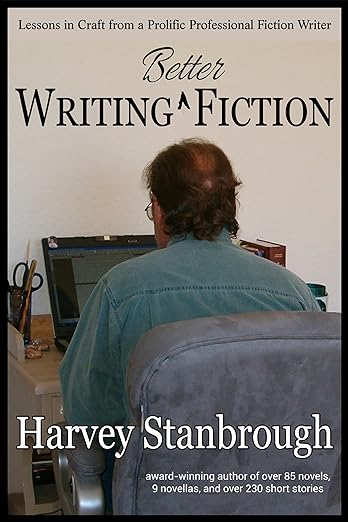
I’ve been reading Writing Better Fiction by Harvey Stanbrough, and he says that he almost called his book Writing Better Character-Driven Fiction, until he realized it was rather redundant. “All good fiction is character-driven,” he writes. He’s not big on outlines, plotting, character sketches, erecting signposts, or anything else that might smack of planning. Instead, he says, “like real life,” he says, “authentic fiction is not planned. Like real life, authentic fiction unfolds naturally.”

Stanbrough has an acronym for this – WITD, or “Writing into the Dark.”

As I’m reading this, I keep asking myself, is this how I write?

The answer is, yes, almost entirely.

I’ve written before about how a minor character became the heart of my fifth novel, Dancing Prince. He was supposed to stay in place. I thought I had a plan for the book in my head. But as I began to write, four-year-old Thomas kept sticking his head in where he was wanted or, I thought, needed. I finally relented and expanded his role a bit. That’s all the encouragement he needed. He took over. 

The book turned into a very different story from the one I’d originally intended. Good thing, too.

I’m currently in the thick of a new story. It’s a rewrite of an earlier manuscript that didn’t work. I’m not rereading the old manuscript as a guide. Instead, I’m letting the characters tell the story, and it’s becoming very different from that old manuscript.

But something similar to Dancing Prince has happened. A new character unexpectedly showed up. The main character is still the main character, but I was typing a scene where he’s leaving an apartment one morning. And for some unknown, crazy reason, this is what I typed next: “As he walked out the door, he saw a young man leaning against a motorcycle parked on the sidewalk.”

Where did that come from? I stared at the line. I read it out loud. I kept staring. And then I knew his name. I knew what he was doing. I knew what would happen next and how the entire story had just shifted. I set the characters free; they let me come along for the ride. Several complicated issues waiting for a solution suddenly were solved, because I let the characters solve them.

I said above that “writing into the dark” is almost entirely how I write. That qualifying phrase has to do with how a story forms in my head, long before (years in the case of Dancing Priest) before the first word lands on the computer screen. The stories I write essentially begin as short scenes in movies. I visualize them happening, slowly connecting the scenes until I can say a “whole story” has been visualized. 

But each scene in my head is character driven. And I mentally repeat each scene to watch what the characters do, and to see how the characters themselves change the scene. 

What’s clear is that I’m not the movie director. I may not even be the script writer. I think I’m more a technician standing in the shadows, assisting if needed, moving props around, painting a backdrop. 

But the characters are in charge.

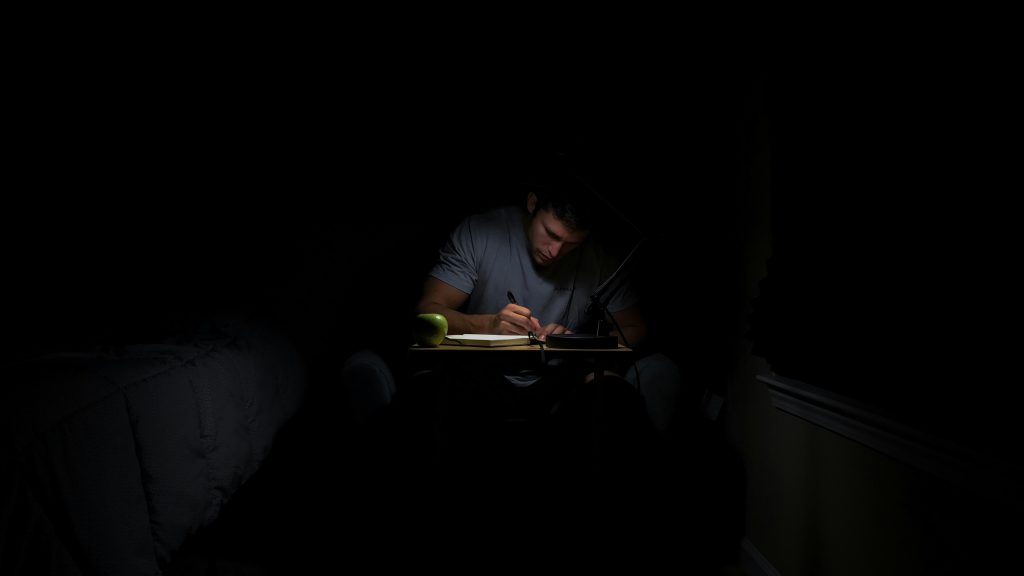
Top photograph by Steven Houston via Unsplash. Used with permission.
Literary and Other Kinds of Fiction

March 20, 2024 By Glynn Young Leave a Comment

Wiseblood Books, which leans in the direction of being a Catholic publisher, has been issuing a series of novels and poetry collections that that interesting, thought-provoking, and broader than the idea of “Catholic publisher” might imply. Its novelists and poets include Dana Gioia, Marly Youmans, James Matthew Wilson, Samuel Hazo, Charles Hughes, Katy Carl, Sally Thomas, Glenn Arbery, R.R. Reno, and others.

What these writers have in common is that they write perceptively and unapologetically about faith, although it’s usually not that obvious. The fiction is serious, literary fiction; the poetry is just as serious, and just as literary. Both compare favorably to anything produced by mainstream, “secular” publishers. Wiseblood’s books aren’t out to score political points and tick the boxes of the latest social and cultural mania to seize the imaginations of what passes for America’s literary elites. 

Instead, they tell stories. They wrestle with what people wrestle with, including holding on to faith in a world growing more indifferent and more hostile.

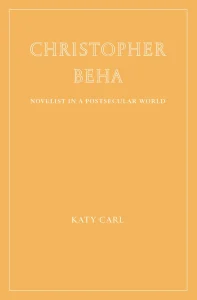
I was reminded of this when I read a Wiseblood monograph, Christopher Beha: Novelist in a Postsecular World by Katy Carl. I’ve heard of Beha, a writer and novelist who served as editor of Harper’s Magazine from 2019 to 2023. He stepped down from the position for the best of reasons; he couldn’t balance his editorial duties with his writing.

Carl’s 32-page monograph explores Beha’s novels – The Whole Five Feet (2010), What Happened to Sophie Wilder(2012), Arts & Entertainments (2014), and The Index of Self-Destructive Acts (2020). And what she finds is that, in what describes as a “postsecular” world, raising the possibility of faith and belief is, well, okay. You can do it in serious fiction, and Beha does it very well, indeed. 

Carl is the editor in chief of Dappled Things Magazine. Her stories and articles have appeared in numerous literary publications, and she previously published the novel As Earth Without Water (2021) and a short story collection, Fragile Objects (2023). She was chosen as Wiseblood Books first writer in residence in 2020, and she is pursuing an MFA degree in creative writing at the University of St. Thomas in Houston., whose founding faculty were James Matthew Wilson and Joshua Hren.  

Katy Carl

Her essay on Beha’s novels repeatedly made me think about my own writing, and how I would describe it. I don’t write literary fiction. I can’t say I write “popular” fiction, or mass market fiction, either. When asked, I’ve said “contemporary fiction.” A few people have suggested “alternative history” or even “alternative future history.” More recently, it’s been historical fiction – no doubts about what to call a novel set during the Civil War and 1915. And now a new one is underway, and it’s definitely contemporary fiction. 

It may be a copout of sorts, but, setting labels aside, all authors have to write the story that’s asking to be written, because it’s a story that the author has to tell. 

I’ve gradually learned the importance of trusting my characters and writing like the writer Harvey Stanbrough describes – WITD, or “writing into the dark.” That means writing with no set outline but trusting your characters enough because they know what they’re doing. I learned that lesson with my last novel, Dancing Prince. One character refused to stay in the minor role I planned for him. I finally surrendered and gave him his head, and he took over. 

And it worked.

Related:

Fragile Objects: Short Stories by Katy Carl.

Wiseblood Books monographs.

Top photograph by Aman Upadhyay via Unsplash. Used with permission.

What Happens When You Finally Type “The End”?

February 21, 2024 By Glynn Young Leave a Comment

It’s been more than two years since the writing began. It’s been more than four since the research started. A little over a month ago, on Jan. 16, I wrote this in my writing journal: “Reached 87,758 words. First draft completed.” Five days later, I wrote “First reread / editing completed.”

It was there I stopped, almost mentally and emotionally spent. I need to do the second edit, which for me is the most serious one. But I stopped, to catch my breath, reflect and take stock, and consider how the past two years of my life have been devoted to a story that is about 25 percent true and 75 percent fiction. Nd what I thought was mostly true mostly wasn’t.

I’ve published five novels and a non-fiction book. I’ve completed two novel manuscripts that have potential but need considerable reworking. I have at least five different novel ideas, and a dozen short stories, buzzing around my head. 

This story I just finished, this manuscript I’ve labored over, isn’t exactly a labor of love. It’s more a labor of sweat, the story I had to get done. 

To continue reading, please see me post today at the ACFW Blog.

Top photograph by Rui Silva sj via Unsplash. Used with permission.
“Little Women” by Louisa May Alcott

January 10, 2024 By Glynn Young 2 Comments

I was in 9th grade, at the time part of the middle school where I grew up. Our English teacher assigned our all-boy class two papers about authors – one English and one American. We were required to read one work by each author for our papers. She had a list of 35 English writers and 35 Americans, one for each person in our class. Our choices, however, were determined alphabetically, which meant whoever was last would get the two no one else wanted. Which meant me.

No one wanted to read a play by William Shakespeare, which meant he would be my English author. And the last American author on the list (remember this was an all-boys class) was Louisa May Alcott (1832-1888).

When my name was called, general laughter erupted. The teacher, with her soft Alabama accent in a roomful of New Orleans boys, was irate. She loved Alcott, she said, and she loved Little Women. And if any of us ever wanted to understand girls, we should read the Alcott novel. I knew what I had better read for my report.

Louisa May Alcott originally published Little Women as two books, Part 1 in 1868 and Part 2 in 1869. The story is based on the lives of Alcott’s sisters, family, and friends. A first read of Part 1 by her publisher found it boring, until he had his two daughters read it. Then he had more girls in the target audience read it. The 2,000-copy first edition sold out almost immediately.

The book has been as popular in Britain as it has in the United States, even though the setting is Civil War Massachusetts (Part 1) and Massachusetts and Europe for Part 2. G.K. Chesterton, when he read it, said it had anticipated the Realism School in literature by about 30 years.

To read it today, you also realize how it anticipated the television mini-series. It’s episodic chapters are almost ideally suited for the small screen (see the 2017 mini-series version developed by Heidi Thomas, she of Call the Midwife). The well-loved work has been adapted countless times for stage, movies, and television. It’s even been adapted as a musical and for anime.

And Little Women is well-loved with good reason. It captures of the lives of the four March sisters living between childhood and adulthood (thus the title, “little women”). The family is living through the Civil War period, with their father serving as a chaplain with the Union army. Each chapter centers on a particular sister – Meg the wise one, Jo the headstrong one with a burning passion to write, Amy the pretty and artistic one, and Beth, the youngest, most frail, and kindest of the girls. In their father’s absence, their mother Marmee presides over the family. 

For all four girls, and the next-door neighbor Theodore (“Laurie”), the story is something of a coming-of-age novel. While the story is set during the Civil War, the war itself rarely intrudes, until in Part 1 Mr. March is taken ill with pneumonia and Mrs. March travels to Washington, D.C. to care for him. Part 2 occurs after the war is over.

Louisa May Alcott

It’s a well-written, engaging story. As you read, you come to like these sisters, and you keep reading o find out what will happen to them and their mother. I have to admit, having seen the 1994 movie version, I can only identify Susan Sarandon as Mrs. March, although Emily Watson did a fine job in the 2017 BBC television series. Those two adaptations stick very closely to the original novels. 

I read the work thinking there would be more about the Civil War than I had remembered from my first reading back in high school. There’s not. The war is a distant and unrelated event in the story. Even Mrs. March rushing to her husband’s bedside is never detailed. 

But it’s still a good story. Alcott wrote well, with passion and with humor. Some of the predicaments that Jo and Amy in particular get into are close to hilarious.

For my ninth-grade papers, I read Julius Caesar and Little Women. My lack of choice ended up standing me in good stead with the teacher, who gave the class a Southern evil eye, daring anyone to laugh, when I read my paper (as we were required to do). I saw a few grins, which quickly disappeared when she turned her attention upon the miscreant. No one laughed.

Top illustration: A drawing of the March house. 

Related:

Hospital Sketches by Louisa May Alcott. 

A Year of Reading (and Writing) the Civil War

January 3, 2024 By Glynn Young 1 Comment

My story connected to the Civil War has passed the 70,000-word mark, and the ending is in sight. I’m not sure when it was that I realized I was writing about something I had only the most surface understanding of, but I did. The only solution was to start reading and researching.

Many blogs and web sites have been helpful, but two especially so. Emerging Civil War, edited by Chris Mackowksi, is written by historians, National Park guides, and other who know their stuff. Most have published books. Civil War Books & Authors, penned by Andrew Wagonhoffer, posts notices of new books and full-length book reviews focused solely on the Civil War, its causes, and its aftermath. Both sites have been at this work for years, ECW for more than a decade and CWBA since 2005.

What was also a treat was discovering and visiting the Missouri Civil War Museum, located adjacent to the Jefferson Barracks National Cemetery here in St. Louis.

Missouri Civil War Museum

My reading and research this year has been less about military strategy, tactics, and battles, and more about what both civilians and soldiers experienced. For several decades after the war, officer and soldier memoirs were popular, and several publishers have made them available in digital format. The same is true for civilians, although there seem to be more memoirs by women and mothers on the Southern side than the Northern, likely reflecting the direct experience these women had.

I did pay attention to certain battles. For my story, the battles of Shiloh, Gettysburg, The Wilderness, Franklin, and Petersburg / Appomattox were the key ones, as was the whole surrender of the Army of Northern Virginia at Appomattox. The surrender, in fact, was the scene where the manuscript originally started, even if its now in another place. 

What’s also changed is that I’m reading other fictional accounts of the war – novels, stories, and poetry. Many people turned to fiction and poetry to make sense of what happened in the years between 1861 and 1865. As a friend once said, “Fiction can be truer that history.”

What follows is a list of the books I read in 2023. Given where my own fiction manuscript is, I expect to be reading far fewer in 2024. Then again, maybe not; the Civil War is a difficult subject to walk away from.

The Saddest Words: William Faulkner’s Civil War by Michael Gorda.

Irish-American Civil War Songs by Catherine Bateson.

Of Age: Boy Soldiers and Military Power in the Civil War Era by Frances Clark and Rebecca Jo Plant.

An Atlas and a Map of the Civil War

Contemners and Serpents: The James Wilson Family Civil War Correspondence, edited by Theodore Fuller and Thomas Knight.

Four Years with Morgan and Forrest by Col. Thomas Berry.

Grant vs. Lee, edited by Chris Mackowski and Dan Welch.

If We Are Striking for Pennsylvania, Vol. 1, by Scott Mingus & Eric Wittenberg.

Reading John Greenleaf Whittier, the “Abolitionist Poet”, edited by Brenda Wineapple.

A Season of Slaughter: The Battle of Spotsylvania Courthouse, May 8-21,1864 – Chris Mackowski and Kristopher D. White. 

Bear in the Wilderness by Donald Waldemer. 

“No One Want to Be the Last to Die”: The Battle of Appomattox, April 8-9, 1865 by Chris Calkins. 

The Summer of ’63: Vicksburg and Tullahoma, edited by Chris Mackowski and Dan Welch. 

Man of Fire: William Tecumseh Sherman in the Civil War by Derek Maxfield. 

My Dearest Julia: The Wartime Letters of Ulysses S. Grant to His Wife.

The Wartime Journal of a Georgia Girl by Eliza Frances Andrews. 

Recollections of a Confederate Staff Officer by G. Mosely Sorrell. 

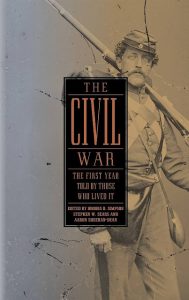
The Civil War: The First Year by Those Who Lived It – Library of America.

President Lincoln Assassinated! The Firsthand Story of the Murder, Manhunt, Trial, and Mourning by Harold Holzer.

Bloody Promenade: Recollections on a Civil War Battle by Stephen Cushman. 

Belle Boyd: Cleopatra of the Secession.

If We Are Striking for Pennsylvania, Vol. 2 by Scott Mingus and Eric Wittenberg.

The Civil War: The Second Year Told by Those Who Lived It – Library of America. 

Service with the Sixth Wisconsin Volunteers by Rufus Dawes.

The Civil War: The Third Year Told by Those Who Lived It – Library of America. 

The True Story of Andersonville Prison by James Madison Page.

The Civil War: The Final Year Told by Those Who Lived It – Library of America. 

From Western Virginia with Jackson to Spotsylvania with Lee by Peter Luebke. 

The Story of Camp Douglas by David Keller.

Lee’s Miserables: Life in the Army of Northern Virginia from the Wilderness to Appomattox by J. Tracy Power. 

Belligerent Muse: Five Northern Writers and How They Shaped Our Understanding of the Civil War by Stephen Cushman. 

Hospital Sketches by Louisa May Alcott.

Shiloh, A Novel by Shelby Foote.

John Ransom’s Andersonville Diary.

John Brown’s Body by Stephen Vincent Benet. 

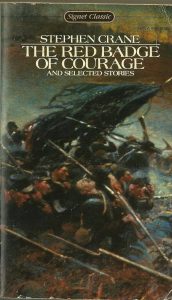
The Red Badge of Courage by Stephen Crane.

The Battle of Franklin by A.S. Peterson.

The Stolen Train by Robert Ashley. 

I also wrote four blog posts that discussed a little of my own great-grandmother’s experience in Union-occupied New Orleans and some of the struggles I had with the research. 

A Little of the Story of Wilhelmina Ostermann

When Research for Your Historical Novel Changes Your Understanding

My Enchantment with (and Addiction to?) the Civil War.

Research Can Teach You a Hard If Useful Lesson.

Top photograph, courtesy Wikimedia Commons: The Wilderness site, sometime after the battle. The dense scrub wasn’t conducive to fighting, but the dry weather made it conducive to being ignited by sparks from artillery fire.

“The Stolen Train” by Robert Ashley

December 27, 2023 By Glynn Young 1 Comment

It didn’t change the course of world history, or even the Civil War. It didn’t even end in success. But the Andrews Raid, sometimes called the Great Locomotive Chase, was certainly notable in its daring and how it almost succeeded.

In 1862, with the blessing of Union military commanders, recruited 20 soldiers. Their mission: capture a Confederate locomotive called The General not far from Atlanta and take it all the way to safety behind Union lines in Tennessee. Along the way, they would tear up track, burn bridges, and do whatever they could to disrupt the Western & Atlantic Railroad Line from Atlanta to Chattanooga. That line was a key supply line for Confederate armies in Tennessee.

It almost worked. Chased by Confederate soldiers upon a train pulled by The Texas locomotive, the raiders made it to within 20 miles of Chattanooga when they had to abandon the locomotive and scatter. Some were caught and imprisoned. Eventually, the survivors were the first to receive the newly created Medal of Honor. 

In 1953, author and historian Robert Ashley published The Stolen Train, a fictional account of the raid. Most of the characters were based on real persons, including the raid’s leader, James Andrews, and the train engineers Andrews had recruited. The primary fictional character was a young, 15-year-old soldier named Johnnie Adams, who has two jobs, lookout atop the train and scrambling up telegraph poles to cut wires.

That a 15-year-old boy is the main character explains who the audience is – squarely aimed at boys in the 10-13 age bracket. I was 10 when I first read it, and even though I thought of myself as a loyal Southerner, I was thrilled by the story. And it is a thrilling story.

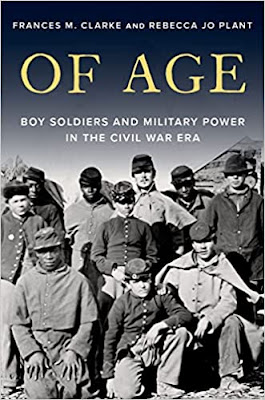
Lest you think a 15-year-old would have been too young to enlist, read Of Age: Boy Soldiers and Military Power in the Civil War Era by Frances Clark and Rebecca Jo Plant. They estimate that up to 10 percent of both the Union and Confederate armies were comprised of boys aged 15 and younger. Ashley’s book for boys is more factual than it might appear.

James Andrews, who led the raid

A considerable number of my classmates read The Stolen Train; it was offered by Scholastic Book Service and widely distributed across the country. Rereading it more than half a century later, it’s still a thrilling and riveting read. Despite its ultimate failure, the Andrews Raid made Southern military and railroad authorities look foolish at best and incompetent at worst. But in their defense, who would have expected a raid to begin deep with the Confederacy itself?

The paperback copy I have is from a fifth printing in 1971, with a cover price of 75 cents. I believe my copy in 1961 cost 50 cents. An Amazon Kindle edition was published in 2020 and lists for $1.99, while hardcover and paperback editions were published in 2012 and a mass market paperback edition in 1997.

It’s a good story, and especially for boys. It’s good to see that it’s available.

Top photograph: The General, on display a few hundred yards from where it was stolen in 1862, at the Southern Museum of the Civil War & Locomotive History, Kennesaw, Georgia.

  • « Go to Previous Page
  • Page 1
  • Page 2
  • Page 3
  • Page 4
  • Page 5
  • Page 6
  • Interim pages omitted …
  • Page 10
  • Go to Next Page »

Footer

GY


Meet the Man

An award-winning speechwriter and communications professional, Glynn Young is the author of six novels and the non-fiction book Poetry at Work.


 01_facebook 02_twitter 26_googleplus 07_GG Talk

Copyright © 2026 Glynn Young · Site by The Willingham Enterprise · Log in | Managed by Fistbump Media LLC