• Skip to primary navigation
  • Skip to main content
  • Skip to footer

Dancing Priest

Author and Novelist Glynn Young

  • HOME
  • BLOG
  • BOOKS
    • Brookhaven
    • Dancing Prince
    • Dancing Prophet
    • Dancing Priest
    • A Light Shining
    • Dancing King
    • Poetry at Work
  • ABOUT
  • CONTACT

fiction

A Year of Reading (and Writing) the Civil War

January 3, 2024 By Glynn Young 1 Comment

My story connected to the Civil War has passed the 70,000-word mark, and the ending is in sight. I’m not sure when it was that I realized I was writing about something I had only the most surface understanding of, but I did. The only solution was to start reading and researching.

Many blogs and web sites have been helpful, but two especially so. Emerging Civil War, edited by Chris Mackowksi, is written by historians, National Park guides, and other who know their stuff. Most have published books. Civil War Books & Authors, penned by Andrew Wagonhoffer, posts notices of new books and full-length book reviews focused solely on the Civil War, its causes, and its aftermath. Both sites have been at this work for years, ECW for more than a decade and CWBA since 2005.

What was also a treat was discovering and visiting the Missouri Civil War Museum, located adjacent to the Jefferson Barracks National Cemetery here in St. Louis.
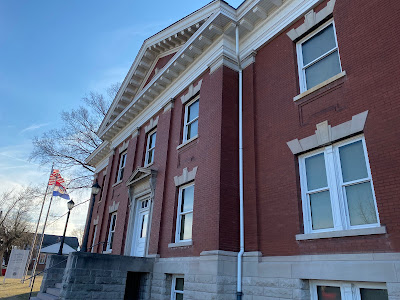
Missouri Civil War Museum

My reading and research this year has been less about military strategy, tactics, and battles, and more about what both civilians and soldiers experienced. For several decades after the war, officer and soldier memoirs were popular, and several publishers have made them available in digital format. The same is true for civilians, although there seem to be more memoirs by women and mothers on the Southern side than the Northern, likely reflecting the direct experience these women had.

I did pay attention to certain battles. For my story, the battles of Shiloh, Gettysburg, The Wilderness, Franklin, and Petersburg / Appomattox were the key ones, as was the whole surrender of the Army of Northern Virginia at Appomattox. The surrender, in fact, was the scene where the manuscript originally started, even if its now in another place. 

What’s also changed is that I’m reading other fictional accounts of the war – novels, stories, and poetry. Many people turned to fiction and poetry to make sense of what happened in the years between 1861 and 1865. As a friend once said, “Fiction can be truer that history.”

What follows is a list of the books I read in 2023. Given where my own fiction manuscript is, I expect to be reading far fewer in 2024. Then again, maybe not; the Civil War is a difficult subject to walk away from.

The Saddest Words: William Faulkner’s Civil War by Michael Gorda.

Irish-American Civil War Songs by Catherine Bateson.
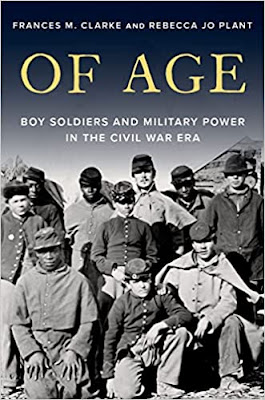
Of Age: Boy Soldiers and Military Power in the Civil War Era by Frances Clark and Rebecca Jo Plant.

An Atlas and a Map of the Civil War

Contemners and Serpents: The James Wilson Family Civil War Correspondence, edited by Theodore Fuller and Thomas Knight.

Four Years with Morgan and Forrest by Col. Thomas Berry.

Grant vs. Lee, edited by Chris Mackowski and Dan Welch.

If We Are Striking for Pennsylvania, Vol. 1, by Scott Mingus & Eric Wittenberg.

Reading John Greenleaf Whittier, the “Abolitionist Poet”, edited by Brenda Wineapple.

A Season of Slaughter: The Battle of Spotsylvania Courthouse, May 8-21,1864 – Chris Mackowski and Kristopher D. White. 

Bear in the Wilderness by Donald Waldemer. 

“No One Want to Be the Last to Die”: The Battle of Appomattox, April 8-9, 1865 by Chris Calkins. 

The Summer of ’63: Vicksburg and Tullahoma, edited by Chris Mackowski and Dan Welch. 

Man of Fire: William Tecumseh Sherman in the Civil War by Derek Maxfield. 

My Dearest Julia: The Wartime Letters of Ulysses S. Grant to His Wife.

The Wartime Journal of a Georgia Girl by Eliza Frances Andrews. 

Recollections of a Confederate Staff Officer by G. Mosely Sorrell. 
The Civil War: The First Year by Those Who Lived It – Library of America.

President Lincoln Assassinated! The Firsthand Story of the Murder, Manhunt, Trial, and Mourning by Harold Holzer.

Bloody Promenade: Recollections on a Civil War Battle by Stephen Cushman. 

Belle Boyd: Cleopatra of the Secession.

If We Are Striking for Pennsylvania, Vol. 2 by Scott Mingus and Eric Wittenberg.

The Civil War: The Second Year Told by Those Who Lived It – Library of America. 

Service with the Sixth Wisconsin Volunteers by Rufus Dawes.

The Civil War: The Third Year Told by Those Who Lived It – Library of America. 

The True Story of Andersonville Prison by James Madison Page.

The Civil War: The Final Year Told by Those Who Lived It – Library of America. 

From Western Virginia with Jackson to Spotsylvania with Lee by Peter Luebke. 

The Story of Camp Douglas by David Keller.

Lee’s Miserables: Life in the Army of Northern Virginia from the Wilderness to Appomattox by J. Tracy Power. 

Belligerent Muse: Five Northern Writers and How They Shaped Our Understanding of the Civil War by Stephen Cushman. 
Hospital Sketches by Louisa May Alcott.

Shiloh, A Novel by Shelby Foote.

John Ransom’s Andersonville Diary.

John Brown’s Body by Stephen Vincent Benet. 

The Red Badge of Courage by Stephen Crane.

The Battle of Franklin by A.S. Peterson.

The Stolen Train by Robert Ashley. 

I also wrote four blog posts that discussed a little of my own great-grandmother’s experience in Union-occupied New Orleans and some of the struggles I had with the research. 

A Little of the Story of Wilhelmina Ostermann

When Research for Your Historical Novel Changes Your Understanding

My Enchantment with (and Addiction to?) the Civil War.

Research Can Teach You a Hard If Useful Lesson.

Top photograph, courtesy Wikimedia Commons: The Wilderness site, sometime after the battle. The dense scrub wasn’t conducive to fighting, but the dry weather made it conducive to being ignited by sparks from artillery fire.

“The Stolen Train” by Robert Ashley

December 27, 2023 By Glynn Young 1 Comment

It didn’t change the course of world history, or even the Civil War. It didn’t even end in success. But the Andrews Raid, sometimes called the Great Locomotive Chase, was certainly notable in its daring and how it almost succeeded.

In 1862, with the blessing of Union military commanders, recruited 20 soldiers. Their mission: capture a Confederate locomotive called The General not far from Atlanta and take it all the way to safety behind Union lines in Tennessee. Along the way, they would tear up track, burn bridges, and do whatever they could to disrupt the Western & Atlantic Railroad Line from Atlanta to Chattanooga. That line was a key supply line for Confederate armies in Tennessee.

It almost worked. Chased by Confederate soldiers upon a train pulled by The Texas locomotive, the raiders made it to within 20 miles of Chattanooga when they had to abandon the locomotive and scatter. Some were caught and imprisoned. Eventually, the survivors were the first to receive the newly created Medal of Honor. 

In 1953, author and historian Robert Ashley published The Stolen Train, a fictional account of the raid. Most of the characters were based on real persons, including the raid’s leader, James Andrews, and the train engineers Andrews had recruited. The primary fictional character was a young, 15-year-old soldier named Johnnie Adams, who has two jobs, lookout atop the train and scrambling up telegraph poles to cut wires.

That a 15-year-old boy is the main character explains who the audience is – squarely aimed at boys in the 10-13 age bracket. I was 10 when I first read it, and even though I thought of myself as a loyal Southerner, I was thrilled by the story. And it is a thrilling story.

Lest you think a 15-year-old would have been too young to enlist, read Of Age: Boy Soldiers and Military Power in the Civil War Era by Frances Clark and Rebecca Jo Plant. They estimate that up to 10 percent of both the Union and Confederate armies were comprised of boys aged 15 and younger. Ashley’s book for boys is more factual than it might appear.

James Andrews, who led the raid

A considerable number of my classmates read The Stolen Train; it was offered by Scholastic Book Service and widely distributed across the country. Rereading it more than half a century later, it’s still a thrilling and riveting read. Despite its ultimate failure, the Andrews Raid made Southern military and railroad authorities look foolish at best and incompetent at worst. But in their defense, who would have expected a raid to begin deep with the Confederacy itself?

The paperback copy I have is from a fifth printing in 1971, with a cover price of 75 cents. I believe my copy in 1961 cost 50 cents. An Amazon Kindle edition was published in 2020 and lists for $1.99, while hardcover and paperback editions were published in 2012 and a mass market paperback edition in 1997.

It’s a good story, and especially for boys. It’s good to see that it’s available.

Top photograph: The General, on display a few hundred yards from where it was stolen in 1862, at the Southern Museum of the Civil War & Locomotive History, Kennesaw, Georgia.

“The Red Badge of Courage” by Stephen Crane

December 13, 2023 By Glynn Young Leave a Comment

If I have one vivid memory of high school junior English class, it would be the classic coming-of-age assignment of The Red Badge of Courage by Stephen Crane. In the spring, anyone could spot a sophomore, because inevitably each and every one of us was carrying our paperback edition of the classic novel about the Civil War. It was assigned at the same time we were studying the Civil War in American history. 

Crane published the novel in 1895, two years after he’d published the book that put him on the American literary map – Maggie: A Girl of the Streets, the story of a prostitute. Crane belonged to the Naturalist, Realist, Symbolist, or Impressionist School, depending upon which critic you ask. The story of a prostitute had not been done before, at least not in a way that made Maggie something of a heroine. 

But it was The Red Badge of Courage that turned Crane into an international literary star. The novel tells the story of Henry Fleming, who lives with his mother, who enlists as a private in the Union army. His mother is deadest against him enlisting, and he does one day on his own and then tells her what he’s done.

We follow Fleming in his new army life. Crane depicts the adulation of the townspeople for his patriotism, how much of army life was characterized by waiting, rumors, and boredom, and Fleming’s fear of facing his first battle and behaving as a coward. In his first military engagement, he performs well, and the enemy is sent running in retreat. But the next day, Fleming and his squad face a renewed attack, and this time it’s Fleming and his cohorts who are running in retreat. He finds himself in dense woods, and in of the most memorable scenes in the novel, he stumbles upon the body of a soldier who died in a battle in the same place.

Still in retreat, he learns that the Union side has prevailed and won the battle. He becomes separated from his regiment, and he’s soon hearing the stories from others. The reader sees how courage and cowardice can exist in the same person at the same time. We learn about the universal complaint of all soldiers in every war – the incompetence of commanding officers. And we see that battles and a war are often won less by brilliant military strategy and tactics and more by who can hold out the longest.

Stephen Crane

What Henry Fleming experienced was life in the army during wartime, and it was (and remains) a far cry from the colorful accounts and government propaganda common to all wars. 

In addition to the first two novels, Crane (1871-1900) also published a poetry collection and another novel, based on his experience as a war correspondent during the Spanish-American War. He published several highly regarded short stories, including “The Open Boat” and “The Bride Comes to Yellow Sky.” With no actual personal war experience, he said that he drew inspiration for The Red Badge of Courage from football games. His short but eventful life ended when he died in England from tuberculosis. 

The Red Badge of Courage is a short, intense, and essentially plotless story. It explores the psychology of solders and war, long before the subject became a popular war. It likely influenced every novel about war written after it. And it explored through fiction, the experience of the Civil War, still the deadliest war ever engaged in by America. 

Top photograph: An illustration of the First Battle of Bull Run, July 21, 1861, showing the Connecticut troops standing firm as the battle turns against them.

“Shiloh” by Shelby Foote

November 22, 2023 By Glynn Young Leave a Comment

Shelby Foote (1916-2005) was a journalist, writer, and historian best known for his three-volume The Civil War: A Narrative, published between 1958 and 1974. His writings about the war and the South generally tilted in the direction of the Lost Cause, which means he’s as far out of favor with historians today as he can be. And yet his scholarship and depth of research were impressive.

Foote also wrote six novels, one of which was entitled Shiloh, published in 1952. As the title indicates, it was about the Battle of Shiloh, fought April 6-7, 1862, in southern Tennessee very close to the Mississippi border. It was something of a seesaw battle, in that the Confederates under Albert Sidney Johnston and P.G.T. Beauregard clearly won the first day, only to see their victory turned into defeat the second day by the Union forces under Ulysses Grant and Don Carlos Buell. There were some 24,000 casualties, the total of both sides, and Shiloh has the dubious distinction of being one of the bloodiest battles of the war.

The name “Shiloh” came from Shiloh Church located near Pittsburgh Landing on the Tennessee River (the battle is also sometimes called the Battle of Pittsburgh Landing). “Shiloh,” interestingly enough, means “peace.”

Foote’s novel is less of a traditional novel and more like seven connected short stories, each with a different narrator. The story moves back and forth between Confederate and Union perspectives. It’s told by a lieutenant and aide-de-camp to General Johnston; a captain in the 53rd Ohio; a private and rifleman in the 6th Mississippi; a private and cannoneer for the 1st Minnesota; a scout in Nathan Bedford Forrest’s cavalry; a squad with the 23rd Indiana; and then Johnston’s aide-de-camp again, listed as “unattached” because Johnston has been killed in battle. 

Shelby Foote

These men, representing both sides, take the reader through the battle and its different aspects. Palmer Metcalfe, the aide-de-camp who provides the beginning and the ending entries, gives a more strategic, step-by-step description. In fact, the first chapter reads more like history than it does a novel. But we see the attacks, the movements, the deaths, the prisoners taken, and ultimately the general carnage that produced such a high casualty rate.

In Foote’s hands, it’s the battle itself that’s the main character and the main story. It’s less about the men who fought it and more about the inevitable turnings of a great wheel of death and destruction.

The Union dead were buried in individual graves; the Confederate dead were buried in several mass, and unmarked, graves. It was here that a tradition started sometime later. Confederate mothers and wives placed flowers on their sones’ and husbands’ graves. Seeing the bare Union graves, they placed flowers on those as well. When Northern mothers and wives heard the story, the reciprocated in likewise fashion. Some good and some understanding did come from that terrible conflict.

Related:

Battle at Shiloh: The Devil’s Own Two Days – Wide Awake Films.

Top illustration: Battle of Shiloh by Thure De Thulstrup for Harper’s Magazine, via Wikimedia Commons.

Encounter in the woods: A Story

June 29, 2022 By Glynn Young 2 Comments

Sam woke with a crick in his neck and a sore backside. He stretched, trying to ease the hurt in his muscles. In the past two years, he’d slept more nights with a tree canopy for a roof than anything manmade, and he still wasn’t used to it. 

With a group of soldiers bound for South Carolina, he’d followed the main road into Chatham, a small Southern town typical of its kind a day’s walk from Appomattox. The smithy and stable, the general store, and a few other establishments lined the town’s main street. Also lining the street had been townspeople with rifles and pistols.

“Just keep on moving through,” said a large man in clothes worn but still presentable. “We don’t mean to be inhospitable, but we’ve had too much trouble with soldiers and others. Keep moving and we’ll all get along just fine.”

A few soldiers had looked as if they were ready to be less than accommodating but were stopped by others. Sam kept walking, wondering if this is what returning soldiers would find everywhere – frightened people trying to protect what little they had left.

They were five miles south of the town when the rain began. At first, it was light, no more than a sprinkle. Sam and the others were used to worse than this, so everyone kept walking. And then the heavens opened up, and the light rain became a proper storm. They rushed for the nearby woods to get some protection. Nearly a hundred men took refuge among the trees. 

The rain continued. Sam and the rest made what shelters they could, but they were all soaked. The storm abated, but a steady rain continued through most of the night. 

Sam had wakened early; the others were still asleep. It was still dark but beginning to edge toward dawn. He made his way through the woods to find a place to relieve himself. It was then he heard a kind of muffled singing. Curiosity got the better of him and he followed the sound. Going deeper into the woods, he could see a small light as he got closer to the sound. He stepped into a clearing and saw some 20 people clustered around a campfire. They stopped singing as soon as they saw him.

Freed slave often accompanied federal troops in the Civil War.

Sam’s father hadn’t owned any slaves, but Sam could tell these people had been slaves. There were men, women, and children of varying ages. They’d been singing “Go Down, Moses” when Sam stepped into the clearing.

Three of the younger men stood and faced Sam.

“What you want here, Reb?” one said, pointing to Sam’s uniform, slightly the worse for wear but still recognizably tan-colored.

“I heard the singing,” Sam said. ‘We’d been sleeping under the trees because of the rain.”

“There are more of you?”

Sam nodded. “About 100 of us, heading home.”

The group around the fire exchanged glances. 

“I mean you no harm,” Sam said. “I just head the singing.”

An older man stood. “We are having worship before we go on our way,” an older man said. “You are welcome to join us.”

Of all the decisions Sam would make on his journey home, this was the first and, as it happened, the most important. It set into motion all that would follow.

“I would like that, sir,” Sam said. He walked to the group and sat down next to an older woman. Her hair was gray; her skin was a soft, light brown.

She nodded as he sat. “You’re a young man,” she said, looking at him closely, “younger than you first appeared.”

“Yes, ma’am,” Sam said. “I’m 15.”

She said no more; the group continued its worship service around the campfire. The older man who’d welcomed him gave a short message from the Book of Exodus, which was Sam’s first solid evidence that this was a group of slaves who’d left their master.

A plantation home in North Carolina.

They sang a few more spirituals and a hymn that Sam knew, “What a Friend We Have in Jesus.” He knew the words, and the group sang as if the music was coming from their souls. 

They finished in prayer, yet no one moved when the worship ended. They were waiting for something, Sam thought.

“Are you headed to, or from, the war?” the older man asked.

“From,” Sam said. “I’m headed home to Mississippi.”

The man nodded. “Discharged or deserted?”

“Mustered out,” Sam said. “The army was disbanded yesterday.” The entire group, including the children, stared at Sam. “General Lee surrendered to General Grant, and his army has been sent home.”

The group broke into excited chatter. “Praise God!” the older man said. “Praise God! We are free!”

People were hugging each other. Two of the women were crying. 

“General Johnston’s army is still in the field,” Sam said. “Somewhere in South or North Carolina. They’re headed this way, thinking to join up with General Lee. But they’ll likely surrender as well.”

“We will eat,” the older man said. “You will eat with us. What is your name?”

“My name is Sam McClure, sir,” Sam said. “But I only have a little food to share, and it has to last me some time.”

“You already shared the blessing with us, Mr. McClure,” the older man said. “You gave us the news. We left where we lived four days ago, to walk north to the federal troops. There are many like us, leaving to find the troops. We are not going back. Do you have a cup for soup?”

Sam nodded. He pulled his tin cup from his back, and soon it was filled with a soup so thick that it was more a stew than a soup. A woman handed him a piece of bread. 

Sam ate slowly, savoring each sip of soup and bite of bread. 

The older man did most of the talking for the group. “We were slaves on a plantation nears Greensboro,” he said. “The master had died in a battle. The mistress died in childbirth, leaving behind a baby boy. Her mother had come from down Alabama way to help with the birth, and she had a granddaughter and young grandson with her. They and the baby were all who were left. Food was getting poor. The field hands left first. We stayed until the baby was weaned, and then we left as well. The grandmother wants to go home, but the railroads have stopped. She is sick, though she will not speak about it, I think because it would frighten the children.”

The story pained Sam, but he supposed it was being duplicated all over the South. Dead masters, workers leaving, fields lying fallow. It was a world in ruins, made up of thousands of stories like this one.

When they finished, he could see they were starting preparations to leave.

“Thank you,” he said, standing up. “Your soup is the best thing I’ve eaten in a year. It’s the closest I’ve found to my mama’s soup since I’ve been gone. Thank you.”

The older man walked up to him. “You may know this, but if you’re headed south, travel with others, or travel in the woods by the road. Satan is walking these roads, and sometimes he looks like a white man, and sometimes like a black man. And sometimes both. We promise to pray for you, the young man who brought us the news.”

Sam nodded hi goodbye andre-entered the woods, making his way back toward the place he and others had slept to get out of the rain. 

He walked quickly through the woods. The pale sun made it difficult to determine, but he thought it must be about 7 a.m. The soldiers would be stirring and preparing to leave.

When he reached where they had camped, he saw it was empty. Everyone was gone. He was alone.

Top photograph: Federal soldiers at Appomattox, April 1865.

When Your Manuscript is Problematic

August 10, 2021 By Glynn Young Leave a Comment

I knew the manuscript would be tricky. The story is about what flows from a hoax. The hoax itself occupies a tiny part of the story; the ramifications are the story. But I knew this would not be an easy road, especially in today’s cultural climate. I anticipated I would be paddling a canoe against a raging torrent.

I was not wrong.

I researched my agents. I found one whom I thought would be fair and not reject the manuscript out of hand. The research paid off; the agent gave it a fair reading.

The response: I love the characters. The story is well-paced and compelling. It keeps you engaged all the way to the end. It’s an important story. But none of the publishers we work with would even consider publishing it.

To continue reading, please see my post today at American Christian Fiction Writers.

Photograph by Karla Hernandez via Unsplash. Used with permission.

  • « Go to Previous Page
  • Page 1
  • Page 2
  • Page 3
  • Page 4
  • Page 5
  • Page 6
  • Interim pages omitted …
  • Page 9
  • Go to Next Page »

Footer

GY


Meet the Man

An award-winning speechwriter and communications professional, Glynn Young is the author of three novels and the non-fiction book Poetry at Work.


 01_facebook 02_twitter 26_googleplus 07_GG Talk

Copyright © 2026 Glynn Young · Site by The Willingham Enterprise · Log in | Managed by Fistbump Media LLC