• Skip to primary navigation
  • Skip to main content
  • Skip to footer

Dancing Priest

Author and Novelist Glynn Young

  • HOME
  • BLOG
  • BOOKS
    • Brookhaven
    • Dancing Prince
    • Dancing Prophet
    • Dancing Priest
    • A Light Shining
    • Dancing King
    • Poetry at Work
  • ABOUT
  • CONTACT

poetry

“Works of Mercy” and Poet Robert Southwell

June 5, 2024 By Glynn Young Leave a Comment

On Monday, I posted a short review of the novel Works of Mercy by Sally Thomas on my Faith, Fiction, Friends blog. It is a fine novel, a little slow moving at the beginning but richly rewarding if you stick with it. I stuck with it, and I’m glad I did.

The main character, an aging housekeeper named Kirsty Sain, works for the priest in a small-town Catholic parish in North Carolina. She lives a somewhat isolated life, until circumstances force a change. But what threads through the change is the poetry of Robert Southwell (1561-1595).

Southwell, who would become a Catholic saint, was one of the Catholic martyrs in the religious wars in England in the 16th century. Yes, but was the age of Shakespeare, but it was also the age of religious war. Henry VIII began the English Reformation; his son and heir carried it onward for the few years he was king. Catholic Mary Tudor represented the reaction, and she was no slouch when it came to martyring Protestants.

When Elizabeth I ascended the throne, it was the reaction to the reaction. That Catholic Philip II of Spain attempted an invasion of England in 1588 to depose Elizabeth and restore the Catholic faith didn’t cause Elizabeth to look on her Catholic subjects kindly. But when it came to martyrdoms, she was a bit more reserved than her older sister.

English-born Robert Southwell was a Jesuit priest who had been educated in France. When he returned to his native England in 1586, he did so in secret and had to perform his priestly offices underground. He was captured in 1592, interrogated and tortured, confined to solitary confinement in the Tower fort wo years, and then transferred to Newgate Prison for his trial in 1595. He was found guilty, sentenced to death by hanging, drawn, and quartered. In 1970, Pope Paul VI canonized him.

The vast majority of his writings and poetry happened in the six years between his return to England and his imprisonment. Earlier works were composed in Latin, but his poems in England were written in English. 

In Works of Mercy, Kristy Sain, raised a Catholic, recalls her college studies, readings, and the affair with her atheist tutor, who disparaged her interest in Southwell and Catholicism. She doesn’t finish her studies, and only years later do Southwell’s poems come back to her.

Because a significant part of the story happens at Christmas, the poem that becomes a part of the story is “The Burning Babe,” which is about the Nativity. In fact, it appears that author Thomas found the novel’s title in this poem.

The Burning Babe

As I in hoary winter’s night stood shivering in the snow,
Surprised I was with sudden heat which made my heart to glow;
And lifting up a fearful eye to view what fire was near,
A pretty Babe all burning bright did in the air appear;
Who, scorched with excessive heat, such floods of tears did shed
As though his floods should quench his flames which with his tears were fed.
‘Alas!’ quoth he, ‘but newly born, in fiery heats I fry,
Yet none approach to warm their hearts or feel my fire but I.
My faultless breast the furnace is, the fuel wounding thorns,
Love is the fire, and sighs the smoke, the ashes shames and scorns;
The fuel Justice layeth on, and Mercy blows the coals,
The metal in this furnace wrought are men’s defiled souls,
For which, as now on fire I am to work them to their good,
   So will I melt into a bath, to wash them in my blood.’
   With this he vanished out of sight, and swiftly shrunk away,
   And straight I called unto mind that it was Christmas day.

It’s easy – too easy – to call Works of Mercy a “Catholic novel.” It certainly reflects a Catholic sensibility; the story is centered on a Catholic church, a Catholic housekeeper, a priest, and a number of parishioners. Yet the themes of the novel, the ideas of serving and faith, extend well beyond “Catholic fiction” and even “religious fiction.”

Intrigued by the poems, I found quite a few books on Amazon about Southwell and his poetry. The one I ended up with was simply titled Works of Robert Southwell. It includes seven of his best-known poems, including “The Burning Babe.” He’s a poet well worth knowing and reading about; his is the story of maintaining faith in a perilous place at a perilous time.

A Year of Reading (and Writing) the Civil War

January 3, 2024 By Glynn Young 1 Comment

My story connected to the Civil War has passed the 70,000-word mark, and the ending is in sight. I’m not sure when it was that I realized I was writing about something I had only the most surface understanding of, but I did. The only solution was to start reading and researching.

Many blogs and web sites have been helpful, but two especially so. Emerging Civil War, edited by Chris Mackowksi, is written by historians, National Park guides, and other who know their stuff. Most have published books. Civil War Books & Authors, penned by Andrew Wagonhoffer, posts notices of new books and full-length book reviews focused solely on the Civil War, its causes, and its aftermath. Both sites have been at this work for years, ECW for more than a decade and CWBA since 2005.

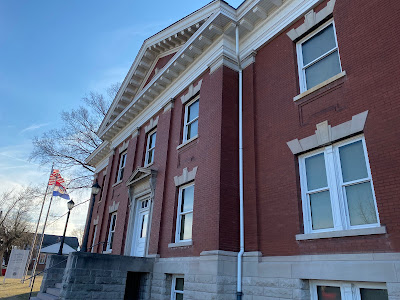
What was also a treat was discovering and visiting the Missouri Civil War Museum, located adjacent to the Jefferson Barracks National Cemetery here in St. Louis.

Missouri Civil War Museum

My reading and research this year has been less about military strategy, tactics, and battles, and more about what both civilians and soldiers experienced. For several decades after the war, officer and soldier memoirs were popular, and several publishers have made them available in digital format. The same is true for civilians, although there seem to be more memoirs by women and mothers on the Southern side than the Northern, likely reflecting the direct experience these women had.

I did pay attention to certain battles. For my story, the battles of Shiloh, Gettysburg, The Wilderness, Franklin, and Petersburg / Appomattox were the key ones, as was the whole surrender of the Army of Northern Virginia at Appomattox. The surrender, in fact, was the scene where the manuscript originally started, even if its now in another place. 

What’s also changed is that I’m reading other fictional accounts of the war – novels, stories, and poetry. Many people turned to fiction and poetry to make sense of what happened in the years between 1861 and 1865. As a friend once said, “Fiction can be truer that history.”

What follows is a list of the books I read in 2023. Given where my own fiction manuscript is, I expect to be reading far fewer in 2024. Then again, maybe not; the Civil War is a difficult subject to walk away from.

The Saddest Words: William Faulkner’s Civil War by Michael Gorda.

Irish-American Civil War Songs by Catherine Bateson.

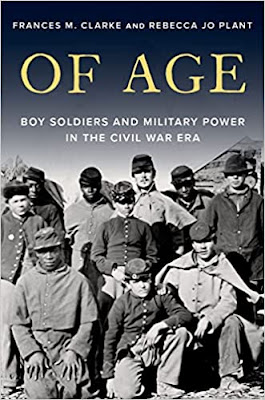
Of Age: Boy Soldiers and Military Power in the Civil War Era by Frances Clark and Rebecca Jo Plant.

An Atlas and a Map of the Civil War

Contemners and Serpents: The James Wilson Family Civil War Correspondence, edited by Theodore Fuller and Thomas Knight.

Four Years with Morgan and Forrest by Col. Thomas Berry.

Grant vs. Lee, edited by Chris Mackowski and Dan Welch.

If We Are Striking for Pennsylvania, Vol. 1, by Scott Mingus & Eric Wittenberg.

Reading John Greenleaf Whittier, the “Abolitionist Poet”, edited by Brenda Wineapple.

A Season of Slaughter: The Battle of Spotsylvania Courthouse, May 8-21,1864 – Chris Mackowski and Kristopher D. White. 

Bear in the Wilderness by Donald Waldemer. 

“No One Want to Be the Last to Die”: The Battle of Appomattox, April 8-9, 1865 by Chris Calkins. 

The Summer of ’63: Vicksburg and Tullahoma, edited by Chris Mackowski and Dan Welch. 

Man of Fire: William Tecumseh Sherman in the Civil War by Derek Maxfield. 

My Dearest Julia: The Wartime Letters of Ulysses S. Grant to His Wife.

The Wartime Journal of a Georgia Girl by Eliza Frances Andrews. 

Recollections of a Confederate Staff Officer by G. Mosely Sorrell. 

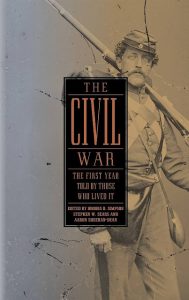
The Civil War: The First Year by Those Who Lived It – Library of America.

President Lincoln Assassinated! The Firsthand Story of the Murder, Manhunt, Trial, and Mourning by Harold Holzer.

Bloody Promenade: Recollections on a Civil War Battle by Stephen Cushman. 

Belle Boyd: Cleopatra of the Secession.

If We Are Striking for Pennsylvania, Vol. 2 by Scott Mingus and Eric Wittenberg.

The Civil War: The Second Year Told by Those Who Lived It – Library of America. 

Service with the Sixth Wisconsin Volunteers by Rufus Dawes.

The Civil War: The Third Year Told by Those Who Lived It – Library of America. 

The True Story of Andersonville Prison by James Madison Page.

The Civil War: The Final Year Told by Those Who Lived It – Library of America. 

From Western Virginia with Jackson to Spotsylvania with Lee by Peter Luebke. 

The Story of Camp Douglas by David Keller.

Lee’s Miserables: Life in the Army of Northern Virginia from the Wilderness to Appomattox by J. Tracy Power. 

Belligerent Muse: Five Northern Writers and How They Shaped Our Understanding of the Civil War by Stephen Cushman. 

Hospital Sketches by Louisa May Alcott.

Shiloh, A Novel by Shelby Foote.

John Ransom’s Andersonville Diary.

John Brown’s Body by Stephen Vincent Benet. 

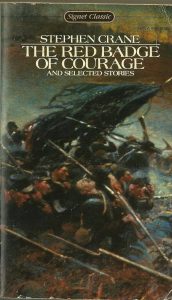
The Red Badge of Courage by Stephen Crane.

The Battle of Franklin by A.S. Peterson.

The Stolen Train by Robert Ashley. 

I also wrote four blog posts that discussed a little of my own great-grandmother’s experience in Union-occupied New Orleans and some of the struggles I had with the research. 

A Little of the Story of Wilhelmina Ostermann

When Research for Your Historical Novel Changes Your Understanding

My Enchantment with (and Addiction to?) the Civil War.

Research Can Teach You a Hard If Useful Lesson.

Top photograph, courtesy Wikimedia Commons: The Wilderness site, sometime after the battle. The dense scrub wasn’t conducive to fighting, but the dry weather made it conducive to being ignited by sparks from artillery fire.

“John Brown’s Body” by Stephen Vincent Benet

December 6, 2023 By Glynn Young 3 Comments

It’s likely the most successful poem in American literary history, selling more than 130,000 copies. And it’s epic in length.

In 1925, the highly regarded poet Stephen Vincent Benet (1898-1943) applied for a Guggenheim Foundation grant to write a long historical poem about the Civil War. The foundation came through with a $2,500 grant that supported Benet and his family. Along with a bit of freelance writing, while he researched and wrote. They moved to Paris for him to write; it was cheaper than living in the United States. He thought the effort would take seven years; in fact, it took only two. John Brown’s Body was published in 1928, catapulting Benet into literary stardom.

John Brown

The poem contributed to Benet being the most read American poet between 1918 and his death in 1943. His other poems and short stories were widely popular as well, including the short story “The Devil and Daniel Webster.” Book One of a planned nine-volume narrative of the settlement of America, entitled Western Star, was published after his death and received the Pulitzer Prize for Poetry.

The epic of John Brown’s Body, or “cyclorama,” as Benet called it, begins with John Brown’s raid on Harper’s Ferry. Even more than the Dred Scott decision, this is the event that the poet indicates was the point of no return. The raid horrified the South and electrified the North; in Benet’s hands, national unity was not possible without a war. In the poem, this first section includes some of the most vivid and dramatic imagery of the entire poem. (And I didn’t know that Brown took hostages, including the great-grandson of George Washington.)

John Brown’s Body seems rather curious today, curious in that it isn’t a rant or filled with pious superiority and virtue signaling. It’s almost scrupulously fair to both sides in the war, depicting both historical and fictional characters as they themselves would have seen and experienced the war. His main fictional characters, Jack Ellyat of Connecticut and Clay Wingate of Georgia, are drawn to popular type, Ellyat being a yeoman Connecticut farmer and Wingate being the son of a large plantation owner in Georgia.  They and their families will experience the war in radically different ways.

Benet moves the story from the Harper Ferry’s raid to the firing on Fort Sumter, battles like Bull Run and Antietam, Gettysburg, and finally the surrender at Appomattox. In addition to the fictional characters living the story, historical characters like Abraham Lincoln, Robert E. Lee, Jefferson Davis and his cabinet, Ulysses Grant and others describe what is happening. Most of the poem covers the period up to an including Gettysburg; the last two years are rather abbreviated, focusing on Appomattox. But Benet does devote a section to Sherman’s march through Georgia to the sea.

Stephen Vincent Benet

It’s rather astonishing that Benet completed the poem in two years. It still makes for an enthralling read as he tells the story of what is (the present moment notwithstanding) the most divisive period in American history, a time when America was torn apart over four years. 

Writing years after the poet’s death, historian Bruce Catton said that if you wanted to understand the Civil War, you could read the 120 volumes of the Official Records of the War of the Rebellion, or you could read John Brown’s Bodyby Benet. Benet makes for much more concise and entertaining read.

Top illustration: A drawing of U.S. Marines storming the engine house at the Harper’s Ferry federal arsenal (National Park Service). 

Why Poetry Can Make You a Better Writer

May 17, 2023 By Glynn Young Leave a Comment

Like most of my generation, I read poetry in English classes in high school. It wasn’t until I was a high school senior that I read poetry that stuck in my head. And it was T.S. Eliot’s “The Love Song of J. Alfred Prufrock” and “Four Quartets.” I read poetry in college as well, but my English literature professor gave brutal tests that put me off poetry for years. 

My professional career eventually led me to corporate speechwriting. I enjoyed the work, the executives I wrote for liked what I did, and I had that sense of “this is what I was meant to do.” It was a good friend, one who wasn’t a speechwriter, who suggested that if I were really serious about it, then I needed to read poetry. He sent me three books – the collected poems of T.S. Eliot, Wallace Stevens, and Dylan Thomas. He told me to read them and others on a regular basis.

And I thought, seriously? No speechwriter I knew read poetry regularly. Most then and now would read books about current events, developments in science, politics, and a lot of speeches written by others. But poetry? Really?

To continue reading, please see my post today at the American Christian Fiction Writers blog.

Photograph by Nick Fewings via Unsplash. Used with permission.

“Poets of the Civil War,” edited by J.D. McClatchy

November 15, 2022 By Glynn Young Leave a Comment

If I asked you to give me the name of an American Civil War poet, you would likely say “Walt Whitman.” His poems, like “O Captain! My Captain!,” “When Lilacs Last in the Dooryard Bloom’d,” and “The Wound Dresser,” certainly catapult him to the top of the Civil War poets list.  

But if I were asked to name another Civil War poet, I’d be rather stumped. Until, that is, I laid eyes on Poets of the Civil War, edited by J.D. McClatchy, published in 2005 as part of the Library of America’s American Poets Project. And I was in for a major surprise. Whitman doesn’t stand there by himself.

The list of Civil War poets includes some of the best-known writers and poets of the 19th century. William Cullen Bryant. Ralph Waldo Emerson. Henry Wadsworth Longfellow. John Greenleaf Whittier. Herman Melville. James Russell Lowell. Bret Harte. Ambrose Bierce. Sidney Lanier. 

To continue reading, please see my post today at Tweetspeak Poetry.

New Review of “Poetry at Work”

November 24, 2020 By Glynn Young Leave a Comment

Poetry at Work Poetry of the Workspace

U.K. poet James Sale has posted a review of Poetry at Work at Amazon UK. Here’s what he had to say.

“There are at least two reasons why this is an important book on poetry, as relevant now as when it was published some 6 years ago. First, Glynn Young realises that over the last 30 years poetry has been hijacked by academics; it’s no longer a poetry by the people for the people. Rather, every second poet you hear about nowadays is Professor X or Dr Y doing research on language somewhere you have never heard of. This is pernicious as it has created a cartel of influence in which the ‘experts’ congratulate each others’ books, but in reality very few people are reading them. Why would they? I cannot think of any academic poet of the last 30 years who has written one poem that stands comparison with Robert Frost’s ‘Stopping By Woods on a Snowy Evening.’

“The thing about poetry is that it is not written by ‘experts’ – its origin is very different. Which leads on to the second reason why Young’s book is so important. If poetry is highly unlikely to be found in academia, where is it to be found? The answer of course is that it will be found in real life, and more specifically, as Young shows, at work. What Young does is re-examine how poetry is everywhere around us, and that it is the poet’s at work who have so much to contribute. That said, as Young observes, ‘Poets, if they remain creative, can find themselves as road kill on the organisational highway.’ It would be good to see these ideas developed further and not allowed to remain fallow; poetry deserves to be widely disseminated and read, and this will never happen so long as the ‘academics’ have it ‘in thrall’. Read this book – it’s worth it.”

  • « Go to Previous Page
  • Page 1
  • Page 2
  • Page 3
  • Page 4
  • Interim pages omitted …
  • Page 6
  • Go to Next Page »

Footer

GY


Meet the Man

An award-winning speechwriter and communications professional, Glynn Young is the author of six novels and the non-fiction book Poetry at Work.


 01_facebook 02_twitter 26_googleplus 07_GG Talk

Copyright © 2026 Glynn Young · Site by The Willingham Enterprise · Log in | Managed by Fistbump Media LLC