• Skip to primary navigation
  • Skip to main content
  • Skip to footer

Dancing Priest

Author and Novelist Glynn Young

  • HOME
  • BLOG
  • BOOKS
    • Brookhaven
    • Dancing Prince
    • Dancing Prophet
    • Dancing Priest
    • A Light Shining
    • Dancing King
    • Poetry at Work
  • ABOUT
  • CONTACT

Writing

How I Learned the Liberal Arts Were Important

January 7, 2026 By Glynn Young Leave a Comment

I can remember the first time I knew for sure that something had gone wrong with the liberal arts. I had suspected some things were awry in our own public school district. Teachers and administrators didn’t like parents asking even basic questions about curricula. “Our focus in on critical thinking,” one principal said, “not rote learning.” Included in rote learning were penmanship, learning historical facts, memorizing multiplication tables, phonics, and just about anything associated with traditional learning.

But it was when my oldest son’s sixth-grade English teacher sent a note home on some class activity that I knew. The note was filled with spelling and grammar mistakes. When I asked if spelling and grammar were still taught, I was given some vague reference to avoiding harming children’s self-esteem. 

We pulled the plug. We moved my oldest to a Catholic school (we weren’t Catholic). Seventh grade was a parental nightmare; we quickly learned that my son was, at best, a full year or more behind his new school classmates. That year was spent homeschooling him after he finished the school day, simply to get him up to par. And this wasn’t some high-achieving superstar Catholic school. It was basic education focused on the essentials. 

We started his younger brother started kindergarten at the same Catholic school. We were not about to repeat the experience of our oldest.

As parents, we were close to heartbroken. Our public school system was one of the highest-ranked systems in the state of Missouri. We both loved the liberal arts; my wife focused on history, and my love was English literature. I had gotten a master’s degree in liberal arts at Washington University in St. Louis in 1988. And what was being taught as liberal arts was an early version of social equity and barely disguised activism. 

It’s gotten worse. By the time my oldest grandson started school, public schools weren’t even considered a possibility. He was enrolled in a classical Christian education school, and his brothers soon followed. The difference is nothing short of amazing; this is a school that cherishes the liberal arts, placing them firmly into the context of Christian faith. We’ve seen the impact, and it’s stunning.

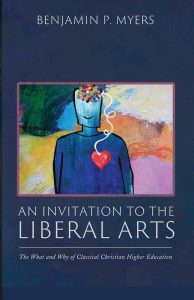
Poet, writer, and professor Benjamin Myers is a champion of the liberal arts, at a time when STEM reigns, liberal arts are in decline, and Harvard – Harvard! – has no professors left teaching Western history. Myers has written a short but important book, An Invitation to the Liberal Arts, succinctly explaining why they are important and indeed vital to society and culture.

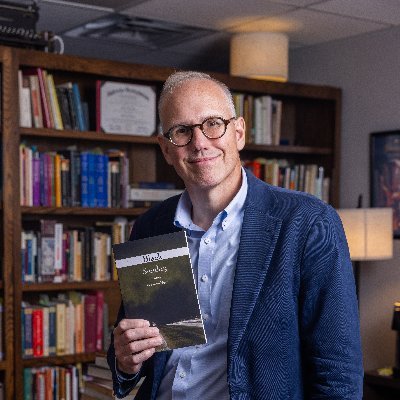
Benjamin Myers

Myers grounds liberal arts in the Bible and Christian tradition. He examines two fundamental questions that undergird the liberal arts – what is man, and why the West. He stresses the importance of the virtues of humility, patience, attentiveness, and selflessness.

He cites Plato in developing the historical cardinal virtues of temperance, fortitude, justice, and prudence, which the Apostle Paul amended by adding faith, hope and love. Those seven virtues are the foundation of what we know as Western civilization, and it will simply not survive without them. Myers foes on to explore the importance of the liberal arts for leadership and how what we call qualities of leadership flow directly from the virtues of Western civilization.

And his conclusion: “When you undertake a liberal arts education, you are not just doing something for yourself. You are, rather, joining a great project of cultural renewal.” In short, the study of liberal arts is an education, and it doesn’t end with a college degree. It is lifelong education.

Myers, associate professor of literature and poetry writing at Oklahoma Baptist University, served as poet laureate of Oklahoma from 2015 to 2016. He is the author of four collections, Elegy for Trains (2011), Lapse Americana (2013), Black Sunday (2019), and At the Family Book of Martyrs (2023). Elegy for Trains won the Oklahoma Book Award for Poetry, and his poetry has been published in numerous literary journals. Myers has also published A Poetic of Orthodoxy: Christian Truth as Aesthetic Foundation (2020). He received his B.A. degree from the University of the Ozarks and his M.A. and Ph.D. degrees in literature from Washington University in St. Louis.

I can’t recommend An Invitation to the Liberal Arts highly enough. As short as it is (all of 122 pages), it is packed with insight, understanding, and a love for its subject. It’s a call to action for our entire lives – a call aimed at being part of the great project of renewing the culture.

Related:

Benjamin Myers Takes on Ambiguity and Belonging.

Benjamin Myers and The Family Book of Martyrs.

Benjamin Myers and Black Sunday.

Pinocchio in Nineveh: Elegy for Trains by Benjamin Myers.

Top photograph by Susan Wilkinson via Unsplash. Used with permission.

“A Month in Siena” by Hisham Matar

December 10, 2025 By Glynn Young Leave a Comment

Hisham Matar won the Pulitzer Prize for biography for The Return, the story of his search for his father, who’d been kidnapped and presumably killed by the Libyan government. His first novel, In the Country of Men, won several recognitions and awards. Virtually every book he writes wins awards, including the National Book Critics Circle Award for his novel, My Friends, in 2025.

There’s one exception, and it’s a gem of a story. 

In 2014 or 2015, Matar traveled to Siena, Italy, as something of a retreat or rest. He was still recovering from the intensity of writing The Return, not to mention the number of widespread accolades it received. Siena was meant to be a respite, and it was. He describes that respite in A Month in Siena, a non-fiction work about his own life, the churches in the town, and the artwork contained in those churches and the local museum. 

“I found something in Siena for which I am yet to have a description,” he writes, but for which I have been searching, and it came at a resonant juncture: the time between having completed a book and seeing it made public; but also at that strange meeting point of two contradictory events—the bright achievement of having finished a book and the dark maturation of the likelihood, inescapable now, that I will have to spend the rest of my days without even knowing what happened to my father, how or when he died or where his remains might be.”

His father had been a Libyan diplomat who became a dissident. The family was living in exile in Cairo when agents of the Qaffadi regime in Libya kidnapped his father, who disappeared inside Libya. 

Matar finds solace in art, and specifically, the art of the Sienese School, which flourished largely in the 13th and 14thcenturies. (The National Gallery in London hosted an exhibition this year on “Siena: The Rise of Painting.”) The writer visits churches for specific paintings and spends so much time at Siena’s art museums that museum guards come to see him as something of a fixture. He could sit for an hour or more, and it was often more, simply absorbing a particular painting. Some of the artists may be familiar, like Caravaggio; others are well known in the art world but perhaps less by the general public, like Ambrogio Lorenzetti and Michelangelo Pistoletto.

Hisham Matar

It’s a small book, about 130 pages, and it includes reproductions of the paintings Matar studied. It’s also a quiet book; Matar conveys the sense of retreat and rest he was seeking through his style, the words he uses, and the stories he tells.

In addition to his numerous literary recognitions, Matar divides his time between New York and London. He teaches literature at Barnard College, Columbia University.

A Month in Siena will likely instill a similar desire that Matar had – to walk the streets of this ancient walled city, meet its people, eat its food, and explore its churches and museums. But you especially want to sit and study its art. 

Top photograph: An aerial view of Siena by Patrick Schneider via Unsplash. Used with permission.

The Christmas Nobody Wanted

December 8, 2025 By Glynn Young Leave a Comment

The Christmas issue of Cultivating Oaks Press is now online, and I have a short story, “The Christmas Nobody Wanted.” It includes essays, reflections, and even a recipe by Andrew Roycroft, Amelia Friedline, Annie Nardone, Junius Johnson, Matthew Clark, Adam Nettesheim, Marbieth Barber, Hillevi Anne Peterson, and several others. 

The theme of the issue is “Making Room to Receive,” and you can access all the posts here. 

Photograph by Jessica Fadel via Unsplash. Used with permission.

“White Week and Other Stories” by Wojciech Chmielewski

November 19, 2025 By Glynn Young 2 Comments

The Polish writer Wojciech Chmielewski isn’t exactly a household name in America, and for a very good reason. Up to now, none of his writing has been published in English. Wiseblood Books has changed that with the publication of White Week and Other Stories, translated by Katarzyna Bylow. 

Chmielewski is best known in Poland for his short stories, which have won awards in his home country. But he’s also an essayist, literary critic, and playwright for Polich Radio Theatre. This collection of stories, many previously published in Polish literary journals and anthologies. Re largely about Warsaw, a Warsaw that is there and the city that used to be. (Much of the city was destroyed during World War II and then rebuilt under communist rule.)

The stories are, in a word, haunting. The opening story is about the area near Grzybowski Square, with its church on one side and construction underway nearby. We see scenes of a marketplace, a boy selling strawberries (“Polish strawberries…all freesh”), an alleyway full of peonies, a group of drunken men arguing, a young woman waiting for someone, and the empty park with its playground. The story contains no named characters or dialogue; the character is the urban landscape itself. Slowly the reader comes to understand that this area was once part of the Warsaw Ghetto, which tens of thousands of Jews were confined before deportation to Auschwitz.

And so the stories go. Chmielewski will return to this theme of the Warsaw Ghetto, but along the way we’ll experience a religious procession (with a man dreaming about snakes), a woman working on her new novel (with some of the characters becoming parts of other stories), a man with an unfaithful wife who finds solace in eating dog food, a village that exists beneath the sand of a beach area, a man who pays a visit and seems to enjoy reading in a madhouse, conversations in a restaurant during a rainstorm, a saint awake in the dark, a young man in love with a girl whose face experiences allergic reactions, the title story about remembering a religious confirmation celebration, and others.

Like that opening story of the visible landscape not seeming to remember the history, all of the stories have that sense of “missing the context.” We’re there, but we don’t understand. We undertake our daily life, but we’re ignorant of what these streets and buildings have seen, what’s come before us, what has shaped this landscape just as it’s shaping us. 

Yes, haunting is the operative word for these stories.

Top photograph: A scene of Old Town Warsaw by Victor Malyushev via Unsplash. Used with permission.

Single Dads in Non-Fiction and Fiction 

November 12, 2025 By Glynn Young 1 Comment

It was only coincidental. I read Joseph Luzzi’s In a Dark Wood: A Memoir (2015) and the next in my reading pile was Unconditional: A Novel by Stephen Kogon. Both books, one non-fiction and the other fiction, told the stories of young men suddenly finding themselves single fathers.

Luzzi is a professor of Italian and teaches at Bard College in New York. In 2007, just as his lecture class was about to begin, he noticed a security guard come into the room. The message was awful; Luzzi’s wife Katherine had been in an automobile accident and was seriously injured. Katherine was also eight-and-half months pregnant. The baby, a little girl, was delivered and survived.  Katherine didn’t.

And thus began a journey of grief, the loss of his wife, navigating funeral and death arrangements, caring for a newborn, and eventually dealing with lawsuits filed against Katherine’s estate and countersuits filed against the other driver. And that on top of trying to resume a “normal” life, as if life could ever be normal after that.

Luzzi turned to the poet Dante and his Divine Comedy. Like Virgil serves as Dante’s guide in the great poem, Dante served as Luzzi’s guide. He tells a moving, heartbreaking story, a man overwhelmed by loss and grief and with the responsibility of a child. If there is a hero in this story, Luzzi might be the first to admit it was his Italian mother, who essentially moves in to care for her granddaughter.

In addition to The Divine Comedy: A Biography, Luzzi has also published Romantic Europe and the Ghost of Italy (2008), A Cinema of Poetry: The Aesthetics of the Italian Art Film (2014), My Two Italies (2014), In a Dark Wood: What Dante Taught Me About Grief, Healing, and the Mysteries of Love (2015), and Botticelli’s Secret: The Lost Drawings and the Rediscovery of the Renaissance (2022). He received his Ph.D. degree from Yale University, and he teaches literature, film, and Italian Studies. He is also the founder of the Virtual Book Club, which focuses on the world’s great books and storytelling.

Writer and filmmaker Stephen Kogon has previously published a young adult novel and two children’s stories, and Unconditional is his first aimed at adult reader. It tells the story of Matthew Russell, a 35-year-old bachelor who is a photographer for the Arizona Cardinals in Phoenix. He’s attending the retirement part of his best friend (and football team member) Kenny when he receives the telephone call that changes his life. 

The Albuquerque police explain that Matthew’s estranged brother Paul and Paul’s girlfriend have been killed in an automobile crash. Apparent suicides, they’ve left behind a premature baby girl who’s in a hospital neonatal intensive care unit. The only note they left behind read “Please take care of the baby.”

And Matthew is the only person capable of doing that. Overwhelmed with loss, not to mention having to manage his brother’s death and funeral, he has to decide what to do with Allie, his new niece. What he decides is that he will take care of her, even if it means radically changing his life.

It’s a moving tory, sometimes borderline sentimental, but that’s of little account when you become engrossed with the story. Matthew surrenders his life to fatherhood, and that includes changing jobs and putting aside his relationship with his on-again, off-again girlfriend Monica. 

Kogon previously published Max Mooth, Cyber Sleuth and the Case of the Zombie Virus and two children’s stories, Squiglet the Ryming Piglet and Squiglet the Piglet Goes on a Nature Hike. His first film, Dance Baby Dance, was released in 2018. He’s also written screenplays, comedy sketches, and comic strips. 

Related:

Dante’s Divine Comedy: A Biography by Joseph Luzzi.

Top photograph by Illia Panasenko via Unsplash. Used with permission.

Forgetting All the Illustrations I Studied for a Non-Illustrated Book

November 5, 2025 By Glynn Young Leave a Comment

My historical novel Brookhaven has no illustrations. I spent an estimated third of my research time hunting for them.

The novel is set in two different time periods – the Civil War and immediately after, and then 50 years later, in 1915. From the beginning of the first draft, I quickly learned that I had to see both periods. I had to see what people wore, what they ate, how they traveled, what their homes were like, what their streets and communities were like, and more. 

From early on, I had to spend far more time looking than reading, and vastly more time looking than writing. Thos 50 years were some of the momentous in American history – rapid industrialization during the war and after, wagons and carriages giving way to automobiles, the advent of flight, the rapid spread of newspapers supported by wire services like Associated Press, rapid changes in the position of women in society, and mechanized agriculture becoming the rule rather than the exception.

To continue reading, please see my post today at the ACFW Blog.

Illustration: Men’s golfing fashions in 1915.

  • « Go to Previous Page
  • Page 1
  • Page 2
  • Page 3
  • Page 4
  • Page 5
  • Page 6
  • Interim pages omitted …
  • Page 46
  • Go to Next Page »

Footer

GY


Meet the Man

An award-winning speechwriter and communications professional, Glynn Young is the author of six novels and the non-fiction book Poetry at Work.


 01_facebook 02_twitter 26_googleplus 07_GG Talk

Copyright © 2026 Glynn Young · Site by The Willingham Enterprise · Log in | Managed by Fistbump Media LLC