I can remember the first time I knew for sure that something had gone wrong with the liberal arts. I had suspected some things were awry in our own public school district. Teachers and administrators didn’t like parents asking even basic questions about curricula. “Our focus in on critical thinking,” one principal said, “not rote learning.” Included in rote learning were penmanship, learning historical facts, memorizing multiplication tables, phonics, and just about anything associated with traditional learning.
But it was when my oldest son’s sixth-grade English teacher sent a note home on some class activity that I knew. The note was filled with spelling and grammar mistakes. When I asked if spelling and grammar were still taught, I was given some vague reference to avoiding harming children’s self-esteem.
We pulled the plug. We moved my oldest to a Catholic school (we weren’t Catholic). Seventh grade was a parental nightmare; we quickly learned that my son was, at best, a full year or more behind his new school classmates. That year was spent homeschooling him after he finished the school day, simply to get him up to par. And this wasn’t some high-achieving superstar Catholic school. It was basic education focused on the essentials.
We started his younger brother started kindergarten at the same Catholic school. We were not about to repeat the experience of our oldest.
As parents, we were close to heartbroken. Our public school system was one of the highest-ranked systems in the state of Missouri. We both loved the liberal arts; my wife focused on history, and my love was English literature. I had gotten a master’s degree in liberal arts at Washington University in St. Louis in 1988. And what was being taught as liberal arts was an early version of social equity and barely disguised activism.
It’s gotten worse. By the time my oldest grandson started school, public schools weren’t even considered a possibility. He was enrolled in a classical Christian education school, and his brothers soon followed. The difference is nothing short of amazing; this is a school that cherishes the liberal arts, placing them firmly into the context of Christian faith. We’ve seen the impact, and it’s stunning.
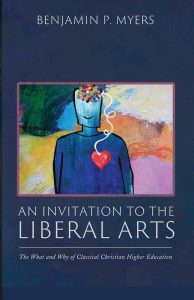
Poet, writer, and professor Benjamin Myers is a champion of the liberal arts, at a time when STEM reigns, liberal arts are in decline, and Harvard – Harvard! – has no professors left teaching Western history. Myers has written a short but important book, An Invitation to the Liberal Arts, succinctly explaining why they are important and indeed vital to society and culture.
Myers grounds liberal arts in the Bible and Christian tradition. He examines two fundamental questions that undergird the liberal arts – what is man, and why the West. He stresses the importance of the virtues of humility, patience, attentiveness, and selflessness.
He cites Plato in developing the historical cardinal virtues of temperance, fortitude, justice, and prudence, which the Apostle Paul amended by adding faith, hope and love. Those seven virtues are the foundation of what we know as Western civilization, and it will simply not survive without them. Myers foes on to explore the importance of the liberal arts for leadership and how what we call qualities of leadership flow directly from the virtues of Western civilization.
And his conclusion: “When you undertake a liberal arts education, you are not just doing something for yourself. You are, rather, joining a great project of cultural renewal.” In short, the study of liberal arts is an education, and it doesn’t end with a college degree. It is lifelong education.
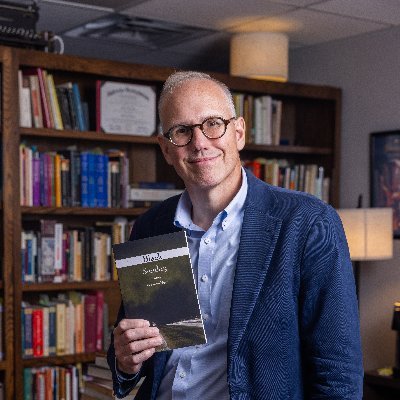
Myers, associate professor of literature and poetry writing at Oklahoma Baptist University, served as poet laureate of Oklahoma from 2015 to 2016. He is the author of four collections, Elegy for Trains (2011), Lapse Americana (2013), Black Sunday (2019), and At the Family Book of Martyrs (2023). Elegy for Trains won the Oklahoma Book Award for Poetry, and his poetry has been published in numerous literary journals. Myers has also published A Poetic of Orthodoxy: Christian Truth as Aesthetic Foundation (2020). He received his B.A. degree from the University of the Ozarks and his M.A. and Ph.D. degrees in literature from Washington University in St. Louis.
I can’t recommend An Invitation to the Liberal Arts highly enough. As short as it is (all of 122 pages), it is packed with insight, understanding, and a love for its subject. It’s a call to action for our entire lives – a call aimed at being part of the great project of renewing the culture.
Related:
Benjamin Myers Takes on Ambiguity and Belonging.
Benjamin Myers and The Family Book of Martyrs.
Benjamin Myers and Black Sunday.
Pinocchio in Nineveh: Elegy for Trains by Benjamin Myers.
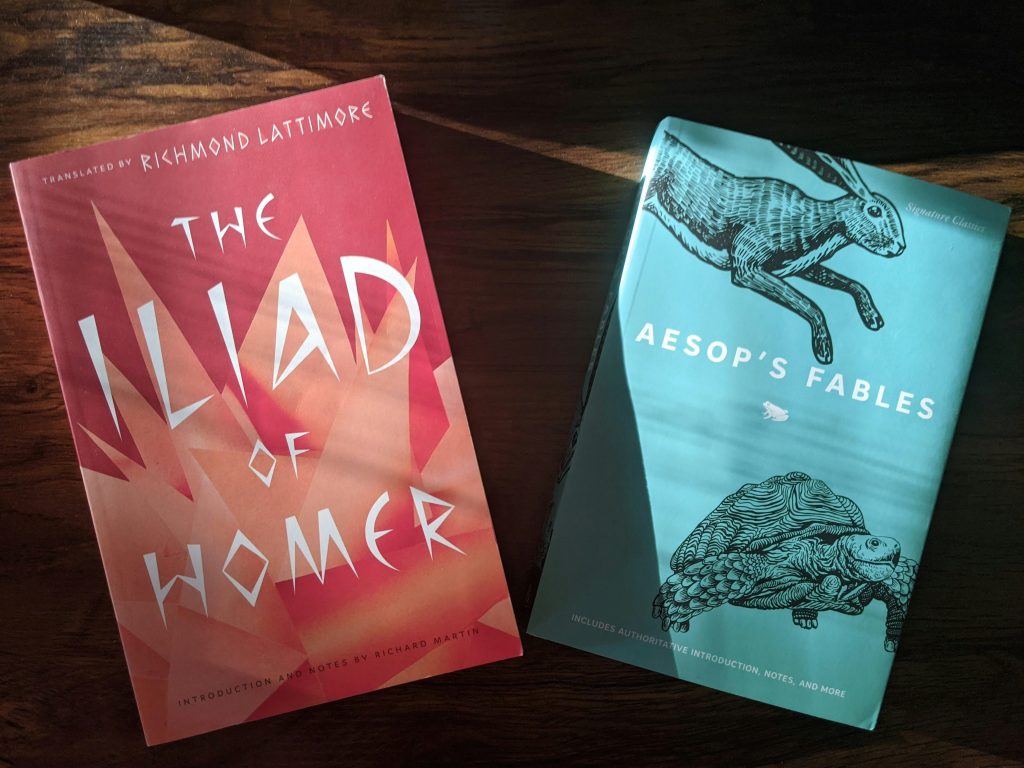
Top photograph by Susan Wilkinson via Unsplash. Used with permission.


Leave a Reply