• Skip to primary navigation
  • Skip to main content
  • Skip to footer

Dancing Priest

Author and Novelist Glynn Young

  • HOME
  • BLOG
  • BOOKS
    • Brookhaven
    • Dancing Prince
    • Dancing Prophet
    • Dancing Priest
    • A Light Shining
    • Dancing King
    • Poetry at Work
  • ABOUT
  • CONTACT

book review

How I Learned the Liberal Arts Were Important

January 7, 2026 By Glynn Young Leave a Comment

I can remember the first time I knew for sure that something had gone wrong with the liberal arts. I had suspected some things were awry in our own public school district. Teachers and administrators didn’t like parents asking even basic questions about curricula. “Our focus in on critical thinking,” one principal said, “not rote learning.” Included in rote learning were penmanship, learning historical facts, memorizing multiplication tables, phonics, and just about anything associated with traditional learning.

But it was when my oldest son’s sixth-grade English teacher sent a note home on some class activity that I knew. The note was filled with spelling and grammar mistakes. When I asked if spelling and grammar were still taught, I was given some vague reference to avoiding harming children’s self-esteem. 

We pulled the plug. We moved my oldest to a Catholic school (we weren’t Catholic). Seventh grade was a parental nightmare; we quickly learned that my son was, at best, a full year or more behind his new school classmates. That year was spent homeschooling him after he finished the school day, simply to get him up to par. And this wasn’t some high-achieving superstar Catholic school. It was basic education focused on the essentials. 

We started his younger brother started kindergarten at the same Catholic school. We were not about to repeat the experience of our oldest.

As parents, we were close to heartbroken. Our public school system was one of the highest-ranked systems in the state of Missouri. We both loved the liberal arts; my wife focused on history, and my love was English literature. I had gotten a master’s degree in liberal arts at Washington University in St. Louis in 1988. And what was being taught as liberal arts was an early version of social equity and barely disguised activism. 
It’s gotten worse. By the time my oldest grandson started school, public schools weren’t even considered a possibility. He was enrolled in a classical Christian education school, and his brothers soon followed. The difference is nothing short of amazing; this is a school that cherishes the liberal arts, placing them firmly into the context of Christian faith. We’ve seen the impact, and it’s stunning.

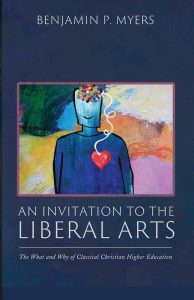
Poet, writer, and professor Benjamin Myers is a champion of the liberal arts, at a time when STEM reigns, liberal arts are in decline, and Harvard – Harvard! – has no professors left teaching Western history. Myers has written a short but important book, An Invitation to the Liberal Arts, succinctly explaining why they are important and indeed vital to society and culture.
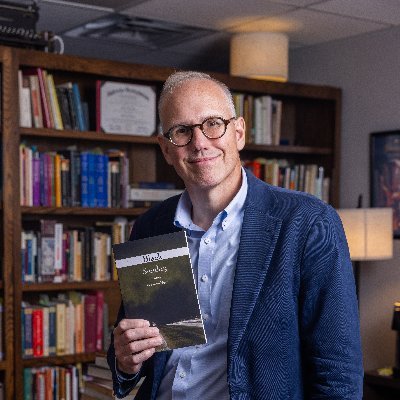
Benjamin Myers

Myers grounds liberal arts in the Bible and Christian tradition. He examines two fundamental questions that undergird the liberal arts – what is man, and why the West. He stresses the importance of the virtues of humility, patience, attentiveness, and selflessness.

He cites Plato in developing the historical cardinal virtues of temperance, fortitude, justice, and prudence, which the Apostle Paul amended by adding faith, hope and love. Those seven virtues are the foundation of what we know as Western civilization, and it will simply not survive without them. Myers foes on to explore the importance of the liberal arts for leadership and how what we call qualities of leadership flow directly from the virtues of Western civilization.

And his conclusion: “When you undertake a liberal arts education, you are not just doing something for yourself. You are, rather, joining a great project of cultural renewal.” In short, the study of liberal arts is an education, and it doesn’t end with a college degree. It is lifelong education.

Myers, associate professor of literature and poetry writing at Oklahoma Baptist University, served as poet laureate of Oklahoma from 2015 to 2016. He is the author of four collections, Elegy for Trains (2011), Lapse Americana (2013), Black Sunday (2019), and At the Family Book of Martyrs (2023). Elegy for Trains won the Oklahoma Book Award for Poetry, and his poetry has been published in numerous literary journals. Myers has also published A Poetic of Orthodoxy: Christian Truth as Aesthetic Foundation (2020). He received his B.A. degree from the University of the Ozarks and his M.A. and Ph.D. degrees in literature from Washington University in St. Louis.

I can’t recommend An Invitation to the Liberal Arts highly enough. As short as it is (all of 122 pages), it is packed with insight, understanding, and a love for its subject. It’s a call to action for our entire lives – a call aimed at being part of the great project of renewing the culture.

Related:

Benjamin Myers Takes on Ambiguity and Belonging.

Benjamin Myers and The Family Book of Martyrs.

Benjamin Myers and Black Sunday.

Pinocchio in Nineveh: Elegy for Trains by Benjamin Myers.

Top photograph by Susan Wilkinson via Unsplash. Used with permission.
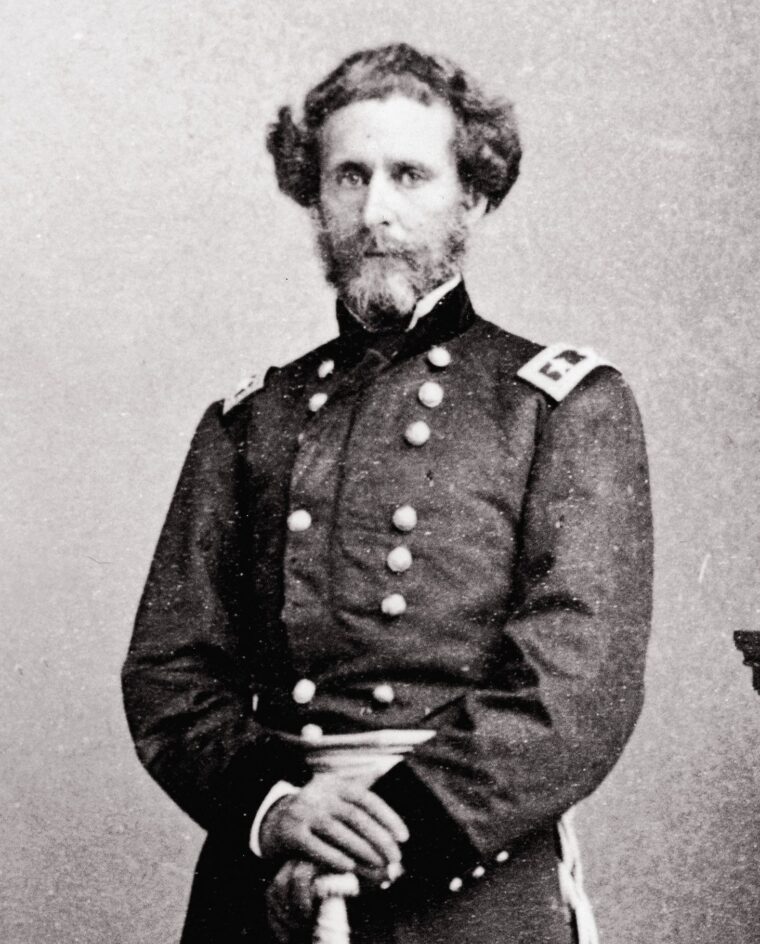
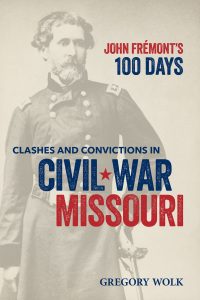
“John Fremont’s 100 Days” by Gregory Wolk

December 31, 2025 By Glynn Young Leave a Comment

The name John Fremont (1813-1890) evokes images of Manifest Destiny, exploration of the western United States, the first Republican candidate for President (18560, and the separation of California from Mexico. Less well-known is his very brief role in the American Civil War. 

For slightly more than three months in 1861, he was the commander of the U.S. Army’s Western Department, stretching from Illinois to the Rocky Mountains and headquartered in St. Louis. Those three months are now detailed in John Fremont’s 100 Days: Clashes and Convictions in Civil War Missouri by Gregory Wolk and published by the Missouri Historical Society.

John Fremonts 100 Days

Wolk has a gift. He meticulously documents the 100 days of Fremont’s office, but he tells it in a storytelling way. This isn’t some dry account of dates, names, and events, but a critical time in American history brought to life.

Fremont was appointed by President Lincoln, and almost from the beginning the man faced political opposition that only grew, particularly from the influential brothers Frank and Montgomery Blair, who had strong St. Louis ties and interests and their own preferences for military leadership in the region.

As Wolk points out, Fremont often didn’t help his own cause. He received his appointment while he was in Europe. He quickly returned to New York but waited there for the arrival of his wife Jessie and their children from California (via a rail crossing in the Panama isthmus. He likely waited far too long for a President and politicians who wanted quick action. 

Once he reached St. Louis, he faced a deteriorating military situation – secessionist unrest in the northeast and southeast parts of the state (Missouri was a border slave state with a governor who almost succeeded in moving Missouri into the Confederacy), the pro-Confederacy State Guard, and Confederate forces moving up from Arkansas. The Battle of Wilson’s Creek, south of Springfield, occurred in this period, a defeat for Union forces. Critics believed Fremont had authorized too little and too late. Wolk does not that it was this battle that likely gave birth to the profession of war correspondent, with a reporter publishing the story and being almost inundated with contract offers and competitors.

Gregory Wolk

Wolk includes vignettes about some of the key players, including Fremont’s wife, Jessie Benton Fremont, daughter of Thomas Hart Benton and a force in her own right. She took her husband’s defense directly to Lincoln (the meeting didn’t go well) and was his public relations manager (long before the term was invented), defender, and chronicler. Also noted is one of the early involvements in the war by an officer named Ulysses S. Grant.

Wolk is a retired attorney, previously general counsel of Three Rivers Systems, Inc., a St. Louis-based developer of academic management software. He has been executive director of Missouri’s Civil War Heritage Foundation, a program coordinator for the Missouri Humanities Council, and currently a member of the board of directors of the National US Grant Trail Association. He previously published Friend and Foe Alike: A Tour Guide of Missouri’s Civil War (2010), which describes the 237 Civil War sites in the state. He lives with his family in Webster Groves in suburban St. Louis.

In John Fremont’s 100 Days, Wolk tells a great story. Fremont emerges as a leader who made mostly political mistakes, who didn’t perceive the Administration forces growing against him. The book also conveys the sense of one of the key reasons the North appeared to be on the road to ultimate defeat – too many politicians trying to fight battles and second-guessing from the safety of their offices in Washington, D.C. 

Related:

Kirkwood’s Grant Historian – Webster-Kirkwood Times.

“A Month in Siena” by Hisham Matar

December 10, 2025 By Glynn Young Leave a Comment

Hisham Matar won the Pulitzer Prize for biography for The Return, the story of his search for his father, who’d been kidnapped and presumably killed by the Libyan government. His first novel, In the Country of Men, won several recognitions and awards. Virtually every book he writes wins awards, including the National Book Critics Circle Award for his novel, My Friends, in 2025.

There’s one exception, and it’s a gem of a story. 

In 2014 or 2015, Matar traveled to Siena, Italy, as something of a retreat or rest. He was still recovering from the intensity of writing The Return, not to mention the number of widespread accolades it received. Siena was meant to be a respite, and it was. He describes that respite in A Month in Siena, a non-fiction work about his own life, the churches in the town, and the artwork contained in those churches and the local museum. 

“I found something in Siena for which I am yet to have a description,” he writes, but for which I have been searching, and it came at a resonant juncture: the time between having completed a book and seeing it made public; but also at that strange meeting point of two contradictory events—the bright achievement of having finished a book and the dark maturation of the likelihood, inescapable now, that I will have to spend the rest of my days without even knowing what happened to my father, how or when he died or where his remains might be.”

His father had been a Libyan diplomat who became a dissident. The family was living in exile in Cairo when agents of the Qaffadi regime in Libya kidnapped his father, who disappeared inside Libya. 

Matar finds solace in art, and specifically, the art of the Sienese School, which flourished largely in the 13th and 14thcenturies. (The National Gallery in London hosted an exhibition this year on “Siena: The Rise of Painting.”) The writer visits churches for specific paintings and spends so much time at Siena’s art museums that museum guards come to see him as something of a fixture. He could sit for an hour or more, and it was often more, simply absorbing a particular painting. Some of the artists may be familiar, like Caravaggio; others are well known in the art world but perhaps less by the general public, like Ambrogio Lorenzetti and Michelangelo Pistoletto.

Hisham Matar

It’s a small book, about 130 pages, and it includes reproductions of the paintings Matar studied. It’s also a quiet book; Matar conveys the sense of retreat and rest he was seeking through his style, the words he uses, and the stories he tells.

In addition to his numerous literary recognitions, Matar divides his time between New York and London. He teaches literature at Barnard College, Columbia University.

A Month in Siena will likely instill a similar desire that Matar had – to walk the streets of this ancient walled city, meet its people, eat its food, and explore its churches and museums. But you especially want to sit and study its art. 

Top photograph: An aerial view of Siena by Patrick Schneider via Unsplash. Used with permission.

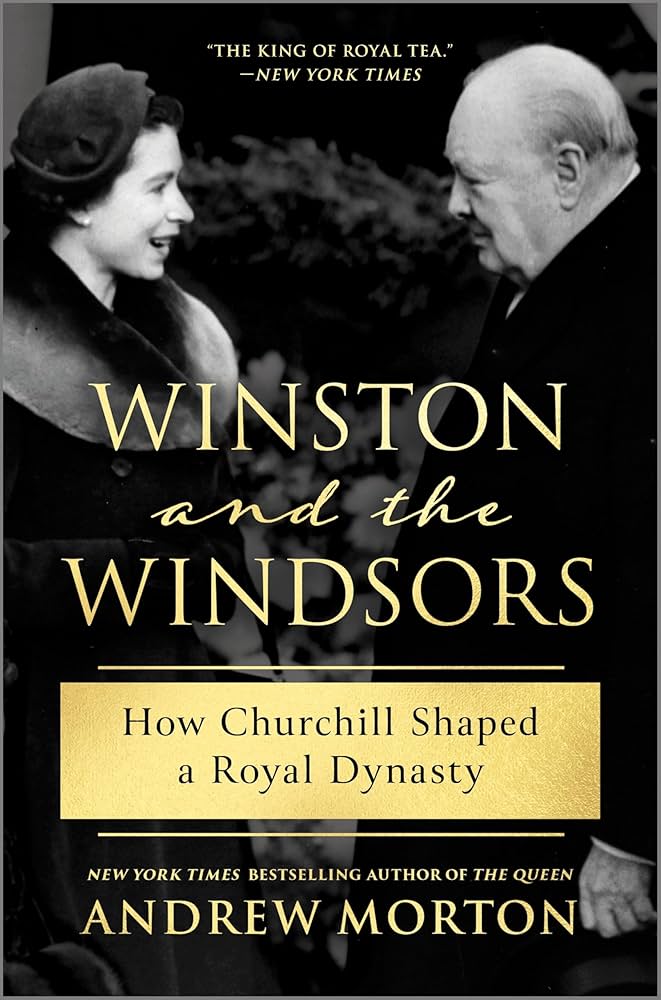
“Winston and the Windsors” by Andrew Morton

November 26, 2025 By Glynn Young Leave a Comment

In late October, we were back at the St. Louis County Library. We had previously attended the talk by mystery writer Elizabeth George; this time it was the British writer, Andrew Morton.

Morton became an almost-household name in Britain in the 1990s when he wrote not just “a” book but “the” book about Princess Diana – the one she agreed to do. Diana: Her True Story nearly toppled the British monarchy – or at least Diana’s revelations seriously damaged the institution. 

Morton has since written books about Monica Lewinsky, Madonna, David and Victoria Beckham, Tom Cruise, Angelina Jolie, and William and Catherine when they were still the duke and duchess of Cambridge. You might say he’s an A-List celebrity biographer.

But his more recent attention has turned from contemporary celebrities to those who are more historical. And that’s what we were there to hear him talk about –Winston and the Windsors: How Churchill Shaped a Royal Dynasty. 

This is a biographical work, but it’s not a biography of Winston Churchill, and it’s not a biography of the Windsor family. Instead, it’s the story of the relationship between Churchill and the royals. No one individual had more influence on the Windsors that Churchill did, with his career bookended by Queen Victoria and Queen Elizabeth II and four kings in between.

From early on, Churchill was seen as something of a loose cannon, but as least from Edward VI onward, the royals recognized that no one was more faithful to the idea of the British monarchy than Churchill. 

Edward VI liked him, even as Churchill could sometimes infuriate him/ George V started out frosty and remote, disdaining Churchill until he began to understand the man better. Edward VII, who gave up his throne, had hoped Churchill might have found a way for him to marry Wallis Simpson and keep the throne, but it never was accepted by the British establishment. (According to Morton during his talk, the royal family initially welcomes Walliss because the kept the Prince of Wales’s drinking under control.)

Considerable space in the book is devoted to what had to be the most important relationship Churchill had with the royals – that of George VI, unexpectedly thrust onto the throne by his brother’s abdication and the one who, with Churchill at his side, led Britain through the very dark days of World War II. Their friendship started off rather cool – George VI and his wife Elizabeth knew how close Churchill had been to Edward VII. But his steadfastness and devotion to the monarchy won them over.

Andrew Morton

It was that eventual closeness that led Churchill to adopt an almost fatherly role with Elizabeth II, when she became queen at 25 on the death of her father. And it was Churchill who traveled to Scotland to tell Elizabeth’s mother than she had to get over her grief and return to London: Elizabeth and the royal family needed her. That was likely the catalyst for her to become affectionately known as the “Queen Mum.” (An interesting side note: Morton says that Churchill played the decisive role in quashing the plan to rename the family “Mountbatten” upon Elizabeth’s succession to the throne.)

Winston and the Windsors is a well-done story of an important relationship that lasted, with all its ups and downs, for some 60 years. It’s fully grounded in historical records; Morton says he spent considerable time in the Churchill Archive at Cambridge University, the archives at Windsor Castle, and the archives at Blenheim Palace, where Churchill was born. That effort shows. So does Morton’s ability to take well-plowed ground and tell a story that’s fresh and fascinating.

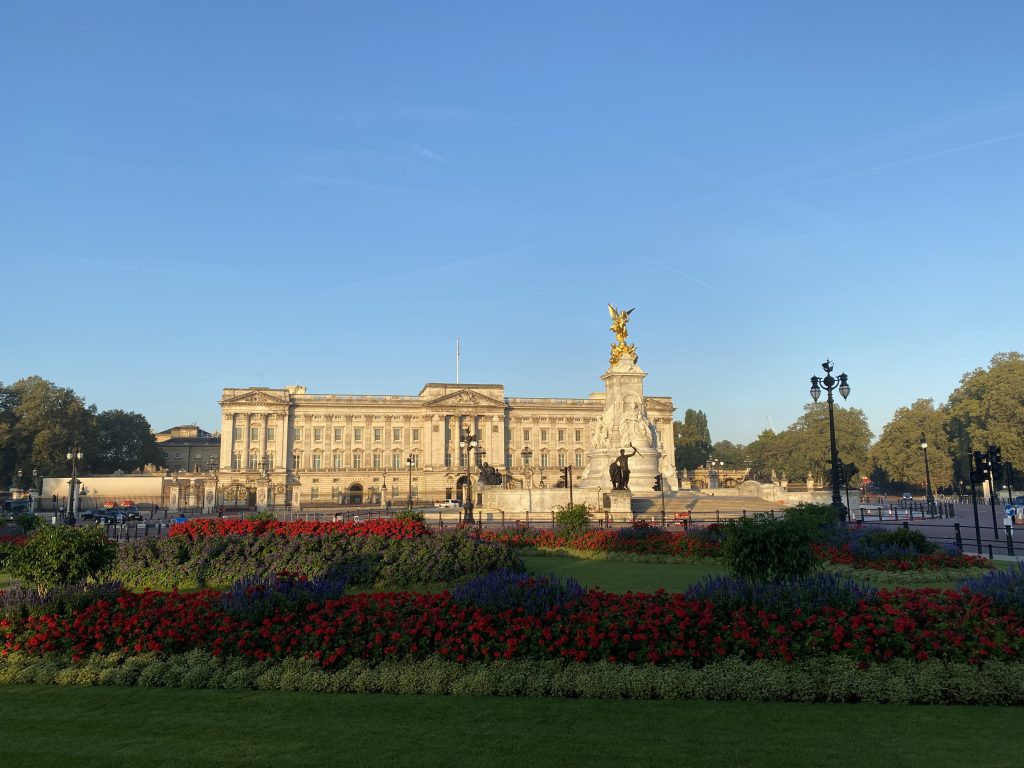
Top photograph: Buckingham Palace.

“White Week and Other Stories” by Wojciech Chmielewski

November 19, 2025 By Glynn Young 2 Comments

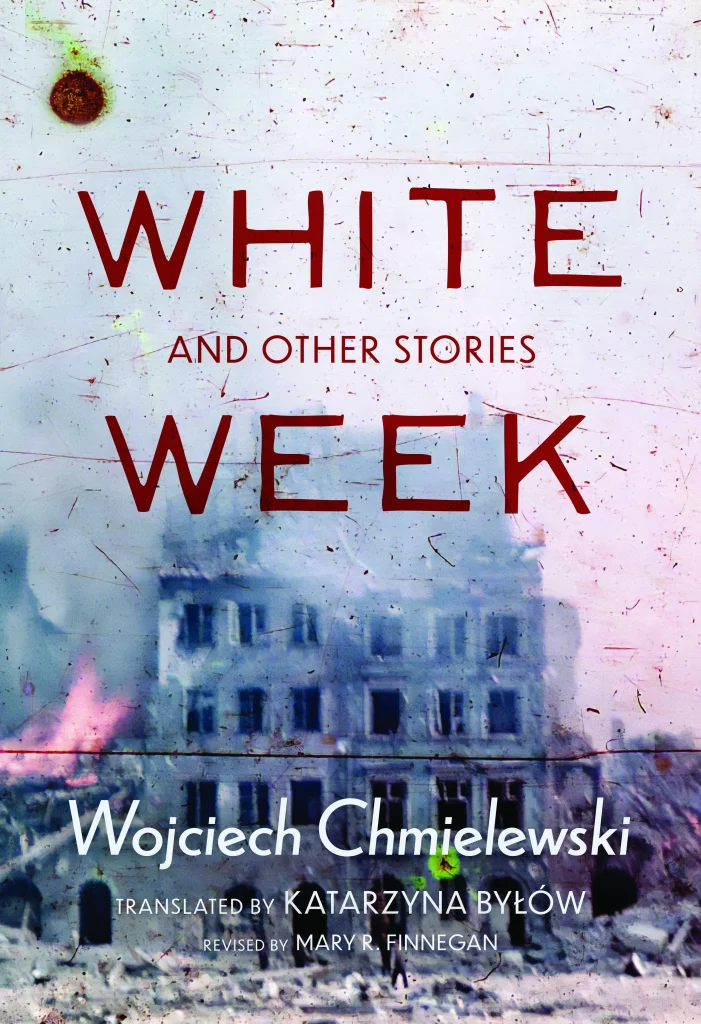
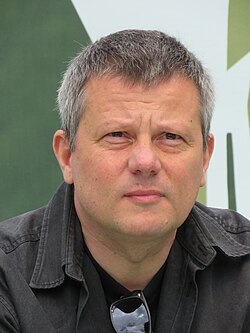
The Polish writer Wojciech Chmielewski isn’t exactly a household name in America, and for a very good reason. Up to now, none of his writing has been published in English. Wiseblood Books has changed that with the publication of White Week and Other Stories, translated by Katarzyna Bylow. 

Chmielewski is best known in Poland for his short stories, which have won awards in his home country. But he’s also an essayist, literary critic, and playwright for Polich Radio Theatre. This collection of stories, many previously published in Polish literary journals and anthologies. Re largely about Warsaw, a Warsaw that is there and the city that used to be. (Much of the city was destroyed during World War II and then rebuilt under communist rule.)

The stories are, in a word, haunting. The opening story is about the area near Grzybowski Square, with its church on one side and construction underway nearby. We see scenes of a marketplace, a boy selling strawberries (“Polish strawberries…all freesh”), an alleyway full of peonies, a group of drunken men arguing, a young woman waiting for someone, and the empty park with its playground. The story contains no named characters or dialogue; the character is the urban landscape itself. Slowly the reader comes to understand that this area was once part of the Warsaw Ghetto, which tens of thousands of Jews were confined before deportation to Auschwitz.

And so the stories go. Chmielewski will return to this theme of the Warsaw Ghetto, but along the way we’ll experience a religious procession (with a man dreaming about snakes), a woman working on her new novel (with some of the characters becoming parts of other stories), a man with an unfaithful wife who finds solace in eating dog food, a village that exists beneath the sand of a beach area, a man who pays a visit and seems to enjoy reading in a madhouse, conversations in a restaurant during a rainstorm, a saint awake in the dark, a young man in love with a girl whose face experiences allergic reactions, the title story about remembering a religious confirmation celebration, and others.

Like that opening story of the visible landscape not seeming to remember the history, all of the stories have that sense of “missing the context.” We’re there, but we don’t understand. We undertake our daily life, but we’re ignorant of what these streets and buildings have seen, what’s come before us, what has shaped this landscape just as it’s shaping us. 

Yes, haunting is the operative word for these stories.

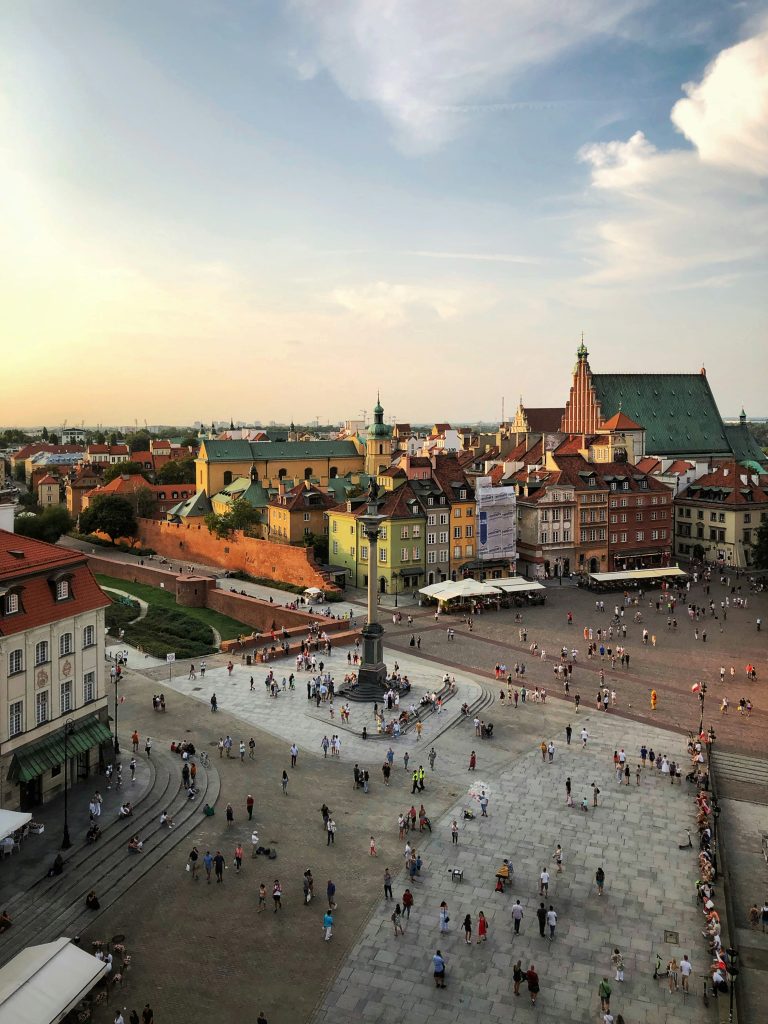
Top photograph: A scene of Old Town Warsaw by Victor Malyushev via Unsplash. Used with permission.

“A Słowy Dying Cause” by Elizabeth George

October 29, 2025 By Glynn Young Leave a Comment

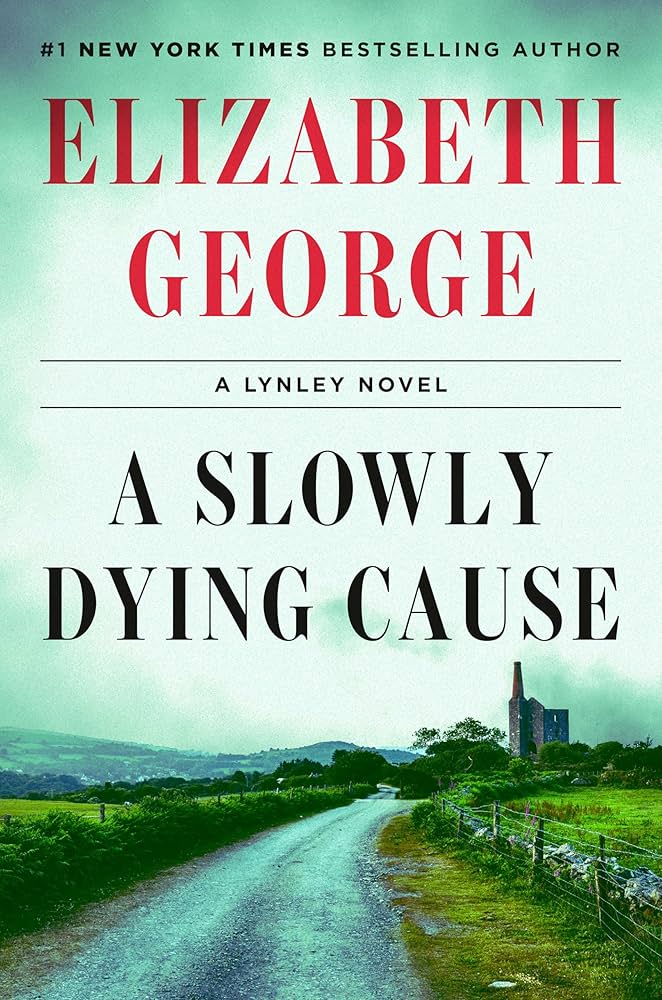
It helped to have heard Elizabeth George speak in early October at the St. Louis County Library. She was doing a promotional tour for her new novel, and among many other things, she noted that Inspector Thomas Lynley would show up late in the story.

And Inspector Lynley does indeed show up rather late for story billed as “A Lynley Novel.” A Slowly Dying Cause, the twenty-first in the Inspector Lynley series, doesn’t even mention him until about page 120, and he and his detective sergeant, Barbara Havers, don’t really start assuming a significant role until about the middle of the book. 

The novel is 640 pages. The reader is well past the halfway point before Lynley learns there’s even a murder. Havers’ mother has died, and Lynley drags his DS with him when he has to go to Cornwall to attend to a leaking roof at the family estate. Lynley is an earl, even if he work for the Mtropolitan Police in London. He steps into the investigation almost accidentally, but once he’s there, no one doubts who’s really in charge.

It’s the local police who investigate the murder of a tin and pewter workshop named Michael Lobb. Potential suspects abound – the dead man’s ex-wife, whom he divorced to marry a woman abrely older than his own children; his children, both of whom need money; his brother, who owns 40 percent of the business and property it sits on; the young wife herself; the hired help, a man and his adult son; the hired man’s two daughters (one of whom is a former lover of Lynley in London); and the wife’s brother, who happened to be visiting from South Africa and opposed his sister’s marriage from the start.

Elizabeth George

The story is not a straight narrative. It includes the account of the murder investigation, interspersed by the story told by the dead man himself. Add to that the story of Lynley’s estate and its needed repairs. George writes mystery novels, yes, but she also writes novels that just happen to have a mystery as one of the story lines. 

I was 200 pages from the end when I realized exactly who the murderer would turn out to be, and more to the point, what the murderer’s motive was. Yet George is nothing if not an enthralling, compelling author; even when I knew (or guessed, correctly, as it turned out), I kept reading to see how it would all tie together. And George pulls it off. A Slowly Dying Cause is more of a novel than a mystery novel.

In addition to the Lynley novels, George writes a young adult series, set on the island in Washington State where she lives. She’s received numerous awards and recognitions for the Lynley novels, which have been adapted for television not once but twice, with the new Lynley series having started this year. 

Related:

Just One Evil Act by Elizabeth George.

An Evening with Elizabeth George.

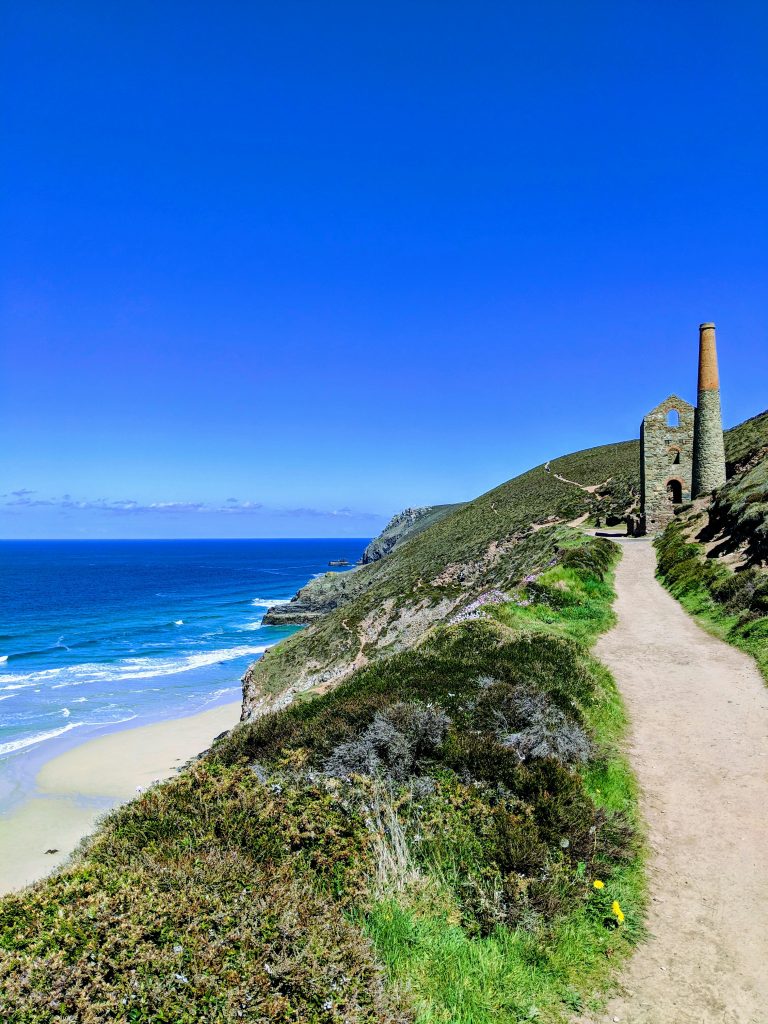
Top photograph: Cornwall coast with tin mining tower by Danilo D’Agostino via Unsplash. Used with permission.

  • « Go to Previous Page
  • Page 1
  • Page 2
  • Page 3
  • Page 4
  • Interim pages omitted …
  • Page 17
  • Go to Next Page »

Footer

GY


Meet the Man

An award-winning speechwriter and communications professional, Glynn Young is the author of six novels and the non-fiction book Poetry at Work.


 01_facebook 02_twitter 26_googleplus 07_GG Talk

Copyright © 2026 Glynn Young · Site by The Willingham Enterprise · Log in | Managed by Fistbump Media LLC