• Skip to primary navigation
  • Skip to main content
  • Skip to footer

Dancing Priest

Author and Novelist Glynn Young

  • HOME
  • BLOG
  • BOOKS
    • Brookhaven
    • Dancing Prince
    • Dancing Prophet
    • Dancing Priest
    • A Light Shining
    • Dancing King
    • Poetry at Work
  • ABOUT
  • CONTACT

book review

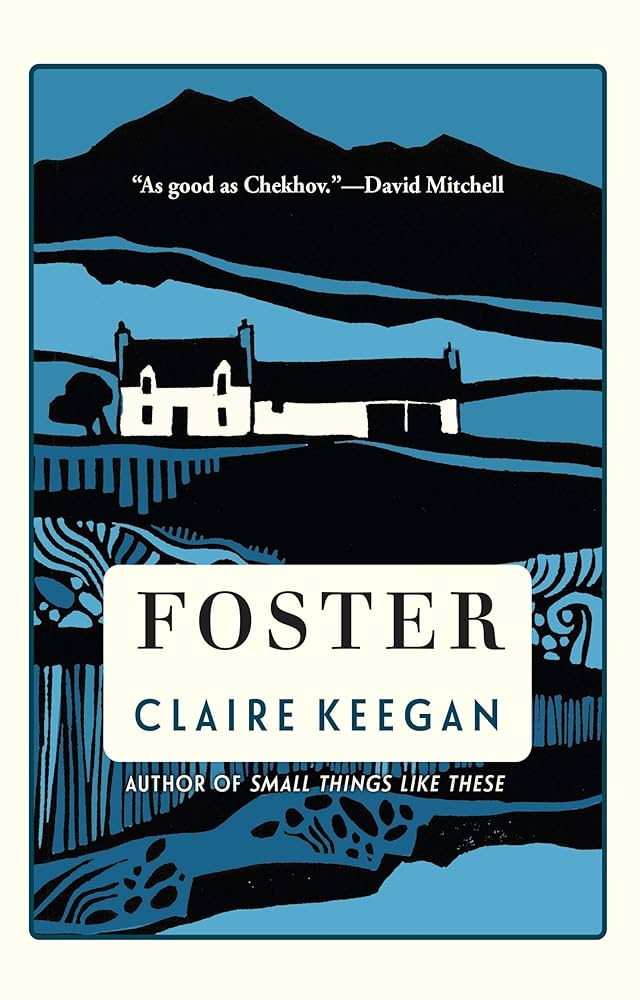
“Foster” by Claire Keegan

August 27, 2025 By Glynn Young 1 Comment

Irish writer Claire Keegan writes stories like Johannes Vermeer painted paintings: interior scenes, perfectly drawn, with far more going on than what first meets the eye. Whether you’re reading a Keegan novel or standing before “Girl with a Pearl Earring,” when you finish and walk away you simply say, “Yes.”

I discovered this when I read Keegan’s Small Things Like These, the story of a coal hauler doing his regular delivery at a convent when he discovers a young girl shivering outside and discovers he has walked into something else entirely. Keegan moves comfortably into her characters’ skins, and the reader becomes almost one with the story.

In Keegan’s short novel Foster, a young girl doesn’t entirely understand what is happening when her father brings her to the home of an older couple, Mr. and Mrs. Kinsella. The girl’s mother is in the final months of pregnancy, the house is already full of children, and the family has the opportunity to park her with a childless couple. The girl discovers a life very different from her own, a life of regular baths, daily changes of clothes, trips to get ice cream, and a couple who love her from the moment she walks in their door. She also discovers something of a mystery, like why she’s initially given the clothes of a boy. And there’s something about the well from which water is drawn.

Claire Keegan

In the day-to-day life of this couple and the girl, the story unfolds. Gradually she discovers how to live a different life, and she will soon come to understand what happened in the family. The story unfolds perfectly; Keegan is one gifted storyteller.

Keegan is best known for her short stories, which have appeared in such publications as The New Yorker, Granta, Best American Short Stories, and The Paris Review, among others. Her writing has won numerous awards and recognitions, including the Rooney Prize for Irish Literature, the William Trevor Prize, and several short story awards. She studied English and political science at Loyola University in New Orleans, received a M.S. degree in creative writing at the University of Wales, and a M.Phil degree from Trinity College Dublin. She lives in rural Ireland.

I didn’t know if I could like a Keegan story better than I liked Small These Like These, but Foster dispelled any doubts I had. From beginning to end, it’s a story of compassion, understanding, and what makes us human. 

Related:

Small Things Like These by Claire Keegan.

“Remembering: A Novel” by Wendell Berry

August 20, 2025 By Glynn Young 1 Comment

It’s the mid-1970s. Andy Catlett is in San Francisco, a writer attending a modern agricultural conference. His family in Kentucky is likely relieved that he’s away; Andy had become very difficult to live with.

The reason: some time before, Andy and a few others were helping a neighbor on his farm. Andy was operating machinery, and almost without realizing what had happened, he lost his hand. The quick actions by the other men likely save his life; he could have bled to death.

Andy knows farm accidents happen. Now one has happened to him. He has had to learn to function with his left hand, the stump of his right arm a constant reminder of what happened. The fact is that Andy no longer feels whole; his entire life is at sea. And he doesn’t know how he’s going to make his way home again.

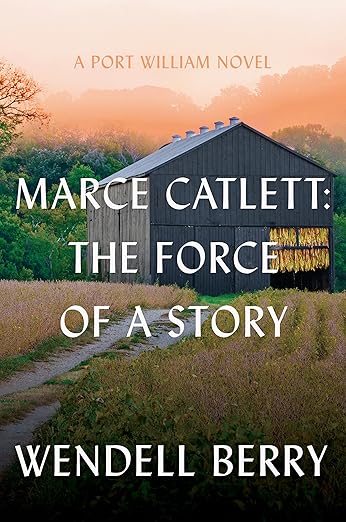
Remembering is the last published novel so far in the Port William noels by Wendell Berry. I say “so far” because Berry has a new one publishing Oct. 7, entitled Marce Catlett: The Force of a Story. Remembering is the story of man forced to question everything he’s believed in, discovering his own mortality, and ultimately finding redemption. It has all the classic Berry themes: community, the land, the people of the land, family, and faith.

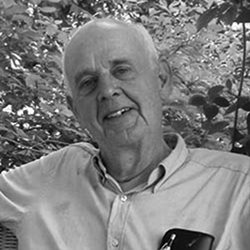
Wendell Berry

The novel is somewhat autobiographical; Berry, too, worked as an agricultural writer for a time. And he would leave that career when he finally understood the inherent conflict between the agriculture he was raised in and what agriculture had become.

Berry is a poet, novelist, essayist, environmentalist, and social critic. His fiction, both novels and stories, are centered in the area he calls Port William, Kentucky, on the Ohio River. He’s won a rather astounding number of awards, prizes, fellowships, and recognitions. He lives on a farm in Kentucky.

Remembering is the story of a deeply troubled heart and mind, a man trying to find his way, and how healing and redemption ultimately happen. 

Related:

My review of Berry’s That Distant Land.

Wendell Berry and the Land.

My review of Berry’s Jayber Crow.

Wendell Berry and This Day: Poems at Tweetspeak Poetry.

Wendell Berry and Terrapin: Poems at Tweetspeak Poetry.

Wendell Berry’s Our Only World.

The Art of the Commonplace by Wendell Berry.

Nathan Coulter by Wendell Berry.

Andy Catlett: Early Travels by Wendell Berry.

A World Lost by Wendell Berry.

A Place on Earth by Wendell Berry.

The Memory of Old Jack by Wendell Berry.

Another Day: Sabbath Poems 2013-2023 by Wendell Berry at Tweetspeak Poetry.

“Mosby’s Rangers” by James Joseph Williamson

July 9, 2025 By Glynn Young 2 Comments

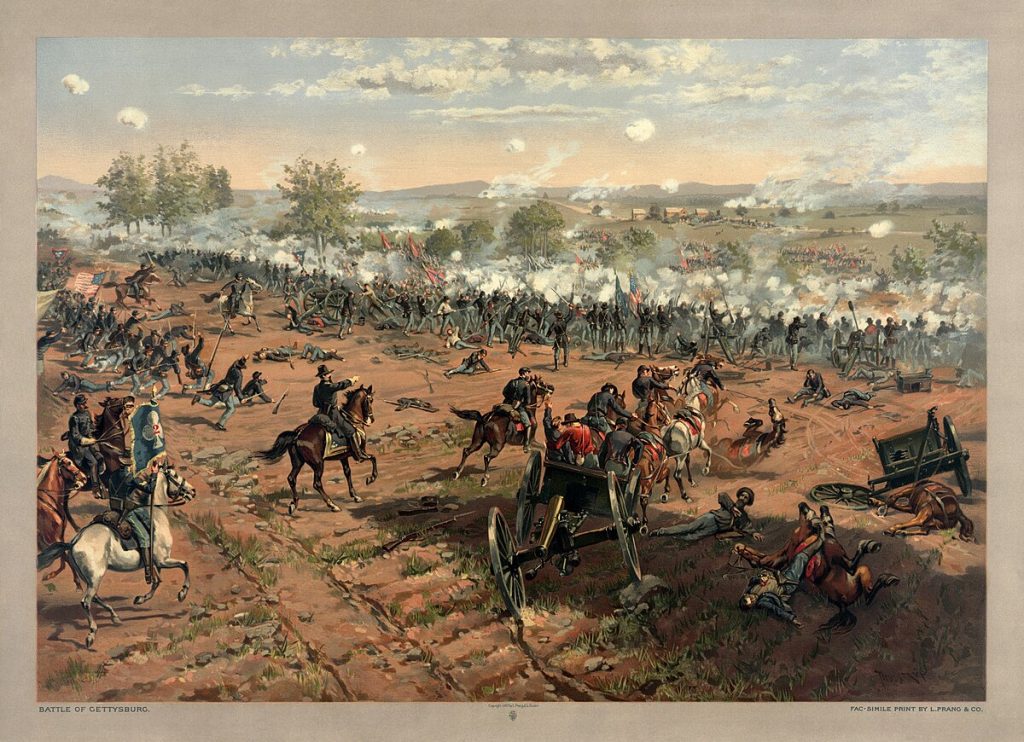
In my novel Brookhaven, I have the 13-year-old Sam McClure sent to the Confederate army in the East. His father had fought with Robert E. Lee in the Mexican American War, and Lee hoped that the young Sam had learned some of his father’s espionage and survival skills. The young man is assigned to a unit called Colby’s Rangers, and after a few weeks of basic training is sent with others to prepare for Lee’s invasion of the North, which culminated in the Battle of Gettysburg. 

The model for Colby’s Rangers in the novel is an actual unit called Mosby’s Rangers. It was less involved in espionage and more involved in disruptions of federal lines, camps, and supply lines. When General Jeb Stuart “rode around” the Union army of George McClellan in 1862, it was Mosby’s Rangers leading the cavalry.

Beginning in April 1863, James Joseph Williamson was a private who gained what many Confederate soldiers and cavalrymen desired – a spot in Mosby’ Rangers. Some 44 years later in 1909, he published a memoir of his time with the unit, which stretched to the end of the war in 1865. Mosby’s Rangers: A Record of the Operations of the Fourth-Third Battalion Virginia Cavalry, From Its Organization to the Surrender is the title. and it was republished as an e-book in 2018. (It’s also available as an audio book.)

Memoirs of the Civil War by soldiers were common in the late 19th and early 20th centuries. The Civil War generation was dying out, and much of the story had not been told. Generals had been their memoirs published; Ulysess S. Grant’s memoirs were a bestseller.  But now it seemed it was the soldiers and lower officers who were publishing accounts “from the ground level.”

Williamson published two editions in his lifetime; the second corrected errors and added information. He had kept a diary during the war years, and the diary became the basis for the memoir. 

It’s a highly readable, interesting, and often thrilling account. John S. Mosby was a Virginian attorney when he joined the Confederate Army. He caught the eye of Jeb Stuart, and he soon became known as one of Stuart’s key men. Mosby’s Rangers operated primarily in the Shenandoah Valley and northern Viriginia, he it’s fair to say they ran circles (literally and figuratively) around Union armies. 

Col. John Mosby

He was nicknamed the “Gray Ghost;” his cavalrymen could slip through enemy lines almost like phantoms. One of the most famous of the Rangers’ exploits was in March 1863. In the early morning hours, a group of 30 Rangers led by Mosby discovered a break in Union lines. They traveled several miles to Fairfax County Courthouse and captured Union Brigadier General Edwin Stoughton, two captains, 30 soldiers, and nearly 60 horses without a shot being fired to a man lost. And then they made their way back to Confederate lines. The story electrified the South and outraged the North; it also earned Mosby a promotion. After Stuart’s death, Mosby reported directly to Lee.

Williamson was one of the 29 men who accomplished “the impossible raid,” and his account is riveting.

Mosby survived the war, despite a bounty placed on his head by Grant. Impressed by what Mosby had accomplished, Grant would pardon him when he became President. They became friends, and Mosby – to the dismay of his Southern fans – became a Republican and worked to unify the country. His popularity diminished rapidly.

Mosby’s Rangers is a great story, told first-hand by a man who was there and saw it happen.

Top photograph: A group of Mosby’s Rangers, with Mosby in the center.

“Glorious Courage: John Pelham in the Civil War” by Sarah Kay Bierle

June 25, 2025 By Glynn Young Leave a Comment

In my research for my novel Brookhaven, it was difficult not to run across references to one particular officer.

John Pelham was an Alabama boy, the third of three sons and born in 1838 in a small wooden house in rural Benton County. His father was a doctor and farmer, enjoying both community respect and economic success. The family’s reputation was such that John’s father was able to get an appointment for his son to the U.S. Military Academy. The young man arrived at West Point in 1856, enrolling in a five-year degree program.

As the rhetoric of the years leading up to the Civil War became increasingly heated, West Point must have become a strange place – outwardly uniform but inwardly affected by the same passions rearing the country apart. John left the academy in 1861, one month shy of graduation. Like other Southerners at West Point, he was being closely watched as secession tore the country apart. He made his way to New York City and then to border-state Kentucky, finally reaching home. Just as he’d been watched by his commanding officers at West Point, he’d also been observed by their Southern counterparts, who were keen to make use of his military training.

For the rest of his short life – he would be mortally wounded aged 24 at the Battle of Kelly’s Ford in 1863 – John Pelham became the stuff of legend. Historian Sarah Kay Bierle has spent years studying in his life, separating fact from myth. The facts of his military prowess didn’t need myth and legend to enhance his reputation. Despite almost all of his letters having disappeared, she’s been able to reconstruct his life and accomplishments from the letters and reports of others as well as official records and reports.

Bierle has succinctly and compellingly summarized it all in Glorious Courage: John Pelham in the Civil War.

And what an enthralling story it is.

Pelham proved the utility of the horse artillery. Have horses pull artillery pieces meant they could be moved frequently and strategically during battle. Pelham demonstrated the value – and his own – during the battles of the Peninsular Campaign, First and Second Manassas (Bull Run), Antietam, and Fredericksburg, among several others. He caught the eye of Confederate generals like Stonewall Jackson, Jeb Stuart, and Robert E. Lee. He was promoted to major and then recommended for a promotion to lieutenant colonel, which was pending at the time of his death. 

He became known as the “Gallant John Pelham;” it was Lee who described his “glorious courage” (and inspired the title of Bierle’s book). In the years after the war, the legends cropped up around him; it seems every young Southern woman had had a romance with him. (And while it was in a different context, it was Pelham who inspired one aspect of the main character in my novel – how legends get born that often have no basis in fact.)

Sarah Kay Bierle

Bierle is what’s called a public historian, working in the field of Civil War education and battlefield preservation. She’s written articles and essays for numerous publications, including Emerging Civil War, and is a frequent speaker on Civil War topics. Her previous publications include Decisions at Chancellorsville, War in the Western Theater, and Call Out the Cadets: The Battle of New Market, May 15, 1864. 

Glorious Courage is a fascinating read. It does what good history should do – separate fact from fable and present a person or event as it should be. In the case of John Pelham, he didn’t need legends to enhance his reputation, and Bierle serves her subject very well indeed.

Related:

Martha Pelham’s Letter: Finding Colorful Details for John Pelham’s 1858 Summer – Sarah Kay Bierle at Emerging Civil War.

Artillery: John Pelham –  Artilleryman, Gallant Fool, Splendid Boy – Sarah Kay Bierle at Emerging Civil War.

Podcast: Historian Sarah Kay Bierle on ‘Gallant’ John Pelham – John Banks’ Civil War Blog.

Top photograph: One of there three known photo of John Pelham.

“Fred Grant at Vicksburg” by Albert Nofi

June 4, 2025 By Glynn Young Leave a Comment

When I wrote my historical novel Brookhaven, I was aware of this story, but I didn’t know it in terms of the color and details. Now I do.

In the spring of 1863, Frederick Dent Grant was 12 going on 13. He’d been born in St. Louis. His mother was Julia Dent Grant, daughter of a slaveowner in St. Louis County. His father was Ulysses S. Grant, general in the Union Army, who was now encamped down the Mississippi River, charged with taking Vicksburg, the last Confederate fortification not in Union hands along the Mississippi. Memphis, New Orleans, and Baton Rouge were all in Union hands; Vicksburg was the last impediment to Union control of the river.

The teenaged Fred Grant

And then Grant did something that would seem almost inexplicable to parents today. In early March of 1863, he sent for his oldest son Fred to join him for the Vicksburg campaign. Fred’s mother also did something inexplicable – she let him go, although she did keep nine-year-old Ulysses Jr. with her and the family.

Fred Grant was one thrilled boy. He would talk about it, and give speeches on it, for the rest of his life.

Far from being watched, monitored, or babysat by an orderly, Fred had almost free roam the camps and even many of the battles. His father would occasionally try to keep him in a safe place, but Fred usually found a way to experience the excitement. His was with the army for numerous battles around Vicksburg, traveled with the army for the Battle of Jackson, and was there when Vicksburg surrendered. He also came down with a common soldier’s ailment – dysentery – and was eventually sent home to St. Louis to recuperate.

Many of Fred’s speeches still exist, and he wrote down his account of the experience in memoir form. Historian Albert Nofi had assembled many of these sources and edited Fred Grant at Vicksburg: A Boy’s Memoir at His Father’s Side During the American Civil War. Fred’s account in not a series of diary entries but rather the adult son of the Union general looking back on one of the most important engagements of the Civil War. While the Battle of Gettysburg usually gets more attention, the fall of Vicksburg established full Union control of the Mississippi River and split the Confederacy in two. 

Fred Grant about 1900

Fred Grant is more than an edited and annotated memoir, however. Nofi provides a succinct and informative introduction and includes several helpful appendices. These are a summary of the Grant and Dent families’ history, short biographies of people and explanations of places mentioned in the text, the order of battle, military terminology, and several other helpful sections that help provide context. The book is also profusely illustrated with photographs, including one of the young Fred Grant at about the time of Vicksburg.

Nofi received his Ph.D. in military history from the City University of New York. He’s written more than 40 books on military history and is a founding member and director of the New York Military Affairs Symposium. He lives in New York City. 

Fred Grant is a memoir, yes, but it also provides a window of a boy’s perspective of war, his father who happened to be one of the most important figures of the Civil War, and how we remember the formative events of our lives. I’s a thoroughly enjoyable book.

“The Collected Breece D’J Pancake”

May 28, 2025 By Glynn Young Leave a Comment

Up to a point, the similarities between John Kennedy Toole and Breece D’J Pancake are uncanny.

Toole (1937-1969) wrote two novels. The first was The Neon Bible, which was published a decade after the second novel, A Confederacy of Dunces. Both received repeated rejections from publishers. Toole would eventually commit suicide in 1969. His mother, Thelma, was determined to see A Confederacy of Dunces published, and she pestered publishers and writers for years, finally wearing down Walker Percy who read it and was blown away. It took Percy three years to find a publisher, and it was LSU Press. A Confederacy of Dunces was a bestseller and won the Pulitzer Prize for Fiction. 

Pancake (an unusual but real last name) wrote 12 short stories and a few fragments of others. Born in 1952 in West Virginia, he managed to graduate from Marshall University. and taught at two military academies. He enrolled in the creative program at the University of Virginia, where he sensed a “class” consciousness between those who held only a B.A. degree and those who had more advanced degrees. But Pancake was the one selling stories to The Atlantic, which made a typographic error when they printed his stories, changing his middle initials “D.J.” to D’J; he kept it. 

He killed himself in 1974 at age 26. His 12 stories represented his entire literary output, but his mother Helen was determined to see them published in book form, which they were in 1983. In 2020, the Library of America republished the 12 stories, along with fragments of other stories and his letters as The Collected Breece D’J Pancake. The introduction is by novelist and short story writer Jayne Anne Phillips, who would go on to win the 2024 Pulitzer Prize for Fiction for Night Watch. The collection also includes the 1983 introduction by James Alan McPherson, who was a director of the creative writing program at Virginia. 

The stories are absolute gems, and even the fragments are excellent. For all of the stories, Pancake drew upon his knowledge of and upbringing in West Virginia. These are the stories of the people left behind America’s growth and prosperity. A farmer trying to keep a dying farm alive. A coal miner who somehow still has work, drinks, and shoots pool. A man who encounters an underage girl working as a prostitute. The death of two teenagers that’s meant to look accidental. A snowplow driver who gives a lift to a hitchhiker. Men who fight for money while onlookers bet. A man on parole out for revenge. And more.

Breece D’J Pancake

The stories aren’t minimalist, which was a quite popular writing movement in the 1970s and early 1980s), but they are written sparingly, with no word superfluous or wasted. Pancake had an ear for authentic conversation; you know you are reading words that sounded exactly like people of the time and place spoke. 

Both Toole and Pancake died way too young. Both left an impressive if limited literary estate. Both were so good one has to wonder what else they might have written had they lived. But both left us with something important and valuable. And both are well worth reading.

Related:

“Time and Again” – short story by Breece D’J Pancake at The Short Story Project.

Top photograph: New River Gorge National Park, West Virginia, by Ryan Arnst via Unsplash. Used with permission.
  • « Go to Previous Page
  • Page 1
  • Page 2
  • Page 3
  • Page 4
  • Page 5
  • Interim pages omitted …
  • Page 16
  • Go to Next Page »

Footer

GY


Meet the Man

An award-winning speechwriter and communications professional, Glynn Young is the author of six novels and the non-fiction book Poetry at Work.


 01_facebook 02_twitter 26_googleplus 07_GG Talk

Copyright © 2026 Glynn Young · Site by The Willingham Enterprise · Log in | Managed by Fistbump Media LLC