• Skip to primary navigation
  • Skip to main content
  • Skip to footer

Dancing Priest

Author and Novelist Glynn Young

  • HOME
  • BLOG
  • BOOKS
    • Brookhaven
    • Dancing Prince
    • Dancing Prophet
    • Dancing Priest
    • A Light Shining
    • Dancing King
    • Poetry at Work
  • ABOUT
  • CONTACT

The Strangest Job Interview I Ever Had

May 27, 2026 By Glynn Young Leave a Comment

I was cleaning out some old files when I came across a small blue address book – the kind we used before iPhones had contact lists, or even before we had iPhones. It dates from 2003. When I looked at the listings, I realized I was holding an artifact of my career.

Between October of 2003 and May of 2004, I was Director of Communications for St. Louis Public Schools. The school district, with many of the problems of an urban school district, had been in upheaval since June. A reform board had been elected, and it had promptly hired an outside management firm from New York to design and implement a total overhaul. It wasn’t a simple reorganization; instead, think Elon Musk’s Department of Governmental Efficiency without the charm.

On its first day, the outside firm discovered that the district wasn’t technically, but actually, bankrupt. Suddenly, change came. Schools were closed and consolidated. Hundreds of staff positions had been eliminated. Operations were outsourced. Chaos and protests were the watchwords. As in, daily chaos and protests.

I was distanced from all of it. I was working from home in a St. Louis suburb as a freelance consultant, having been one of many white males in their late 40s or early 50s who’d been downsized. I saw the newspaper stories, but they didn’t affect my kids, my school district, or my world.

But they soon would.

Photograph by Nicola Tolin via Unsplash.

By September, the chaos in St. Louis Public Schools had intensified. Layoffs were continuing. Board meetings had to be held in the largest school auditorium available, one that held 400. Another thousand would be outside, unable to get in. Arrests during board meetings were not uncommon.

That month, a friend called me. At least, I think he was a friend. He sent me a job posting – Director of Communications for St. Louis Public Schools. The former director had resigned, and the district was looking for a replacement. The previous position had managed a team of 12. The new position managed a team of one-half person, which provides some idea of how extensive the downsizing had been.

When I read the listing, I called the friend back. And I laughed. “You can’t be serious,” I said. But he was, explaining that the district desperately needed someone who could talk with opponents and protesters like they were real people and would be unflappable in the fact of hundreds screaming at you. He said I had that exact experience, reminding me of the time with a previous employer that I’d had corporate security keeping my house under surveillance because of threats from people associated with a Greenpeace protest. 

We talked some more. I said I’d think about it. I did. And then I did something that most people would consider stupid. I filled out the application and sent it in. I had zero experience with working for a school district.

And heard nothing. For weeks. 

I’d almost forgotten about it when a district secretary called and told me the interview was set for a day the following week at 9 a.m. I was to park in the district’s headquarters parking building and give my name to the security officers at the entrance.

And thus began the strangest job interview I have ever had.

But before the interview, another friend called and asked a strange question. Was I applying for a job in the St. Louis mayor’s office? When I said no, but I had applied for the school district job, he simply said, “Ah.” He told me that a consultant to the mayor had been calling around and connected to him, looking for background on me. The weirdest thing he’d been asked was if I attended church, and if so, which one. He happened to know, and he provided the information. 

The mayor’s office was closely, if unofficially, tied to what was happening in the school district.

The interview day arrived. I drove to downtown St. Louis and parked. I gave my name to the security officer. I was escorted to a conference room to wait. With nine other candidates for the job.

Ten of us. Not only was I the only white male in the room, but I was also the only male. I was wearing a suit. I smiled and told the others hello. No one spoke. They stared at me like I was a triceratops that had accidentally wandered in from the street. 

One by one, we were called to the interview in another nearby conference room. The intervals between each varied, from five minutes to 25. You could almost guess who was getting the most favorable reactions by the length of time that passed. 

I was the last to be called.

Photograph by Michael via Unsplash. 

Waiting in the conference room were the lead for the management team, who was serving as acting superintendent; one of the team associates; and a vice president who was the theoretical manager for the communications function. She would be my boss, if I got the job. 

For about 10 minutes, the interview questions were perfunctory. Tell us about yourself. What would you consider your greatest achievement. Your biggest failure. Your background. A couple of questions about specific things on my resume.

I could tell the acting superintendent was getting antsy. He was seated to my left, and the other two interviewers were next to each other on my right. He was fidgeting, almost like someone who couldn’t keep still (my oldest son was like that; I recognized the behavior). Suddenly, he cut off a question from across the table, stood, and almost exploded as he shouted.

“Why the hell would you want a job like this?”

The room went silent. The other two looked down, as if this was and wasn’t a surprise. 

For a moment, I said nothing. And then I said, “Because you need me.”

Whatever he expected me to say, that wasn’t it. He looked surprised and then sat down. I went on to explain that the protests were unlikely to stop, and the district needed someone who could deal with that. They needed someone who was comfortable in front of a news camera. They needed someone who understood internal as well as external communications. And they needed someone who would treat critics and protesters with respect and empathy. 

They listened, asked a few more questions, and the interview ended. I drove the 16 miles home, finding my wife waiting in the driveway. A member of the school board and former St. Louis mayor had called, and I was supposed to meet him at his office now. I turned around and headed back toward mid-town St. Louis. 

Photograph by Shaver IK via Unsplash.

The office was in a building near the St. Louis Symphony; I parked in the symphony’s parking lot and made my way to the top floor of the building next door. It was lunchtime, and the offices and desks were empty. I could hear a voice down the hall and followed the sound.

The man was on the phone and waved me into the office. He handed me a binder, indicating that I should start reading it. It was a report on the problems in the school district, and it was about two inches thick. When he finished his call, he turned to me and said, “Tomorrow, I need you with me at a meeting with a group of teachers from the high school. It’s at 4 p.m., and about a dozen people will be there.” The meeting would be at an Italian restaurant in the part of St. Louis known as the Hill, still a largely Italian American area (Joe Garigiola and Yogi Berra grew up there). He continued talking while I wondered whether the teachers’ meeting was part of the interview process.

As he talked, I began to realize that this wasn’t an interview; I was getting my first assignment. I finally asked, “I’m assuming I’m hired?”

He waved almost impatiently. “Yeah, yeah, we’ll work out the other stuff like salary. Just be there at 4.” And with that, the conversation was over.

And that is how I was hired as Director of Communication for St. Louis Public Schools. I didn’t know the official start date, my salary, benefits, or anything else. But I was hired.

Top photograph by Chelaxy Designs via Unsplash. Used with permission.

“To Those Who Speak” by Adam Luke Hawker

May 20, 2026 By Glynn Young Leave a Comment

Luke Adam Hawker is a designer who made the leap to full-time art in 2015. His background is architecture and design, and in his art, he works to connect places and people. His limited-edition prints can be found at several locations in London, including the Royal Opera House, St. Paul’s Cathedral, the Old Royal Naval College, and Battersea Power Station.

Hawker has also published three books. Together (2021) is a graphic novel that turned into a surprise bestseller. The Last Tree: A Seed of Hope (2023) is a fable about a world without trees. This year, he published To Those Who Speak, a much more personal story that’s less a story and more of a non-fictional account with quiet, profound illustrations. 

Luke Adam Hawker

The story is this, simply: Hawker and his wife had a son born with an extra X chromosome. The boy is also non-verbal. Hawker did what most parents would do – researched, read, and try to understand how he could teach his son to understand and communicate. The family had or bought a dog, and the dog attached itself to the boy. The dog and the boy seemed to understand each other without a word being exchanged. 

At some point, Hawker understood. Perhaps it wasn’t that the non-verbal boy could learn to understand words. Instead, perhaps the verbal parent could learn how to communicate to the non-verbal boy. And that’s what happened. One thing that resulted was this book, To Those Who Speak.

As Hawker says in his introduction, it is not a children’s book, but it is also not not a children’s book. Using black-and-white drawings and minimal words, the book is “an expression of gratitude” to his son for what Hawker calls an Invaluable education.

Emotion wells as you read and absorb the drawings. The boy meets the dog. They become each other’s world. The boy begins to hum. He and the dog discover the peace of wandering among trees. Hawker begins to see how much his son can say without uttering a word. The boy’s development is measured by steps, not milestones. The first unspoken but hand-shaped word. A respiratory illness (not uncommon among children with the extra X chromosome), an illness that was nearly fatal.

You don’t need many words to describe this beautiful book. You just nod and sit with it.

When You Hit a Writing Drought

May 13, 2026 By Glynn Young Leave a Comment

Since the time I was a reporter for my college newspaper, longer ago than I care to admit, writing has been an integral part of my life. I’ve been a reporter, editor, newsletter editor, speechwriter, public relations manager, novelist, short story writer, non-fiction book author, blogger, book reviewer, essayist, poet, and more. Writing has been central in every job I held and every employer I worked for. 

I never had time for writer’s block. A speech had to be written. News releases had deadlines. Contracts had to be met. Employers had expectations (or demands, often unreasonable). I might have a project where I had to pause to understand the challenge fully, but I’d figure out a way through it.

What I’ve had for the last year isn’t writer’s block. I still blog, write book reviews, and even write a few short stories. But the flood of writing that’s carried me for 50-plus years has slowed considerably. It’s less of a block and more of a “moderate drought.”

To continue reading, please see my post today at the ACFW blog.

Photograph by Glenn Carstens-Peters via Unsplash. Used with permission.

Five Ways to Research Your Family History

May 7, 2026 By Glynn Young Leave a Comment

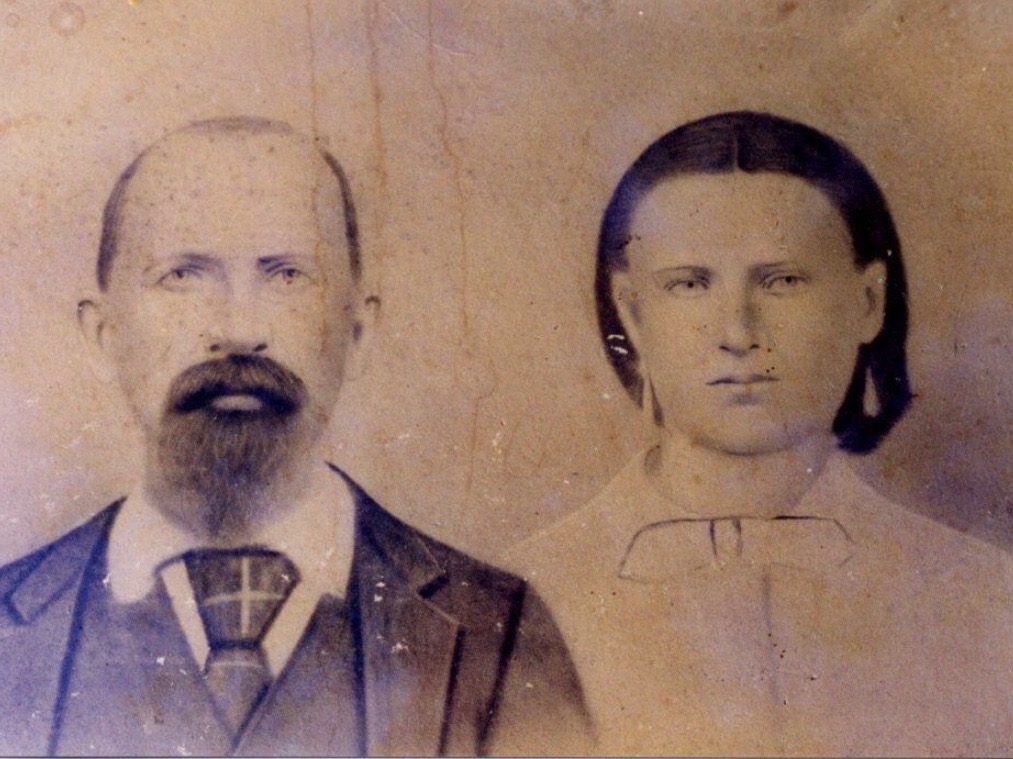
The writing of my historical novel Brookhaven took about 150 years.

I must have seen something like this before, but I can’t recall a specific example. Many novels include an acknowledgement page, cutting the people who helped or inspired the author. My historical novel Brookhaven has an author’s note explaining some of the novel’s background. But it also has something you don’t usually see in a novel – a nine-page bibliography.

I included more as a reminder to myself of where the novel come from. 

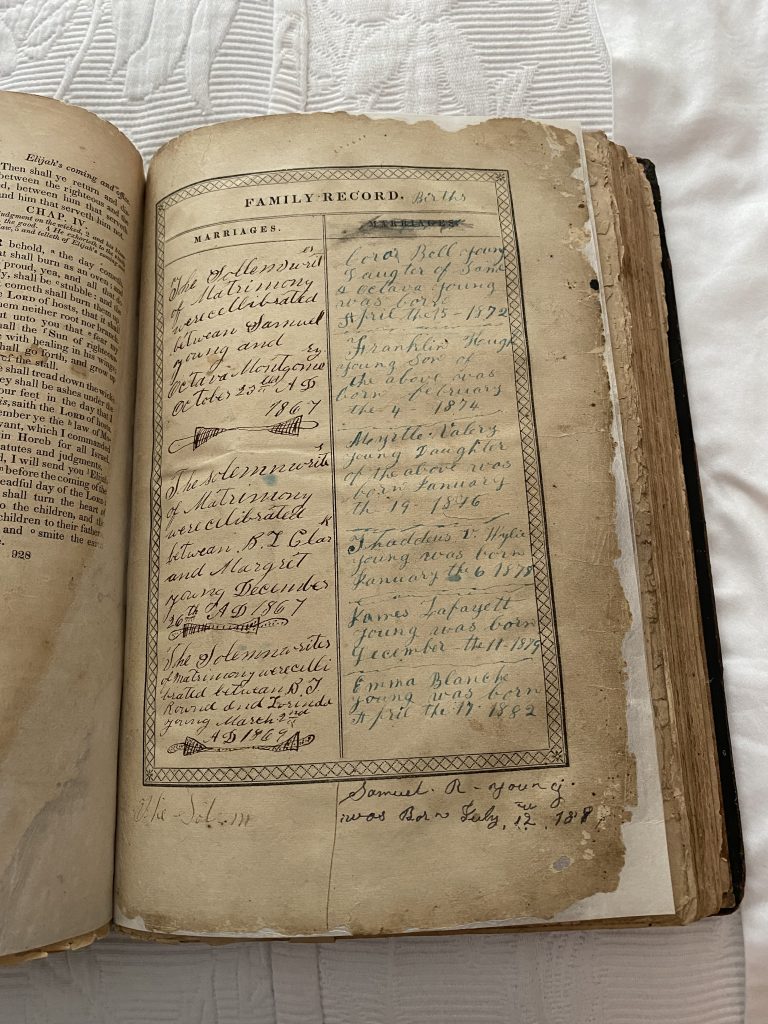
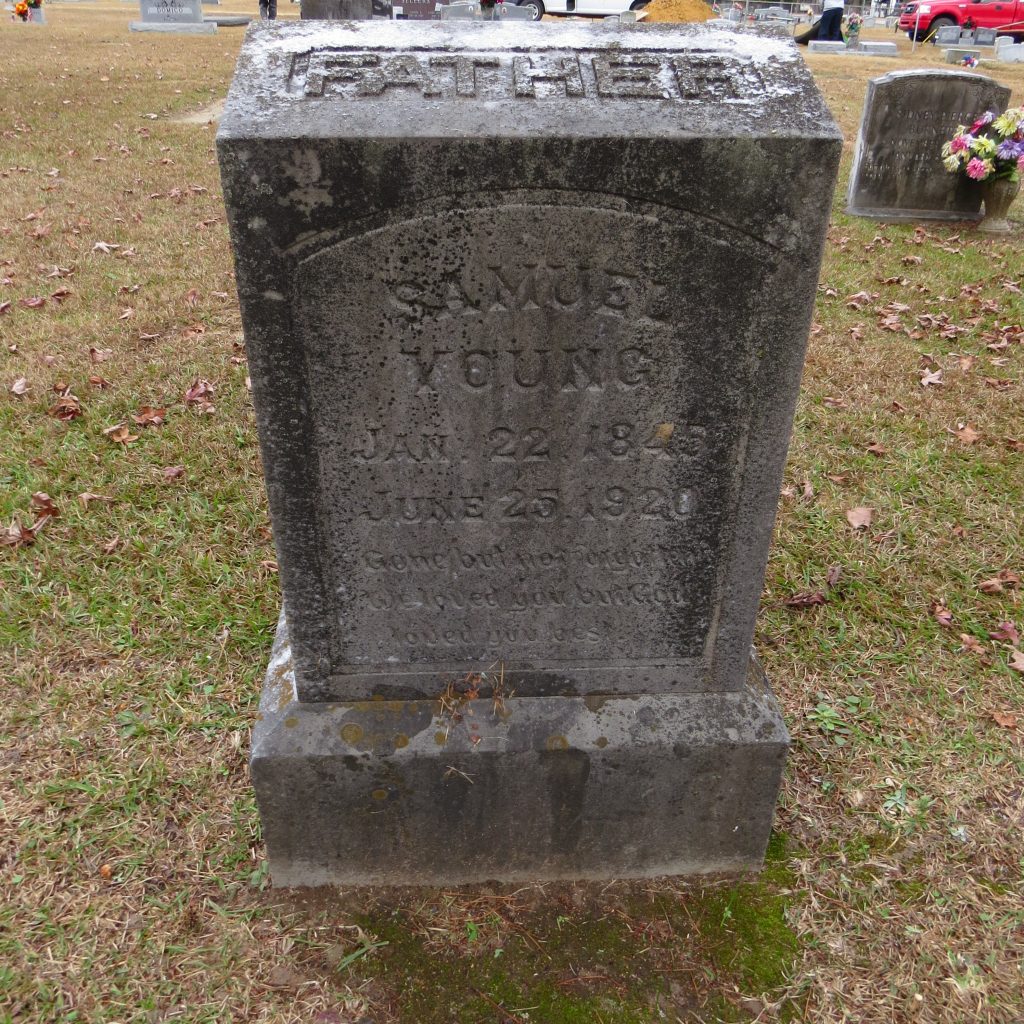
A grandmother who referred to the Civil War as the “War of Northern Aggression.” A father who told slightly mangled family stories, including one that sounded like an epic journey. A research paper in high school on what the “plantation system” really looked like. A family Bible with a mystery embedded in the birth and death records. A mountain of reading old and new American history books. An aunt who spent decades researching family history, long before the invention of the internet. Discovering I liked, as in really liked, the poems of Henry Wadsworth Longellow, once the top-selling poet and author in the United States who was dropped into the dustbin of literary criticism. 

To continue reading, please see my post today at Tweetspeak Poetry.

Photograph: A page from the records in the family Bible pre-preservation.

“The Burning Glow” by Luke H. Davis

May 6, 2026 By Glynn Young 1 Comment

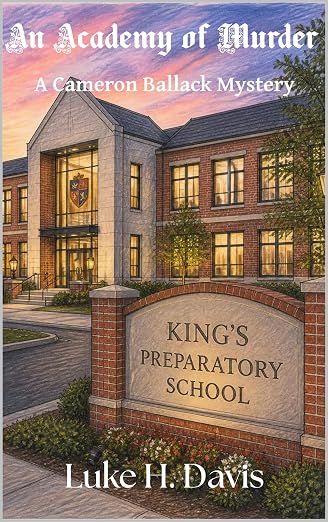
Cameron Ballack is back. And he’s traipsing all over where I used to bike.

Ballack is the fictional wheelchair-bound police detective created by St. Louis-based writer Luke H. Davis. In previous books (and there’s been a gap of some years), he and his team were based in St. Charles County, Missouri, part of metropolitan St. Louis. In his new outing, entitled The Burning Glow, Ballack is now the lead detective for the Special Investigating Department, which operates across the metro St. Louis region. (St. Louis actually does have something similar that operates across jurisdictional lines called the Major Case Squad.)

What Ballack and his team are pulled into is a car bombing in the part of the city of St. Louis known as “Little Bosnia,” home to numerous immigrants who fled the war in the 1990s. The victim is a teenager, who had arrived at a spot behind an apartment complex to show his friends a body in a dumpster. The friends run off; the teenager dies when he returns to his car. The teen was Bosnian and Muslim.

The next day, another car bombing occurs – one in the parking lot of a synagogue in west St. Louis County. A Jewish couple is killed. The male victim happened to be the business partner of the man whose body was in the dumpster. Then a third car bombing is narrowly avoided, when the intended victim, another Bosnian in south St. Louis, happens to step outside his home for a cigarette after midnight and notices someone checking underneath a car. 

Luke H. Davis

And from there, the mayhem gets even wilder. Ballack is racing not only to find the killer or killers but also to solve the crimes before the FBI arrives. It culminates in a wild chase across south St. Louis. (By this time, I’m yelling at Davis to leave Ted Drewes ice cream store alone.)

Davis tells a nail-biting story. He also gets the geography exactly right. I know because I’ve biked those very same streets, and biked them a lot, including those in Little Bosnia. And I’m still trying to recover from the scene at the intersection of Chippewa and Hampton. 

Davis teaches at Westminster Christian Academy in St. Louis and chairs the Bible Department there. He’s also taught at schools in Louisiana, Florida, and Virginia. He describes himself as “Presbyterian body, Lutheran heart, Anglican blood, Orthodox spirit,” all of which have served him well in writing the Cameron Ballack mysteries. He has published three Ballack mysteries, Litany of Secrets (2013), The Broken Cross (2015), and A Shattered Peace (2017), and Joel: The Merivalkan Chronicles Book 1 (2017). He blogs at For Grace and Kingdom.

So, Ballack is back, and his fans are thrilled. The Burning Glow takes the detective into new territory, deep into eastern European history and its transplant located in St. Louis. It’s a fast-paced, gripping tale, and here’s hoping we don’t have to wait long for the next one.

Related: 

Redemption: The Church in Ancient Times by Luke H. Davis.

Reign: The Church in the Middle Ages by Luke H. Davis.

Reform: The Church at the Birth of Protestantism by Luke H. Davis.

Renewal: The Church That Expands Outward by Luke H. Davis.

Reading a Novel that Stars Your Hometown.

My review of Litany of Secrets.

My review of The Broken Cross.

My review of A Shattered Peace.

My review of Tough Issues, True Hope by Luke Davis.

Tides of Death by Luke H. Davis.

Island Games by Luke H. Davis.

The Christmas Solo – my new story at Cultivating Oaks Press

April 22, 2026 By Glynn Young Leave a Comment

I have a new story at Cultivating Oaks Press. Entitled “The Christmas Solo,” it’s a tale of a man floundering after a marriage disaster who finds his way back with a Christmas song. 

It’s inspired by a song that has a short but strange history on YouTube, of all places. Early last October, a suggested video showed up on my YouTube page. Because it used a photo of the singer Josh Groban, I thought it was a new song by him. It was called “Light of Heaven,” and after listening to it a couple of times, I realized it sounded like Groban singing but wasn’t. Then I ask myself, what is this? Something done with an AI program? Identity theft? But if it was on YouTube, shouldn’t it have been vetted or approved with a new channel?

There were a number of similar videos, most using Groban’s picture and the voice sounding like Groban’s, but not quite his. A few other videos used other well-known singers like Rihanna. 

But I liked “Light of Heaven.” I’d listen to it while I did my periodic walks. Slowly, as I listened, a story began to shape itself in my mind. A song about the Nativity could become a way of redemption for a broken man. 

That’s the story I wrote for Cultivating Oaks Press. 

I had continued to listen to “Light of Heaven” on YouTube until this past weekend. It was still available on Saturday. On Sunday, clicking on the link brought this message: “Video unavailable. This video has been removed due to a contractual obligation with a music licensor.” Not only had the video vanished, but its channel, along with all the other songs, was gone as well.

It’s a story based on a song that became a ghost. All that’s really left of the song is this story. 

Photograph by Tom Allport via Unsplash. Used with permission.

  • Page 1
  • Page 2
  • Page 3
  • Interim pages omitted …
  • Page 67
  • Go to Next Page »

Footer

GY


Meet the Man

An award-winning speechwriter and communications professional, Glynn Young is the author of six novels and the non-fiction book Poetry at Work.


 01_facebook 02_twitter 26_googleplus 07_GG Talk

Copyright © 2026 Glynn Young · Site by The Willingham Enterprise · Log in | Managed by Fistbump Media LLC