• Skip to primary navigation
  • Skip to main content
  • Skip to footer

Dancing Priest

Author and Novelist Glynn Young

  • HOME
  • BLOG
  • BOOKS
    • Brookhaven
    • Dancing Prince
    • Dancing Prophet
    • Dancing Priest
    • A Light Shining
    • Dancing King
    • Poetry at Work
  • ABOUT
  • CONTACT

Cultivating, Winter 2026: Renewing Gratitude

January 26, 2026 By Glynn Young 1 Comment

The winter issue of Cultivating Oaks Press is live, and the theme is renewing gratitude. This issue includes some wonderful essays, articles, and stories by Rob Jones, Annie Nardone, Sheila Underwood Vamplin, Adam Nettesheim, Christina Brown, Lara d’Entremont, Kelly Keller, Maribeth Barber, and many more. I have a short story, “Grateful for the War.”

“Island Games” by Luke H. Davis

January 21, 2026 By Glynn Young 1 Comment

DI Gareth Benedict and his team are assigned to help police the Island Games, a sports event held every two years and attracting teams in some 13 sports from various islands, and not only those around the United Kingdom. This year, the island of Anglesey off the coast of Wales is the host, and teams are coming from as far away as the Falkland Islands in the South Atlantic.

The reader knows, before the police forces do, that the games have also attracted two assassins. We don’t know yet their intended targets, but we will. 

Benedict, for his part, spots some vandalism on the Falkland group’s tour bus, and when he raises a concern at the initial meeting of all the police forces, the local Anglesey police, nominally in charge, don’t take kindly to his concern. But when a drone is used to shoot and wound the elderly team physician, all the police have to pay attention. And the district superintendent puts Benedict and his team in charge of the investigation. Another attack doesn’t end in wounding; this time a cyclist from Estonia doesn’t escape the bullet.

Luke H. Davis

Island Games by Luke H. Davis is the second in the DI Gareth Benedict series, and it’s a rollicking good tale of not exactly competent villains, grudges buried in the past, a bit of good fortune, and steady and slogging police work. The police team face an almost impossible task of identifying and tracking down the villains, and it’s only casual glimpses and solid guesswork that begin to give the game away. Davis throws in a bit of what might – or might not – develop into a police force romance. And the author has done his Welsh homework – the context of Wales rolls seamlessly through the story.

Davis teaches at Westminster Christian Academy in St. Louis and chairs the Bible Department there. He’s also taught at schools in Louisiana, Florida, and Virginia. He describes himself as “Presbyterian body, Lutheran heart, Anglican blood, Orthodox spirit,” all of which have served him well in writing the Cameron Ballack mysteries. He has published three Ballack mysteries, Litany of Secrets (2013), The Broken Cross (2015), and A Shattered Peace (2017), and Joel: The Merivalkan Chronicles Book 1 (2017). He blogs at For Grace and Kingdom.

The bad news is that Island Games ends all too soon. The good news is that the third in the series, The Dark Road, is due this summer.

Related: 

Redemption: The Church in Ancient Times by Luke H. Davis.

Reign: The Church in the Middle Ages by Luke H. Davis.

Reform: The Church at the Birth of Protestantism by Luke H. Davis.

Renewal: The Church That Expands Outward by Luke H. Davis.
Reading a Novel that Stars Your Hometown
.

My review of Litany of Secrets.

My review of The Broken Cross.

My review of A Shattered Peace.

My review of Tough Issues, True Hope by Luke Davis.

My review of Tides of Death by Luke H. Davis

How Scott Adams Made Me a Hero

January 14, 2026 By Glynn Young 1 Comment

In the fall of 1995, I was helping the company’s IT function plan for its annual conference in March. They needed a keynote dinner speaker, and they looked to me to see if it were at all possible to get Scott Adams, creator of the Dilbert comic.

It’s hard to understand now, but the Dilbert carton was growing in popularity, and Adams – himself a former IT person – was considered the patron saint of IT. He wasn’t as well known outside of the function, not yet, anyway. But he soon would be.

How I came to be on this committee is a story in and of itself. Earlier that year, I’d asked IT for help in setting up a company web site. I was told they couldn’t help, and by the way, the web was just a flash in the pan, because the future was – I am not making this up – Lotus Notes. So, I’d gone to an outside firm. 

Scott Adams in 2017

We were a week away from launch when the company hired a new VP of IT. At his first senior staff meeting, he had everyone introduce themselves and what areas they were responsible for. When they finished the roundtable, he asked, “Who’s in charge of web development?” No one said a word, until one person volunteered, “Well, there is this guy in PR.” 

I was descended upon by IT people suddenly anxious to help. I remember saying, “Please, just stay away. We’re ready to go live.” 

I mention that story because it’s a Dilbert cartoon if there ever was one. 

As a result, the new VP made sure I was on the planning team. And they were looking to me to see if we could get Scott Adams as the keynote dinner speaker. Everyone agreed it was a long shot.

In late October, I contacted his representative, who in turn passed me to a speaker’s bureau, which did call me back. He had had a cancellation for the time we were requesting in the spring, and he would do it. I couldn’t believe it; it had been relatively easy, and the fee was well within our budget. They faxed the contract, which I quickly signed and faxed back.

The people in IT were overjoyed. They thought I was some kind of magician, but it was really only a combination of circumstances. 

Then, on Nov. 9, 1995, Bill Watterson, the creator of Calvin and Hobbes, announced he would be discontinuing the comic strip at the end of the year. As newspapers everywhere looked for a replacement, the choice was obvious – Dilbert.

Scott Adams and Dilbert suddenly rocketed to household names. At first, I worried that they might cancel, but, no, it was full steam ahead.

We arranged for transportation from the airport to the hotel, and he said he would find his way to the convention center. Dinner was at 7, and he arrived at 6:15. I met him in the lobby and introduced myself. I then took him into the dinner room, where servers were still setting up. He had requested an overhead projector, and he checked the equipment and the microphone.

At dinner, he sat with the Chief Financial Officer, who was over the IT function, the VP of IT, and several other senior executives who had apparently arranged to attend the dinner to hear him, including the company’s CEO.  I worried a bit about the CFO; he was a stern, dour figure, not known for having a sense of humor and often frowning at anything not connected to the business. I was sitting nearby in case of an emergency, and all seemed to go well.

As dessert was served, the chairman of the meeting introduced Scott. A senior IT manager, the man was literally bubbling with excitement. In the room were almost 500 people. 

The book he autographed for me

Scott’s presentation was “The Cartoon Strips That Didn’t Make It Past the Censor.” He showed the strips, telling the story associated with each one. I don’t think anyone on the room stopped laughing. The dour CFO was laughing so hard I thought he’d fall off his chair. When Scott finished, he was mobbed, and he spent at least an hour autographing Dilbert books people had brought to the speech. Including me, and you can see my personalized one above. (I still have the book.)

The CFO made a point of congratulating me for the arranging what he called “the best after-dinner speech I’ve ever heard.” 

I walked him back to his hotel. We talked about Dilbert, drawing cartoons, and the presentation. He said that when Bill Watterson made his announcement, he and his cats did a conga line to celebrate. I told him that his cartoon strip had managed to capture the idiocies of corporate life (and corporate life in the 1990s was saturated with idiocies). I also said that a few months ago, I had stuck a Dilbert cartoon on the door of my office, and it had become something of a shrine, with people sticking up their favorites on the door. (HR tolerated it. Barely.)

That was Scott’s genius: He captured corporate life as millions of us were living it.

People said afterward it was the highlight of the conference. Scott Adams was the perfect speaker, and a perfect gentleman. He was funny, and he knew how to use self-deprecating humor (the only safe kind). He struck me as someone who loved his work, and he was still somewhat bewildered by what seemed like instant fame. And as the years went by, he never lost it that sense of surprise and wonder.

And now he’s gone. The creator of Dilbert, the Boss, Catbert, Dogbert, and Ratbert belongs to the ages.

Related:

Dilbert Creator Scott Adams Dies at 68 – Fox News.

The Scott Adams School 01/13/26 – Scott’s final message.

How I Learned the Liberal Arts Were Important

January 7, 2026 By Glynn Young Leave a Comment

I can remember the first time I knew for sure that something had gone wrong with the liberal arts. I had suspected some things were awry in our own public school district. Teachers and administrators didn’t like parents asking even basic questions about curricula. “Our focus in on critical thinking,” one principal said, “not rote learning.” Included in rote learning were penmanship, learning historical facts, memorizing multiplication tables, phonics, and just about anything associated with traditional learning.

But it was when my oldest son’s sixth-grade English teacher sent a note home on some class activity that I knew. The note was filled with spelling and grammar mistakes. When I asked if spelling and grammar were still taught, I was given some vague reference to avoiding harming children’s self-esteem. 

We pulled the plug. We moved my oldest to a Catholic school (we weren’t Catholic). Seventh grade was a parental nightmare; we quickly learned that my son was, at best, a full year or more behind his new school classmates. That year was spent homeschooling him after he finished the school day, simply to get him up to par. And this wasn’t some high-achieving superstar Catholic school. It was basic education focused on the essentials. 

We started his younger brother started kindergarten at the same Catholic school. We were not about to repeat the experience of our oldest.

As parents, we were close to heartbroken. Our public school system was one of the highest-ranked systems in the state of Missouri. We both loved the liberal arts; my wife focused on history, and my love was English literature. I had gotten a master’s degree in liberal arts at Washington University in St. Louis in 1988. And what was being taught as liberal arts was an early version of social equity and barely disguised activism. 

It’s gotten worse. By the time my oldest grandson started school, public schools weren’t even considered a possibility. He was enrolled in a classical Christian education school, and his brothers soon followed. The difference is nothing short of amazing; this is a school that cherishes the liberal arts, placing them firmly into the context of Christian faith. We’ve seen the impact, and it’s stunning.

Poet, writer, and professor Benjamin Myers is a champion of the liberal arts, at a time when STEM reigns, liberal arts are in decline, and Harvard – Harvard! – has no professors left teaching Western history. Myers has written a short but important book, An Invitation to the Liberal Arts, succinctly explaining why they are important and indeed vital to society and culture.

Benjamin Myers

Myers grounds liberal arts in the Bible and Christian tradition. He examines two fundamental questions that undergird the liberal arts – what is man, and why the West. He stresses the importance of the virtues of humility, patience, attentiveness, and selflessness.

He cites Plato in developing the historical cardinal virtues of temperance, fortitude, justice, and prudence, which the Apostle Paul amended by adding faith, hope and love. Those seven virtues are the foundation of what we know as Western civilization, and it will simply not survive without them. Myers foes on to explore the importance of the liberal arts for leadership and how what we call qualities of leadership flow directly from the virtues of Western civilization.

And his conclusion: “When you undertake a liberal arts education, you are not just doing something for yourself. You are, rather, joining a great project of cultural renewal.” In short, the study of liberal arts is an education, and it doesn’t end with a college degree. It is lifelong education.

Myers, associate professor of literature and poetry writing at Oklahoma Baptist University, served as poet laureate of Oklahoma from 2015 to 2016. He is the author of four collections, Elegy for Trains (2011), Lapse Americana (2013), Black Sunday (2019), and At the Family Book of Martyrs (2023). Elegy for Trains won the Oklahoma Book Award for Poetry, and his poetry has been published in numerous literary journals. Myers has also published A Poetic of Orthodoxy: Christian Truth as Aesthetic Foundation (2020). He received his B.A. degree from the University of the Ozarks and his M.A. and Ph.D. degrees in literature from Washington University in St. Louis.

I can’t recommend An Invitation to the Liberal Arts highly enough. As short as it is (all of 122 pages), it is packed with insight, understanding, and a love for its subject. It’s a call to action for our entire lives – a call aimed at being part of the great project of renewing the culture.

Related:

Benjamin Myers Takes on Ambiguity and Belonging.

Benjamin Myers and The Family Book of Martyrs.

Benjamin Myers and Black Sunday.

Pinocchio in Nineveh: Elegy for Trains by Benjamin Myers.

Top photograph by Susan Wilkinson via Unsplash. Used with permission.

When It’s a Thrill to be No. 2

January 1, 2026 By Glynn Young 2 Comments

During this past week, the Emerging Civil War web site has been posting its countdown of the 10 most read articles on its site in 2025. The articles are typically written by historians, national park officials, and other experts in the field of Civil War history.

Which I am decidedly not. 

But.

The site welcomes articles by guests, and you don’t need to be an expert or historian to submit one. The articles, however, are all peer-reviewed. 

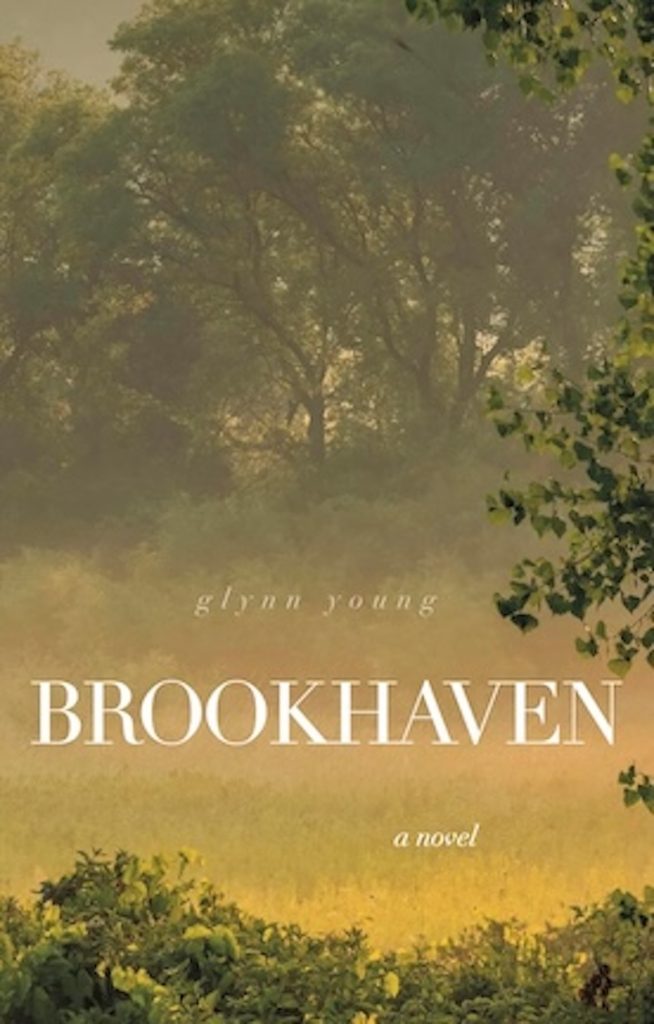
In January, I submitted an article explaining how a family story told through at least generations about my ancestor’s involvement turned out to about as far from the truth as you might imagine. I’d been researching the Civil War and an ancestor’s role in it, for my novel Brookhaven, when I stumbled over what he really did and what actually happened. (The story turned out to be far better, and I stuck with it for the novel.)

My article passed the peer review committee and was duly published in January. And it turns out to have been the second-most read article on the site for 2025. 

You can read the article, “Research for a Novel Upended a Family Legend,” at the site.

Photograph: A page of the family records in the Young Bible.

“John Fremont’s 100 Days” by Gregory Wolk

December 31, 2025 By Glynn Young Leave a Comment

The name John Fremont (1813-1890) evokes images of Manifest Destiny, exploration of the western United States, the first Republican candidate for President (18560, and the separation of California from Mexico. Less well-known is his very brief role in the American Civil War. 

For slightly more than three months in 1861, he was the commander of the U.S. Army’s Western Department, stretching from Illinois to the Rocky Mountains and headquartered in St. Louis. Those three months are now detailed in John Fremont’s 100 Days: Clashes and Convictions in Civil War Missouri by Gregory Wolk and published by the Missouri Historical Society.

John Fremonts 100 Days

Wolk has a gift. He meticulously documents the 100 days of Fremont’s office, but he tells it in a storytelling way. This isn’t some dry account of dates, names, and events, but a critical time in American history brought to life.

Fremont was appointed by President Lincoln, and almost from the beginning the man faced political opposition that only grew, particularly from the influential brothers Frank and Montgomery Blair, who had strong St. Louis ties and interests and their own preferences for military leadership in the region.

As Wolk points out, Fremont often didn’t help his own cause. He received his appointment while he was in Europe. He quickly returned to New York but waited there for the arrival of his wife Jessie and their children from California (via a rail crossing in the Panama isthmus. He likely waited far too long for a President and politicians who wanted quick action. 

Once he reached St. Louis, he faced a deteriorating military situation – secessionist unrest in the northeast and southeast parts of the state (Missouri was a border slave state with a governor who almost succeeded in moving Missouri into the Confederacy), the pro-Confederacy State Guard, and Confederate forces moving up from Arkansas. The Battle of Wilson’s Creek, south of Springfield, occurred in this period, a defeat for Union forces. Critics believed Fremont had authorized too little and too late. Wolk does not that it was this battle that likely gave birth to the profession of war correspondent, with a reporter publishing the story and being almost inundated with contract offers and competitors.

Gregory Wolk

Wolk includes vignettes about some of the key players, including Fremont’s wife, Jessie Benton Fremont, daughter of Thomas Hart Benton and a force in her own right. She took her husband’s defense directly to Lincoln (the meeting didn’t go well) and was his public relations manager (long before the term was invented), defender, and chronicler. Also noted is one of the early involvements in the war by an officer named Ulysses S. Grant.

Wolk is a retired attorney, previously general counsel of Three Rivers Systems, Inc., a St. Louis-based developer of academic management software. He has been executive director of Missouri’s Civil War Heritage Foundation, a program coordinator for the Missouri Humanities Council, and currently a member of the board of directors of the National US Grant Trail Association. He previously published Friend and Foe Alike: A Tour Guide of Missouri’s Civil War (2010), which describes the 237 Civil War sites in the state. He lives with his family in Webster Groves in suburban St. Louis.

In John Fremont’s 100 Days, Wolk tells a great story. Fremont emerges as a leader who made mostly political mistakes, who didn’t perceive the Administration forces growing against him. The book also conveys the sense of one of the key reasons the North appeared to be on the road to ultimate defeat – too many politicians trying to fight battles and second-guessing from the safety of their offices in Washington, D.C. 

Related:

Kirkwood’s Grant Historian – Webster-Kirkwood Times.

  • « Go to Previous Page
  • Page 1
  • Page 2
  • Page 3
  • Page 4
  • Page 5
  • Interim pages omitted …
  • Page 67
  • Go to Next Page »

Footer

GY


Meet the Man

An award-winning speechwriter and communications professional, Glynn Young is the author of six novels and the non-fiction book Poetry at Work.


 01_facebook 02_twitter 26_googleplus 07_GG Talk

Copyright © 2026 Glynn Young · Site by The Willingham Enterprise · Log in | Managed by Fistbump Media LLC