• Skip to primary navigation
  • Skip to main content
  • Skip to footer

Dancing Priest

Author and Novelist Glynn Young

  • HOME
  • BLOG
  • BOOKS
    • Brookhaven
    • Dancing Prince
    • Dancing Prophet
    • Dancing Priest
    • A Light Shining
    • Dancing King
    • Poetry at Work
  • ABOUT
  • CONTACT

Writing

“Remembering: A Novel” by Wendell Berry

August 20, 2025 By Glynn Young 1 Comment

It’s the mid-1970s. Andy Catlett is in San Francisco, a writer attending a modern agricultural conference. His family in Kentucky is likely relieved that he’s away; Andy had become very difficult to live with.

The reason: some time before, Andy and a few others were helping a neighbor on his farm. Andy was operating machinery, and almost without realizing what had happened, he lost his hand. The quick actions by the other men likely save his life; he could have bled to death.

Andy knows farm accidents happen. Now one has happened to him. He has had to learn to function with his left hand, the stump of his right arm a constant reminder of what happened. The fact is that Andy no longer feels whole; his entire life is at sea. And he doesn’t know how he’s going to make his way home again.

Remembering is the last published novel so far in the Port William noels by Wendell Berry. I say “so far” because Berry has a new one publishing Oct. 7, entitled Marce Catlett: The Force of a Story. Remembering is the story of man forced to question everything he’s believed in, discovering his own mortality, and ultimately finding redemption. It has all the classic Berry themes: community, the land, the people of the land, family, and faith.

Wendell Berry

The novel is somewhat autobiographical; Berry, too, worked as an agricultural writer for a time. And he would leave that career when he finally understood the inherent conflict between the agriculture he was raised in and what agriculture had become.

Berry is a poet, novelist, essayist, environmentalist, and social critic. His fiction, both novels and stories, are centered in the area he calls Port William, Kentucky, on the Ohio River. He’s won a rather astounding number of awards, prizes, fellowships, and recognitions. He lives on a farm in Kentucky.

Remembering is the story of a deeply troubled heart and mind, a man trying to find his way, and how healing and redemption ultimately happen. 

Related:

My review of Berry’s That Distant Land.

Wendell Berry and the Land.

My review of Berry’s Jayber Crow.

Wendell Berry and This Day: Poems at Tweetspeak Poetry.

Wendell Berry and Terrapin: Poems at Tweetspeak Poetry.

Wendell Berry’s Our Only World.

The Art of the Commonplace by Wendell Berry.

Nathan Coulter by Wendell Berry.

Andy Catlett: Early Travels by Wendell Berry.

A World Lost by Wendell Berry.

A Place on Earth by Wendell Berry.

The Memory of Old Jack by Wendell Berry.

Another Day: Sabbath Poems 2013-2023 by Wendell Berry at Tweetspeak Poetry.

How a Book Inspired a Character

August 13, 2025 By Glynn Young 1 Comment

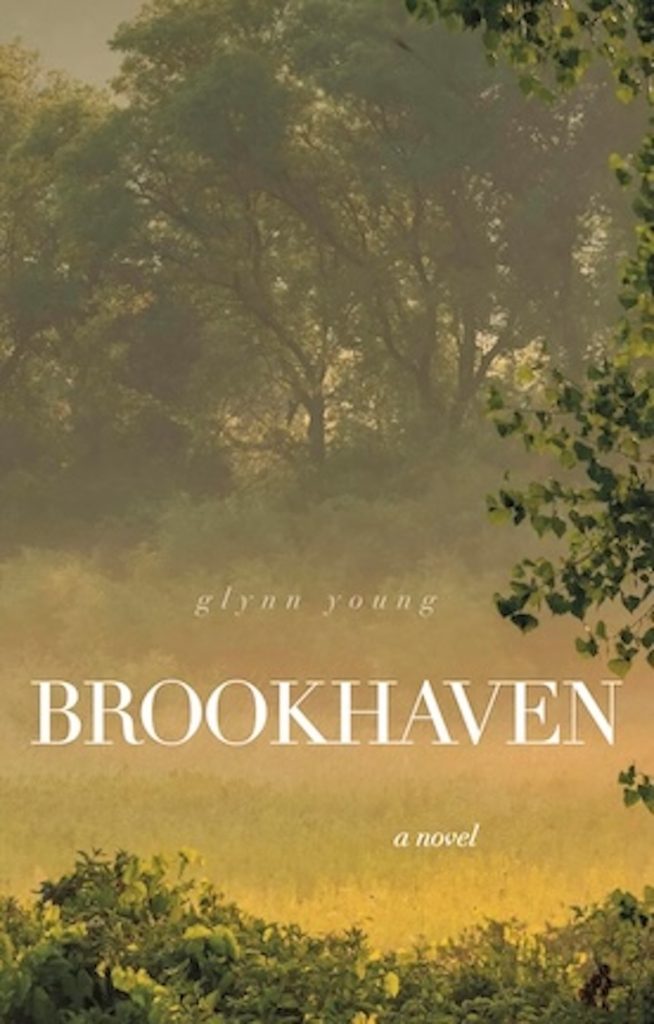
I was struggling while I was writing the manuscript of what would become Brookhaven. I was up to my eyeballs in research; I had the overall story arc in my head. I knew it would be 1915, and the character of Sam McClure would be explaining his life during the Civil War.

I had one problem.

What would he be telling the story in the first place? Why would he be recounting both what he had previously told his family and what he hadn’t told them? I knew that in the 1890-1920 period, memoirs of the Civil War were a major genre of autobiography, but this wasn’t a case of Sam writing his story or dictating his story for it to be published as a memoir. The whole idea was him to tell the story not as it happened or chronologically, but how different events of the war shaped the rest of his life.

Bah, humbug. 

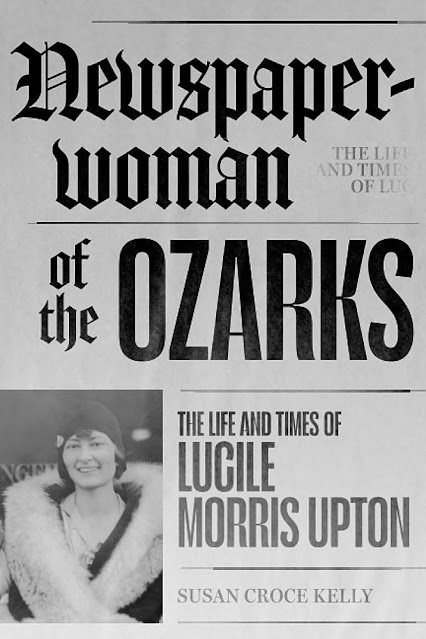
I happened to be reading a biography of a woman journalist. Entitled Newspaperwoman of the Ozarks: The Life and Times of Lucile Morris Upton, it has been written by Susan Croce Kelly, herself a former journalist at the now-shuttered St. Louis Globe-Democrat.

Susan and I had met (I can’t believe it’s been this long) some 45years ago, when we both worked in public relations. In fact, we were in the same speechwriting department for a few years. Another speechwriter in the group named Jim Fullinwider and I had lived through a book she was writing at the time, Route 66: The Highway and Its People. She used weekends and vacation time to travel the length of the old Route 66, at least where it still existed. 

The highway started in Chicago and end in Los Angeles, and it was the stuff of legends. It still is today. Jim and I would sit in Susan’s office on Monday mornings, listening in wonder as she told of her weekend Interviews. She’s a born storyteller, and she was telling us stories that we and most other people had never heard before. In 2014, she published her second book, Father of Route 66: The Story of Cy Avery. 

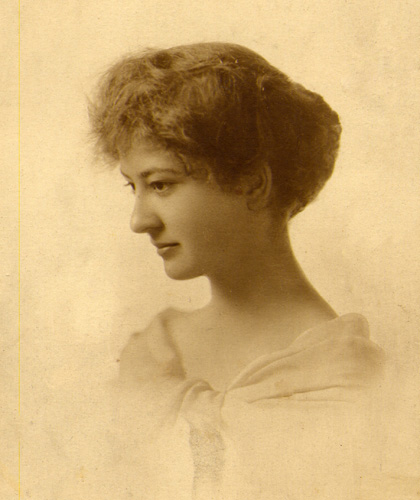
As I was struggling with myself over my own novel, I glanced at the cover of her Lucile Upton book. And I thought. If I went back about a decade in time from the photo of Lucile Upton, I would see the fashions of 1915. (I can’t explain why that thought occurred; it just did.)

Eureka! That was it. Sam McClure would be telling his story, shrouded in mystery still unsolved 50 years after the war had ended, to a newspaperwoman. And her story would turn out to be entangled with his. 

Elizabeth Putnam was born. Headstrong journalist, determined to make her way in what had been a man’s world, not intimidated by what others thought, passionate about women’s right to vote as a first step, and hoping to be sent by her New York newspaper to cover the Great War in Europe.

That’s when I rewrote the beginning of Brookhaven. And that’s when I started rewriting the entire manuscript. Because Brookhaven was never meant to be a story of only the Civil War; it was the story of how a war changed lives and a culture, and how it continued to do that. 

You might say I owe Lucile Morris Upton and Susan Kelly a debt of gratitude. They both helped me tell a story.

Related:

Newspaperwoman of the Ozarks by Susan Kelly.

Top photograph: Lucile Morris Upton about 1915. She would be about six years younger than the character of Elizabeth Putnam in Brookhaven.

The Value of Writing Short Stories

August 6, 2025 By Glynn Young Leave a Comment

In the seven months since my last novel Brookhaven was published, I’ve been focused on talking about it, writing about it, publicizing it, sending out copies, and all the usual things you do to promote your book. I haven’t done much writing of anything else or anything new. An idea for a new novel has been percolating in my mind, but nothing has seen the light of day.

Yet the desire to write is there; it seems like it’s always there. I’ve had to stifle it a bit to keep focused on marketing Brookhaven. 

I was able to scratch the writing itch by what resulted from a coincidence.

To continue reading, please see my post today at the American Christian Fiction Writers blog.

A Bible Verse and a Fictional Scene

July 30, 2025 By Glynn Young Leave a Comment

For the past few months, our church pastors have been preaching a series on the Gospel as seen in the life of David. We’re nearing the end of the series. The sermons have focused on some of the highlights of David’s life, including his anointing by the prophet Samuel, the confrontation with Goliath, the growing animosity of King Saul, the friendship with Saul’s son Jonathan, David becoming king, and Bathsheba. 

Last Sunday, the sermon centered on the end of the rebellion by David’s son Absalom (2 Samuel 18). The army gathered by Absalom has been defeated and scattered; Absalom himself, trying to escape, is caught by his trademark flowing hair in the branches of a tree. He’s dangling there when found by David’s general, who wastes no time in ignoring David’s earlier command to spare Absolom’s life and putting the young man to the sword. 

I’m familiar with the account. I’ve read it many times, my attention caught by the image of Absalom dangling from the tree limb. It is a truism that you can read a book of the Bible, a passage, a chapter, and even a verse scores of times and not see something that will suddenly catch your attention during an additional reading.

This is what I had overlooked: “The battle spread over the face of all the country, and the forest devoured more people that day than the sword” (2 Samuel 18:8, English Standard Version; italics added for emphasis). The penultimate example of this was Absalom himself, but I wondered what had happened to everyone else.

My mind strayed 2,800 years forward to the American Civil War, the Battle of the Wilderness in 1864 near Richmond, Virginia. No rain had fallen for weeks, and the dense brush of the woods was tinder-dry. When the Union army began firing its artillery, the resulting explosions ignited the woods. Soldiers on both sides found themselves not only fighting the enemy but also and even worse foe – a quickly spreading forest fire. (It’s said that the Union artillery killed more of its own men than anything the Confederates did.) 

For my novel Brookhaven, I read extensively about this battle. It’s the setting for the second of three encounters between Captain John Haygood and the young teenager Samuel McClure. Haygood has been wounded and can’t walk unassisted. Not recognizing Sam at first, at gunpoint he orders Sam to take him back to the Union line, dodging animals like snakes fleeing the fire, dying soldiers, and the sounds of single gunshots as the dying and wounded killed themselves rather than be knowingly consumed by the raging fire. It was a fictional scene based entirely on what really happened.

From all accounts, the Wilderness was a horrific battle. If there was a “winner,” it was General Lee’s Confederates. But Ulysses Grant, now in command of the Union army attacking Lee, had something Lee did not – an almost endless supply of recruits – and he was not shy about using them. The Battle of the Wilderness extended for weeks, and it grew to include the Battle of Spotsylvania Courthouse.

It’s a crucial scene in the novel. A year after Grierson’s Raid came to Sam’s hometown of Brookhaven, Mississippi, he again meets the man who had a huge impact on his mother’s life and, indirectly, his own. They will meet once more during the final Battle of Petersburg in 1865.

Absalom’s army was fleeing woods burning from artillery fire, but one can sense the desperation of men who will be judged traitors to King David. They would have met obstacles  like lack of paths, ditches and ravines, wild animals, sudden drop-offs, and, like their leader, unexpected low-hanging branches. 

Researching and writing that scene in Brookhaven gave me a better understanding of that Bible verse. Even when it’s me, I’m fascinated in the way a writer’s mind can work.

Related:

Bear in the Wilderness by Donald Waldemar.

The Battle of the Wilderness by Gordon Rhea.

Diary of a Confederate Tarheel Soldier by Louis Leon.

Hell Itself: The Battle of the Wilderness May 5-7, 1864 by Chris Mackowski.

Photograph by Filip Zrnzevic via Unsplash. Used with permission.

The Mud Queen

July 4, 2025 By Glynn Young Leave a Comment

When I agreed to co-teach a Sunday School class of second graders, I had no idea of what I was going to experience. And it wasn’t the kids.

It was my co-teacher, Carl.

He recruited me. We both had our youngest children – boys – in second grade. The Sunday School class needed a teacher. We’d met in an adult Sunday School class, but we weren’t particularly close friends. 

“Look,” Carl said, “they need a teacher for the second grade. I can entertain the kids, but you’re the teacher. We have to make this fun. We can show the kids that Sunday School is fun. And so is learning about God.”

To continue reading, please see my story at Cultivating Oaks Press. This is the summer edition, and the theme is merriment.

Photograph by Matt Seymour via Unsplash. Used with permission.

“Echoes of Hemingway: An Anthology”

June 18, 2025 By Glynn Young Leave a Comment

In early May, I was reading A Farewell to Arms by Ernest Hemingway. Coincidentally, a writer named Harvey Stanbrough announced a writing contest for short stories inspired by any work of Hemingway’s. 

This must be a sign, I thought; I’m right in the thick of what’s known as the great love story of World War I. 

I wrote a story and submitted it. It wasn’t one of the stories chosen as top 3 (with a little prize money) but it was chosen to be in the e-book anthology, “Echoes of Hemingway.” 

The title of my story is “Sonnets to Psalms,” and it’s about what happens to the main character Frederick Henry after the war ends. The title comes from a sonnet written in 1590 by George Peal, which some literary critics believe inspired Hemingway to write his World War I story. The sonnet’s title: “A Farewell to Arms.”

Then it became a matter of fitting pieces together – the town of Montreux, Switzerland, where Frederick and Catherine lived; an abbey not too far away; and some basic research.

The anthology contains 20 stories by 13 writers (a few overachievers wrote more than one story), and it has some very fine short stories covering a surprising number of genres. My own story would be categorized as general or historical fiction.

You can find more information about the anthology at https://payhip.com/b/3ibI5, and it will be available on the various book sites July 12. It can be pre-ordered at Amazon or at Books2Read. And it’s available right now at Harvey’s web site.

I’d never done this with a short story before, and it was actually a lot of fun.

  • « Go to Previous Page
  • Page 1
  • Interim pages omitted …
  • Page 5
  • Page 6
  • Page 7
  • Page 8
  • Page 9
  • Interim pages omitted …
  • Page 46
  • Go to Next Page »

Footer

GY


Meet the Man

An award-winning speechwriter and communications professional, Glynn Young is the author of six novels and the non-fiction book Poetry at Work.


 01_facebook 02_twitter 26_googleplus 07_GG Talk

Copyright © 2026 Glynn Young · Site by The Willingham Enterprise · Log in | Managed by Fistbump Media LLC