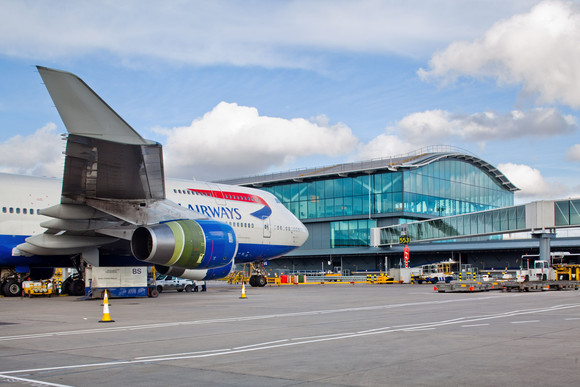
I try to remember when the reality of what had happened to us finally sunk in. I had a glimpse when I saw thousands camped out at the hospital, praying for Mike’s survival. And on the plane to London, I saw the looks of deference as we walked through the cabin to greet passengers. But I knew for sure when we walked into the terminal at Heathrow, with the archbishop and the prime minister waiting for us, almost surrounded by television, flash cameras, and mobiles held high to get a shot of the new royal family.
Us.
- Sarah Kent-Hughes, Dancing King
Photo: British Airways plane at Heathrow Airport.


 Dancing Prophet is fiction, but like all fiction, it can’t help but reflect the times in which it’s written. When the history of our times comes to be written, it may be title (or subtitled) “The Age of Institutional Crisis.” Our government structures aren’t working; the sorry spectacle of a U.S. Senator questioning a candidate for the Supreme Court about the references to body noises in his high school yearbook isn’t even funny as much as it is tragic.
 This is the world partially depicted in Dancing Prophet. Michael Kent-Hughes has been thrust into a position he never expected and never sought. He is not only dealing with ecclesiastical failure; he is also dealing with politicians increasingly reluctant to take responsibility and a London governing authority that ceases to work due to political disfunction.

 He felt like screaming. Instead, he dug his fingernails into his legs where his hands rested. He briefly glanced as the phone message left by his secretary. Please call as soon as convenient. He would like a meeting as soon as possible. And a phone number for a Detective Merwin with the Bristol police.
 Should he call Gwendolyn? He knew his wife was volunteering at school today. She wouldn’t be home until 4 or 4:30. Should he say anything? This could be just a perfunctory conversation with the detective, just the routine thing they did.