• Skip to primary navigation
  • Skip to main content
  • Skip to footer

Dancing Priest

Author and Novelist Glynn Young

  • HOME
  • BLOG
  • BOOKS
    • Brookhaven
    • Dancing Prince
    • Dancing Prophet
    • Dancing Priest
    • A Light Shining
    • Dancing King
    • Poetry at Work
  • ABOUT
  • CONTACT

Reviews

Wendell Berry and the “Mad Farmer Poems” 

September 10, 2025 By Glynn Young 2 Comments

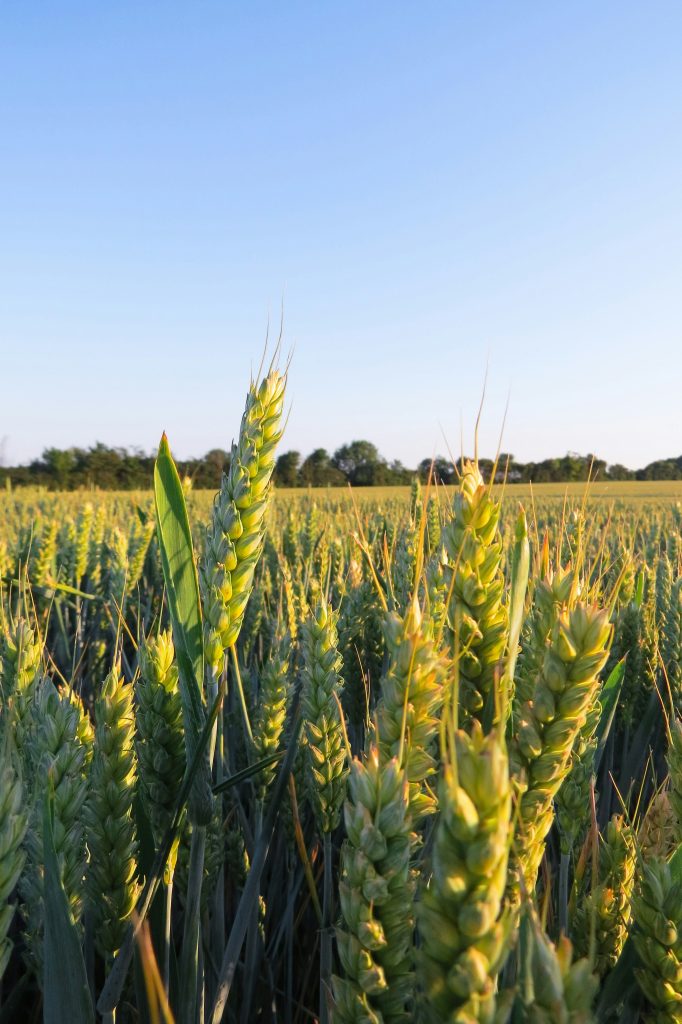
Wheat fields

It was a conversation that went much like you might expect.

“I don’t understand it,” the executive said. “They hate us. They hate what we do. They don’t even really understand what it is that we do. They don’t understand how important our products are for farmers and for the world’s food supply.”

I was sitting in the executive’s office, working with him on a speech he was to give. What he was talking about wasn’t the subject of the speech, but it was clearly on his mind. I listened to what was essentially a rant, and then I asked a question.

“Have you read Wendell Berry?”

He stared at me. “Who’s that?”

And there it was. The animosity about the company’s products, the position of the company in the marketplace, the company’s close identification with “Big Agriculture,” and the executive’s being perplexed with the activists and animosity on social media could all be summed up that that question – “who’s that?”

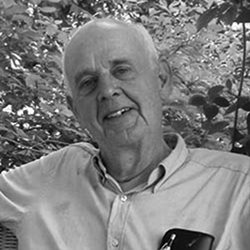
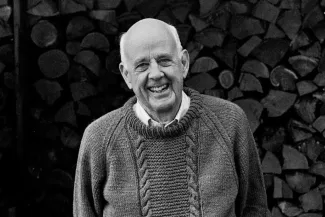
Wendell Berry

I answered his question. “Berry,” I said, “is the man who has articulated a very different understanding of agriculture, the idea of community, and the understanding of the land. He’s widely read and admired. You have to read his essays to understand what’s behind all the animosity and controversy. His fiction and poetry will help, too.”

The response? “I don’t have time to read that stuff.”

Now 91, Berry was born in Henry County, Kentucky, where his family had farmed for five generations. He worked as a writer for agricultural publications like Rodale Press, but he eventually returned to Henry County and worked his own farm, Lane’s Landing. 

But he continued to write. He wrote essays, poems, general interest articles, short stories and novels. He fictionalized his region of Kentucky, renaming the nearby town of Port Royal as  “Port William.” Slowly and then rapidly, his ideas of land, community, and agriculture permeated American culture, influencing people like Joel Salatin and Michael Pollan, who in turn have had a huge influence.

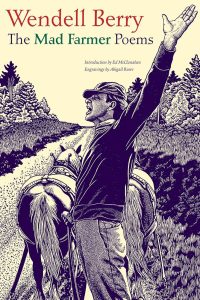
I generally prefer Berry’s fiction and poetry to his essays. A good place to start is with The Mad Farmer Poems, where Berry articulates his major problems with agriculture as practiced in the United States. It’s a relatively short collection, about the size of a chapbook, and it includes such poems as “The Mad Farmer Revolution,” “Manifesto: The Mad Farmer Liberation Front” (which is not as radical as it sounds) and “Prayers and Sayings of the Mad Farmer.”

The poems introduce you to a man who is, yes, angry about the state of modern agriculture, but who maintains a reverence for the land, the people who farm it, and the community the people create together. This is what Berry sees as broken and lost in America of the 21st century, and it’s difficult not see the sense he makes.

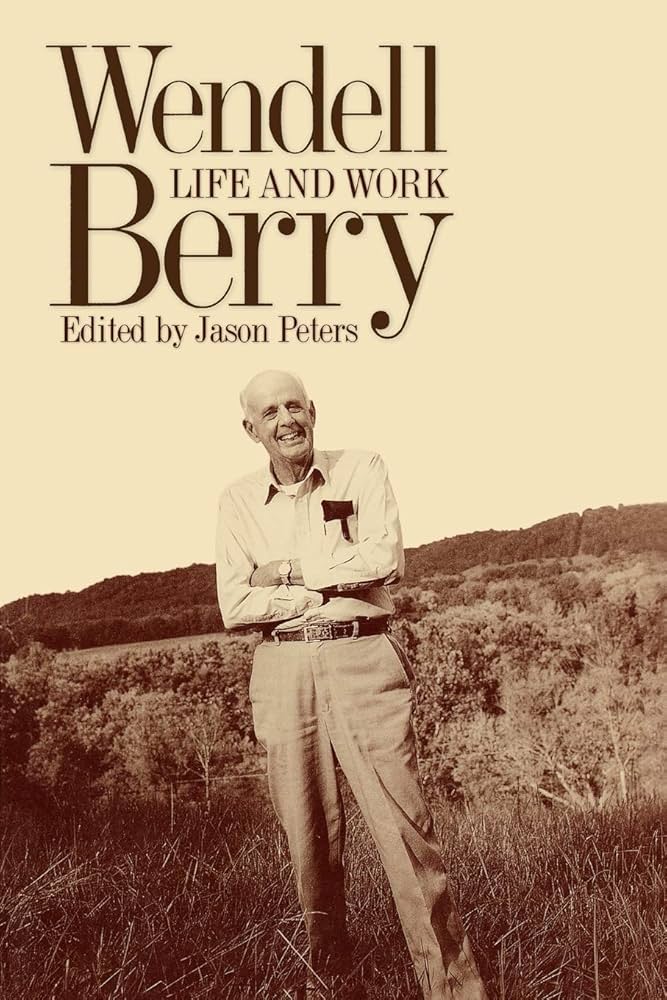
In 2007, Jason Peters, a professor at Hillsdale College, assembled and edited a collection of essays about Berry under the title Wendell Berry: Life and Work.  It’s a good introduction to Berry and his writings from people who admire his work and his beliefs and have generally been strongly influenced by him. 

The contributors include non-fiction author Sven Birkerts, novelists Barbara Kingsolver and Gene Logsdon, poets Donald Hall and John Leax, Patrick Deneen of Georgetown University, ecology writer Bill McKibben, and numerous others. They speak to Berry’s fiction, his poems, his faith, his philosophy, his deep beliefs in land and community, and related topics. And the key here is the word “related.” Berry doesn’t compartmentalize different parts of his life. It is all part of an integrated whole.

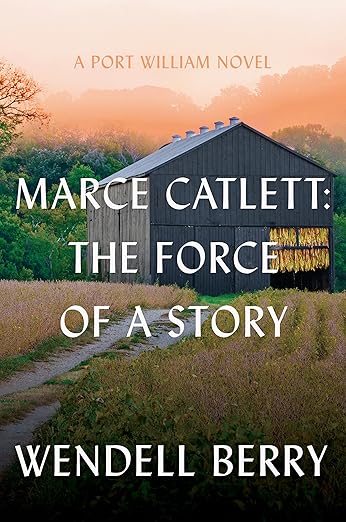
Berry received B.S. and M.A. degrees from the University of Kentucky. He was a Wallace Stegner Fellow at Stanford University and studied in Italy and France under a Guggenheim Fellowship. He taught at New York University and the University of Kentucky and served as a writer for Rodale Press. Since 1965, he and his wife have lived at Lane’s Landing. And he has a new Port William novel publishing in October – Marce Catlett: The Force of a Story.

When the executive and I had that conversation, more than a decade ago, I had read much of Berry’s poetry, two of his novels, and several of his essays – a mere drop in the bucket of what the man has published. I’ve read much more since then. And I think my answer to “Who’s that?” is even more on point now then it was back then. If you want to understand the culture – and cultural battle – of American agriculture, you have to read Wendell Berry.

Related:

My review of Berry’s That Distant Land.

Wendell Berry and the Land.

My review of Berry’s Jayber Crow.

Wendell Berry and This Day: Poems at Tweetspeak Poetry.

Wendell Berry and Terrapin: Poems at Tweetspeak Poetry.

Wendell Berry’s Our Only World.

The Art of the Commonplace by Wendell Berry.

Nathan Coulter by Wendell Berry.

Andy Catlett: Early Travels by Wendell Berry.

A World Lost by Wendell Berry.

A Place on Earth by Wendell Berry.

The Memory of Old Jack by Wendell Berry.

Poets and Poems: Wendell Berry and Another Day.

Top photograph by Megan Andrews via Unsplash. Used with permission.
Two Reviews of “Brookhaven”

September 5, 2025 By Glynn Young Leave a Comment

One day, I’ll figure out how Amazon works. Here are two reviews of Brookhaven, both dated December of 2024 (the month it was published), but which didn’t show up until the last week. Still, I thank both reviewers for their kind comments.

From Dec. 26, 2024:

 Immensely Satisfying

A quick admission, I usually have to be drug kicking and screaming to read new novels. So, when this book was placed into my hands, I’m now glad my tantrum was brief and that I settled in to both read and enjoy Brookhaven. The novel is lovely, sad, joyful, redemptive, and all around a thoroughly satisfying example of entertaining storytelling. Without giving away the plot, the author artfully weaves in the awful complexity of the Civil War, along with its immediate aftermath, into the lives of the generations that came after, and all with a most satisfying conclusion.

And from Dec. 31, 2024:

 “Brookhaven” kept me up late wondering what would happen next!

“Brookhaven” is a retrospective novel set amidst the grim realities of the American Civil (and often not-so-civil) War and its aftermath. While Young’s descriptions of the war feel so authentic and in the moment, it is his love story—one of romantic love and, even more, love of a place and its people—that drew me in. Young’s writing is clear and concise, and he weaves together a complicated tale that is engaging, endearing, and enlightening. I don’t have a lot of time to read, but the book managed to keep me up late at night wondering what would happen next. I expect it will do the same for many other readers.

“A Month in the Country” by J.L. Carr

September 3, 2025 By Glynn Young Leave a Comment

In 1980, British writer J.L. Carr (1912-1994) published a short novel. It was one of eight he would publish during his life. And it turned out to be the one that became something of a classic. Even today, it’s considered a “perfect novel.”

The novel is A Month in the Country. It has the kind of plot that wouldn’t lead you to believe it would become as famous as it has. A veteran of World War I, who specialized in art restoration before the war, has been hired to uncover a mural in a small chapel in Yorkshire, one dating to early Anglo-Saxon times. At some point in the past, perhaps during the dissolution of the monasteries and raiding of the churches by Henry VIII, the mural has been covered over. 

Now the church authorities want it restored, if possible. Thomas Birkin, the veteran is still suffering from post-traumatic stress disorder (called something else back then), largely manifested by a nervous tic in his face that he can’t control. His wife has deserted him, although she had deserted him many times before. It’s a perfect job for Birkin – away from people, away from stress, and it might just give him the time he needs to heal. 

J.L. Carr

Working near the adjacent cemetery is another veteran, Charles Moon, who’s been hired to find the bones of an ancestor of a former parishioner, who believed the burial was somewhere near the cemetery. Moon and Birkin become friends. And it will turn out that Moon is also healing from a different kind of wartime experience. 

Inevitably, Birkin finds himself being drawn into the life of the nearby village of Oxgodby. The townspeople, including the vicar’s wife, will also help Birkin heal. Rather surprisingly, nothing will quite turn out the way the reader expects, and that’s part of what gives the novel its charm. 

The book was made into a movie of the same name in 1987, starring Colin Firth as Birkin, Kenneth Branagh as Moon, Natasha Richardson as the vicar’s wife, and Patrick Malahide as the priggish vicar. 

Carr drew on his own background of growing up in Yorkshire for all his novels, including A Month in the Country. The themes of art, vanished village life, community, and healing are worked through his books. 

It’s a gem of a story, the uncovering of the mural (and the artist) a significant part of it. Life never quite works out the way you think it will, and sometimes that’s a very good thing.

“Foster” by Claire Keegan

August 27, 2025 By Glynn Young 1 Comment

Irish writer Claire Keegan writes stories like Johannes Vermeer painted paintings: interior scenes, perfectly drawn, with far more going on than what first meets the eye. Whether you’re reading a Keegan novel or standing before “Girl with a Pearl Earring,” when you finish and walk away you simply say, “Yes.”

I discovered this when I read Keegan’s Small Things Like These, the story of a coal hauler doing his regular delivery at a convent when he discovers a young girl shivering outside and discovers he has walked into something else entirely. Keegan moves comfortably into her characters’ skins, and the reader becomes almost one with the story.

In Keegan’s short novel Foster, a young girl doesn’t entirely understand what is happening when her father brings her to the home of an older couple, Mr. and Mrs. Kinsella. The girl’s mother is in the final months of pregnancy, the house is already full of children, and the family has the opportunity to park her with a childless couple. The girl discovers a life very different from her own, a life of regular baths, daily changes of clothes, trips to get ice cream, and a couple who love her from the moment she walks in their door. She also discovers something of a mystery, like why she’s initially given the clothes of a boy. And there’s something about the well from which water is drawn.

Claire Keegan

In the day-to-day life of this couple and the girl, the story unfolds. Gradually she discovers how to live a different life, and she will soon come to understand what happened in the family. The story unfolds perfectly; Keegan is one gifted storyteller.

Keegan is best known for her short stories, which have appeared in such publications as The New Yorker, Granta, Best American Short Stories, and The Paris Review, among others. Her writing has won numerous awards and recognitions, including the Rooney Prize for Irish Literature, the William Trevor Prize, and several short story awards. She studied English and political science at Loyola University in New Orleans, received a M.S. degree in creative writing at the University of Wales, and a M.Phil degree from Trinity College Dublin. She lives in rural Ireland.

I didn’t know if I could like a Keegan story better than I liked Small These Like These, but Foster dispelled any doubts I had. From beginning to end, it’s a story of compassion, understanding, and what makes us human. 

Related:

Small Things Like These by Claire Keegan.

“Remembering: A Novel” by Wendell Berry

August 20, 2025 By Glynn Young 1 Comment

It’s the mid-1970s. Andy Catlett is in San Francisco, a writer attending a modern agricultural conference. His family in Kentucky is likely relieved that he’s away; Andy had become very difficult to live with.

The reason: some time before, Andy and a few others were helping a neighbor on his farm. Andy was operating machinery, and almost without realizing what had happened, he lost his hand. The quick actions by the other men likely save his life; he could have bled to death.

Andy knows farm accidents happen. Now one has happened to him. He has had to learn to function with his left hand, the stump of his right arm a constant reminder of what happened. The fact is that Andy no longer feels whole; his entire life is at sea. And he doesn’t know how he’s going to make his way home again.

Remembering is the last published novel so far in the Port William noels by Wendell Berry. I say “so far” because Berry has a new one publishing Oct. 7, entitled Marce Catlett: The Force of a Story. Remembering is the story of man forced to question everything he’s believed in, discovering his own mortality, and ultimately finding redemption. It has all the classic Berry themes: community, the land, the people of the land, family, and faith.

Wendell Berry

The novel is somewhat autobiographical; Berry, too, worked as an agricultural writer for a time. And he would leave that career when he finally understood the inherent conflict between the agriculture he was raised in and what agriculture had become.

Berry is a poet, novelist, essayist, environmentalist, and social critic. His fiction, both novels and stories, are centered in the area he calls Port William, Kentucky, on the Ohio River. He’s won a rather astounding number of awards, prizes, fellowships, and recognitions. He lives on a farm in Kentucky.

Remembering is the story of a deeply troubled heart and mind, a man trying to find his way, and how healing and redemption ultimately happen. 

Related:

My review of Berry’s That Distant Land.

Wendell Berry and the Land.

My review of Berry’s Jayber Crow.

Wendell Berry and This Day: Poems at Tweetspeak Poetry.

Wendell Berry and Terrapin: Poems at Tweetspeak Poetry.

Wendell Berry’s Our Only World.

The Art of the Commonplace by Wendell Berry.

Nathan Coulter by Wendell Berry.

Andy Catlett: Early Travels by Wendell Berry.

A World Lost by Wendell Berry.

A Place on Earth by Wendell Berry.

The Memory of Old Jack by Wendell Berry.

Another Day: Sabbath Poems 2013-2023 by Wendell Berry at Tweetspeak Poetry.

“Spare Us Yet: And Other Stories” by Lucas Smith

July 23, 2025 By Glynn Young Leave a Comment

Faith meets reality. Sometimes, it doesn’t work out as you expect it to, or as you think it should.

Growing up in a culture that’s saturated Catholic (like New Orleans was), even we non-Catholics were aware of the impact and reach of the church. Ash Wednesday felt weird when you were one of the few in public school with a clean forehead. You lined up for your polio vaccine (sugar cube style) at the local Catholic school. Most of the weddings and funerals you attended were Catholic, and you typically found more food at funerals than wedding receptions. Almost all your neighborhood friends were Catholic. You took you SAT tests at the Catholic high school. Catholic was familiar; Catholic was normal.

Perhaps this is why I felt completely at home with Spare Us Yet, the collection of short stories by Lucas Smith. To call them Catholic stories would be an act of misdirection. Certainly, they all have the sense of faith, and a few even concerns priests, religious holidays, and observances. But they are not stories of faith as taught in seminary or theology textbooks as they are stories of faith lived out in day-to-day life.

A young priest prepares for Shrove Tuesday. An American tries to give away an Eisenhower dollar in Mexico, discovering that even friends may not be what they seem. People wrestle with getting the COVID vaccine. An expert marksman volunteers to be part of a firing squad chosen by the condemned felon as his method of execution. An omen of death in the form of a washerwoman appears in three visions. In a dystopian future, a man gets in trouble with villagers for teaching children about Jesus, repeating stories as he remembers them (this may be my favorite in the collection, although several are vying for that). A young boy prepares for a swim meet by having the “heat numbers” written on his arm. Priests try to manager worship during lockdown. A mother and her son take a trip to the Outback. A grandson visits his ailing grandparents, who are trying to cover for each other’s memory loss. A letter to the editor serves as an obituary. And more.

Lucas Smith

Every story in Spare Us Yet is moving; each is worth reading at least twice. The characters are people struggling to make sense of life, struggling to understand what it means to live one’s faith. You know them, you’ve met people like them, and you recognize yourself in them.

Smith is a writer and poet who is from Orange County, California and Australia, where he currently lives. His writing has been published in such literary journals as Australian Book Review, Meanjin, Quadrant, Island, Southerly, and The Rialto. He’s the co-founder and editor-in-chief of Bonfire Books in Melbourne, and in 2023 served as writer-in-residence at Wiseblood Books, which led to the writing and publication of Shape Us Yet. He writes The Sprawl of Quality at Substack.

A word about Wiseblood Books. Likely named for Flannery O’Connor’s first novel, it publishes fiction, non-fiction, and poetry. I’m most familiar with the poetry, having read some 18 of their collections over the past several years. I’ve also read several of their fiction works. Their authors include Sally Thomas, Kary Carl, Dana Gioia, James Matthew Wilson, Glenn Arbery, Marly Youmans, and many authors. The novel Hold Fast, by Spencer K.M. Brown, was one of my favorite books in all of 2024. They work with literary fiction, serious literary fiction, but it’s also readable literary fiction. I can’t recommend them enough.

Related:

Lucas Smith reads from his story “Compline.”

An Australian to English Glossary for Spare Us Yet – Luch Smith at The Sprawl of Quality.

  • « Go to Previous Page
  • Page 1
  • Page 2
  • Page 3
  • Page 4
  • Page 5
  • Interim pages omitted …
  • Page 15
  • Go to Next Page »

Footer

GY


Meet the Man

An award-winning speechwriter and communications professional, Glynn Young is the author of six novels and the non-fiction book Poetry at Work.


 01_facebook 02_twitter 26_googleplus 07_GG Talk

Copyright © 2026 Glynn Young · Site by The Willingham Enterprise · Log in | Managed by Fistbump Media LLC