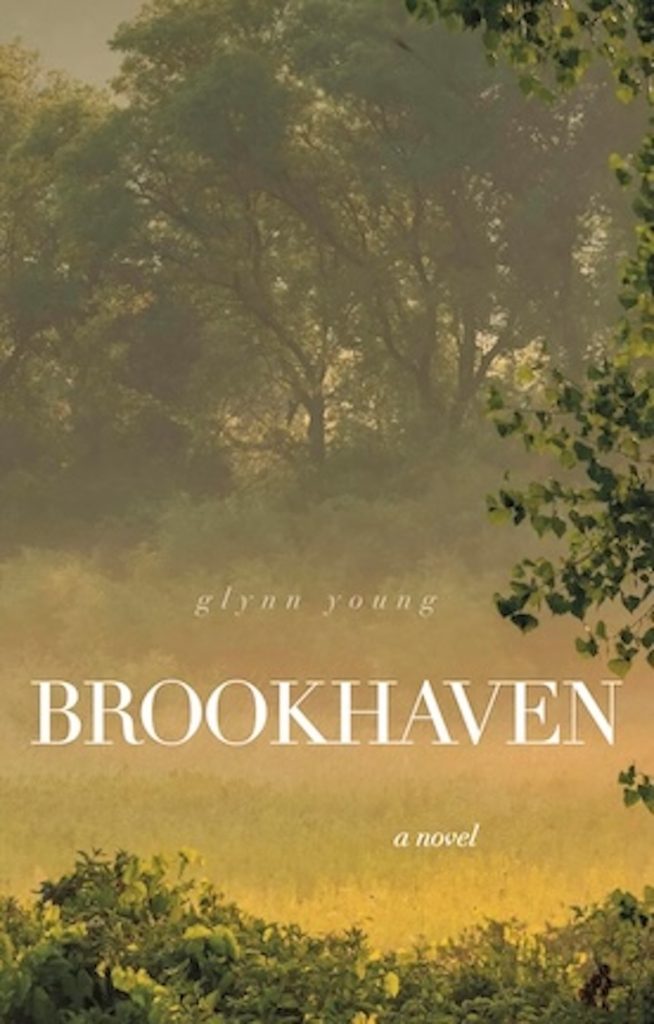
When I began to write my historical novel Brookhaven, my jumping off point was a family story. My father often told me about my great-grandfather, Samuel Young, and his Civil War experience.
The story was this: Samuel was 13 when the war began in April of 1861. He was too young to enlist, so he signed up as a messenger boy. He had been in that position for a good deal of the war. When the war ended with the surrender of General Lee’s Army at Appomattox Courthouse to General Grant and the surrender of General Johnston’s army to General Sherman at Greensboro, Samuel found himself in the East, with no way to get home except by foot.
The story went on, When Samuel arrived home in Brookhaven, he found his family gone. Told they had fled to Texas rather than live under federal control, he continued his trek west, across Louisiana, until he found them in East Texas. A key part of the story was that the family had never owned slaves; they had been shopkeepers.
It’s a great story. A teenager, going off to war, too young to fight but finding other ways to serve, finds himself stranded at war’s end and has to walk home. He would have had to walk across Georgia, with its devastated 60-mile swath thanks to General Sherman’s march. He would have found more devastation in Alabama, and financial and social upheaval everywhere. Law and order would have broken down; soldiers and freed slaves alike would have been pillaging. People, especially people passing through, would not have found it easy to find food.
I held on to that story for more than half a century, and then I decided to write about. A historical novel, to bring my great-grandfather’s story to life.
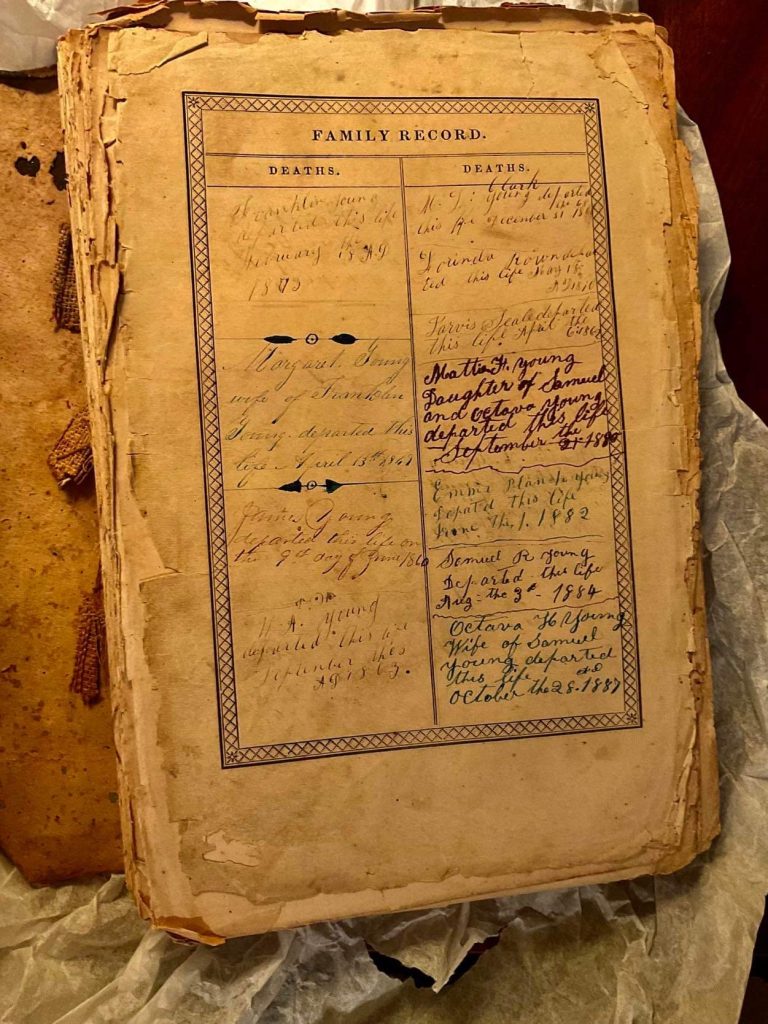
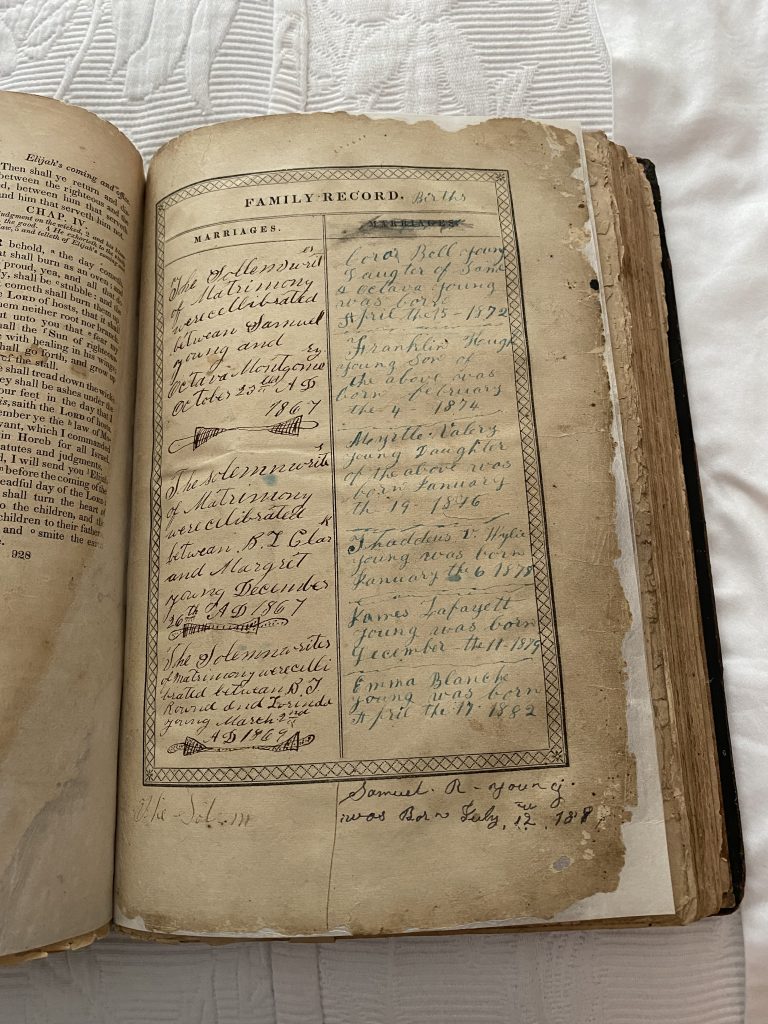
Considerable research was required – battles, social conditions, the home front, political history. I found some wonderful web sites that focused on historical research. I read other novels, speeches from the era, and spent a lot of time with records from the family Bible, which took me in unexpected directions. I researched genealogy sites like Family Search and Ancestry.com.
I went through data bases of Confederate soldiers, looking for any reference to Samuel. I didn’t find one. That was the first red flag. Then I learned what the term “messenger boy” really meant – the equivalent of a Western Union messenger who delivered the telegrams or bad news to families. I rechecked birth dates and accounts of how the Confederacy took the enlistment age down to 16 officially and lower unofficially. The story of “too young to enlist” wasn’t holding water. For Samuel, that wouldn’t have been true in the last three years of the war. The unraveling of the family story, the family legend, was underway fully.
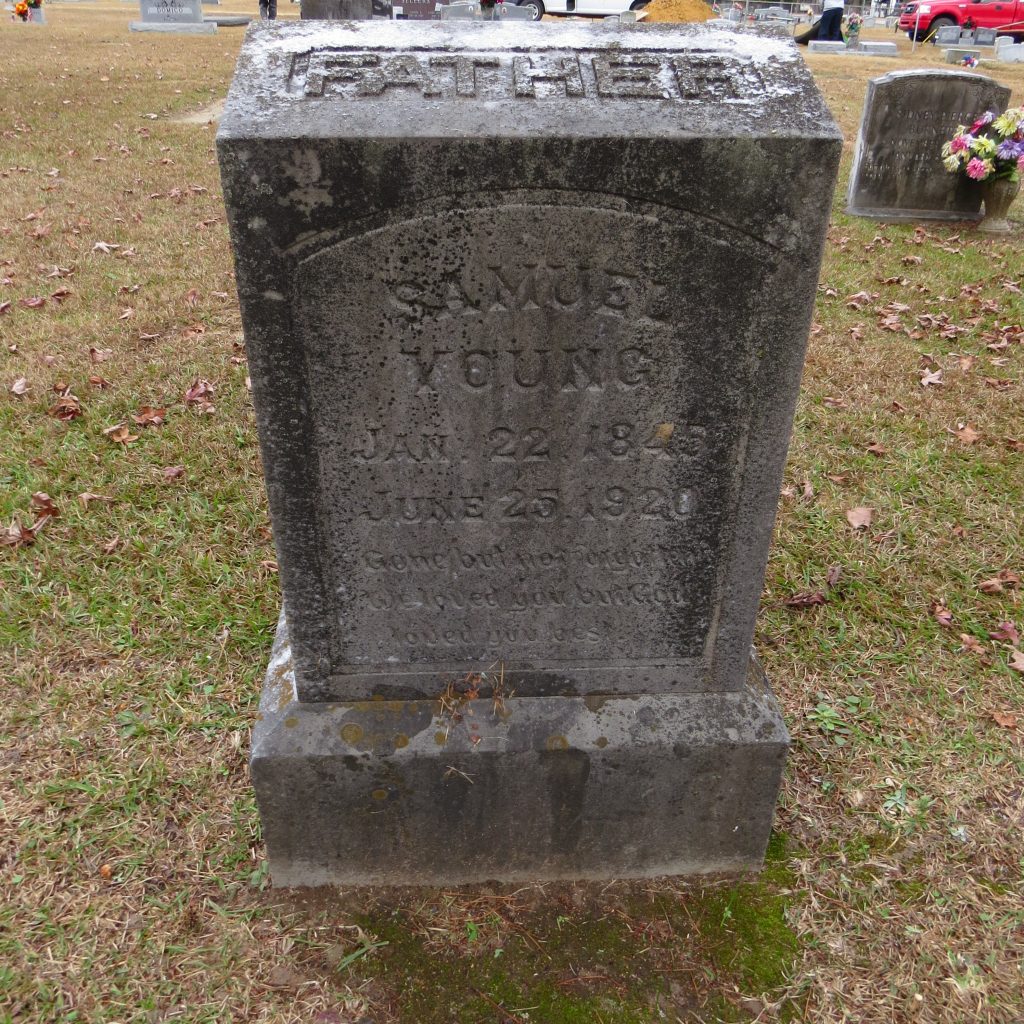
Then I found another account, by Samuel’s oldest son Hugh (my grandfather was Samuel’s youngest son; how we ended up with Samuel’s family Bible is unknown but still a source of controversy). It’s based on the story Samuel told Hugh’s children.
The story was that Samuel’s two older brothers enlisted, and their father didn’t want his youngest and the last son at home to stay. He paid to keep Samuel out of it, including paying another young man to take his place in an enlistment. When even that no longer worked, and Samuel had to enlist, his father arranged for his to be sent to a regiment in Texas, far from the horrific battles in the East. Samuel supposedly told his grandchildren that he “never saw a Yankee the entire time; all I did was chase Injuns.”
That story rang true. There was no messenger boy working in the Confederate armies. No long trek home from Appomattox. No finding the family gone in Brookhaven. They had fled to Texas, but Samuel, being in Texas himself, knew that.
The unraveling got worse. I found the census records for Mississippi for the years 1830 to 1860, and for 1870 to 1910. The Youngs were there. The entire time, their occupations were listed as farmers, not shopkeepers. They didn’t live in Brookhaven but in Johnston Station, south of Brookhaven. And, through 1860, the records included the names of their 17 slaves.
This was never the heroic, romantic story my father told me. I don’t know whether he invented it, or my grandfather, or even whether I misunderstood or misheard. But it turned out to be a real story, the true story. Samuel did survive the war; his two brothers and a brother-in-law did not. His father was right to be concerned, just as concerned as fathers and mothers all over the North and the South were. It’s estimated that 10 percent of the population of the United States – combined North and south – died during the war. Samuel could easily have been part of that statistic.
I stuck with the story as I heard it from my father for Brookhaven. But the real story was just as important.
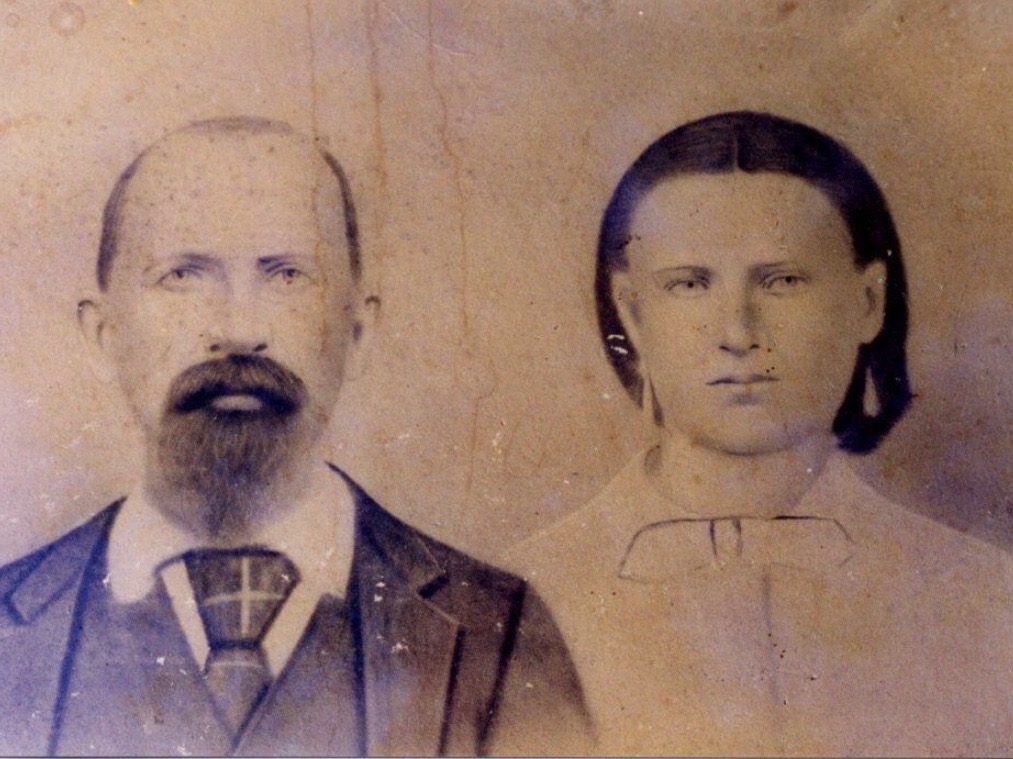
Top photograph: Samuel Franklin Young and his wife Olivia Montgomery Young.