• Skip to primary navigation
  • Skip to main content
  • Skip to footer

Dancing Priest

Author and Novelist Glynn Young

  • HOME
  • BLOG
  • BOOKS
    • Brookhaven
    • Dancing Prince
    • Dancing Prophet
    • Dancing Priest
    • A Light Shining
    • Dancing King
    • Poetry at Work
  • ABOUT
  • CONTACT

communications

Looking Back at a Crazy Job

July 22, 2026 By Glynn Young 2 Comments

I’ve spent a few weeks reflecting on my incredibly short, and incredibly long, eight months with St. Louis Public Schools. What began with the strangest job interview I ever had, the weirdest first day on the job, and the ongoing chaos of every single day ended with a very quiet farewell. 

In previous jobs in corporate communications, I’d experienced periods of media blitzes and controversies. But I’d never experienced a job in which every day was a media blitz, every day was a controversy, and I had to work and publicly communicate in a highly political environment where it was difficult to know who was telling the truth, whose information was accurate, and who was trying to help or merely trying to gain an edge on an opponent. 

It’s often difficult to believe today, but I quickly learned that the news media were my most accurate sources of information. Several of the reporters had police radios and picked up reports of problems at individual schools, school bus issues, and conflicts within school headquarters itself that sometimes reached police report level.

With a budget that had been slashed from $1 million to $20,000, and that $20,000 already spent, we had to improvise how we communicated. What has been largely on paper before – newsletters, magazines, internal newspapers – became electronic – the web site, email, and message boards. I had to give myself a crash course in communicating online. I became allies with the IT team. I discovered how school parents and protesters (and they often overlapped) communicated. 

I talked and listened to everyone. I answered every media call. I never turned down a request for a statement. I learned how to piece together statements when no one wanted to go on record. I had to learn quickly how to read between the lines. I learned there was one person I could trust completely, a guy on the staff of the management team that had been brought in to try to rectify the precarious situation the school district was in – too many buildings, declining enrollments, too large an administrative overhead, and was not just facing bankruptcy but, unknown to most, was already in it.

Actions like closing schools, laying off staff, and changing the pension program are the stuff of controversy, outrage, and protest. Those had started in June of that year; I arrived in October, following the resignation of the communications director who had lost the entire staff and budget. My one-half of a headcount and I did what we had to do – improvise, think on our feet, make decisions without the benefit or luxury of time to think them through. 

We also had to deflect interference. The mayor’s office called daily, with instructions what we should be doing for the day. Yes, there was no official connection between the mayor and the school district, bit it happened. I’d listen politely and go back to my work. One School Board member would find a new public relations firm each month that had the ideas and plan that would immediately solve all the communication problems of the district. I would dutifully go to hear a presentation, usually, just a consultant spouting platitudes. I’d thank them and go back to work. Almost all of the members of the Board understood communications and weren’t shy about what we needed to do, and I’d listen politely, wondering how soon that member would be leaking the Board’s confidential information.

This was not an environment that inspired trust.

As I started my eighth month, I was hitting full-on physical exhaustion. And right at that point, I received a phone call, from a good friend I knew at my former corporate employer. The business that the company had spun off in 1997 had finally gone into bankruptcy, and under the terms of the spinoff, the environmental liabilities had returned to the former parent to manage until bankruptcy was resolved. 

The relationship between the bankrupt spinoff and the former parent was not optimum. For months, in fact, it was being fought in the news media. I’d see the reports and shake my head, knowing how much the people in the parent company would hate the publicity. Then I’d go back to whatever crisis or chaos the school district had that morning.

Then came the call. The friend from the parent company chatted a bit and then asked a question. “Have you ever thought about coming back?”

My answer was immediate. “No.”

“Would you like to think about it?”

“Doing what, exactly?”

The job involved the parent company and the bankrupt spinoff. Managing media inquiries, developing positions, help manage the environmental issues that had returned with the bankruptcy, and work with my counterparts at the spinoff.

The fact that I had been on television – a lot – didn’t hurt. They’d noticed, and when they tried to figure out what to do, I kept showing up on television. 

I interviewed. I got the job. 

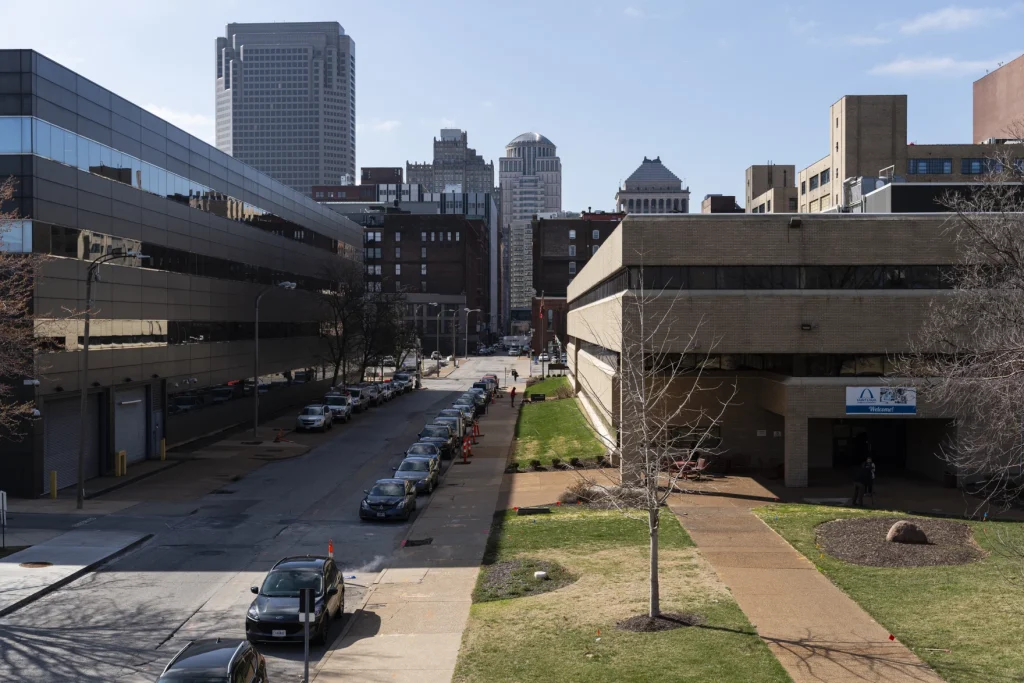
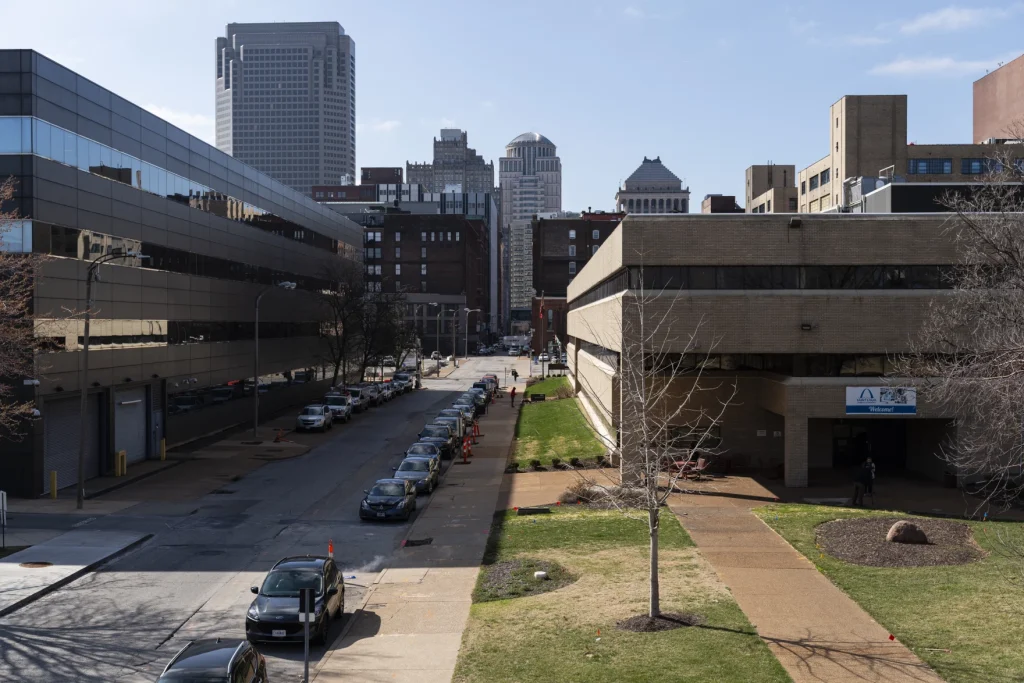
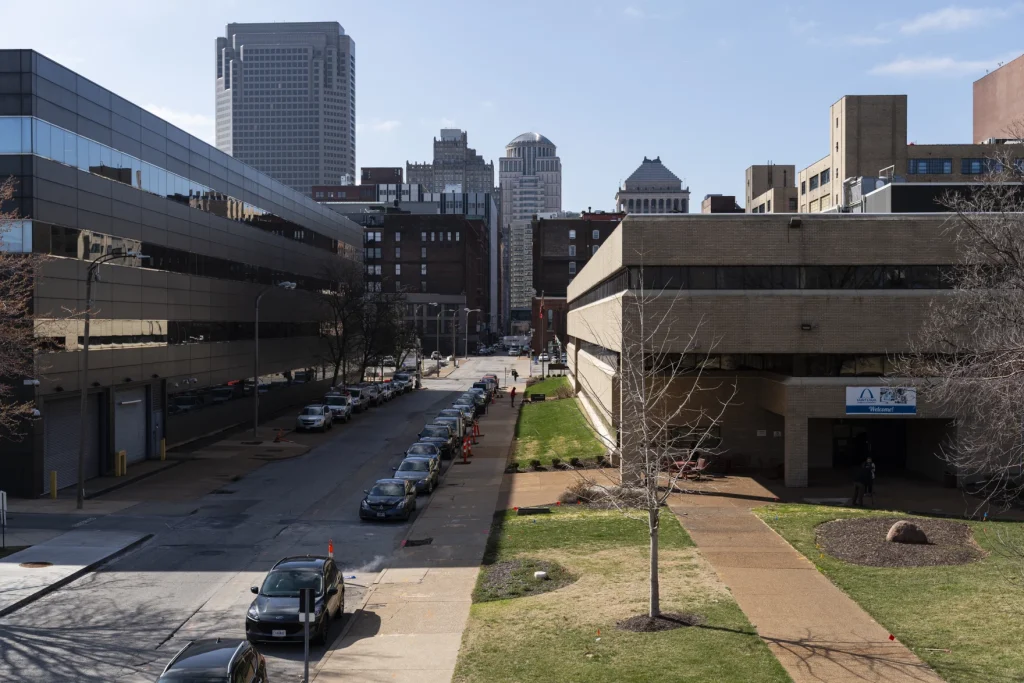
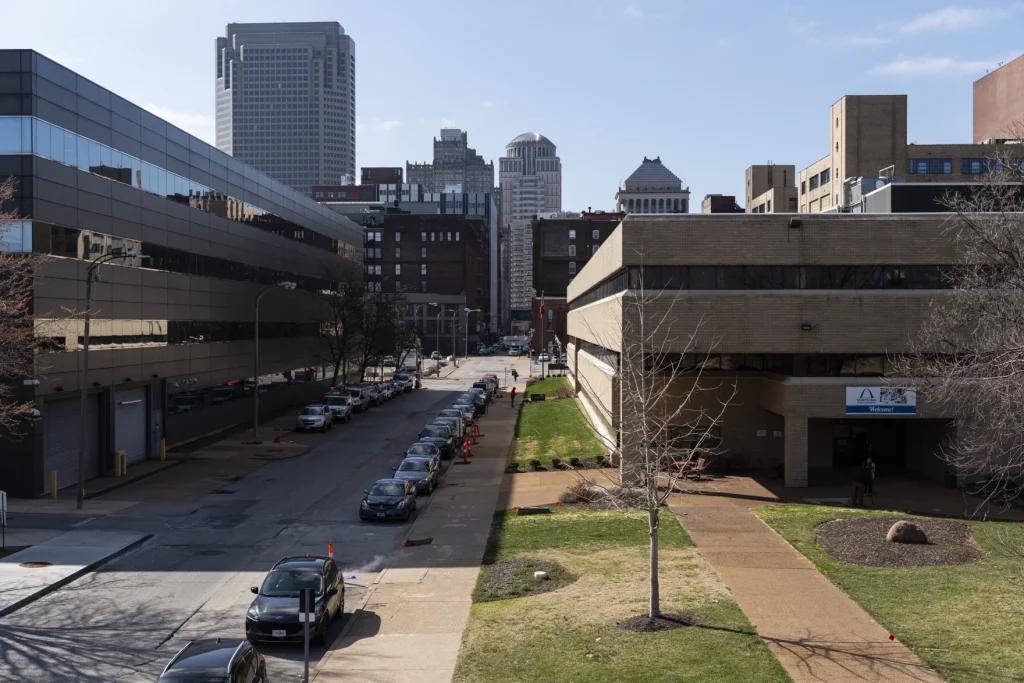
Top photograph, St. Louis Public Schools headquarters building by St. Louis Public Schools.

Communicating Through the Chaos

July 8, 2026 By Glynn Young 1 Comment

If I had any doubts from the job interview, the first day on the job was confirmation. The next few months underscored it. If I could summarize it one word, my job as Director of Communications for St. Louis Public Schools was all about chaos. 

Every day was chaotic. Little if anything could be anticipated or planned for. I often looked at the office telephone (and my Blackberry; that was the phone we used) as the enemy. You answered a call, and your day instantly changed.

I learned that I wasn’t the only one dealing with chaos. The man brought in to take over the district’s finances (which were a train wreck; the district was not only technically but actually bankrupt) was a former corporate CFO.  He dealt with impossible tasks every day. His wife later told me that she worried most about public meetings – Board of Education meetings, town halls, outreach meetings – because anything could and often did happen. She would look for me making a statement on TV news, and then she knew her husband was okay.

The district had all the problems of an urban school system – money problems, crime, declining educational standards and test scores, dropping enrollments, school consolidations. An outside management firm had been brought in to try to transform the district; school closures, budget reductions (the communications budget was reduced from $1 million to $20,000, and that had been spent by the time I arrived).

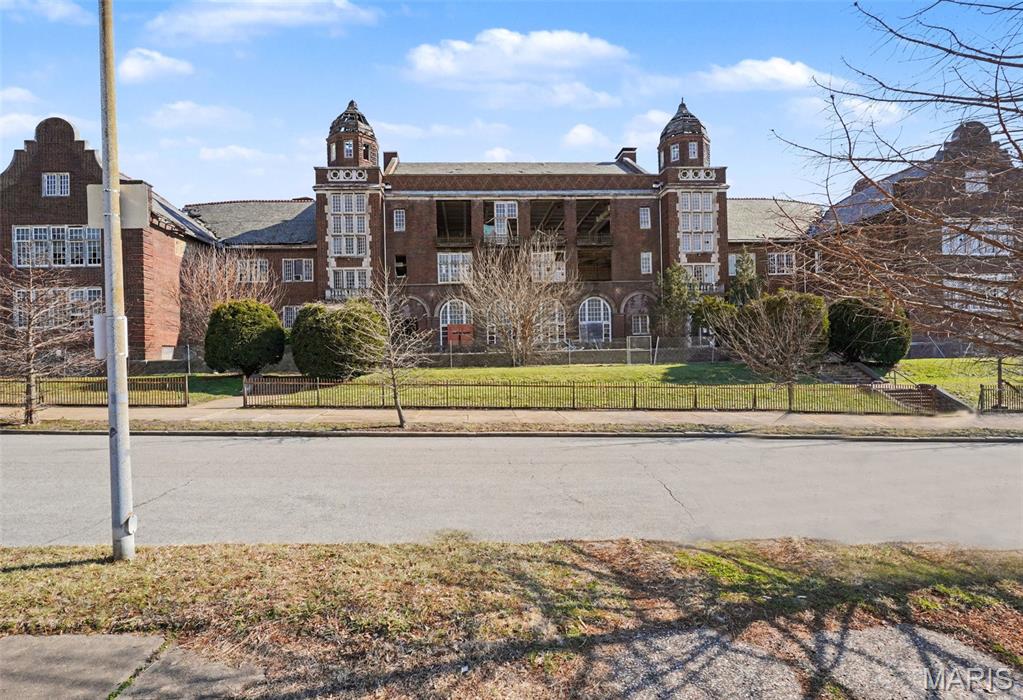
St. Louis Public Schools headquarters.

The problems had been developing for decades; now they were being addressed, and sometimes eliminated, in weeks and days. The entire system was experiencing an ongoing series of shocks. It made for unhappy people. Lots of unhappy people. Board members fighting change. Th teachers’ union. School principals. Headquarters people. People whose jobs had been eliminated. Parents furious over school closures. Vendors who’d lost lucrative contracts.

Yes, it was chaos. And I had to figure out how to communicate into it. And in spite of it.

I had no budget. No ongoing publications. I knew next to nothing about electronic communications. Fortunately, at that time, there was almost nothing to learn. This was the pre-social media era; no Facebook, LinkedIn, Twitter (or X), TikTok, or anything else. We had a web site that was seriously out-of-date and a television studio (the district had its own channel) that could barely afford to function. What had been a communications staff of 12 was now me and one-half of a headcount shared with another group.

So, we improvised. First was a newsletter.

We started a weekly email newsletter from the superintendent to top HQ staff and school principals. When I first mentioned the idea, it was met with serious opposition from the outside management firm. “It will be leaked to everyone,” people said. And I said, “Exactly.” And to make sure of it, we included this statement at the top: “Private and Confidential. Do Not Distribute.”  

Yes, it leaked. To parents, the public, the news media, everyone. It was one of the most unusual ways to communicate I’d ever participated in, but it worked. People were gleeful that it leaked, thinking they had foiled the management team. One rather venomous critic even caught me at a school board meeting, saying triumphantly he received every weekly issue from multiple sources. I expressed shock and indignation. When the reporter for the St. Louis Post-Dispatch figured it out, he simply said. “You knew this would happen, didn’t you?” I was properly aghast at the thought. 

Photo by AbsolutVision via Unsplash.

Second, I made myself available to the news media. I was never not available. I never handed out prepared statements written by attorneys. I provided background when asked. I answered calls from 7 a.m. and 11:30 p.m. I was interviewed one night in the den of my house. One Saturday, I did an interview at the car dealership where I was getting some maintenance work done. 

What helped was that reporters had never experienced that kind of cooperation, and they knew I had what was close to the worst job in the district. They cut me slack. They gave me background information of their own. They knew I would always give a straight answer, and I would talk in English, not jargon.

I also made sure to treat all media the same. It didn’t matter whether it was a small independent radio station with a very limited reach or even Newsweek. It was something I’d learned from corporate communications. You might think the New York Times is more important than anything, but that small trade or neighborhood publication just might turn out to be the most important call you make.

Third, we did outreach meetings. When it was time to present the new budget, we took the proposals out to the public. We let people see what the problems were and make their own suggestions.

When this effort was being planned, it almost strangled at the beginning. At a meeting in the superintendent’s office, with what must have been 50 people, the acting superintendent walked the assembled group of administrators through the plan. One person said, “I am not going into that high school. It is not safe.” Heads nodded in agreement.

You could have heard the proverbial pin drop. I was sitting on the floor, because it was the only place to sit. And I said, “If it’s unsafe for us to go into that high school, then why are we sending children into it every day?” Silence. The objection was dropped.

As an aside, I went into a multitude of schools in the district, many during the day but also at night for outreach meetings. Yes, some schools had security procedures; one elementary school had barbed wire on the windows on both the first and second floors. But not once did I ever feel unsafe or threatened. 

Photo by Edwin Andrade by a Unsplash.

And we fought back with facts. One journalism teacher published a long article in the St. Louis Journalism Review, attacking the management firm and the changes that had been made. When I read it, I had to three times to make sure I understood it. In addition to a multitude of factual errors, the article was filled with grammatical errors and misspelled words. The article had never been edited; instead, it was published unedited.

I wrote a response. A list of the errors (it was long). A list of the grammar and spelling mistakes (also long). And then I asked, did any editor at the St. Louis Journalism Review even read it before they published it? My response was published. One notable correction I remember was that the writer had referred to me as a “district flak;” I pointed out that what he meant to say was “district flack.”

I learned letter from a friend who was on the Review’s editorial board that my letter had landed like a nuclear bomb. He told me it was the longest editorial board meeting he ever participated in, and, while the errors were bothersome, what was even more upsetting to some of the board members was that the lack of editing and oversight was publicly embarrassing. (To be fair, the St. Louis Journalism Review was run by former reporters and editors, and while they were usually reliably liberal in their biases, they did try to be factually correct. (And they usually edited their articles.)

The teacher who wrote the original article caught up with me at the next school board meeting. He was not happy. He felt humiliated. He said a response was being prepared. I told him that was fine, but to make sure someone edited it before publication. He was not impressed with my response. And then I said, “You need to understand. I am not your enemy. The management firm is not your enemy. They’re trying to save the district from a financial and structural implosion.” He didn’t believe me.

Not everything that we did worked. If we had known then about the term “derangement syndrome” we all might have understood it better. Some people simply could not acknowledge facts. The one advantage I did have, in a sea of disadvantages, was relative freedom. I could move quickly, respond quickly, and know that my back was covered. I learned to trust implicitly one of the management firm’s people; he had a mind like a steel trap and a command of facts and issues that was rather phenomenal. 

But it was still chaos, served daily.

Related:

The Job in Which No Day Was Like Any Other.

The Strangest First Day on the Job I Ever Had.

The Strangest Job Interview I Ever Had.

Top photograph by Wayee Tan via Unsplash. Used with permission.

The Job in Which No Day Was Like Any Other

July 1, 2026 By Glynn Young 1 Comment

I worked as director of Communications for St. Louis Public Schools for seven months. I’d gone through the strangest job interview I’d ever had, and I had a first day on the job unlike any other I had had or anyone I knew had had. But I figured that, after that tumultuous first day, things would settle down.

I figured wrong. 

Things would never settle down. Every day would be unlike every other day. 

One ongoing source of turmoil was the Board of Education itself, the seven people elected by voters to oversee the district’s operations. Four had been elected on a reform slate. Three had not. Most of the turmoil generated by the Board came from those three. 

One constantly leaked confidential board information to the St. Louis Post-Dispatch, especially if it might embarrass or “expose” the reform members. One day she went further. She showed up at a middle school with reporters in tow, announcing she was firing the principal. I had to drop what I was doing and rush to the school, deal with the reporters, and explain that Board members could not fire staff members. But she got the coverage she wanted on the 6 p.m. news; she wasn’t happy that I did, too.

Another Board member had been a perennial candidate for every elected office in the city of St. Louis and had managed to get on the school board because of a lack of challengers. He called me one day and asked me to set up a press conference; he was going to demand that the acting superintendent resign. I explained I couldn’t do that.

The third was likely the most intelligent member of the board. It was amazing to watch her focus like a laser on misstatements, inconsistencies, and contradictions form the administration. She also didn’t leak to the media; she said whatever she had to say publicly. 

But there was a problem. One day, I was sitting in my office when I heard a splash. I saw the board member, who thought she has disguised herself by wearing a baseball cap, rush from my boss’s office next to mine and carrying an empty water pitcher. She had thrown the water on my boss at her desk. 

I called security. They responded immediately. So did the police, because the board member had barricaded herself in her small office. The administrative area was evacuated. It took several hours, but the police eventually prevailed and removed her for charging and booking for assault. Yes, I had to hold an impromptu press conference to explain what had happened. I also had to give a witness statement to police. There had been rumors she had a bomb; she didn’t. 

It was the reporter for Channel 5 who explained why the Board member had done it. She’d been inspired by a scene in The Wizard of Oz, and she believed my boss had become a witch. The reporter did not make that up. It was true.

A second source of turmoil was the public anger over the district’s restructuring. Downsizing had occurred across the district, with hundreds of people losing their jobs. The third floor of district headquarters in downtown St. Louis had been full of people six months before. Now it was empty and unused, except for the broadcast studio and the Board’s conference room. A major chunk of the second floor, the area adjacent to where I worked, was also empty.

Several schools had been closed, angering parents and teachers like. School bus routes had been consolidated and removed from influence by the Board and top district officers. Food service contracts had been consolidated and removed from political oversight. The nepotism rule was being enforced. Full-time activists were drawn to the turmoil.

All of it would coalesce around Board meetings. Thy were held at a middle school near downtown, because it had been built with the largest auditorium. Every Board meeting saw a filled room – 450 people who were not shy about screaming. Another 500, often more, would be outside in the parking lot.

I had attended school board meetings in my own suburban school district. Feelings might run high at times, but meetings usually stayed calm. 

Not with St. Louis Public Schools 

I sat next to my boss at the first meeting I attended in October. The room was packed. The crowd had to be continuously warned to calm down or be expelled. Board members yelled at each other, and at members of the crowd. People were often shouted down. It was a circus of noise. One activist charged the stage where the Board was sitting, and was wrestled to the ground by the police, handcuffed, and arrested, literally two feet from where I was sitting. 

When the meeting ended, my boss smiled. “You must be a good luck charm. This was a good meeting.”

Shocked, I stared at her. “This was a good meeting?”

She nodded, smiling again. “We only had one arrest.”

The third source of turmoil was the normal workings of an urban school district. All the reporters covering the district had police radios. There would be reports of weapons on campus, gang fights, campus intruders, school bus incidents, and other problems. 

Once, I was at a meeting hosted by the school district and held at the high school that specialized in information technology. Hundreds of people were attending a presentation by the State Board of Education. I received a text message – food poisoning at an elementary school near the city’s old and famous food market. The incident was odd because only one class had been affected, and the children had eaten different things in the cafeteria. But the teacher had also been affected, and that moved the situation from possible hysteria to serious issue. The food service vendor was sending people to collect samples and provide a statement to the media. 

The vendor’s representatives showed up, collected samples, and promptly slipped out a side door. They would not be providing a statement. Reporters turned to me. I had to invent a response on the spot, explaining what we knew and didn’t know and expressing our surprise that the vendor had not made a statement as promised. 

The vendor was not happy with my response. That made us even. I wasn’t happy with their response.

Like I said, no day was like any other day. No such thing as a “typical day” existed. I might try to plan, but I always had to be prepared to junk the plan and go by the seat of my pants. That was the only typical thing about the job.

Related:

The Strangest First Day on the Job I Ever Had.

The Strangest Job Interview I Ever Had.

Top photograph, St. Louis Public Schools headquarters building. All photographs via St. Louis Public Schools.by St. Louis Public Schools.

The Strangest First Day on the Job I Ever Had

June 3, 2026 By Glynn Young 4 Comments

I felt more than a little apprehension. I was in morning rush hour traffic, driving to downtown St. Louis from the close-in suburb where I lived. It was something of a new experience. I hadn’t driven in rush-hour traffic since leaving Houston 25 years earlier. The apprehension wasn’t about traffic; I had stepped outside my career experience and accepted a job with St. Louis Public Schools. And I was early; the hours were 8 to 5, but I decided to be there by 7:30.

Except for nine months at a newspaper straight out of college, my career had been exclusively corporate communications: employee communications, crisis communications, media relations, environmental communications, and speechwriting. Especially speechwriting. Even for the three years I had had my own consulting business, I worked for companies, doing mostly speechwriting. 

Corporations have their moments of craziness and crisis, but they pale in comparison to urban school districts. And yet, here I was, driving to my first day on the job at the largest school district in the state of Missouri, a district that had been in crisis for years and was now in hyper-crisis. 

An outside management team has been authorized to take over and try to fix the massive problems the district faced – financial, academic, structural. The management team had been tasked with smashing an entrenched bureaucracy, and the bureaucracy – and all the outside people supporting it – was fighting back. 

I was allowing myself to walk right into it. I’d already had the strangest job interview I’d ever had, and now I would have the strangest first day on the job I’d ever had.

Photograph by Charles Deluvio via Unsplash.

I parked in the district’s garage, a short walk across a plaza from the headquarters building. I followed my instructions, introduced myself to the security team at the entrance, and accompanied one of the armed guards to a small room off the lobby, where I had my picture taken and badge created. Then I took the stairs to the second floor, where my office was said to be. Someone directed me toward the side of the building overlooking North 11th Street. The office was quite nice, just like any corporate office, and with a door. It was next to my boss’s office, but she was in an offsite meeting with all the other senior officials. 

The secretary told me that I was supposed to go to Human Resources to fill out the required forms, but she said there was something else I needed to do first. Channel 5 News had asked for an interview about the teachers’ sickout. 

“The teachers are having a sickout?” I said.

She nodded. “I think it has to do with changes to pensions. But they say it’s not a sickout, only hat a lot of teachers have called in sick.” 

I went looking for someone to give me the background and find out what the district’s response was. I found the HR department down on the first floor, but no one there admitted to knowing anything. Someone in the academic department might know something, they said. I started looking around the building. That’s when I began to see some of the changes that had arrived. 

The part of the second floor near my office was empty. There were fully equipped desks in cubicles, with tape dispensers, staplers, paper, and other office supplies, but no people. This had been the 12-member communication department. Now it was me and a half-headcount I hadn’t met yet. The people in Finance couldn’t help. No one in the academic department could say anything, because the top officials were in that offsite meeting. 

The third and top floor was entirely empty except for a broadcast studio; the technician told me he was glad to meet me, his new boss. No one had mentioned that I was responsible for the broadcast studio. I would shortly learn that I was also responsible for the photography studio and archives, housed in one of the schools that had been closed. I found out that day when the district’s photographer showed up in my office to meet his new boss.

Back on the second floor, I stopped by the secretary’s desk to ask a question everyone had been vague about. What was my discretionary budget? She rather cheerfully told me that it it had been close to $1 million, but that had been reduced to $20,000. “But don’t worry about it,” she said. “The $20,000 has already been spent.” 

The budget was zero. My job had become even more interesting.

I finally found someone who knew about the sick-leave policy and the issue, but they would not go on the record and never in front of a camera. I would soon learn that tended to be the official position of virtually everyone who worked for the school district – people universally saw the news media as one-way tickets to dismissal. The person did say the policy was that sickouts were illegal; people participating in them were subject to dismissal. I was warned that the principals would likely protect their staff and deny anyone had called in sick. I tested that with two principals. The assessment had been correct.

As my first hour on the job ended, I walked downstairs and outside to do an interview with Channel 5. Channels 2, 4, 11, and 30 followed. Then the St. Louis Post-Dispatch and the St. Louis American. The St. Louis Business Journal. The Riverfront Times. Several radio stations, including two independents. 

That morning, I learned that I had to help TV reporters find a different location around the building so that televised reports wouldn’t look the same. That, as part of his job covering the school district, the Post-Dispatch reporter possessed and monitored a police radio. (The Post-Dispatch building was half a block away.) That School Board members, administrators, principals, and teachers all leaked like sieves to the media, parents, critics, protestors, and anyone else who’d listen.

Photograph by Scott Graham via Unsplash.

In between interviews, I received my first phone call. It was from the St. Louis Mayor’s office, providing my “suggested” instructions for the day. I would discover that this would happen three or four times a week. The Mayor’s office was not connected in any official way to the school district. I suppose it’s okay to note now that I received my instructions politely and then ignored them. But I appreciated the effort.

By noon, I had a little time to go to HR and fill out my forms. I completed them in a small conference room and returned them to a secretary. It would be weeks before anyone owned up to those forms getting lost. The people involved knew the forms had been lost, but they were afraid to say anything. I figured it out when I didn’t receive my first two paychecks.

More interviews followed. Lunch that day happened around 3 p.m. when I found a vending machine that I had to get Security to operate because there had been too many break-ins and thefts. Yes, right there in the headquarters building, presumably by people who worked there. What had been the district’s small cafeteria had been closed in one of the restructurings that had already happened.

Toward the end of the day, the secretary brought me a catalog to order office supplies. I mentioned that I’d seen the fully supplied cubicles nearby, and couldn’t I simply take some of what was there? She looked almost horrified. “But don’t you want new supplies?” she said. I said I would scavenge first, and if I needed anything else, I’d let her know. She looked at me like I was a graverobber.

By 5 p.m., I was exhausted. The administrators had all returned from the offsite meeting, and I was able to greet several of them, including the acting superintendent, the man who’d yelled at me in the interview. He had a small team of two or three people he’d brought with him; one of them would become an island of sanity in what was clearly the craziest workplace I’d ever walked into.

If I’d only known what was ahead, I might not have come back after what had been the stranngest, most hectic first day on the job I’d ever experienced.

Related: 

The Strangest Job Interview I Ever Had.

Top photograph by St. Louis Public Schools.

“Bad News” by Batya Ungar-Sargon

February 9, 2022 By Glynn Young Leave a Comment

Batya Ungar-Sargon is the deputy opinion editor at Newsweek and co-hosts Newsweek’s podcast “The Debate.” Before joining Newsweek, she was the opinion editor of Forward, the largest Jewish media outlet in the United States. She’s written for The New York Times and Washington Post. She’s appeared on MSNBC, NPR, and NBC. She has a Ph.D. from the University of California, Berkeley.

She is not the person you would expect to have written a book like Bad News: How Woke Media is Undermining Democracy. But she did.

Bad News is not a book written from a conservative, right-wing, or alt-right perspective. It’s not a hastily compiled mishmash of everything that’s wrong with the news media. Instead, Ungar-Sargon has published a carefully researched, well-documented, and well-written story of where American news media has gone seriously wrong and how that is harming the United States.

If the problem could be summarized in one sentence, it would be this: the business model of the news media has shifted from reporting the news to giving its demographic the perspective that it wants. Some call this reporting the narrative instead of the news. Whatever it’s called, it’s making a significant contribution, perhaps the most significant, to destroying trust it itself, in American Institutions, and what Americans have believed about their country. And that has implications far beyond the 50 states

This is what Ungar-Sargon documents in Bad News:

The people who are the reporters and editors have not been working-class for two generations. The economic and social status of reporters changed fundamentally, and the author points to the Watergate scandal as one of the starting points.

The major news media have abandoned the working class, not unlike the Democratic Party did beginning with the Clinton Administration. The working class is still large group of people, and Fox News isn’t so much the conservative media outlier as it is the channel that covers what the working class cares about.

Social media and the internet, far from “democratizing” society, have been the mechanisms by which the major news media centered their efforts on narrative instead of news – and turned the narrative into a business model.

Batya Ungar-Sargon

The media’s coverage of racial issues fits its audience’s understanding about race and itself, but it is completely out of kilter with what most Americans believe or experience. One example: 81 percent of Black Americans do not want the police defunded. Ungar-Sargon argues that the media is besotted with race because a discussion of class, which she sees is the real issue, would undermine the media’s own position.

The media’s cartoonish coverage of Jews, crime, and Trump voters exemplify what is happening. She doesn’t say it exactly this way, but Donald Trump is like the drug to the news media’s addiction. It needs Trump, and not only to prop up its ratings and subscriptions but also to be the ever-present Bogeyman out to destroy America as the media understands it.

She doesn’t present a laundry list of how to fix the problem; the solution will take generations. But she does suggest things that Americans can do to stop the media from exercising the negative influence it has. And it’s not things like cancel your newspaper subscription.

Bad News is an important book, one likely to be ignored by the news media. But the rest of need to read it and understand it. It’s that important.

Related:

The Convergence of Social Media and Big Media

When Journalism Began to Change

When the Worldwide Web Was a Marvel – and a Mystery

How Email Started a Revolution

The Media and Kyle Rittenhouse

The U.S. Media and Russian Collusion

Top photograph by Markus Spiske via Unsplash. Used with permission.

When Journalism Began to Change

January 20, 2022 By Glynn Young 3 Comments

When I read Breaking News: The Remaking of Journalism and Why It Matters Now by former editor of The Guardian Alan Rusbridger, I was struck with how much his experience at the newspaper tracked with my own experience in corporate communications. The worldwide web and what followed was upending his world at the newspaper at the same time it had begun to change mine – and for the same reasons. We began to deal with it earlier, while The Guardian and other newspapers were affected more quickly, but we were grappling with many of the same issues and at roughly the same time (1995-2015).

I left corporate communications for a time – almost four years. I felt worked to death, spun off, and finally laid off, and I was done. I set up my own consulting firm, and I was focused on two areas of communications – writing speeches and community relations. In late 2003, a friend dared me to apply for the top communications job at St. Louis Public Schools, which I did, thinking I’d never hear anything. I was wrong. They called, I interviewed along with nine others (we were all told to report at the same time and sat in the same room until we were interviewed). I got the job and started work the next morning.

The school district was in crisis. A reform board had been elected, an outside management firm was hired, the district was found to be bankrupt, and underway were layoffs, school closings, and staff restructurings. The old communications department had been 13 people. The new one was me and one-half of another person, and we shared a secretary with another group. 

I’ve never had a job like that one. On my first day of work, I was filling out papers in HR when I was told the news media were waiting for a statement. The teachers were having a sick-out to protest changes in sick-leave policy. I did five media interviews that day, three of them on camera. One of the reporters laughed when she saw me. “We heard they’d hired you. Welcome to St. Louis Public Schools.”

For the next eight months, there wasn’t a single day when I didn’t give a media interview. I was followed home at night by reporters. I was tracked down at a car dealership on a Saturday when I was having my car serviced. Sometimes it was national media calling and doing interviews by phone. I lived, breathed, and dreamed journalists and journalism. And sometimes the news happened right next to me, like when a school board member drenched my boss with a pitcher of water or people in the aisle next to where I was sitting were arrested at a school board meeting. A good meeting, my boss told me, was one where fewer than three people were arrested.

It was a crazy and rough-and-tumble experience, but I was dealing with journalism as I’d always known it, as I was trained in it, and as I had experienced it in corporate communications. A bit more intense, to be sure, but I recognized people who saw their jobs as getting the news and telling the story. 

By the time I returned to corporate communications in 2004, something had fundamentally changed, and especially with national media. I was working in a narrowly defined area, communications for so-called “legacy” assets. A spinoff from seven years before had declared bankruptcy, and the company had regained responsibility for all of the issues that had been spun off with the bankrupt company. I was hired because I had the background for it.

Generally, the reporters I dealt with specialized in business or environmental issues, or they were local media in various locations. I was in familiar territory, and the journalists were familiar. But with the company’s main line of business, the journalists were anything but familiar, and the people involved in media relations were going crazy.

Simply put, reporters were casting news stories in a broader context of opinion. It wasn’t all thinly disguised editorials masquerading as news stories, but it was close. And it wasn’t all reporters, but it was a few key ones. I’d sit in staff meetings, listening to the problems. And it wasn’t simply a case of “PR people always dislike reporters and vice versa” kind of problems. I read the stories, and I could easily see that the problem was serious. The media relations people had tried everything – from uninviting the reporters to events to traveling to meet with the reporters’ bosses. Nothing had worked. 

At one staff meeting, after yet another example of what should have been a balanced story had been turned into a disaster, I offered a suggestion. “We have a web site. You’re going to have to critique the story and publish the critique on the web site, showing exactly what’s happening.”

By the looks I received, they must have thought I’d landed from Mars. You didn’t do that with reporters. It would make it worse. They would hate you and get even. That was not a solution, and no one had ever done that before. “You don’t get into a spitting war with someone who buys ink by the barrel.”

“Embarrassment at doing a shoddy job is the only thing I know you can do that might work,” I said. “Seriously, what’s the downside?”

My advice was not accepted. The problems continued. For years. Until the day a worse-than-usual outrageous story was published, inventing “news” out of whole cloth. It was all bogus. It was so bad that a major journalism school called out two reporters for what they had done. But only people following journalism had seen it.

By that time, one of my responsibilities included the company’s blog. We often published links to stories about the company. Without asking permission, I published the link to the journalism school’s statement, without comment, and lots of people saw it, including people inside the company. The offending reporters were pulled by their editors from covering the company for six months. 

Today, we have a phrase for the problem, and it is a serious problem. Many people will tell you that our national media no longer report the news, but instead maintain, promote, and defend the narrative (a post-modern concept if there ever was one), whatever the narrative happens to be. And it’s exacerbated by social media. 

How all of this might have started is unknown. A lot of things fused together – post-modernism, fundamental changes in university academics, the growing political divide in the United States, and more. The narrative is not an active conspiracy of publishers, editors, and reporters colluding to report the news in a certain way. It would likely be easier to deal with if it was a conspiracy. Instead, it’s group think, group think shared by many of the nation’s elites, and it’s killing journalism. And the rest of us

Related:

How Email Started a Revolution

When the Worldwide Web Was a Marvel – and a Mystery

The Media and Kyle Rittenhouse

The U.S. Media and Russian Collusion

Top photograph by Markus Spiske via Unsplash. Used with permission.
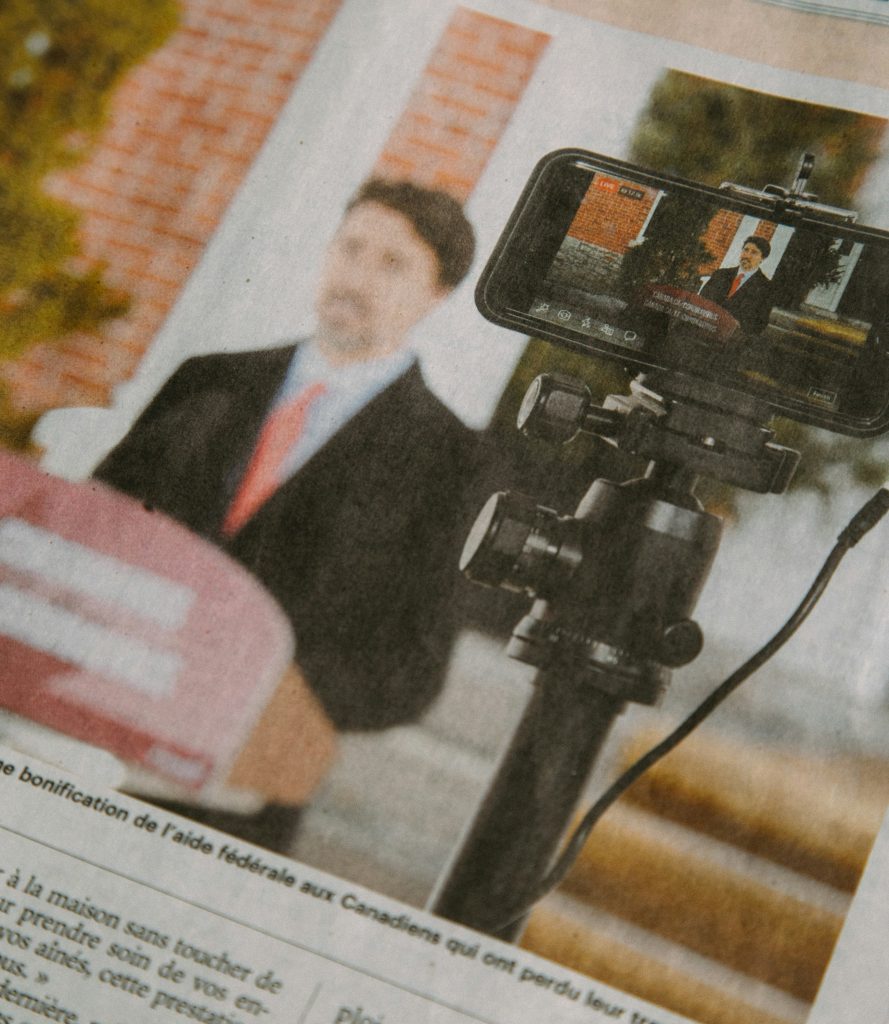
Lower photograph by Absolut Vision via Unsplash. Used with permission.
  • Page 1
  • Page 2
  • Go to Next Page »

Footer

GY


Meet the Man

An award-winning speechwriter and communications professional, Glynn Young is the author of six novels and the non-fiction book Poetry at Work.


 01_facebook 02_twitter 26_googleplus 07_GG Talk

Copyright © 2026 Glynn Young · Site by The Willingham Enterprise · Log in | Managed by Fistbump Media LLC