• Skip to primary navigation
  • Skip to main content
  • Skip to footer

Dancing Priest

Author and Novelist Glynn Young

  • HOME
  • BLOG
  • BOOKS
    • Brookhaven
    • Dancing Prince
    • Dancing Prophet
    • Dancing Priest
    • A Light Shining
    • Dancing King
    • Poetry at Work
  • ABOUT
  • CONTACT

book review

“The Battle of Jackson, Mississippi” by Chris Mackowski

October 17, 2022 By Glynn Young Leave a Comment

As many times as I’ve driven through or visited Jackson, Mississippi, I never knew that two Civil War battles were fought within days of each other right here at Mississippi’s capital city. The first, the Battle of Jackson, happened May 14, 1863. The second, at nearby Champion Hill. happened two days later. Champion Hill was the pivotal action in guaranteeing the eventual fall of Vicksburg, giving the Union control of the Mississippi River and dividing the Confederacy in half.

Chris Mackowski, in The Battle of Jackson, Mississippi, tells the story of that battle, one that ended in the city’s capture and eventual large-scale destruction. It was something of a pincers battle, with Ulysses Grant directing General James McPherson to lead his troops from the northwest and General William Sherman to lead his troops from the southwest. After the diversionary tactic of Major Benjamin Grierson’s raid through Mississippi from mid-April to early May of 1863, Grant successfully moved his army across the Mississippi River at three places as part one of the capture of Vicksburg.

Part two was critical – capture the disable the railroad (and supply chain) from Jackson to Vicksburg – and that meant an attack on Jackson. Facing him in Jackson was a very reluctant Confederate general, Joseph Johnston – reluctant in that he didn’t want to be in Jackson to begin with and was only there because Confederate President Jefferson Davis ordered him to go. He no sooner arrived than he ordered the troops to retreat eastward.

Mackowski tells an enthralling story, placing the reader in the middle of the action on both sides. You experience the determination of the Union troops and their generals, and you experience the panic felt of the citizens of Jackson as those troops approached the city. Jackson’s fall was not the worst thing to happen to the Confederacy, but it made a significant impact on the people of Mississippi and elsewhere in the South. The city would later be re-occupied by the Confederates, only to be abandoned again on July 14 as Grant marched east from the surrendered Vicksburg. The city was largely a ruin; its destruction earned it the nickname “Chimneyville.”

The book is filled with small but telling details. The Bowman Hotel, where Johnston’s short stay was cut even shorter by the approaching federal, is the same place where Grant sets up his headquarters. Sherman ordered the hotel and other private properties to be protected as the army left for Vicksburg, but fires were set in spite of those orders, and the hotel was destroyed. And also fascinating is the brief account of Grant’s 12-year-old son Fred, racing up the state capital stairs to reach the Confederate flag flying on the flagpole, only to be met by a jubilant federal soldier coming down the stairs, the flag in his arms. 

Chris Makowski

Mackowski is the author or editor of almost 30 books on the Civil War. He’s the editor-in-chief for the Emerging Civil War web site and the editor for the Emerging Civil War Series of books. He is a writing professor and associate dean for undergraduate programs at St. Bonaventure University in New York. He also serves as historian-in-residence at Stevenson Ridge on the Spotsylvania battlefield in Virginia. He’s worked as a historian for the National Park Service, and he gives tours at four major Civil War battlefields – Fredericksburg, Chancellorsville, Wilderness, and Spotsylvania. 

The Battle of Jackson, Mississippi is a concise, highly readable account of the battle, filled with maps and photographs and supported by extensive research. It was a relatively small battle in the context of the Civil War, but it was a critical action that helped lead to the fall of Vicksburg two months later.

Top photograph: The Bowman House Hotel in Jackson about 1863, prior to its destruction by fire. Photo courtesy of the Mississippi Department of Archives & History. 
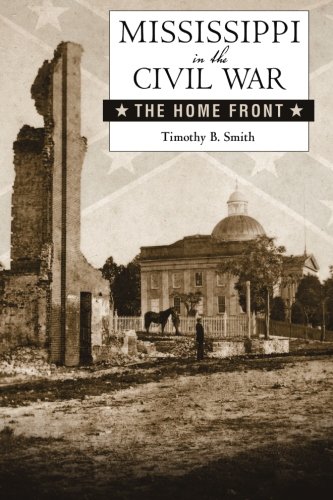
“Mississippi in the Civil War: The Home Front” by Timothy Smith

October 10, 2022 By Glynn Young Leave a Comment

In high school and college, when we read about or study the American Civil War, we learn primarily about the political and military figures and the battles and campaigns. When I attended LSU, the school’s history department had a national reputation, with professors like T. Harry Williams, who was not only a highly regarded Civil War historian but also wrote the Pulitzer Prize-winning biography of Huey Long. Williams published several books on Abraham Lincoln, P.G.T. Beauregard, Civil War generals, and related topics.

In recent years, more attention has been paid to the war and how it affected civilians. When Union armies invaded the Southern states, they civilians they encountered were largely women, children, and older men beyond military age. And it is this group, and their lives in towns, cities, and farms, that Timothy Smith considers in Mississippi in the Civil War: The Home Front.

Smith divides his story in two pieces. First is how the state of Mississippi dealt with the military conflict from secession through the end of the war. The second is how the civilian population experienced the war. He pays particular attention to the belief among historians that the South was defeated not only by Northern industrial might but also by the people losing the will to fight. He finds some of that may be true, but that the “losing the will to fight” sentiment may have played a smaller role than previously thought.

Mississippi’s surely had more than sufficient reason to lose heart. From early in the war, the state was devastated economically, militarily, and socially. Agriculture was disrupted, cities burned, and railroads destroyed. What little there was industrial infrastructure also suffered severely. Deserters and criminals freed from jails roamed the countryside. Cotton, which had been the state’s primary crop, became almost useless with the federal blockade of ports. Inflation soared. Foodstuffs became scarce. The state had to sequester food for the military. Many people fled the state during the war for less affected places like Texas. (My own Mississippi ancestors did precisely that, returning only after the war was over.)

Particularly interesting is Smith’s discussion of the anti-secession sentiment in the state, which was surprisingly strong. Not everyone wanted to leave the Union; not everyone owned slaves. But everyone would largely suffer equally.

Timothy Smith

Smith provides an overview of what people experienced. Military battles aside, it was a dark time for many people in the South, free and slave, and the effects would be felt for decades. Some say the effects are still being felt. 

Smith’s numerous books on the Civil War include accounts of the battles of Vicksburg, Corinth, Champion Hill, Shiloh, Forts Henry and Donelson, and Chickamauga; the Mississippi secession convention; U.S. Grant’s invasion of Tennessee; and the Grierson Raid in Mississippi. A professor of history at the University of Tennessee at Martin, he’s won numerous awards for his books, including the Fletcher Pratt Award, the McLemore Prize, the Richard Harwell Award, the Tennessee History Book Award, the Emerging Civil War Book Award, and the Douglas Southall Freeman Award. He lives with his family in Tennessee.

Mississippi in the Civil War: The Home Front is a sobering story. Mississippi and the other Southern states may have brought the war upon themselves, but its people endured and survived, Smith explains how that happened.  

Related:

“The Real Horse Soldiers” by Timothy Smith. 

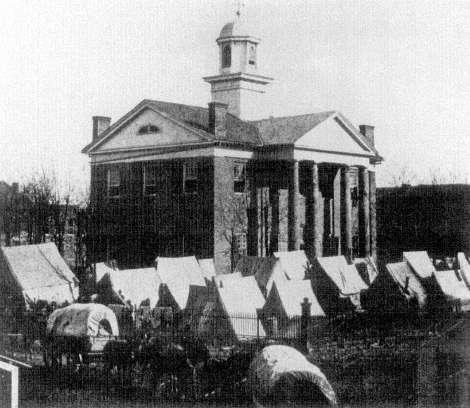
Top photograph: The original Oxford, Miss., courthouse, with a Union army encampment on its grounds. 

“The Civil War in Mississippi: Major Campaigns and Battles” by Michael Ballard

October 3, 2022 By Glynn Young Leave a Comment

If there is a state we most associate with the American Civil War, it is Virginia. Numerous battles occurred there; the federal and confederate armies faced each other for four years, most often in a stalemate; and the two enemy capitals ensured that Virginia was a major theater of the war. And it was in Virginia that Robert E. Lee ultimately surrendered to Ulysses S. Grant. 

Some have argued that the United States really won the war farther west – the fall of New Orleans and Vicksburg, the battles around Nashville and Chattanooga, the capture of Atlanta in 1864, and Sherman’s March to the Sea. 

And then there was Mississippi, the second state (after South Carolina) to secede from the Union. The Civil War in Mississippi was more – far more – than Vicksburg. Historian Michael Ballard (1946-2016) tells the story in The Civil War in Mississippi: Major Campaigns and Battles (2011). The book is volume 5 of the Heritage of Mississippi published by the University Press of Mississippi for the Mississippi Historical Society and the Mississippi Department of Archives and History.

Vicksburg (1863) may have been the most important battle in the state; its surrender solidified control of the Mississippi River by the United States and severed the Confederacy in half. But the northern part of the experienced numerous battles. The town of Holly Springs changed hands 57 times. The town of Oxford was burned. The state capital of Jackson fell twice to the federals; Grant took the city and then attacked Vicksburg from the east. Before he marched to the sea in Georgia, Sherman marched from Jackson to Meridian in similar fashion, destroying anything that might be of value to the Confederates. Major Benjamin Grierson led a three-week-long raid with 1,700 cavalry troops from the Tennessee line south, eventually arriving in federally held Baton Rouge in Louisiana. 

The destruction through the years of war was large-scale – plantations, factories, warehouses full of supplies, railroad deports and track, and whole towns in some cases. In his well-written and highly readable account, Ballard succinctly tells the story of all of what happened. 

Michael Ballard

During his lifetime, Ballard published numerous books about the Civil War, including A Long Shadow: Jefferson Davis and the Final Days of the Confederacy (1986); Landscapes of Battle: The Civil War (1988); Pemberton: The General Who Lost Vicksburg (1999); A Mississippi Rebel in the Army of Northern Virginia: The Memoirs of Private David Holt (1995); Grant at Vicksburg: The General and the Siege (2003); U.S. Grant: The Making of a General 1861-1863 (2005); and several others. He received his B.A., M.A., and Ph.D. degrees from Mississippi State University, where he also worked as archivist and director of the Congressional and Political Collection. 

The Civil War in Mississippi is a fine history and a sobering one. By the end of Civil War, the state’s economy was in ruins, its towns and cities had experienced widespread destruction, thousands of its men had died on battlefields across the state and the South, and its social order was turned upside down. Recovery would be a long time coming. 

Top photograph: Artist’s rendering of the Battle of Corinth, Miss.; Mississippi Department of Archives and History.

“Ends of War” by Caroline Janney

September 19, 2022 By Glynn Young Leave a Comment

I have an image in my head, likely based on what I remember from American history in college, that when Robert E. Lee and Ulysses S. Grant agreed to surrender terms at Appomattox in April 1865, Lee’s Army of Northern Virginia went home. Two weeks later, William Johnston surrendered to William Sherman at Greensboro, North Carolina, and Johnstone’s Army of Tennessee went home. And that was end of the Civil War.

Well, not quite.

As Lee’s army fled west from Richmond and then Petersburg, what had been about 60,000 men was losing strength. Some were captured, some took off for points west, and some disappeared into the woods and valleys. By the time Lee and Grant met, Lee’s army was likely between 30,000 and 40,000, and more men were leaving every day.

Grant’s purpose, to which he stuck ferociously through the negotiations and through the coming months, was to bring peace. Lee’s men could go home. They would be issued rations and paroles. A parole was good to obtain rations from Union provosts and to obtain transportation on ships and trains to go home. There would also be no reprisals for having served in Lee’s army. 

McLean House in Appomattox, where Lee surrendered to Grant

Many headed east first – to get to the ports where they could get passage to Mobile, New Orleans, and other ports. Others headed toward rail stations, though those were more problematic; many railroad tracks were not repaired from the war, and men would find themselves alternately riding and walking to the next station.  

But for many in the Confederate army, the war was not over. Some tried to reach Johnston’s army, which was Lee’s army was trying to do in his flight from Richmond. Others decided to try to Texas and the army of General Edmund Kirby Smith. Still others would become guerillas and continue to war effort – something Grant feared almost more than anything. The region of Virginia and North Caroline experienced upheaval, chaos, and disruption that would continue for weeks (see my review of Hearts Torn Asunder: Trauma in the Civil War’s Final Campaign in North Carolina by Ernest Dollar Jr.). 

It looked like peace and an easy reunification might prevail, until the assassination of President Abraham Lincoln on April 14 crystalized the desire for vengeance. It would be argued from the man in the street to the highest levels of government that Grant’s paroles of Lee’s men had limited application, and Lee, his officers, and many of his mean should be tried for treason. The wave demanding vengeance could only be stopped, and then incompletely, by Grant himself. 

In Ends of War: The Unfinished Fight of Lee’s Army After Appomattox, Caroline Janney tells a riveting story of the final days and weeks of Lee’s army, its officers, and its men, how their paroles came almost seen to be worthless before cooler heads, notably Grant’s, prevailed. No peace could be or would be drafted and signed; peace treaties were between sovereign nations, and the United States view the Confederacy as a region of rebellion. A peace treaty would have also hammered out what punitive terms there might be for the defeated nation, its leaders, and its military. In the place of a peace treaty stood only the terms of Lee’s surrender to grant, which were extended by Sherman to Johnston. 

Caroline Janney

But, as Janney makes clear, in those final, chaotic days of confusion, despair, and anger, the idea of what the South called “the Cause” became “the Lost Cause.” The South had not been defeated on the battlefield but by Northern industrial might, foreigners in the army, and the use of freed slaves as troops. Any evidence to the contrary was discounted and dismissed; the South believed its cause had been a righteous one.

Janney is the John Nau III Professor of the American Civil War and director of the John L. Nau Center for Civil War History at the University of Virginia. She has worked as a historian for the National Park Service and taught at Purdue University. has also published Burying the Dead But Not the Past: Ladies’ Memorial Associations and the Lost Cause (2008) and Remembering the Civil War: Reunion and the Limits of Reconciliation (2013). She received a B.A. Degree in government and a Ph.D. degree in history from the University of Virginia. 

She recently received the 2022 Gilder Lehman Lincoln Prize from the Gilder Lehrman Institute of American History and Gettysburg College for Ends of War. The book was also a joint recipient of the Richard Barksdale Harwell Award of the Atlanta Civil War Roundtable for the best book on a Civil war subject published in the preceding ear. 

The awards are no surprise. The book is an extraordinarily well-researched effort, as demonstrated by the extensive notes and bibliography. Written in non-academic language, it’s difficult to put Ends of War down. She succeeds in making her case, and she’s changed our understanding of the end of the Civil War and how it affected the country for a century afterward.

“Hearts Torn Asunder” by Ernest Dollar Jr.

August 3, 2022 By Glynn Young 2 Comments

It’s April 1865, the last month of the Civil War. Richmond has fallen. The Confederate cabinet is fleeing. Robert E. Lee’s Army of Northern Virginia surrenders to Ulysses S. Grant at Appomattox Courthouse. Lee’s soldiers are paroled and dispersed, most heading south (and on foot) into North Carolina and toward home in the rest of the former Confederacy. William Tecumseh Sherman’s army is chasing that of Confederate Gen. Joseph Johnston, and the chase is ending near Raleigh and Greensboro. As Johnston meets with Sherman to discuss surrender terms, he learns that President Lincoln has been assassinated in Washington. 

The final convulsion of the war and the Confederacy is happening in central and north central North Carolina. And it its path are the people who live there, in cities and towns, and on farms, people who see both armies strip the countryside bare of food and provisions. One army’s soldiers experience sorrow and despair, while those of the other feel jubilation. Soldiers of both, after four long years of war, are experiencing what today we recognize as Post Traumatic Stress Disorder, or PTSD. It isn’t called that then; it isn’t even recognized. 

But citizens and soldiers are experiencing its effects – and the effects of hunger. The hunger was at times so great that soldiers and civilians alike began attacking warehouses and trainloads of provisions meant for the Confederate army.

Horrors and atrocities happened on both sides. Rage, fed by deaths and maiming of friends and fellows and fueled by alcohol, could make otherwise kind men do terrible things. Civilians – men, women, and children, free and slave – bore the brunt of that rage. And it was rage coming from both Union and Confederate soldiers.

Ernest Dollar Jr.

The story of that month and that place is told, and told well, by Ernest A. Dollar, Jr. in Hearts Torn Asunder: Trauma in the Civil War’s Final Campaign in North Carolina. It’s a somber, sometimes shocking story that shows a side of war we rarely see in the movies or are taught about in school. But it happened, and it happens. And it doesn’t simply change people; it also changes cultures and societies. The effects of what happened in North Carolina in April 1865 were felt for generations.

Dollar graduated from the University of North Carolina at Greensboro with B.A. degree in history and a B.F.A. degree in design, and an M.A. degree in history from North Carolina State University. He’s worked at historic sites in both North Carolina and South Carolina. He’s currently the Executive Director of the City of Raleigh Museum, and he and his family currently live in Raleigh.

Hearts Torn Asunder makes for hard reading. But it’s a story that needs to be told.

Top image: Engraving of the meeting of Gen. Joseph Johnston and Gen. William T. Sherman at the Bennett Homeplace, April 1865.

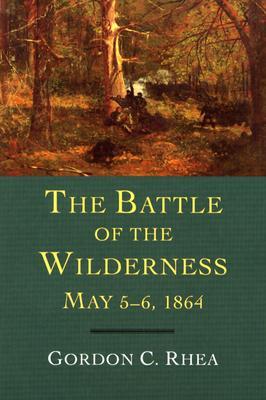
“The Battle of the Wilderness” by Gordon Rhea

July 13, 2022 By Glynn Young 1 Comment

Gordon Rhea is an attorney and Civil War historian. He’s written several highly regarded books about the war, including The Battles for Spotsylvania Court House and the Road to Yellow Tavern, May 7–12, 1864 (1997), To the North Anna River: Grant and Lee, May 13–25, 1864 (2000), Cold Harbor: Grant and Lee, May 26–June 3, 1864 (2002), Carrying the Flag: The Story of Private Charles Whilden, the Confederacy’s Unlikely Hero (2004), and On to Petersburg: Grant and Lee, June 4–14, 1864 (2017).

His books have received a number of awards and recognitions, and he’s served as a lecturer at the U.S. Army Training and Doctrine Command and as a commentator for CNN. I discovered his The Battle of the Wilderness, May 5–6, 1864, published in 1994 by LSU Press, when another writer of another Civil War book spoke of the Rhea work in almost reverential tones. I discovered the book was still in print, available in paperback and on Amazon Kindle. The hardcover is also available in used editions. 

And what a story Rhea tells.

The Battle of the Wilderness was the first major confrontation between Ulysses S. Grant, newly appointed by Abraham Lincoln to lead the Northern armies, and Robert E. Lee, commander of the Confederacy’s Army of Northern Virginia. It was an effort by Grant to break through the stalemate around Richmond and capture the Confederate capital. Fought over roads, some open fields, and the dense woods known as the Wilderness, the battle pitted the wills of two opposing commanders, both of whom were determined to prevail at almost any cost. 

The battle would end in stalemate, with both sides gaining and losing something. The number of casualties places the battle in one of the top five in the Civil War. The Union had between 17,000 and 18,000 dead, wounded, and missing or captured. The Confederacy had between 11,000 and 12,000. But the overall losses were greater in ultimate impact for the Lee’s army, because these were losses that could not be replaced. And both sides experienced the loss of key generals. 

Gordon Rhea

Rhea tells the story almost like a novel. It’s an enthralling, riveting read, with the action so immediate that the reader feels a direct part of it. The first day went mostly to Lee’s army; the second day began with a Union breakthrough, but it was soon turned back with the forces of General James Longstreet arriving at the last possible minute and almost too late. Lee would also lose General J.E.B. Stuart, who died of his wounds a few day after the battle ended.

Drawing upon official records, diaries, letters, and news reports, Rhea tells the story not only from the generals’ perspective but also from that of the men fighting on the ground, often face-to-face in woods burning from the artillery fire. And it’s a comprehensive story, made all the more remarkable with how complex this battle actually was. Rhea sorts it out and helps the reader understand exactly what happened. He also includes numerous maps and illustrations to aid understanding.

I’ve read quite a few books about the Civil War, and The Battle of the Wilderness ranks as one of the very best.

Related:

Hell Itself: The Battle of the Wilderness, May 5-7, 1864 by Chris Mackowski.

Top illustration: Map of the Battle of the Wilderness, made in 1895 (via Wikimedia Commons).

  • « Go to Previous Page
  • Page 1
  • Interim pages omitted …
  • Page 12
  • Page 13
  • Page 14
  • Page 15
  • Page 16
  • Page 17
  • Go to Next Page »

Footer

GY


Meet the Man

An award-winning speechwriter and communications professional, Glynn Young is the author of six novels and the non-fiction book Poetry at Work.


 01_facebook 02_twitter 26_googleplus 07_GG Talk

Copyright © 2026 Glynn Young · Site by The Willingham Enterprise · Log in | Managed by Fistbump Media LLC