• Skip to primary navigation
  • Skip to main content
  • Skip to footer

Dancing Priest

Author and Novelist Glynn Young

  • HOME
  • BLOG
  • BOOKS
    • Brookhaven
    • Dancing Prince
    • Dancing Prophet
    • Dancing Priest
    • A Light Shining
    • Dancing King
    • Poetry at Work
  • ABOUT
  • CONTACT

Dancing Prince

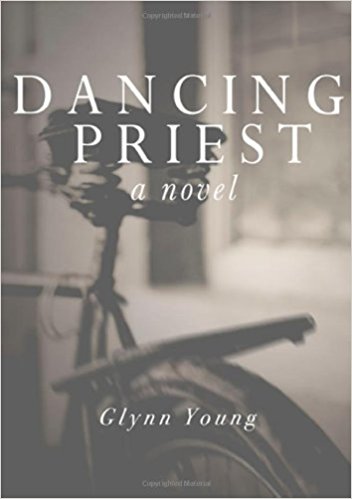
Dancing Priest: What You Learn at a Group Book Discussion

July 28, 2020 By Glynn Young Leave a Comment

In February, a woman at church asked me if I would be interested in talking with her book discussion club about Dancing Priest. She had read it, and the three published after it, and said she had recommended it to the club. The question became, how fast could I say yes?

Then came coronavirus, and everything went into hibernation. But Dancing Priest hadn’t been forgotten, and once our county emerged from lockdown (or sort of emerged), the discussion was back on. Last week, I sat for two hours with the club’s members, about eight or nine people in all, and talked about Dancing Priest, its successor novels in the series, and the new and final novel in the series, Dancing Prince. 

Virus note: Yes, we wore masks and sat in a socially-distanced-approved manner.

The members are people who love to read. They’ve been meeting for several years and have become good friends. They take their books seriously, and they read a broad range of fiction and non-fiction. (Their next book is Team of Rivals: The Political Genius of Abraham Lincoln by Doris Kearns Goodwin.) Two of the people in the group had read all five of the Dancing Priest novels. Two had read the first two, Dancing Priest and In A Light Shining. The rest had read only the first one.

Any author loves to talk about his or her books. The best part of a discussion like this one is to hear directly from readers, particularly readers who love books. They ask questions, they make observations, and they offer deep insights and comments. They take what you’ve written very seriously. 

Here are a few of the questions and comments.

Where did the idea of Michael Kent come from? A song, “Luna Rossa” by Mario Frangoulis. I heard it on an airplane flight to San Francisco, and the song evoked the image in my mind of a priest dancing on a beach (it’s an older song, popular in the 1950s, sung in Italian; I have no idea what it’s actually about). Music infuses all five of the books. The first two were written while I listened rather incessantly to two Frangoulis CDs, “Sometimes I Dream” and “Follow Your Heart.” The last three owe a debt to two instrumental albums by Michael W. Smith, “Freedom,” and “Glory.”

How many times have you been to Edinburgh? Since a good part of Dancing Priest and the others have a significant Edinburgh component, it’s a good question. The answer is – I have never been to Scotland or its capital city. But I have spent so much time on the internet doing research, and especially visual research, and I feel live a virtual resident. The home where Michael is raised outside Edinburgh is based on a real house, An Calla, just transported from an island on the western side of Scotland to the eastern side of the country. I used real buildings at the University of Edinburgh, real coffeeshops, and real theater venues. 

In the last three novels, the scenes in London were all based on first-person visits – my own. During trips in 2012, 2013, 2014, 2015, and 2017 to London and England, I took a ton of photographs. I stood at the front of Southwark Cathedral and imagined what it would be like to preach a sermon there. I’ve done the tour at Buckingham Palace twice. I’ve stayed at a hotel on Buckingham Gate. I know the bus lines and the tube lines, and how to get from Hyde Park to Kings Cross Station. We had considered going to Edinburgh in 2020, but the virus disposed of that idea. Perhaps next year.

Who was your intended reading audience for Dancing Priest? My original idea was to write a romance that men could read. Yes, men. And, for the first two books, readers were about evenly divided between men and women. The reality is, though, that it’s mostly women who read fiction, including both Christian and general fiction. Interestingly, most of the emails and social media messages about the books have come from men. 

Have you thought about turning Dancing Priest into a movie script? Yes, actually, I have, but I have zero experience in scriptwriting. In fact, it was the publisher who first brought the subject up, back in 2011. He even sent the book to a film production friend in California, who read it and said, “It’s a novel. I thought you were sending me a script.” The question comes from how visual the book seems to be. Even when I reread it, it seems like I’m watching a movie. But that’s how the book was born – in my imagination. I wrote the manuscript in my head for four years before the first landed on the computer screen, and in that sense, it was a visual story. This has been noted by some of the very first readers almost a decade ago. 

How Sarah Hughes comes to faith is exactly how it happens for a lot of people. In Dancing Priest, Sarah and Michael have a major conflict over faith; it’s the central conflict of the story. When she returns to Los Angeles, her experience at UCLA is lifted almost exactly from my own experience at LSU. For the book club members, this deeply resonated; some have had similar experiences or have family members with similar experiences. One called it “completely realistic.” 

Photograph by You X Ventures via Unsplash. Used with permission.

Dancing Prince: The Exhibition at the Tate Modern

July 21, 2020 By Glynn Young 1 Comment

An exhibition at the Tate Modern plays a critical role in the story of Dancing Prince. 

Readers first met Jason Kent-Hughes Dancing Priest as Jason Bannon. Then 16, he was one of the “warehouse children” living near St. Anselm’s Church in San Francisco. He’s drawn to Michael Kent’s outreach program, a coffeehouse with live music. In A Light Shining, Jason is taken in by Michael and Sarah Kent-Hughes and eventually adopted. Almost accidentally, Michael and Sarah discover the boy has a gift for painting. 

By the time of Dancing Prince, Jason is in his early 30s, married and with two sons of his own. He’s an assistant curator at the Tate Modern. As Sarah recognizes in the story, their San Francisco street child has become an artist with a gift for art administration. As part of a regular staff activity, he gives a talk on the two paintings by Sarah owned by the museum. The interest is so great that the museum has to move the venue from a lecture room to Power Hall, the large interior space that helps define the Tate Modern’s architecture (see the top photograph). 

The interest is so intense, in fact, that the museum asks Jason to curate an exhibition of Sarah’s paintings for 18 months out. It’s an ambitious timetable; Jason not only has to find the paintings and their owners and negotiate contracts to borrow them, he also has to plan the exhibition itself, arrange for an exhibition catalog, and arrange for corporate sponsors. And then there the negotiations with three other museums which will host the exhibition after it closes at the Tate Modern. Eighteen months is an almost impossible timetable, but Jason somehow pulls it off.

I first visited the Tate Modern in 2012, during a vacation trip to England. Our hotel was on the South Bank, near Westminster Bridge, and I discovered I could walk to the museum by taking a more-or-less straight-line route through back streets. The alternative was to follow the south embankment along the Thames, past the London Eye, the Southbank Centre, the National Theatre, and eventually to the Tate, next door to the Globe Theatre. Because the of the curve of the river, the back-street route was much shorter, and took me through a neighborhood called The Cut, the Old Vic Theatre, the New Vic Theatre, various and sundry business areas, and then the rear of the museum property (you still have to enter from the front entrance on the river). 

The museum is something of an architectural wonder. A one-time power generation station, the structure has an interesting history. Closed as a power station, it was renovated and reopened as the Tate Modern in 2000. It is the major repository for the modern and contemporary art works in the Tate’s collection. 

In 2012, I visited three times; my wife likes to sleep in and I kept getting drawn back to the building and its collection. It also provided some great walking exercise. The exhibition that was on when I visited was “Edvard Munch and the Modern Eye,” and it was excellent. In 2015, I also viewed the Agnes Martin exhibition, which I liked, but it did inspire a comment about wallpaper by Jim Kent-Hughes in Dancing Prince. The museum expanded with a large, adjacent building, and I was able to see it in 2017. 

In the novel, dissatisfied with the rather perfunctory articles written by the experts, Jason eventually writes the catalog himself, an almost first-person account of his own knowledge of and experience with his adopted mother’s artwork. The exhibition also leads to the discovery of two unknown paintings by Sarah, a critical development in the relationship between Michael Kent-Hughes and his youngest child Thomas, and a fleeting first meeting between Michael and Mary Penniman, who assumes a large role later in the book.

Top photograph by Dil via Unsplash. Photograph of Tate Modern expansion by Jay Mullings also via Unsplash, Both used with permission.

Three Reviews of “Dancing Prince”

July 17, 2020 By Glynn Young Leave a Comment

Martha Orlando has published has a lovely review of Dancing Prince today at her blog: “What I want my readers to understand is that no one comes away from reading Glynn’s works without feeling the Lord has blessed them.” You can read Martha’s entire review at Meditations of My Heart.

And over at Amazon, one reader expected to be disappointed by the novella included with the novel, because it is rather different, but was pleasantly surprised. Another reader says the Dancing Priest novels has become her favorite book series.

Dancing Prince: The Heart of a Child

July 14, 2020 By Glynn Young 2 Comments

The first four Dancing Priest novels were about Michael Kent-Hughes. In the fifth, Dancing Prince, the character who is stage center is Michael’s youngest child, Thomas, or Tommy, as he’s called by friends and family. He’s named for Michael childhood, college, and adult friend, Thomas MacFarland. 

As the novel begins, Tommy is four years old. His mother, Sarah Kent-Hughes, is painting in her studio when she discovers that the boy has slipped inside to watch. The unwritten rule of the family is that no one watches Sarah when she’s painting – not Michael, not the other children, not friends, no one. And yet there’s Tommy, quietly watching her and doing his own little drawings.

At first perturbed, Sarah looks at what Tommy’s been drawing, and she realizes that the boy might have artistic talent. She encourages him and continues to allow him in her studio while she paints. Until the day Michael comes home unexpectedly and finds them both painting in the studio. What happens next will frame the next two decades of Tommy’s life and the life of his father. It also frames the novel.

The novel shows Tommy at 4, 6, 13, 15, 19, and his early 20s. In his relationship with Michael, there is a recurring pattern, leading to the estrangement between the two. David Hughes, Sarah’s twin brother, becomes the significant male influence in Tommy’s life. Because Tommy so strongly resembles his uncle; people often think he looks more like David’s child than Michael’s. David also becomes the chief counsel to Michael on the subject of Tommy, for it is to David that Michael turns at times of crisis. 

What the story required was a boy and eventually a young man who somehow retain s the heart of a child. Tommy is known as the most devout of Michael and Sarah’s children. He’s also the most perceptive and intuitive. As his older brother Hank points out, from a young age Tommy always seems to know what is going to happen next, and he always seems to understand what is happening better than his older siblings.

Tommy was not the easiest character to develop. The section when he is 13 was actually the first part of the Tommy sections of the novel that was written. The scene of Michael accompanying Tommy and a friend to the Imperial War Museum is actually the oldest written part of the novel, having been originally drafted in 2006 and 2007 as part of a very different story about Michael and his family.

Tommy wasn’t supposed to be the main character of this novel. As the drafting got underway, Tommy kept poking his head into the story. It was almost as if I couldn’t keep him out or under control. It was a year ago that I finally threw up my hands and surrendered, completely revising the draft into something that is closer to what was finally published. Tommy turned out to be very content with being the center of attention.

Top photograph by Japheth Mast via Unsplash. Used with permission.

First Review for “Dancing Prince”

July 9, 2020 By Glynn Young Leave a Comment

Dancing Prince has its first review on Amazon, and it’s a five-star. Thank you, Carla!

“What does one say when you have lived so intimately with the Kent-Hughes family, suffering with them in their sorrows and rejoicing in their achievements and triumphs. Always and most importantly delighting in the way their every path in life revealed their Christian passion and commitment. I am sorry their fans don’t get to continue walking with them but pray their lives will impact many faithful and searching readers.

“As a side note, I was reluctant to read the epilogue for I expected to be disappointed with a story going in a totally different direction after so thoroughly enjoying the 5 books in the series. What a surprise awaited me. You will NOT be disappointed.”

You can see the review at the Amazon page.

The Story of the Novella ‘Island’

July 7, 2020 By Glynn Young Leave a Comment

“Did you write this?”

My publisher asked me that question after reading the manuscript for the novella Island. The reasons he asked was straightforward. It is completely unlike the writing style for the five novels that constitute the Dancing Priest series. 

The novella is closely connected to but not dependent upon Dancing Prince, the fifth and final novel in the series just published last week. The choices were to publish it as a separate work or include it as a bonus with the novel. Ultimately, we included it as a bonus with the novel. (The photograph above is the one that would have been used for the cover if we’d decided to make it a separate work.)

Early readers of Dancing Prince have discovered that the novel itself is about the same length as its four predecessors. But the novella adds another 20,000 words.

Island is story that a character in Dancing Prince, Erica Larsson, begins to write to explain – at least in fiction – how a tomb on the island of Broughby in the Orkneys might have come to be. The story doesn’t play a critical role in the main narrative, but it does stand as something of an extension of it.

The novella tells the story of Aoife and Ulf, two people living at the end of the 9th century. Aoife was born on the island, the daughter of a Celtic fisherman and the Dane woman he marries. Ulf is the third son of the king of Trondelag, a city and region in what is now Norway. Island is even given an introduction by Farley MacNeill, a character in the book who is the professor and academic mentor for Thomas Kent-Hughes. Thomas, or Tommy, is the fourth natural child and second son of Michal and Sarah Kent-Hughes and leads the archaeological dig that finds the tomb on the island of Broughby. 

MacNeill writes that he finds the story compelling historically, and he notes as almost an aside that he finds that the author has told something of her own story. 

The idea for the novella predates Dancing Prince itself. In 2014, I was fascinated by an article in Discover Britain magazine entitled “All roads lead Norse: Mysteries of the Orkney Islands.” It described the Neolithic and Norse relics and sites that are common in these islands off the northern coast of Scotland. The story is available online but is behind the magazine’s paywall. A similar story, “Discover the ancient island history of Orkney,” is available on the magazine’s web site and includes a photo of St. Magnus Cathedral in Kirkwall, which has a brief mention in Dancing Prince. 

In 2015, when my wife and I visited Britain, I made a point of visiting the Lewis Chessmen exhibition at the British Museum. These game pieces are among a hoard of similar pieces found buried on the Isle of Lewis in the Orkneys in the 19th century. I even picked up a few replicas, and this crowd sits on the shelf above my computer screen. They watched me write the manuscripts for Dancing King, Dancing Prophet, and Dancing Prince. The original chessmen are a couple of hundred years older than the period for Island, but they have been a good reminder of where the story came from.

The names and events of Island are based on a lot of online research into Viking / Norse and Celtic names and customs, as well as a lot of reading of Viking and Scottish history. I won’t claim that I got everything right; in fact, the story in the novella and the main novel turns on a Viking expedition about a century earlier than what history tells us. 

As the publisher discovered, the writing style is very different from the five novels. For one thing, it’s written entirely in the present tense; most novels, including mine, are usually written in the past tense. It’s also what’s called historical fiction; the five novels are closer to something I might call contemporary alternative history. Plain fiction works, too.

But that’s where the novella came from.

  • « Go to Previous Page
  • Page 1
  • Page 2
  • Page 3
  • Page 4
  • Go to Next Page »

Footer

GY


Meet the Man

An award-winning speechwriter and communications professional, Glynn Young is the author of six novels and the non-fiction book Poetry at Work.


 01_facebook 02_twitter 26_googleplus 07_GG Talk

Copyright © 2026 Glynn Young · Site by The Willingham Enterprise · Log in | Managed by Fistbump Media LLC