• Skip to primary navigation
  • Skip to main content
  • Skip to footer

Dancing Priest

Author and Novelist Glynn Young

  • HOME
  • BLOG
  • BOOKS
    • Brookhaven
    • Dancing Prince
    • Dancing Prophet
    • Dancing Priest
    • A Light Shining
    • Dancing King
    • Poetry at Work
  • ABOUT
  • CONTACT

Dancing Prince

Did “Dancing Prophet” Become Prophetic?

October 13, 2020 By Glynn Young 5 Comments

In 2012, I had a conversation with my publisher about the future novels planned in the Dancing Priest series. Dancing Priest had been published in late 2011, and the publication of A Light Shining was imminent. I walked him through what I saw as the main subjects and themes of several additional books (another six, if I remember correctly, which eventually became another three). 

The fourth book was to focus on the conflict between Michael Kent-Hughes and the Church of England hierarchy, which would eventually lead to a reformation. The catalyst would be a child sexual abuse scandal, happening over decades and facilitated (as in, covered up) by the church. The inspiration for this was the scandal in the Roman Catholic Church; what I did was to transfer the Catholic scandal to the Church of England. Or so I thought.

Two weeks after that conversation, my publisher sent me an article that had just been published in Britain. It looked like the Church of England had its own, homegrown child abuse scandal, and didn’t need any fictional help from the Catholic church. 

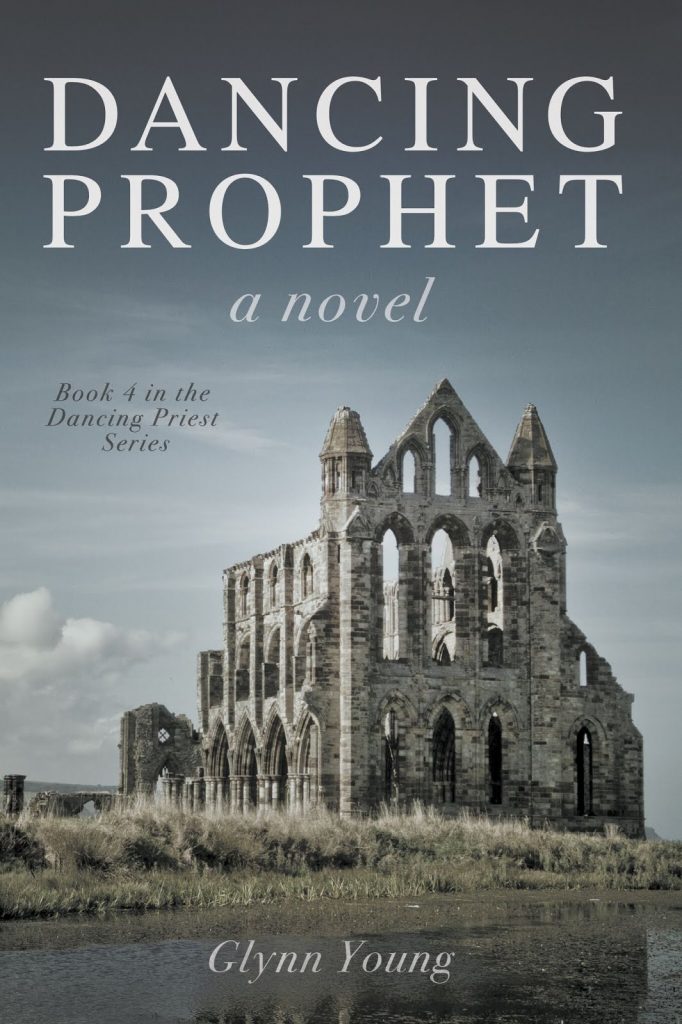
Dancing Prophet, the fourth novel in the Dancing Priest series, was published in 2018. That year, more revelations were unfolding about the Church of England. In 2019, an independent inquiry was established to look at what had happened and why. Last week, the inquiry panel released its study. 

It sounded like the story line in Dancing Prophet. My wife says I need to stop writing about things that become true.

It gives me no particular joy that real events seem to follow several of the key events in the Dancing Priest stories. (Sometimes, the correlations aren’t horrific, like the DNA study made of Vikings that sounded a lot like what happens in Dancing Prince.) But it does seem uncanny at times. I don’t have the gift of prophecy, but I’ve asked myself, how do real events happen that mirror the stories I wrote in my five novels?

I don’t have a solid answer. I have an idea of what happens, and it has to do with the research I do for the stories and the work experience I’ve had.

The Dancing Priest novels are not historical novels in the strict sense. They’re not about the past. They are more futurehistorical novels, because they’re set in the soon-to-happen future. (One reviewer has called them alternative historical novels.) But they are based on considerable reading and research and first-hand experiences on visits to London and England.

The streets Sarah’s car has to take from Buckingham Palace to the Tate Britain (Dancing Prophet)? I’ve walked them. The visit Michael makes with the two boys to the Imperial War Museum and the Guards Museum Shop (Dancing Prince)? I’ve done both. Taking a train from King’s Cross Station (Dancing Prince)? Been there, done that. A tube ride from South Kensington to the Tower of London (Dancing King)? Yep. And the books I’ve read have ranged from Peter Ackroyd’s multi-volume History of England and a history of coronations to a domestic history of the British royal household and a history of the Church of England.

My work experience has also served as a resource. Working for two Fortune 500 companies, a Fortune 1000 company, a public institution, a newspaper, and my own business has taught me a lot about how organizations respond to crises. Almost by default, the initial response is self-protection. The ongoing response tends to be self-protection. And that response can put public relations people in very difficult positions. The fact that the Church of England responded to its child sex abuse crisis almost exactly like the Roman Catholic Church did is no surprise.

You don’t have to be a prophet when basic human nature never changes. 

Top photograph by Cajeo Zhang via Unsplash. Used with permission.

A Tale of Two Paintings

October 6, 2020 By Glynn Young Leave a Comment

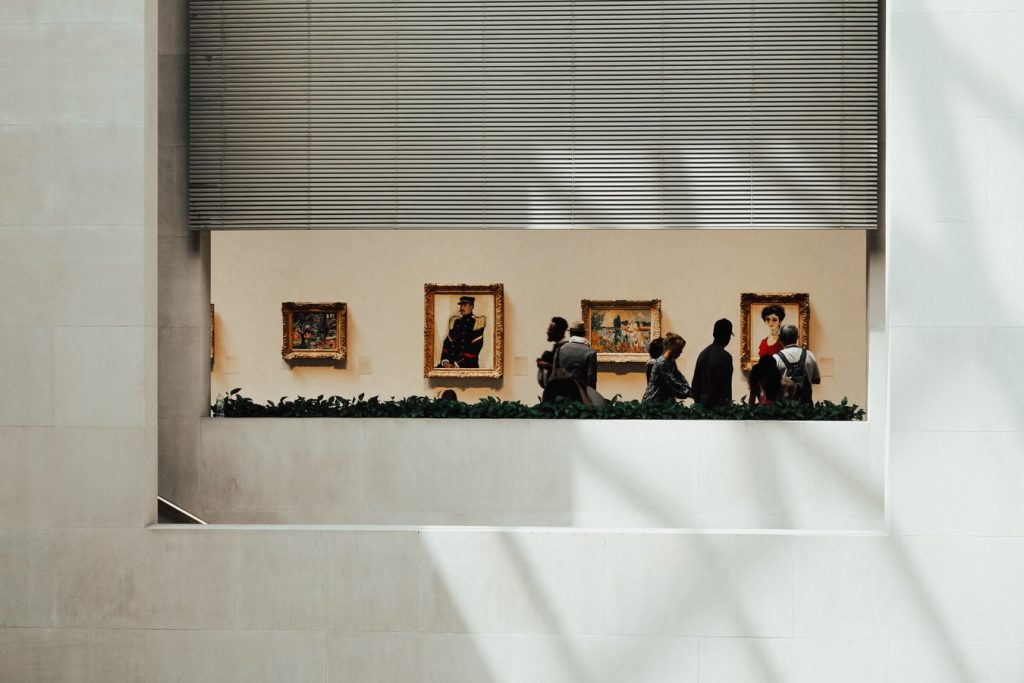
I’ve talked about how an exhibition at the Tate Modern plays a critical role in Dancing Prince. In turn, two paintings in the exhibition play a critical role in the narrative of the novel. 

Jason Kent-Hughes, the adopted son of Michael and Sarah, is working as an assistant curator at the Tate Modern. Sarah describes him as their “San Francisco street child with a gift for painting and art administration.” After graduating from school in London, he did a year of military and then enrolled at the Slade School of Fine Art, part of University College London. After receiving his degree, he joined the Tate Modern.

As he explains to Michael, he gave a talk at the museum about the paintings done by Sarah that are in the Tate’s collection. It’s part of a regular weekly feature, he says, in which a staff member speaks about their choice of topic – something they’re working on, something in the collection, an upcoming exhibition, a research project, and so on. 

The lectures are open to the public and generally draw anywhere from 30 to 300 people, apart from the staff attending. Jason’s talk on Sarah’s paintings brings 2,000, forcing the museum to move the event to Power Hall (the Tate Modern’s huge interior space). It’s also videotaped and posted for sale on the museum’s web site, resulting in 30,000 orders during the first day. The museum suspects there’s a huge financial and artistic potential here, and it asks Jason to curate a major exhibition of Sarah’s work. Assembling the exhibition becomes his full-time job for the next 18 months.

Jason uses a journal of works kept by Sarah, starting with the paintings she did for her senior university project (described in Dancing Priest). Through some fairly intense work, he’s able to track 99 of her 101 listed paintings. The two that he can’t locate are the last ones, and they’re described in the journal with rather puzzling letters. What he knows is that these two paintings are likely important, because Sarah had been evolving her style and clearly reaching for something more.

Jim Kent-Hughes, the other adopted son of Michael and Sarah, accidentally comes across painting #100. It is their youngest child, Tommy, who holds the key to painting #101. All of Sarah’s paintings, and even her studio, become flashpoints in the relationship between Michael and Tommy. But those two paintings will be the most serious tension points. 

I’d like to say I understood exactly what I was doing when I developed the story of the two paintings. Perhaps I did, subconsciously. But it was only after the book was published, and I had reread it (twice), that I realized the story of the two paintings are the bookends for the entire series of five novels. Sarah’s paintings and art play an important role in the first book, Dancing Priest. And they play a critical role in the final book, Dancing Prince.

The story of the two paintings also speaks to something else – the meaning of art in our lives. We can look at a painting say “I like it” or “I don’t like it” or “They call that art? I could have painted that.” Or we can be so struck by a painting that words fail us. The first time that happened to me was in London, and (surprise) it was at the Tate Modern. It was a portrait of Marguerite Kelsey by Meredith Frampton. That one painting brought me back three times to the museum during a 2012 visit, and I still don’t know if I can adequately describe the impression it made on me. Another annual exhibition in London that we’ve seen all five times we’ve visited is the BP Portrait Awards, which has a similar effect on me. 

In Dancing Prince, those last two paintings will affect virtually every character who sees them in a very similar way that those paintings in London affected me. For Michael and Tommy, the impact will be far greater. 

Top photograph by Abbie Bernet, and middle photograph by Zalfa Imani, via Unsplash. Used with permission. 

Dancing Prince: Anticipating a DNA Study of Vikings?

September 29, 2020 By Glynn Young 1 Comment

Some strange things have occasionally happened with the Dancing Priest stories. Strange, as in they anticipated some real news events. Each of the novels has an example of this, to the point where it spooked my wife and even my publisher.

And now comes Dancing Prince, published in July of this year. 

In mid-September, scientists in Denmark and Armenia published a study in Nature that reported on the largest DNA study of Vikings ever done. The Vikings, as it turns out, were a far more diverse lot that anyone had previously known. Yes, a preponderance of the DNA was associated with the Nordic countries like Sweden and Denmark, but the researchers also found that the Vikings were not a homogenous group. The DNA included connections to southern Europe and Asia.

The Popular science site Inverse, in its story on the study, noted that some of the Pictish people of Ireland and Scotland had burials like Vikings. 

When I wrote and finished the text of Dancing Prince, I was completely unaware of this research. The investigation of a burial site on a small (and fictitious) island in the Orkneys uncovers the burial of a Viking and a Celt, a male and female and presumably a married couple. DNA analysis of the two people found in the tomb confirms a hypothesis by the lead character in the novel. The novel also includes a novella as an epilogue that tells the story of this couple, and it tracks fairly closely with what the research team learned about Vikings and their DNA. 

I did a lot of reading – a lot of reading – about Vikings, their invasions of the British Isles, their homelands, their burial customs, their lifestyles, and the names of people that were common. I checked to see if it was possible to do DNA analyses of skeletons or human remains more than a thousand years old (it is). I studied reports by archaeologists working on Viking sites. I read about Viking marriage rites. 

In doing all this research, my goal wasn’t to create an absolutely perfect story, but to create a plausible one. 

What I didn’t expect was to anticipate (by two-and-a-half months) a study on Vikings’ DNA that, even if unintentionally, gives my fictional story more credence. 

Top photograph by Steinar Engeland via Unsplash. Used with permission.

Megan Willome Reviews “Dancing Prince”

August 19, 2020 By Glynn Young Leave a Comment

It begins and ends with an open door. 

“The first line of the book and the last line. It’s so subtle,” said Glynn Young, author of Dancing Prince, the fifth and final in the Dancing Priest series.  

“They are very different kinds of doors and implications. I would like to say I plotted it out, but I did not. As I was finishing, I knew, ‘That’s how it has to end, just before they walk into the room.’ Then it hit me, ‘That’s how it begins.’”

I had not noticed this symmetry, although I liked the first sentence so much I did a sacred reading on it. Just a little lectio divina on these seven words: “She must have left the door ajar.”

To continue reading, please see Megan Willome’s review of Dancing Prince.

The Uses of a Novella

August 18, 2020 By Glynn Young Leave a Comment

On July 1, with the publication of my fifth novel, I brought a five-book series to a conclusion. Each of the five was about 93,000 words in length, except for the last one. The last one has an additional 20,000 words, included as an epilogue but actually a freestanding novella.

It’s related on a minor way to the main novel; it’s mentioned as a manuscript one of the characters is writing. The idea for it predates the novel it’s part of; its genesis was years earlier from an article in Discover Britain magazine on the Celtic and Viking history that saturates the Orkney Islands.

I wrote it as part of a break from writing the novel. My novels are contemporary fiction; this novella is historical fiction, set a thousand years before the contemporary story. I wrote it without actually knowing what to do with it. What was likely in the back of my mind was an understanding of all the various ways authors use novellas.

To continue reading, please see my post today at the American Christian Fiction Writers blog. 

Bill Grandi Reviews “Dancing Prince”

July 29, 2020 By Glynn Young Leave a Comment

Pastor Bill Grandi has published a review of Dancing Prince at his blog, Cycleguy’s Spin. 

“What I want to say deals more with my personal emotions,” he writes. “I found myself twisting and turning with each turn of the plot. Unexpected twists. Unprepared-for turns. I simply had trouble putting the book down. If it hadn’t been for Glynn I might have gotten more stuff done at home. I might have decided to cut the grass instead of saying, “It’s too hot to do much of anything.” And doggone it if he didn’t make it hard to put the book down and go to bed!”

You can read the entire review at Cycleguy’s Spin. 

  • « Go to Previous Page
  • Page 1
  • Page 2
  • Page 3
  • Page 4
  • Go to Next Page »

Footer

GY


Meet the Man

An award-winning speechwriter and communications professional, Glynn Young is the author of six novels and the non-fiction book Poetry at Work.


 01_facebook 02_twitter 26_googleplus 07_GG Talk

Copyright © 2026 Glynn Young · Site by The Willingham Enterprise · Log in | Managed by Fistbump Media LLC