• Skip to primary navigation
  • Skip to main content
  • Skip to footer

Dancing Priest

Author and Novelist Glynn Young

  • HOME
  • BLOG
  • BOOKS
    • Brookhaven
    • Dancing Prince
    • Dancing Prophet
    • Dancing Priest
    • A Light Shining
    • Dancing King
    • Poetry at Work
  • ABOUT
  • CONTACT

Dancing Prince

He’s Got Me Rereading My Own Books

April 27, 2025 By Glynn Young Leave a Comment

Pastor Bill Grandi has three posts last week on his rereading of my Dancing Priest series. On Tuesday, Bill discussed the difficulty of reading the fourth book in the series, Dancing Prophet, because of what it was about. It was a difficult book to write, and it became somewhat prophetic, including when the Archbishop of Canterbury resigned for helping to cover up a scandal in the Church of England.

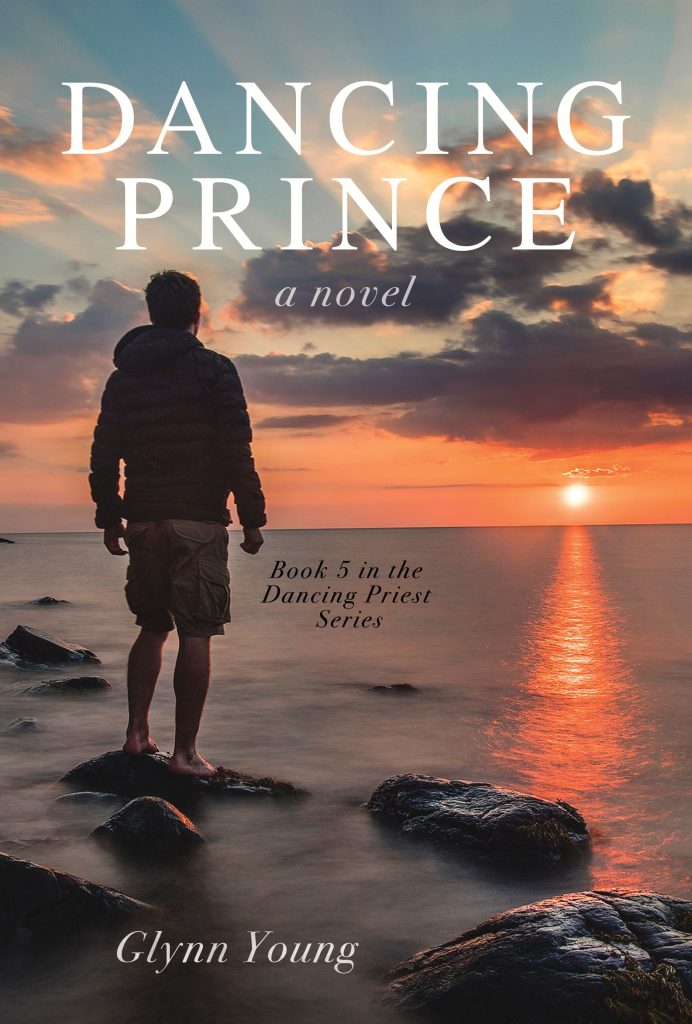
On Wednesday, Bill discussed a conversation between Michael and Sarah Kent-Hughes in Dancing Prophet, in which Sarah observes how hard it is to be one of the workers sent in “to clean out the pipes.” And on Thursday, Bill writes about a scene in the fifth and last in the series, Dancing Prince, in which Michael’s two sons, Henry and Thomas (or Hank and Tommy, as they’re known by the other characters), are discussing “calling,” or being called by God as described in I Samuel 16:1-13, the rejection of Saul and the anointing of David.  Coincidentally, the pastor at my church used that passage as the text for his sermon this morning. 

Bill’s post led me to start rereading my own books. I’ve already finished the first two, Dancing Priest and A Light Shining. (Amazon has the Dancing Priest pages messed up; the Kindle version is here; the cheaper paperback price is here, but it’s still more than it’s supposed to be.)

Originally, I had planned on doing only those two books. They were written as one (huge) manuscript of about 150,000 words. But the publisher and I had a conversation about what might happened after Michael and Sarah returned to Britain, and it was in that conversation that I described what could be the plot lines for several more books, including what would become Dancing Prophet and its difficult subject. Two weeks later, the publisher sent me a short news clip; the difficult subject had become a horrific reality. That reality continues 13 years later, with the resignation last year of the Archbishop of Canterbury.

After rereading A Light Shining, it is my prayer that its subject – religious violence that nearly tears Britain apart – never becomes reality. 

Do You Outline, or Do You Write into the Dark?

May 8, 2024 By Glynn Young Leave a Comment

A problem developed while I was writing my fifth novel. The problem had to do with what I conceived as a minor character – a four-year-old boy who would grow to adulthood during the story. But he wasn’t the main character; far from it, in fact. He was supposed to have a bit role.

Unfortunately, he had a different idea.

I kept floundering with the manuscript because this kid kept sticking his head in. It was as if he was demanding a bigger part of the story. I was hitting dead end after dead end, and my writing was going nowhere.

To continue reading, please see my post today at the ACFW Blog. 

Photograph by Steven Houston via Unsplash. Used with permission.

The Pleasures of Reading a Physical Book

January 18, 2023 By Glynn Young 1 Comment

I read a lot of e-books. Reviewing poetry for Tweetspeak Poetry means I’m read a lot of collections in pdf or e-book formats. Reviewing books on my Faith, Fiction, Friends blog means the same thing, although almost all of those books are e-books and specifically books found on Amazon Kindle.

I like my Amazon Kindle Fire (I also have the Kindle app on my laptop and phone). It saves considerable bookshelf space, for one thing. Many of the books I have there will be read once and not likely read again at some time in the future. While the prices of some Kindle books, particularly more academic ones, are eyebrow-raising, most Kindle book prices are reasonable and usually cheaper than the hardback or paperback.

Two recent books I read, however, reminded me of the pleasures of holding and reading a physical book. 

The Lost Tales of Sir Galahad, with stories by various authors, was recently published by The Rabbit Room. It’s a beautiful book, with a bright red embossed cover, creative stories, and wonderful illustrations by Ned Bustard. I’m trying to imagine it as an e-book, and I don’t think it would work as well.

The Bodleian Library recently published a new edition of “Elegy Written in a Country Churchyard,” the famous poem by Thomas Gray. It includes wonderful wood engravings by Agnes Miller Parker, first published in 1938. Her black-and-white illustrations remind me of the paintings by Thomas Hart Benton, full of motion and activities. It’s another book that wouldn’t work as well in an electronic format. (You can read my review of the book at Tweetspeak Poetry.)

There’s something about holding a physical book that brings additional pleasure to reading, probably not unlike holding a printed newspaper adds something to reading the news that an online version doesn’t have. It may be that, for non-fiction books, you can find something more quickly in the index, or that a physical text allows you to see a page as something more than only one screen. Or perhaps I’m just more comfortable with a physical text; it’s the one I’ve known since my mother was reading Grimm Fairy Tales aloud when I was two and three years old.

And that could be it – a physical text creates associations – with its place on a shelf, with people, with what was happening at the time – that an e-book or pdf doesn’t. And a physical text suggests a greater degree of permanence – it’s there even if your internet connection goes down or the battery on your Kindle goes out.

My five novels in the Dancing Priest series were first published on Amazon Kindle in e-book format, followed shortly thereafter by the paperback editions. A couple of months ago, my publisher told me that he’d been contacted by a firm that produced hardback versions, and those editions were also now available. I checked Amazon, and sure enough, there they were. 

I bought the first in the series, Dancing Priest, to see what the binding was like. There’s no dust cover or book jacket, but the cover is a sturdy laminated cardboard. It’s not a durable, say, as a hand-stitched leather, but it’s certainly more durable than a paperback. And, yes, I ended up buying all five hardbacks. At $34.99, they’re not inexpensive. But what can an author say?

I picked the last one in the series, Dancing Prince, and read the hardcover version. I can’t say there was anything remarkably different from the paperback, but I did find a slight, perhaps significant, difference. The book, and the story, felt more substantial.

I’ll continue to buy e-books; they’re provide a means to read good writing without breaking the budget. I’ll continue to buy hardbacks and paperbacks, particularly for books I want to keep, reread, and have ready access to because I know exactly where they are or the shelf.

Top photo by Jaredd Craig. Amazon Kindle photo by Freestocks. Both via Unsplash and used with permission.

The Character of Michael in the Dancing Priest Novels

November 17, 2020 By Glynn Young 1 Comment

After Dancing Priest was published in late 2011, I received an email from a reader in Seattle. He liked the book. He liked the book so much that he said it should be required reading for young men under the age of 20. 

He said this, he said, because the character of Michael was all about standing firm and true in the face of adversity. “There’s a nobility in the character of Michael Kent that we should all aspire to.” That character is demonstrated in large things, like an Olympic tragedy, and in smaller things, like taking in a motherless eight-year-old boy.

By the second Novel, A Light Shining, Michael Kent has become Michael Kent-Hughes, husband of Sarah. He wears his wealth lightly. Finding his family in Italy, instead of doing the legal thing, he does the right thing. And he faces the great personal adversity of any in the five novels, when he nearly dies. In fact, for a significant section of the book, Michael is unconscious, and the focus shifts to Sarah. 

In Dancing King, with Britain in physical shambles, Michael could have walked away from family responsibilities and the royal invitation that’s fallen to him. But he doesn’t take the easy way out. Months before the coronation, he learns that he’s facing serious opposition and a pile of dirty tricks. He and the staff he’s selected to work with him meet each one head one, turning potential adversity into advantage. 

Michael, as head of the Church of England, finds himself engulfed in a church mega-scandal in Dancing Prophet. The church scandal begins to erupt at the same time the Greater London Council reaches a political impasse, budgets expire, and the transport and sanitation workers go one strike. Michael is all of 30 years old in the story, but his sense of responsibility carries him forward. 

As the last of the series, Dancing Prince, begins, Michael is 35. He’s effectively the nation’s czar, parliamentary government having collapsed some years earlier. His sense of responsibility is still carrying him forward, but there are cracks, especially in his family life. He and Sarah have grown apart; trouble is brewing in their marriage. The flashpoint becomes their youngest child, Thomas, and one incident will haunt the family for the next 20 years. 

This is a somewhat different Michael than the theology student and cycling enthusiast in the first story. He knows that the pressures of his position are allowing his family to slip through his fingers. He’s physically, mentally, and emotionally exhausted. People are talking about Sarah avoiding evening activities at the palace. And one person, their youngest child, will bear the brunt of the estrangement.

Much of the younger man remains, but this is a man who’s been shaped, and sometimes mauled, by the job. In the previous stories, he was something of an idealized character. In the last one, he becomes more real. 

Top photograph by Benjamin Rascoe via Unsplash. Used with permission.

Some Recent Reviews of “Dancing Prince”

November 3, 2020 By Glynn Young Leave a Comment

Here are four recent reviews of Dancing Prince, posted on Amazon. Nothing touches an author’s heart like seeing people connect to something he’s written.

“’We are always part of a story larger and older than ourselves.’ ~ the fictional Farley McNeill, Ph.D. in the Foreward to fictional Erika’s fiction story.

“Love. Loss. Grief. Grace. Kindness. Compassion. Politics. Royalty. Romance. Family Dynamics. Mystery. Suspense. Humor. Art. Archeology. Christian Vikings. Well-rounded characters. Detailed description. Rich imagery. This book has it all.

“It’s not a slim book, either. And I read it in a weekend, though reduced to tears as soon as the first chapter. I woke up this morning still thinking about the book and wishing the series didn’t have to end.

“The characters are well developed, and there’s a cast of characters if you forget who’s who. Descriptions are detailed–but not so much that you get lost. The imagery is rich. Also, there’s enough backstory in this book that it can stand alone. But if I were you, I’d read the whole series. This is a story–and a family–that will stick with me.”  — Sandra

##

“Remember when the last LOTR movie won all the award, partly in recognition for the achievement of the series? I liken that to this last book in the five-book Kent-Hughes saga. It’s a great story although not my favorite in the series (that’s book 3, “Dancing King”). And there is, in this one, a return of the king.

“The first two chapters really grabbed me and set up what is to come in the rest of the novel. I really enjoyed when the story went on remote, taking place in a new location, just to shake things up. Like another reviewer said, I loved the epilogue and thought it capped off the entire series.

“I am sad to see the story end, but it ended well and, I think, at the right spot. This is a series I have recommended to others and will continue to recommend.

“Well done, Glynn!” – Megan

##

“I have been completely captivated by Glynn Young’s cast of characters in The Dancing Priest series, but this final story is a crowning gem (pun intended). And the epilogue is the sweetest surprise. Such lovely, lovely storytelling. I couldn’t stop reading until the end.” – Laura 

##

“I read the other four books by Glynn. Loved them. I was right into the life of the people. Hated to come to the end and found this one The Dancing Prince. Got it immediately and loved it. Very interesting. Involved in so many intriguing people with so many interesting stories. Loved the dig on the special island and the findings. Then to make everything even more intriguing, a story involving the people revolved around the dig. I don’t want to give it away. I tried another book because I love books, but this new one left me down. Nothing compared to the Glynn Young books. He’s an exceptional writer. Wish he had another ten or more books available. Read these books, you will not regret it.” – Del 

Top photograph by Max Delsid via Unsplash, Used with permission.

Giving a Minor Character a Bigger Role

October 20, 2020 By Glynn Young 3 Comments

The character of David Hughes, twin brother of Sarah Hughes, has been a part of the Dancing Priest series from the beginning. In Dancing Priest, the first novel, it was David who had decided to do a study year abroad in Scotland, dragging his sister along with him. David was the scholar in the family, and at the University of Edinburgh he was studying Scottish history. Because of a fire at his dormitory, David ends up rooming with Michael Kent and Tommy McFarland, even though they’re two years older. And it’s Tommy’s girlfriend Ellen who fixes David up on a blind date with Betsy, whom he’d eventually marry.

The character of David Hughes served as something of a counterpoint to Michael and Tommy. They’ve been friends since they were six years old and have roomed together at St. Andrews during their entire time at university. David is the quiet American, the scholarly outsider, contrasting with the outgoing McFarland and the self-confident and often-quite-candid Michael. McFarland is an outspoken champion of Scotland and Scottish independence; David is the young man who’s been in love with Scotland from afar and is now living exactly where he wants to live.

David and Sarah experience family upheaval when their father turns his back and cuts off all communication with them and their older brother Scott, a doctor in San Francisco. As a result, the Hughes twins spend Christmas at McLarens, the home of Ian and Iris McLaren, the guardians for Michael. While there, David helps Ian, an equine veterinarian, deliver a foal.

David has very small roles in the next three books in the series, but I always felt he deserved something more. The opportunity for that arrived with Dancing Prince. 

Some 30 years have passed since the first novel. David is a history professor at the University of St. Andrews. He and Betsy have two now-grown children. Over the years, it is David who has become a key figure in the life of Thomas Kent-Hughes, the youngest of Michael and Sarah’s children. 

As Michael grows more estranged from Tommy, David unintentionally helps to fill the gap, to the point where Tommy feels closer to his uncle than to his own father. Early in the story, Tommy and his father experience one of the many crises in their relationship, and it’s to David in St. Andrews to whom Tommy flees from London. When it’s time for college, Tommy will select St. Andrews, and a large part of the reason is that David teaches there. 

In many significant ways, Tommy becomes part of the Hughes family, and he clearly feels more comfortable with his uncle than with his father. Tommy looks more like his uncle than he does Michael, and he’s often mistaken for David’s son. They share a love of scholarship, and early on David is guiding Tommy in his pursuit of Norse and Icelandic languages. And it’s a reciprocal relationship. When David’s own son experiences a breakdown, it’s Tommy to whom David turns for help. 

The character of David was a quiet, stabilizing one from the beginning. Those characters rarely get center stage in stories and novels. Dancing Prince offered the opportunity to bring David out of the background and give him a significant part in the story. And, as it turns out, it will be a crucial part that he plays. Michael will eventually tell Tommy that he owes David a debt he can never repay, “for being there for you when I wasn’t.” David is something of an unsung hero of the Dancing Priest stories, and it was gratifying to give him his due. 

Top photograph by Shipman Northcutt via Unsplash. Used with permission.

  • Page 1
  • Page 2
  • Page 3
  • Page 4
  • Go to Next Page »

Footer

GY


Meet the Man

An award-winning speechwriter and communications professional, Glynn Young is the author of three novels and the non-fiction book Poetry at Work.


 01_facebook 02_twitter 26_googleplus 07_GG Talk

Copyright © 2026 Glynn Young · Site by The Willingham Enterprise · Log in | Managed by Fistbump Media LLC