• Skip to primary navigation
  • Skip to main content
  • Skip to footer

Dancing Priest

Author and Novelist Glynn Young

  • HOME
  • BLOG
  • BOOKS
    • Brookhaven
    • Dancing Prince
    • Dancing Prophet
    • Dancing Priest
    • A Light Shining
    • Dancing King
    • Poetry at Work
  • ABOUT
  • CONTACT

Civil War

Restoring the Family Bible – and More

September 7, 2022 By Glynn Young 1 Comment

More than 40 years ago, my father gave me the Young Family Bible. It had been given to him by his father, who’d received it from his father. The value of the book, as experts like to say, was “intrinsic,” In other words, it was zero, except for what a family member would believe.

The book as received from my father was wrapped in brown grocery-bag paper and tied with twine. It has sat on a closet shelf in my parents’ house for a long time, probably since they moved there in 1955. I have very vague memories of it from childhood. 

When my father gave it to me, I did the time-honored thing: I put it on a closet shelf. Eventually, I removed the wrapping and twine and wrapped it in acid-free paper and a box. Its value to me and the rest of the family was what it contained – four pages, inserted between the Old and New Testaments, of family births, marriages, and deaths. The earliest date was that of my great-great grandfather’s birth in 1802; the last date was in 1890. All of the events were written in the same hand – my great-grandfather’s Samuel Franklin Young. He also wrote his signature on an inside cover. 

The Bible restored

The Bible was not in good shape. The leather binding had failed. The leather was gone from the corners of the cover, exposing the frayed and decaying “boards” underneath. The sewing of the sections had failed. Spine folds were damaged. The family pages were damaged. The title page had disappeared. And there was evidence (prior to my possession) (I hope) of damage from insects, mold, and possibly rodents. 

The questions were: Could it be restored? Could we at least save the family record pages? And could I afford it?

My wife found a story in St. Louis Magazine about NS Conservation. It’s owned by Noah Smutz, and it focuses on book conservation and related services in St. Louis and the American Midwest. Noah is the real deal, and it was a real find to discover that he lived and worked right here in St. Louis, about 20 minutes from my house. 

Noah became interested in book conservation when he was a student worker at the University of Kansas Libraries. He did internships with the Smithsonian Archives and the Bodleian Library in Oxford. He received a Masters degree in book conservation from West Dean College in the United Kingdom. And he’s worked with the St. Louis Art Museum, the Nelson-Atkins Art Museum in Kansas City, the Missouri Historical Society. Saint Louis University, and the Smithsonian Libraries. 

If anyone could do something with the Young Family Bible, it was Noah. 

Last March, I took the book to Noah for an assessment. He looked over it carefully. What was encouraging was that he didn’t reject it out of hand as impossible. As he went through the book, he found something that I’d never come across before – a lock of auburn hair. My best guess is that it probably belonged to my great-grandmother, Octavia Montgomery Young. She died more than 30 years before my grandfather did and, uncommon for the time, he never remarried.

He told me what he needed to do, and he told me what he wouldn’t do, which was to restore every single page of the Bible. The cost would have been prohibitive. But he spelled out what he would do and named his price, which I thought more than fair for the work he’d be doing. His initial assessment fee ($125) applied to the overall price he’d be charging. 

A family records page

He also said he wouldn’t have it finished until about October. The COVID pandemic seemed to have prompted a lot of people to become interested in restoring family books, Bibles, and similar heirlooms. I was more than happy with his schedule.

He also said the Bible, using the King James Version text, was likely printed in the late 1860s or early 1870s. Tens of thousands of Bibles like this were printed and typically sold by door-to-door salesmen. 

Noah actually finished the work in late August. I knew we were getting close when I saw him post a few pictures on Instagram (nsconservation). What he did was amazing. It’s a bound book again. The family pages and the signature page have protected with Japanese paper. The leather cover was repaired and replaced where needed. The book was restitched; the signature page was placed where it originally belonged, at the back of the Bible (he matched the inkblots). He did a bit more work, and he constructed an acid-free storage box that fits it perfectly. 

The signature page

I’ve had time to think about this Bible and my great-grandfather. The approximate date of the book fits something else that happened in the family. His father died in 1870 (his mother had died some years before). Because of deaths in the Civil War (he lost two older brothers and a brother-in-law), he was the youngest and only surviving son. At 23 or 24 years old, he became head of the family, which included not only his young wife the firstborn child but also including two sisters-in-law, his sister, and their children. And he would have bought a family Bible with its record section because, like tens of thousands of other families in both North and South, the dead from the war needed to be remembered and memorialized, even if it was no more than writing their names in a family Bible. 

What Noah restored was more than a book. It was also a piece of family history and American history. With the publication date, the family records and the lock of hair, the book has the Biblical story to tell as well as its own. 

How Research Fills the Gaps in a Family Story

August 24, 2022 By Glynn Young Leave a Comment

The idea has been in my head for years – a story about my great-grandfather. But I knew only a few facts about him, passed down by my father. Research has filled it in – a little bit.

Too young to enlist as a regular soldier, he’d been a messenger boy in the Civil War. He’d lost two brothers and a brother-in-law in the war, leaving him the youngest and surviving son. When the war ended in 1865, he had been “someplace east,” likely North Carolina rather than Appomattox. He had to walk home to southern Mississippi. When he arrived, he discovered his family was gone, having fled to Texas.

That was as much as I knew. When I finally decided to consider a story about him, I turned first to the family Bible, with its records of births, deaths, and marriages.  The records, written over a period of 50 years, were in the same hand – my great-grandfather’s. They proved more revealing that I’d realized.

To continue reading, please see my post today at the ACFW blog. 

When a Book Won’t Let Go

August 10, 2022 By Glynn Young 1 Comment

Two weeks after finishing it, and I’m still thinking about Hearts Torn Asunder: Trauma in the Civil War’s Final Campaign in North Carolina by Ernest Dollar Jr. (See my review last week.) 

When I read it, I expected to read about the final convulsive moments of the surrender of the Confederate armies and the immediate aftermath. And that’s the thumbnail description. But it’s about a lot more.

It’s the story of the civilians in north central North Carolina, roughly Raleigh to Greensboro, who found themselves in the path of two defeated armies and one victorious one.

It’s the story of the soldiers in those armies, who had to live with what we know today as Post-Traumatic Stress Disorder. One thing you don’t read in the general histories of the Civil War period in the rather startling increase in soldier suicides and commitments to insane asylums in the years and decades after the war.

It’s the story of some of the atrocities inflicted on the civilian and military population. In generally, Confederate soldiers were focused on finding food, shoes, and clothes, and they didn’t care where they found them. Confederate soldiers and civilians alike were often desperate for food, and together they were raiding government warehouses and supplies. 

The Union soldiers had food. What they were looking for was loot and revenge. There were too many reports of pillaging and looting, and more than a few of rape. Women and often children were brutalized. Houses were burned. It wasn’t only soldiers who developed PTSD. Some of the federal soldiers were disciplined and a few executed for their crimes (especially after the armies surrendered; that meant the civilians were no longer members of a foreign and hostile country).

My great-grandfather was somewhere in that convulsion. Even at war’s end, he was (chronologically) a boy. Too young to take up arms officially, he had enlisted and became a messenger boy for the Confederate army.

What I don’t know is what did he do to stay alive. Did he participate in the looting of government warehouses? Did he steal from civilians? Those questions will never be answered. What we do know is that he had to walk home to southern Mississippi – hundreds of miles across a landscape destroyed in many places and in complete social upheaval everywhere. 

When he finally reached home, he learned his family had fled to Texas. So, his trek continued across Louisiana and into east Texas, where he found them. He also discovered that he was the sole surviving son, the youngest child in the family. When his father died four years later, my great-grandfather became the head of the family, which included a widowed sister, two widowed sisters-in-law, and a number of nieces and nephews. And his only family, too – he had married in 1867, and he and his wife had a little boy. He had to take care of that extended family through the rigors of Reconstruction.

My great-grandfather was made of some stern stuff, and that book, Hearts Torn Asunder, helped me understand just how stern it was.

Top photo: My great-grandfather, Samuel Franklin Young, and my great-grandmother, Octavia Montgomery Young. 

“Hearts Torn Asunder” by Ernest Dollar Jr.

August 3, 2022 By Glynn Young 2 Comments

It’s April 1865, the last month of the Civil War. Richmond has fallen. The Confederate cabinet is fleeing. Robert E. Lee’s Army of Northern Virginia surrenders to Ulysses S. Grant at Appomattox Courthouse. Lee’s soldiers are paroled and dispersed, most heading south (and on foot) into North Carolina and toward home in the rest of the former Confederacy. William Tecumseh Sherman’s army is chasing that of Confederate Gen. Joseph Johnston, and the chase is ending near Raleigh and Greensboro. As Johnston meets with Sherman to discuss surrender terms, he learns that President Lincoln has been assassinated in Washington. 

The final convulsion of the war and the Confederacy is happening in central and north central North Carolina. And it its path are the people who live there, in cities and towns, and on farms, people who see both armies strip the countryside bare of food and provisions. One army’s soldiers experience sorrow and despair, while those of the other feel jubilation. Soldiers of both, after four long years of war, are experiencing what today we recognize as Post Traumatic Stress Disorder, or PTSD. It isn’t called that then; it isn’t even recognized. 

But citizens and soldiers are experiencing its effects – and the effects of hunger. The hunger was at times so great that soldiers and civilians alike began attacking warehouses and trainloads of provisions meant for the Confederate army.

Horrors and atrocities happened on both sides. Rage, fed by deaths and maiming of friends and fellows and fueled by alcohol, could make otherwise kind men do terrible things. Civilians – men, women, and children, free and slave – bore the brunt of that rage. And it was rage coming from both Union and Confederate soldiers.

Ernest Dollar Jr.

The story of that month and that place is told, and told well, by Ernest A. Dollar, Jr. in Hearts Torn Asunder: Trauma in the Civil War’s Final Campaign in North Carolina. It’s a somber, sometimes shocking story that shows a side of war we rarely see in the movies or are taught about in school. But it happened, and it happens. And it doesn’t simply change people; it also changes cultures and societies. The effects of what happened in North Carolina in April 1865 were felt for generations.

Dollar graduated from the University of North Carolina at Greensboro with B.A. degree in history and a B.F.A. degree in design, and an M.A. degree in history from North Carolina State University. He’s worked at historic sites in both North Carolina and South Carolina. He’s currently the Executive Director of the City of Raleigh Museum, and he and his family currently live in Raleigh.

Hearts Torn Asunder makes for hard reading. But it’s a story that needs to be told.

Top image: Engraving of the meeting of Gen. Joseph Johnston and Gen. William T. Sherman at the Bennett Homeplace, April 1865.

“The Battle of the Wilderness” by Gordon Rhea

July 13, 2022 By Glynn Young 1 Comment

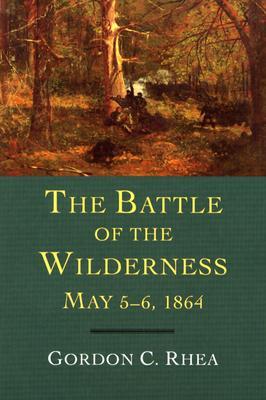
Gordon Rhea is an attorney and Civil War historian. He’s written several highly regarded books about the war, including The Battles for Spotsylvania Court House and the Road to Yellow Tavern, May 7–12, 1864 (1997), To the North Anna River: Grant and Lee, May 13–25, 1864 (2000), Cold Harbor: Grant and Lee, May 26–June 3, 1864 (2002), Carrying the Flag: The Story of Private Charles Whilden, the Confederacy’s Unlikely Hero (2004), and On to Petersburg: Grant and Lee, June 4–14, 1864 (2017).

His books have received a number of awards and recognitions, and he’s served as a lecturer at the U.S. Army Training and Doctrine Command and as a commentator for CNN. I discovered his The Battle of the Wilderness, May 5–6, 1864, published in 1994 by LSU Press, when another writer of another Civil War book spoke of the Rhea work in almost reverential tones. I discovered the book was still in print, available in paperback and on Amazon Kindle. The hardcover is also available in used editions. 

And what a story Rhea tells.

The Battle of the Wilderness was the first major confrontation between Ulysses S. Grant, newly appointed by Abraham Lincoln to lead the Northern armies, and Robert E. Lee, commander of the Confederacy’s Army of Northern Virginia. It was an effort by Grant to break through the stalemate around Richmond and capture the Confederate capital. Fought over roads, some open fields, and the dense woods known as the Wilderness, the battle pitted the wills of two opposing commanders, both of whom were determined to prevail at almost any cost. 

The battle would end in stalemate, with both sides gaining and losing something. The number of casualties places the battle in one of the top five in the Civil War. The Union had between 17,000 and 18,000 dead, wounded, and missing or captured. The Confederacy had between 11,000 and 12,000. But the overall losses were greater in ultimate impact for the Lee’s army, because these were losses that could not be replaced. And both sides experienced the loss of key generals. 

Gordon Rhea

Rhea tells the story almost like a novel. It’s an enthralling, riveting read, with the action so immediate that the reader feels a direct part of it. The first day went mostly to Lee’s army; the second day began with a Union breakthrough, but it was soon turned back with the forces of General James Longstreet arriving at the last possible minute and almost too late. Lee would also lose General J.E.B. Stuart, who died of his wounds a few day after the battle ended.

Drawing upon official records, diaries, letters, and news reports, Rhea tells the story not only from the generals’ perspective but also from that of the men fighting on the ground, often face-to-face in woods burning from the artillery fire. And it’s a comprehensive story, made all the more remarkable with how complex this battle actually was. Rhea sorts it out and helps the reader understand exactly what happened. He also includes numerous maps and illustrations to aid understanding.

I’ve read quite a few books about the Civil War, and The Battle of the Wilderness ranks as one of the very best.

Related:

Hell Itself: The Battle of the Wilderness, May 5-7, 1864 by Chris Mackowski.

Top illustration: Map of the Battle of the Wilderness, made in 1895 (via Wikimedia Commons).

The Music of the Civil War

July 6, 2022 By Glynn Young 3 Comments

If there are any songs the modern ear would associate with the Civil War, it would be one of three: “Battle Hymn of the Republic” by Julia Ward Howe, “Dixie,” and Ashokan Farewell. The first two were actually composed and sung during the Civil War. “Ashokan Farewell,” however, was composed in 1982 by Jay Ungar and his wife Molly Mason. Its plaintive music sounds like it should have been a Civil War song, but it was actually used as the soundtrack for the 1990 PBS television miniseries The Civil War by Ken Burns. 

I spent some time looking at the music and songs of the Civil War, and quickly learned that “plaintive” music was not on the agenda of either the Union or the Confederacy. Instead, the music was military marches, rousing fight songs, and music to remind the soldiers (on both sides) what they were fighting for. “Plaintive” only arrived long afterward, as people began to understand what the war had actually cost. 

Both sides maintained regimental bands.

Songs really sung or music played during the Civil War include “Southern Soldier,” “Battle Hymn of the Republic” (1862), “Battle Cry of Freedom” (1862) “St. Patrick’s Day in the Morning,” “Goober Peas,” “Old 1812,” “Gary Owen,” “Kingdom Coming,” “Dixie,” “When Johnny Comes Marching Home,” “Song of the Confederate Irish Brigade,” and “The Bonnie Blue Flag” (1861), also known as “We Are a Band of Brothers.” 

A Confederate regimental band

“Dixie” had been written and first performed in 1859, but it was adapted into a military quickstep for the inauguration of Jefferson Davis as president of the Confederacy. It was Davis who said it should be the Confederacy’s official anthem. A number of alternative (and more militaristic) versions were written during the war.

In addition to “Dixie,” many of the popular songs were updated versions of older military and war music. And it’s not surprising to see the number of Irish tunes sung by both sides, given the presence of Irish immigrants in the armies. Many of the songs were originally sung in the 18th century; “St. Patrick’s Day in the Morning” was composed in the late 1700s and its composer is believed to have been not an Irishman but a Scot. 

“Battle Hymn of the Republic” has an interesting history. It began its life as a religious camp meeting hymn, “Oh, brother, will you meet us on Canaan’s happy shore.” Then it evolved into “John Brown’s Body,” the song about the famous (or infamous) abolitionist who staged the raid on Harper’s Ferry in 1859. In 1861, Julia Ward Howe wrote a poem for The Atlantic Monthly, for which she was paid $5. The magazine gave it the title of “Battle Hymn of the Republic.” It was set to the tune of “John Brown’s Body,” and the rest is history.

Music on the Confederate side followed the progress of the war. Initially, with a string of Southern victories, songs were written to celebrate each battle. After the Confederate defeat at the Battle of Fredericksburg, no more specific battle songs were composed. Instead, songs like “Goober Peas” (also known as peanuts) appeared, with lyrics about the dietary privations of both military and civilian life in the South. Music to support the war was reproduced and distributed widely by both Northern and Southern music publishers. But after 1863, music distribution in the South was increasingly hampered by a shortage of paper. 

The only new field music composed during the war was “Taps,” by Union general Dan Butterfield, who wrote it after the Seven Days Battles. 

A number of familiar hymns were composed and sung during the war. These include “He Leadeth Me” (1862), “My Jesus, I Love Thee” (1864), “Shall We Gather at the River” (1864), “Day by Day” (865), and many more. 

Top illustration: The federal 8th Regiment Band during the Civil War.

  • « Go to Previous Page
  • Page 1
  • Interim pages omitted …
  • Page 18
  • Page 19
  • Page 20
  • Page 21
  • Page 22
  • Go to Next Page »

Footer

GY


Meet the Man

An award-winning speechwriter and communications professional, Glynn Young is the author of six novels and the non-fiction book Poetry at Work.


 01_facebook 02_twitter 26_googleplus 07_GG Talk

Copyright © 2026 Glynn Young · Site by The Willingham Enterprise · Log in | Managed by Fistbump Media LLC