• Skip to primary navigation
  • Skip to main content
  • Skip to footer

Dancing Priest

Author and Novelist Glynn Young

  • HOME
  • BLOG
  • BOOKS
    • Brookhaven
    • Dancing Prince
    • Dancing Prophet
    • Dancing Priest
    • A Light Shining
    • Dancing King
    • Poetry at Work
  • ABOUT
  • CONTACT

Brookhaven

Forgetting All the Illustrations I Studied for a Non-Illustrated Book

November 5, 2025 By Glynn Young Leave a Comment

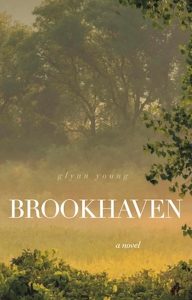
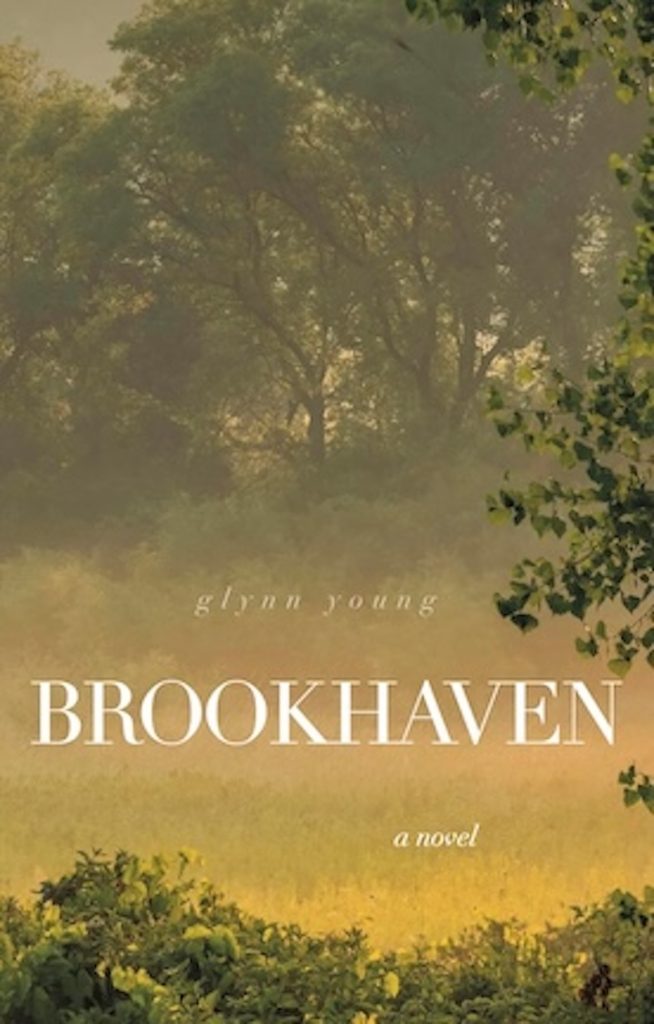
My historical novel Brookhaven has no illustrations. I spent an estimated third of my research time hunting for them.

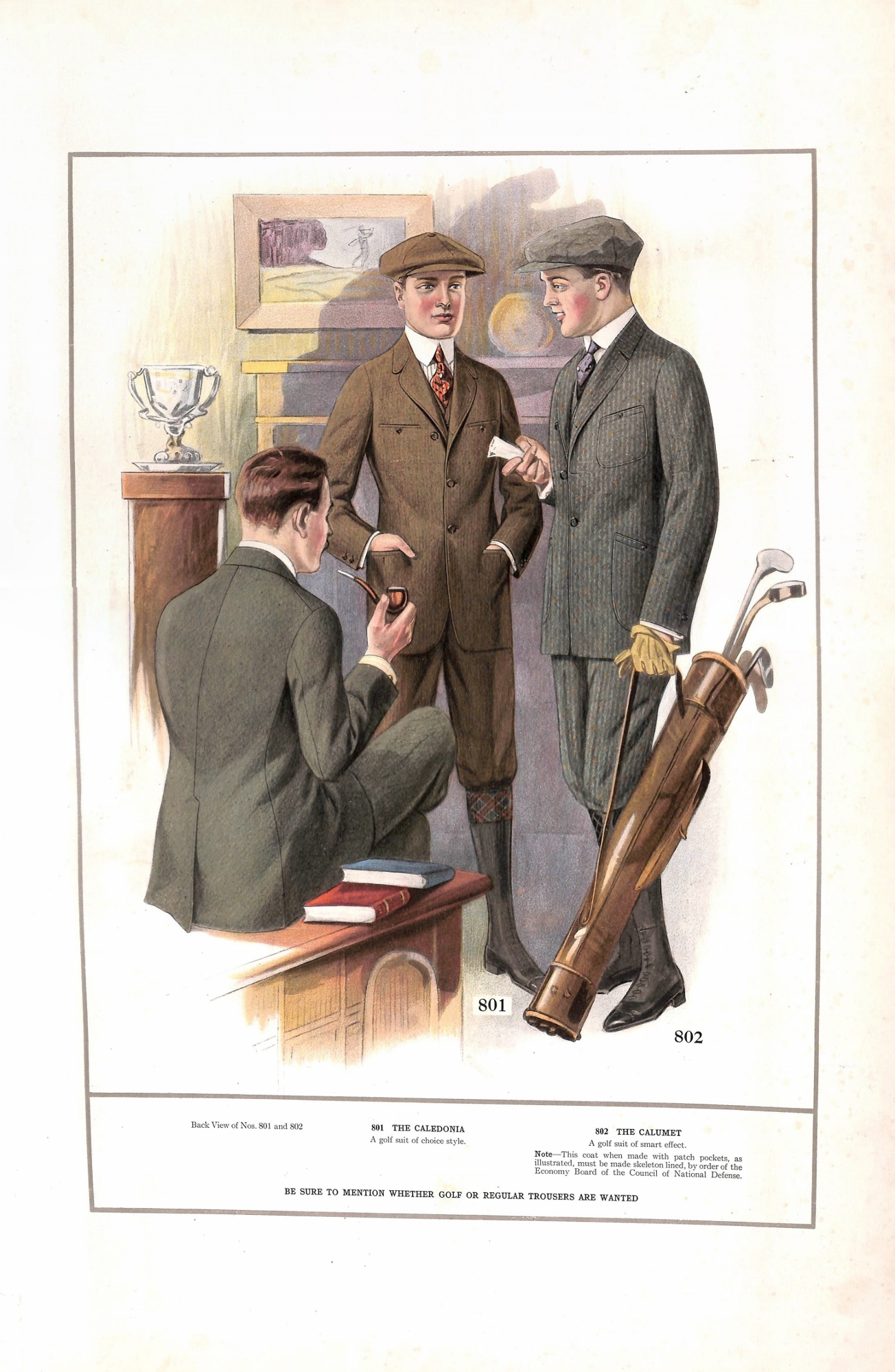
The novel is set in two different time periods – the Civil War and immediately after, and then 50 years later, in 1915. From the beginning of the first draft, I quickly learned that I had to see both periods. I had to see what people wore, what they ate, how they traveled, what their homes were like, what their streets and communities were like, and more. 

From early on, I had to spend far more time looking than reading, and vastly more time looking than writing. Thos 50 years were some of the momentous in American history – rapid industrialization during the war and after, wagons and carriages giving way to automobiles, the advent of flight, the rapid spread of newspapers supported by wire services like Associated Press, rapid changes in the position of women in society, and mechanized agriculture becoming the rule rather than the exception.

To continue reading, please see my post today at the ACFW Blog.

Illustration: Men’s golfing fashions in 1915.

“Brookhaven” and the Pearl River Lumber Company

October 15, 2025 By Glynn Young Leave a Comment

A reader of Brookhaven sent n email, asking if I modeled the McClure Lumber Company in the novel on the Pearl River Lumber Company. A great-grandfather had worked there, the reader said, and she wondered.

That I had to research the Pearl River Lumber Company to respond to her should answer the question. Or, more briefly, no. 

The company was founded in 1899, building a large mill on the outskirts of Brookhaven, Mississippi. A community grew up around it and was called Pearlhaven. A rail line was built, appropriately named the Brookhaven & Pearl River Railway, and extended from Brookhaven to Monticello in the next county to the east. Coincidentally, int he novel this is roughly the road or direction that the young Sam McClure travels to reach home some months after the Civil War has ended. I even mention Monticello by name in the book. 

The lumber company was eventually acquired by the Goodyear Syndicate, and the rail line was sold to the Illinois Central in 1910. The mill was closed that same year. The rail line operated for another 18 years, finally shut down in 1928. 

In Brookhaven, from the 1850s Sam McClure’s family has been operating a grain mill, a lumber mill, and the general store across from the railroad depot in downtown Brookhaven. The grain mill, facing consolidation in the industry because of the growth of the big milling conglomerates like General Mills, was eventually closed and the property converted to racing racehorses. The lumber mill continued to operate, and the war in Europe increases demand for lumber and wood. I included a short scene about British and French representatives signing a contract with Sam, a contract which would lead to a major expansion of lumber operations. 

The Illinois Central deport in Brookhaven about 1903.

But I didn’t know anything about the Pearl River Lumber Company or the associated railroad operations. The genesis of including a lumber yard in the story came from the fact that Brookhaven is part of the Great Piney Woods of Mississippi, and natural resources like wood and lumber would come to characterize the “New South” after the Civil War and Reconstruction. The South had enormous natural resources, and while agriculture would remain the major industry, it was industries like lumber that helped pulled the South out of post-war economic devastation. 

While the novel had been published, the reader’s question took me back into research. I was rather tickled to discover what little I knew actually aligned very closely with the real story. 

Top photo: Operations at the Pearl River Lumber Company.

“Midnight on the Potomac” by Scott Ellsworth

October 1, 2025 By Glynn Young Leave a Comment

A considerable portion of my historical novel Brookhaven is set in the last year of the Civil War, and yet the novel only covers a few of the momentous events – the battles of the Wilderness and Spotsylvania Courthouse, the final siege of Petersburg, Lee’s surrender to Grant at Appomattox, and Johnston’s surrender to Sherman near Greensboro. 

Indirectly, the novel covers Grierson’s Raid through Alabama, the fall of Atlanta and Sherman’s march to the sea, and the political and social chaos that followed. People lived through those times; my own ancestors (on both sides of my family) lived through it.

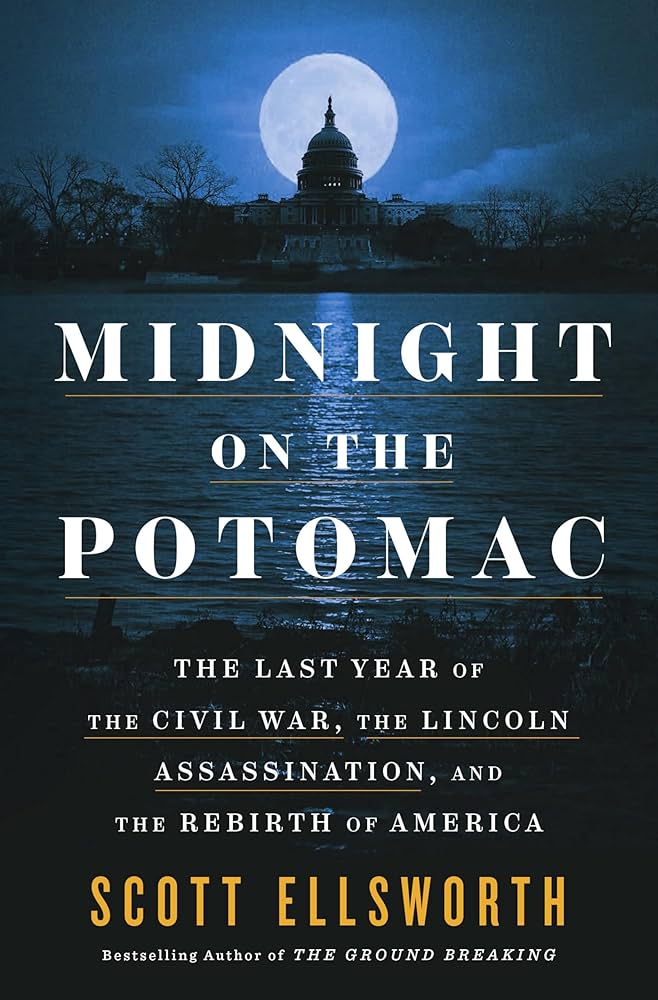
The last year of the Civil War is also the focus of Midnight on the Potomac: The Last Year of the Civil War, the Lincoln Assassination, and the Rebirth of America. In almost a conversational vignette style, historian Scott Ellsworth guides the reader through the major events of 1864-1865, showing how they not only were significant in and of themselves but also how they shaped post-war America.

You meet spies and ghost armies, experience the horrific battle in the Wilderness near Richmond, and discover how slaves were liberated and sometimes abandoned by Union armies. You follow the acting career of John Wilkes Booth and how it led to that fateful night at Ford’s Theater. You learn how the fall of Atlanta assured Lincon’s reelection, and you join Booth in listening to Lincoln’s second inaugural speech. You meet the famous and not-so-famous, and you experience history in many of the words and first-hand accounts of the people who were themselves involved. 

Scott Ellsworth

It says something of Ellsworth’s skill that the writing and stories seem almost effortless. You know they’re not; a prodigious amount of research and knowledge was required for that “effortlessness.”

Ellsworth previously published The Ground Breaking: The Tulsa Race Massacre and an American City’s Search for Justice; Death in a Promised Land: The Tulsa Race Riot of 1921; The Secret Game: A Wartime Story of Courage, Change, and Basketball’s Lost Triumph; and The World Beneath Their Feet: Mountaineering, Madness, and the Deadly Race to Summit the Himalayas. He attended Reed College in Oregon and graduate school at Duke University in North Carolina. And he also worked as a historian at the Smithsonian Institution. He lives with his family in Ann Arbor, Michigan, and he teaches at the University of Michigan.

Through the power of stories, Midnight on the Potomac explains what happened that last, fateful year of the Civil War, and it does so in a highly readable, engaging way.

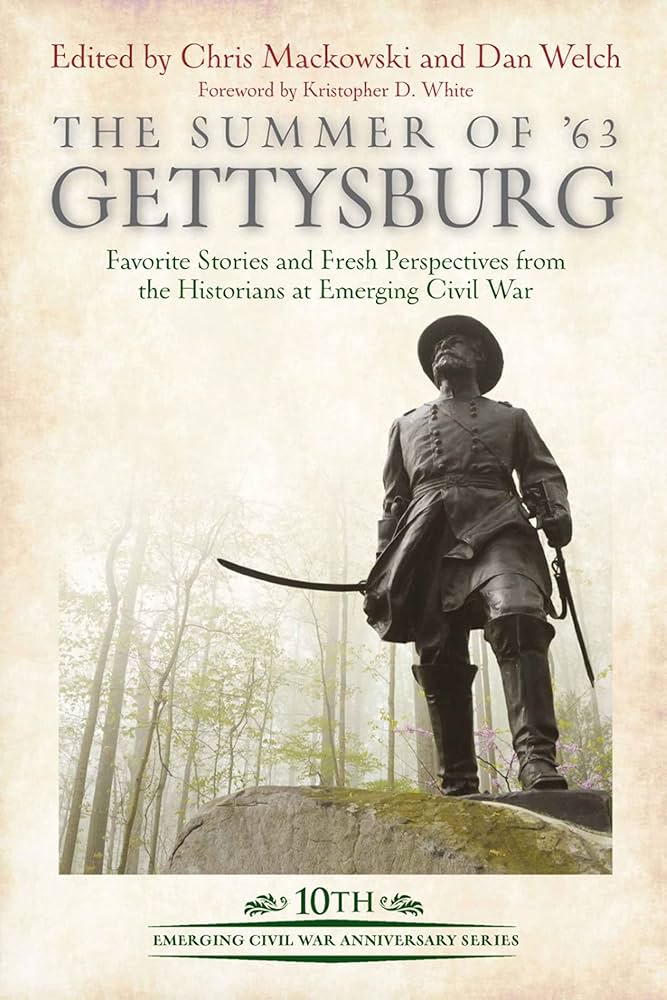
“The Summer of ’63: Gettysburg” by Chris Mackowski and Dan Welch

September 17, 2025 By Glynn Young Leave a Comment

My historical novel Brookhaven is set during the Civil War’s final two years and immediately after, and then in 1915, 50 years later. The moment that sets the story into motion happens in late April of 1863 – Grierson’s Raid, in which a troop of some 1700 Union cavalry made their way through Mississippi from the Tennessee border to (eventually) Baton Rouge, Louisiana. The soldiers came to Brookhaven, most notably burning the train station and tearing up railroad track. 

The raid had a specific point: divert attention from Gen. Grant’s army preparing to cross the river from Louisiana and end the siege of Vicksburg, the last Confederate position on the river. The fall of Vicksburg would been the Union controlled the entire length of the river and would split the Confederacy in two. 

The Vicksburg campaign was covered in a collection of articles edited by Chris Mackowski and Dan Welch, part of a series called “Summer of ’63.” Their Vicksburg & Tullahoma covered the events and milestones of that campaign, including a raid on Mississippi’s capital of Jackson, which eventually led to a Union victory.

Now Mackowski and Welch have done it again, this time turning to another major Union victory in 1863 – the Battle of Gettysburg.

The Summer of 1863: Gettysburg follows a similar format. Mackowski and Welch have gathered and edited articles from the Emerging Civil War web site (which I can’t recommend highly enough if you’re interested in American history generally and Civil War history specifically). When you read a concentration of work like this, you realize just how fine the historical scholarship is on the site. 

The subjects include understanding why the Battle of Chancellorsville is so vital to understanding Gettysburg; how Gen. Meade took control of the Union army on the eve of battle; the mascot of the 11h Pennsylvania; prominent local families; how the Union retreated through the town at the beginning of the three-day battle; the impact of three men on the battle’s outcome; the role of Stonewall Jackson; the poet and writer Herman Melville on Pickett’s Charge; the aftermath, including the effort to punish Gen. Meade for “allowing” Lee’s army to escape; how the wounded saw the battle; how the battle was memorialized; the famous 1913 reunion of both Union and Confederate veterans,; and much more.

Chris Makowski

A professor at St. Bonaventure University, Mackowski has received B.A., M.A., M.F.A., and Ph.D. degrees in communication, English, and creative writing. The author of some nine books, he’s written extensively on the Civil War for a number of publications. He also worked for the National Park Service and gave tours of the Civil War battlefields at Fredericksburg, Chancellorsville, Wilderness, and Spotsylvania. 

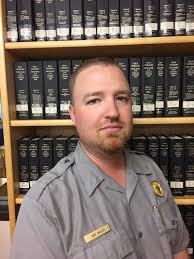
Dan Welch

Welch is an educator in a public school district in Ohio and serves as a seasonal park ranger at Gettysburg National Military Park and associate editor of Gettysburg Magazine. He’s written two books in the Emerging Civil War Series and co-edited several volumes. 

A collection like The Summer of ’63: Gettysburg makes you appreciate the quality of the articles at Emerging Civil War. It also reminds me of the debt I owe to the writers there; I spent considerable time using the site for research and background for Brookhaven. It’s a debt I can’t repay. And my book has been published for some months, yet I still spend considerable time on the web site.

Related: 

The Summer of ’63: Vicksburg and Tullaloma, edited by Chris Mackowski and Dan Welch.

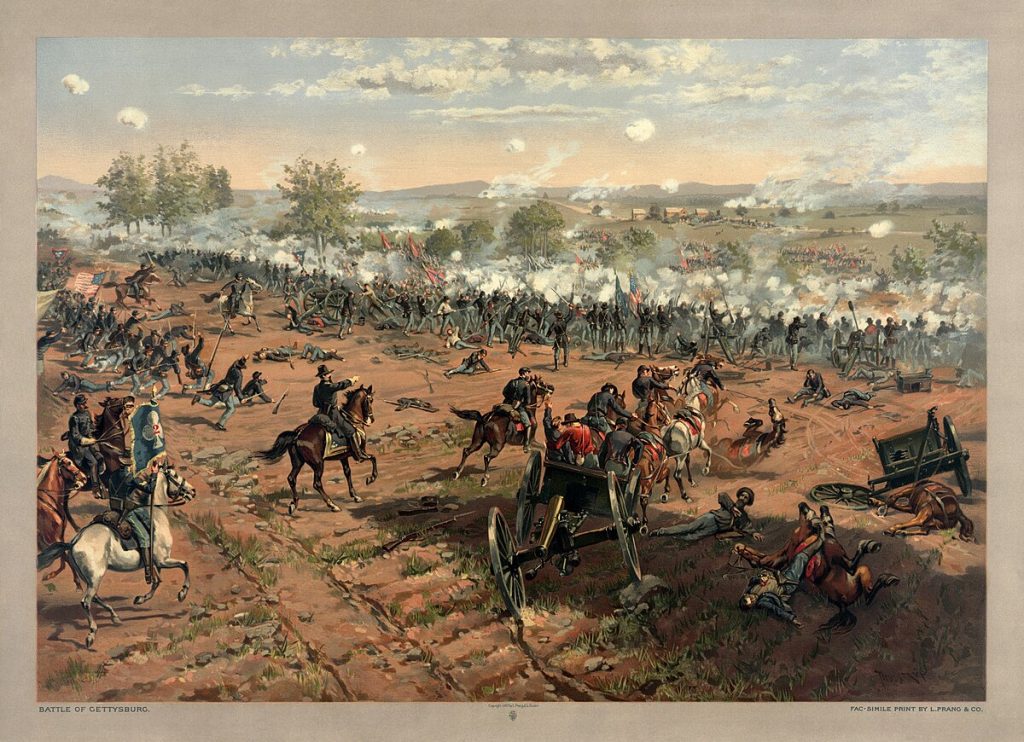
Top illustration: The Battle of Gettysburg as depicted by artist Thure de Thulstrup for Harper’s Weekly.

Two Reviews of “Brookhaven”

September 5, 2025 By Glynn Young Leave a Comment

One day, I’ll figure out how Amazon works. Here are two reviews of Brookhaven, both dated December of 2024 (the month it was published), but which didn’t show up until the last week. Still, I thank both reviewers for their kind comments.

From Dec. 26, 2024:

 Immensely Satisfying

A quick admission, I usually have to be drug kicking and screaming to read new novels. So, when this book was placed into my hands, I’m now glad my tantrum was brief and that I settled in to both read and enjoy Brookhaven. The novel is lovely, sad, joyful, redemptive, and all around a thoroughly satisfying example of entertaining storytelling. Without giving away the plot, the author artfully weaves in the awful complexity of the Civil War, along with its immediate aftermath, into the lives of the generations that came after, and all with a most satisfying conclusion.

And from Dec. 31, 2024:

 “Brookhaven” kept me up late wondering what would happen next!

“Brookhaven” is a retrospective novel set amidst the grim realities of the American Civil (and often not-so-civil) War and its aftermath. While Young’s descriptions of the war feel so authentic and in the moment, it is his love story—one of romantic love and, even more, love of a place and its people—that drew me in. Young’s writing is clear and concise, and he weaves together a complicated tale that is engaging, endearing, and enlightening. I don’t have a lot of time to read, but the book managed to keep me up late at night wondering what would happen next. I expect it will do the same for many other readers.

Stephen Foster: How Song Opened a Door on History

August 26, 2025 By Glynn Young Leave a Comment

You can’t research and write a novel about the Civil War, or anything else set in the mid-19th century, without quickly running into the songs people sang. As I researched what would eventually become my novel Brookhaven, I came across war songs, anthems, sung by the Irish who came to America and enlisted, hymns, songs by the home folk, and more. 

I went looking for a book about music in the Civil War, and I found ta small volume published by the Library of America in 2010, Stephen Foster & Co.: Lyrics of America’s First Great Popular Songs. It’s a small, eye-opening gem. I discovered that songs I learned in elementary school had been around for more than a century.

To continue reading, please see my post today at Tweetspeak Poetry.

  • Page 1
  • Page 2
  • Page 3
  • Interim pages omitted …
  • Page 7
  • Go to Next Page »

Footer

GY


Meet the Man

An award-winning speechwriter and communications professional, Glynn Young is the author of three novels and the non-fiction book Poetry at Work.


 01_facebook 02_twitter 26_googleplus 07_GG Talk

Copyright © 2025 Glynn Young · Site by The Willingham Enterprise · Log in | Managed by Fistbump Media LLC