• Skip to primary navigation
  • Skip to main content
  • Skip to footer

Dancing Priest

Author and Novelist Glynn Young

  • HOME
  • BLOG
  • BOOKS
    • Brookhaven
    • Dancing Prince
    • Dancing Prophet
    • Dancing Priest
    • A Light Shining
    • Dancing King
    • Poetry at Work
  • ABOUT
  • CONTACT

Blog

Paperback Edition of “Dancing Prophet” Now Available

October 5, 2018 By Glynn Young Leave a Comment

Dancing Prophet Dancing Priest

It happened about 10 days earlier than expected, but the paper edition of Dancing Prophet, fourth in the Dancing Priest series, is now available. You can find the Amazon listing here.

Amazon is still sorting through having the Kindle edition and paperback edition on the same page. In the meantime, the Kindle edition can be found here.

Two quotations from Dancing Prophet:

“Trevor Barry recognized the irony of him, an agnostic on a good day and essentially nothing on most days, being relied upon for advice and counsel by a deeply Christian king. At first surprised, Trevor had come to appreciate how much the King’s trust meant.”

“The last time the couple had seen Sarah was the beginning of her senior year in high school. She was now 26. The man figured that the crowd would be so large for her speech that there would be no chance of her seeing them. He turned out to be mistaken.”

A Novel about a Crisis

October 3, 2018 By Glynn Young 1 Comment

Dancing Prophet A Novel about a Crisis

More than once, my wife has pointed out that my 2017 novel Dancing King and my new novel Dancing Prophet tend to pick on the Anglican Church, and specifically the Church of England.

It’s a fair point; the major tension in Dancing King is between the king, Michael Kent-Hughes, and the Church of England hierarchy at Lambeth Palace. Michael is speaking at churches for the need for reformation, and then makes a blow-out speech at a conference of bishops. Lambeth strikes back, however, employing all sorts of stratagems and accusations.

In Dancing Prophet, scandal erupts. What looks contained to one church is actually broader and deeper, involving churches and dioceses across the country and well beyond. The introductory sentence reads this way: “The match that ignited the reformation of the Church of England was lit by three teenagers.”

The heart of this story was written more than a decade ago, and then rewritten (many times) over the years. In one sense I did pick on the Church of England – the idea of the scandal in Dancing Prophet is actually inspired by the real institutional crisis the Catholic Church has been struggling with. In the story, Michael will realize that the situation is beyond reformation; the church as he’s known it is gone.

Dancing Prophet Dancing PriestDancing Prophet is fiction, but like all fiction, it can’t help but reflect the times in which it’s written. When the history of our times comes to be written, it may be title (or subtitled) “The Age of Institutional Crisis.” Our government structures aren’t working; the sorry spectacle of a U.S. Senator questioning a candidate for the Supreme Court about the references to body noises in his high school yearbook isn’t even funny as much as it is tragic.

Our language has become the language of extremes, suggesting a mutual contempt that’s hard for me to fathom. I’ve stopped reading the editorial and op-ed pages of my hometown newspaper; there’s virtually nothing in it that one could call a reasoned argument. Lots of polemics, to be sure; lots of barely disguised contempt for any opinion, belief, or value other than what the editorial and op-ed writers agree with. Snark rules.

The church universal is in crisis as well. Mainline Protestant denominations in the United States are in membership free fall. Evangelical megachurches are afflicted by their leaders abusing women and elder boards refusing to believe it, until significant damage is done. The Catholic Church is being torn apart. This looks like a winnowing of the church to me, a winnowing that will leave a smaller and perhaps stronger church.

This isn’t the time for reasoned arguments. This is the time for rule by the mob. I watch the news coverage, and I see the mob racing through the halls of Congress, screaming at senators and congressman. This is rhetorical violence approaching physical violence.

Some have compared this to the declining days of the Roman Empire; it’s closer, I think, to the declining days of the Roman Republic.

Dancing ProphetThis is the world partially depicted in Dancing Prophet. Michael Kent-Hughes has been thrust into a position he never expected and never sought. He is not only dealing with ecclesiastical failure; he is also dealing with politicians increasingly reluctant to take responsibility and a London governing authority that ceases to work due to political disfunction.

Early in the story, two of the leading characters in Dancing Prophet are discussing how Michael came to occupy his position. Here was Michael, with no military background, no royal upbringing, and in fact nothing to recommend him for the position of king. He was a Church of England priest, and a young one at that, without any hierarchal experience.

And here’s what one of the characters says:

“God picks the man needed for the job at hand. And isn’t it fascinating that Michael had essentially been exiled to the hinterlands as a child, reared completely away from anything even remotely royal, felt called into the priesthood when he was relatively young, and was then sent to the outer edges of the Anglican world, away from the center and all that the center implied. God was preparing Michael, as surely as you and I are sitting here. And He was less interested in military and palace experience and far more interested in raising up a man after His own heart.”

And that’s the hope of Dancing Prophet, that even in the darkest times, God is raising up men and women after His own heart.

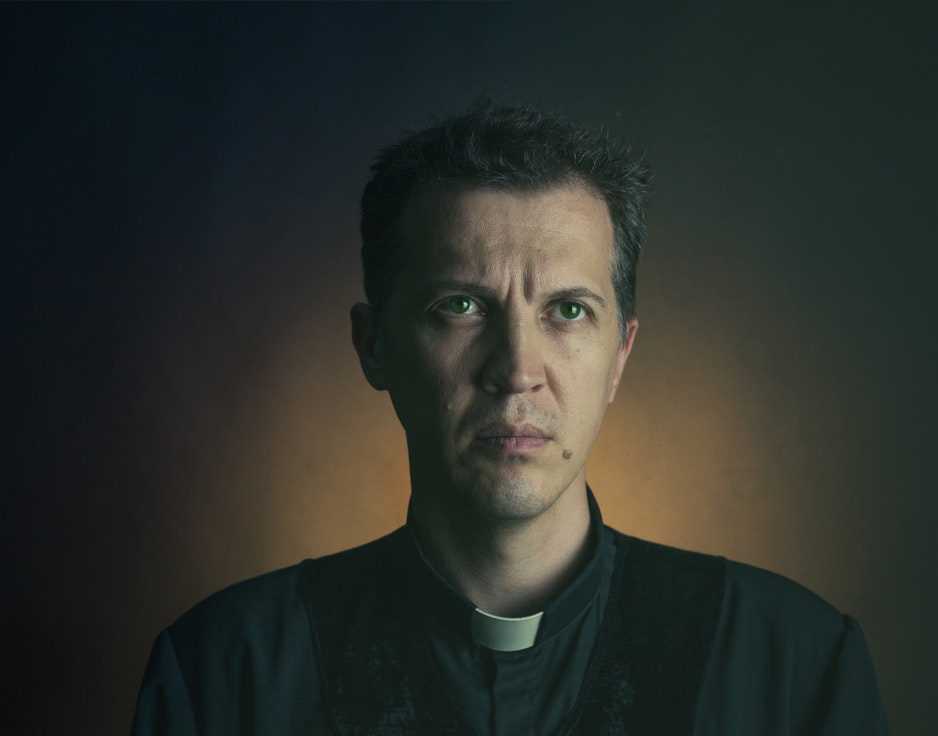
Top photograph by Micah Williams via Unsplash, and lower photograph by Oliver Sjostrom, also via Unsplash. Used with permission.

Ebook Edition of “Dancing Prophet” Published Today

October 1, 2018 By Glynn Young Leave a Comment

Dancing Prophet Dancing Priest

The ebook version of my new novel “Dancing Prophet,” is published today (paperback is coming in mid-October). In this fourth novel in the Dancing Priest series, Michael Kent-Hughes confronts a collapsing, scandal-wracked church and a collapsing city government. A trusted advisor finally confronts his own troubled past. And Sarah Kent-Hughes finds her long-disappeared mother and ministers to a dying soldier. You can find the ebook at Amazon.

As a special promotion, the paperback edition of Dancing King, the third in the Dancing Priest series, is available at Amazon for $3.07.

“Dancing Prophet” ebook available for preorder at Amazon

September 23, 2018 By Glynn Young Leave a Comment

Dancing Prophet Dancing Priest

From the back cover of Dancing Prophet: “Newly crowned King and Queen, Michael and Sarah Kent-Hughes are ready to get down to business, serving the people of the United Kingdom to the best of their abilities. Unknown to them, looming scandals in the Church of England and beyond are about to begin a cascade of events that threaten to destroy the Church, their family and society’s ability to function. Michael, Sarah and those closest to them will be forced to confront destructive and predatory sins in an attempt to save the Church and the future of the country.”

The ebook version of Dancing Prophet goes on sale Oct. 1, and can now be preordered at Amazon.  The paperback version will be available in mid-October. As a special promotion, the paperback version of book 3, Dancing King, is $3.07 right now.

The Cover for My New Novel, “Dancing Prophet”

September 19, 2018 By Glynn Young Leave a Comment

Dancing Prophet Dancing Priest

Dancing Prophet, fourth in the Dancing Priest series, will be published In October. This is how it begins: “The match that ignited the reformation of the Church of England was lit by three teenagers.”

The Team Player: A Story

September 17, 2018 By Glynn Young 2 Comments

Team Player Dancing Prophet

Bishop Jeremy Smallwood was so practiced at nodding and smiling that he could have taken a nap while he listened.

Mrs. Brightman-Pennington, referred by many except to her face as Bright Penny, was talking. Droning, in fact, her voice acting like a sedative, a very harsh sedative, as if she could simultaneously put a listener to sleep while dragging sharp nails down his arms. Her voice had an irritating, vaguely condescending quality that, if their meeting exceeded the allotted 30 minutes, Smallwood knew would drive him to a criminal act.

His mind stuck on that phrase – criminal act – and he nearly jumped up from his chair. Instead, he calmed himself, offering a platitude here, a cliché there, anything to avoid alerting Bright Penny that he was coming unglued and his life, so carefully cultivated and constructed, was beginning to unravel.

With each of his nods or comments, Bright Penny would smile and continue to talk.

He didn’t want to listen. Not today. All he wanted to do was to run to his Mini in the cathedral parking lot, drive to the Bristol airport, and hop a plane to Brussels. From Brussels, he would promptly lose himself, somewhere in Europe. Anywhere. His French was tolerable enough; he could find a village in Belgium or perhaps Provence.

Bright Penny had shifted her subject from missions to the cathedral gardens; he couldn’t remember how she had made the transition. He glanced at his office window to the gardens outside. She was saying something about charging extra for a garden tour, and he realized she was saying that visitors could pay extra if they wanted to see the gardens.

“We’re very proud of our gardens, of course, Mrs. Brightman-Pennington,” Smallwood said, “but they’re not that spectacular to charge visitors an extra fee, surely.”

“It’s what they could be, bishop,” she said, and then she was off and running on yet another stream of consciousness monologue.

Man running in fog Dancing ProphetHe felt like screaming. Instead, he dug his fingernails into his legs where his hands rested. He briefly glanced as the phone message left by his secretary. Please call as soon as convenient. He would like a meeting as soon as possible. And a phone number for a Detective Merwin with the Bristol police.

His hands were sweating, and he felt slightly faint. He knew why the detective had called. He couldn’t help but know why. The news stories had been pouring out of London for days. Priests arrested. Boys abused. Pedophilia rings.

Eleven priests had been arrested, their names published in the news reports. He knew two of the priests. Both had been sent by Canterbury, the archdiocese Bristol was officially part of. He had seen their personnel files and had immediately protested. Then he received a call from his former seminary head, telling him to man up and be a team player. That was code. Follow your orders, or someone will remember the good old days at seminary.

The priesthood had been part of his life as far back as he could remember. He was a third-generation Anglican cleric. His grandfather had been a parish priest, his father had been dean at Durham Cathedral, and now he was a bishop, with bright prospects for his career. His father would often mention Lambeth Palace as a career aspiration. Smallwood had attended St. Simon’s because that’s where his grandfather and father had attended. As he was the only son, it was expected. And he did what he had to do to get ahead and excel. He’d become a team player.

He’d hated it. He’d hated St. Simon’s, and he’d hated the priesthood. No one who knew would believe. Including his wife. And his father.

None of the news reports mentioned anything outside of London. At least yet. But he knew it was only a matter of time. Too many transfers from parishes and dioceses all over Britain.

The media had already anointed it a “crisis.”

He knew it worse than that. There were more priests. A lot more.

His hands were trembling. He tightly clasped them together to stop it.

“Bishop Smallwood,” Mrs. Brightman-Pennington said, “have you heard a word I’ve said?”

“Of course,” he said, offering his trademark smile that often dazzled her and other female parishioners.

“Do you feel all right?” she said. “You look positively ashen.”

“Actually,” he said, grateful for a potential end to the meeting, “I’ve been fighting the beginning of a migraine all day.”

“And here I’ve been prattling away,” she said, promptly launching into a discussion of everyone she knew who suffered from migraines, how they coped, and some of the folk remedies they had tried, with mixed success.

His secretary discreetly knocked at the door and entered. “I’m sorry to disturb you, Bishop Smallwood,” she said, “but you have that scheduled meeting.” She smiled at their guest.

He stood and thanked Bright Penny, and said he hoped to continue their discussion soon. She beamed, talked a few more minutes, and then left.

After seeing Mrs. Brightman-Pennington out, his secretary returned.

“Detective Merwin is insistent that he see you today,” she said. “I’ve told him your schedule is full, but he became rather demanding.  And rude.”

Smallwood nodded. “Let’s bump that meeting with the deacons to another day. That should provide enough time. Tell the detective I can meet with him at 4 p.m.” He glanced at his watch; it was now 2 p.m. There was a flight to Brussels at 3:30.

“Is this about the news reports from London?” she said. “I saw the list of names.”

“More than likely,” he said, displaying a sense of calm and perspective he didn’t feel, “they will need to check on the backgrounds of the priests arrested.” How many had passed through the diocese since he’d been bishop? Thirty? Forty? He’d lost count. How much more had been covered up, parents calmed down, discreet payments made, counseling arranged?

She nodded and left. He could see she was unconvinced.

Man behind glass Dancing ProphetShould he call Gwendolyn? He knew his wife was volunteering at school today. She wouldn’t be home until 4 or 4:30. Should he say anything? This could be just a perfunctory conversation with the detective, just the routine thing they did.

Should he say anything to the children? Joan, their oldest, was at St. Andrew’s. Peter, 15, was in school in Bristol. Elliott, their youngest, was 9 and attending school at St. Edward’s, where Gwen was volunteering.

Andrew Brimley. His name came unbidden and unexpected. His close friend, doing seminary together at St. Simon’s. Jeremy had been a team player; Andrew had not. Jeremy got the plum assignments and was shortlisted for the next archbishopric opening. Andrew, whom he had not talked with since seminary, had been banished to some obscure failing church in Scotland. He’d turned the church around. A remarkably gifted preacher and pastor. A man who loved serving. The priest who’d led a 15-year-old boy named Michael Kent to his church, a boy who believed he was being called to the priesthood. And the man now sitting on Britain’s throne.

Brimley hadn’t been a team player, Smallwood thought bitterly. He had kept his integrity intact.

Everything had gone according to plan until this.

He would leave. He would drive home, pack a suit bag, and get to the airport. He knew there were ATM machines at the airport. He couldn’t face his family, and he couldn’t bear the idea of facing his father.

Avoiding the main door to his office, with his secretary seated outside and the next appointment waiting, whoever it was, Smallwood slipped through the door to the garden making his way to the cathedral car park. Within minutes he was home, grabbing a suitcase and throwing clothes into it. In his study, he opened the petty cash jar, the funds inside ostensibly to be used for needy parishioners. It was diocesan money. He quickly counted the 220 pounds. He could get more at the airport ATM.

He shoved the cash into his pocket, suddenly realized he was wearing his clerical collar. He rushed back up the stairs, stripped off the collar and short, and found a polo shirt and jacket.

Smallwood glanced at his watch. It was now 2:35. He could still make the 3:30 p.m. flight to Brussels.

He raced out the side door to his car. A man was leaning against it. The man smiled.

“Bishop Smallwood? I’m Detective Merwin with the Bristol police.” The man looked at the suit bag in Smallwood’s hand. “I believe I’m a bit early for our appointment. I hope that’s not a problem.”

This story is based on a scene in my upcoming novel Dancing Prophet.

Top photograph by Kiwihug via Unsplash. Lower photograph by Ryoji Iwata, also via Unsplash. Both used with permission.

  • « Go to Previous Page
  • Page 1
  • Interim pages omitted …
  • Page 54
  • Page 55
  • Page 56
  • Page 57
  • Page 58
  • Interim pages omitted …
  • Page 67
  • Go to Next Page »

Footer

GY


Meet the Man

An award-winning speechwriter and communications professional, Glynn Young is the author of six novels and the non-fiction book Poetry at Work.


 01_facebook 02_twitter 26_googleplus 07_GG Talk

Copyright © 2026 Glynn Young · Site by The Willingham Enterprise · Log in | Managed by Fistbump Media LLC