It’s the calm after the storm.
For months, it’s been days and weeks of intense writing, rewriting, editing, re-editing, adding to, and subtracting from. I thought novel #4 would be a relative slam dunk, since large chunks of it have existed for more than a decade. All I had to do was add a few thousand words and polish it up, and then it would be ready, correct?
Well, no.
What finally emerged as a completed manuscript draft bears little resemblance to the text I started with. The story idea remained the same, but along the way a supplementary narrative was added, characters changed, new conflicts emerged, and the original text was rewritten at least three times. Then it was editing and proofing and fact-checking.
To continue reading, please see my post today at the ACFW blog.
Photograph by Keenan Constance via Unsplash. Used with permission.

 Writing a fiction series seems to have become popular in the 19thcentury. It’s not the same thing as serial publication, which is how Charles Dickens published his novels – a chapter per issue of a periodical. One of the best-known series in the 19thcentury was the Chronicles of Barsetshire by
  What happened was this: as I constructed what became the world of Michael and Sarah Kent-Hughes, the construction grew, it expanded over time, it became more elaborate and detailed, and it became too big to be contained in only a single book. What was one rather large manuscript was transformed into four novels.

 The kidnapper was a man named
  In 2012, in a conversation with my publisher about writing life after A Light Shining, I mentioned this story. A few days later, he sent me a press story from England. A small pedophile ring had been uncovered within the Church of England. He wanted to know if I had “pre-written history.”
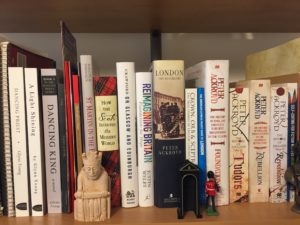

 The manuscript carcass – what was left over – had piled up. The publisher suggested a sequel. Out came the metaphorical ax again and chopped off about 65,000 words. Because of changes in Dancing Priest during the rewriting and editing process, those 65,000 words had to be reworked even more than the first manuscript. The story grew.
 So
So