• Skip to primary navigation
  • Skip to main content
  • Skip to footer

Dancing Priest

Author and Novelist Glynn Young

  • HOME
  • BLOG
  • BOOKS
    • Brookhaven
    • Dancing Prince
    • Dancing Prophet
    • Dancing Priest
    • A Light Shining
    • Dancing King
    • Poetry at Work
  • ABOUT
  • CONTACT

Glynn Young

Dancing Prince: The Exhibition at the Tate Modern

July 21, 2020 By Glynn Young 1 Comment

An exhibition at the Tate Modern plays a critical role in the story of Dancing Prince. 

Readers first met Jason Kent-Hughes Dancing Priest as Jason Bannon. Then 16, he was one of the “warehouse children” living near St. Anselm’s Church in San Francisco. He’s drawn to Michael Kent’s outreach program, a coffeehouse with live music. In A Light Shining, Jason is taken in by Michael and Sarah Kent-Hughes and eventually adopted. Almost accidentally, Michael and Sarah discover the boy has a gift for painting. 

By the time of Dancing Prince, Jason is in his early 30s, married and with two sons of his own. He’s an assistant curator at the Tate Modern. As Sarah recognizes in the story, their San Francisco street child has become an artist with a gift for art administration. As part of a regular staff activity, he gives a talk on the two paintings by Sarah owned by the museum. The interest is so great that the museum has to move the venue from a lecture room to Power Hall, the large interior space that helps define the Tate Modern’s architecture (see the top photograph). 

The interest is so intense, in fact, that the museum asks Jason to curate an exhibition of Sarah’s paintings for 18 months out. It’s an ambitious timetable; Jason not only has to find the paintings and their owners and negotiate contracts to borrow them, he also has to plan the exhibition itself, arrange for an exhibition catalog, and arrange for corporate sponsors. And then there the negotiations with three other museums which will host the exhibition after it closes at the Tate Modern. Eighteen months is an almost impossible timetable, but Jason somehow pulls it off.

I first visited the Tate Modern in 2012, during a vacation trip to England. Our hotel was on the South Bank, near Westminster Bridge, and I discovered I could walk to the museum by taking a more-or-less straight-line route through back streets. The alternative was to follow the south embankment along the Thames, past the London Eye, the Southbank Centre, the National Theatre, and eventually to the Tate, next door to the Globe Theatre. Because the of the curve of the river, the back-street route was much shorter, and took me through a neighborhood called The Cut, the Old Vic Theatre, the New Vic Theatre, various and sundry business areas, and then the rear of the museum property (you still have to enter from the front entrance on the river). 

The museum is something of an architectural wonder. A one-time power generation station, the structure has an interesting history. Closed as a power station, it was renovated and reopened as the Tate Modern in 2000. It is the major repository for the modern and contemporary art works in the Tate’s collection. 

In 2012, I visited three times; my wife likes to sleep in and I kept getting drawn back to the building and its collection. It also provided some great walking exercise. The exhibition that was on when I visited was “Edvard Munch and the Modern Eye,” and it was excellent. In 2015, I also viewed the Agnes Martin exhibition, which I liked, but it did inspire a comment about wallpaper by Jim Kent-Hughes in Dancing Prince. The museum expanded with a large, adjacent building, and I was able to see it in 2017. 

In the novel, dissatisfied with the rather perfunctory articles written by the experts, Jason eventually writes the catalog himself, an almost first-person account of his own knowledge of and experience with his adopted mother’s artwork. The exhibition also leads to the discovery of two unknown paintings by Sarah, a critical development in the relationship between Michael Kent-Hughes and his youngest child Thomas, and a fleeting first meeting between Michael and Mary Penniman, who assumes a large role later in the book.

Top photograph by Dil via Unsplash. Photograph of Tate Modern expansion by Jay Mullings also via Unsplash, Both used with permission.

Heart of Darkness: All This Stuff Happens in the Middle

July 18, 2020 By Glynn Young Leave a Comment

Someone forgot to tell Joseph Conrad. 

When you write fiction, you’re supposed follow the rule of thirds. The first third is the introduction of the characters and the development of the conflict. The second third is the development of the narrative, providing a deeper understanding of the characters and conflict. And the last third is the heightened pace of action leading to the climax and resolution of the conflict.

In Heart of Darkness,, after the first third of the short novel, Conrad threw the rule book out the window. All this stuff happens in the second third, offering no respite for the reader.

Marlow has located his boat and fixed it, and he’s now sailing upstream. On board are pilgrims. Also on board are some interesting members of the crew. They’re cannibals. He thinks they’re exercising great restraint or perhaps they’re just not hungry. 

At one stop, he finds a ruined reed hut. Inside is a book, An Inquiry into Some Points of Seamanship, written by a master in the British Navy. The book is filled with marginal notes. To Marlow, the notes look like code. He takes the book with him.

He continues to learn more about Mister Kurtz, the object of his journey.

There’s an attack on the boat from shore. A key crew member is killed. It’s looking grim for all concerned when the pilgrims (the pilgrims!) open fire on the jungle, scattering the attackers. Amid all the chaos, Marlow becomes seriously worried that, if the local population has started attacking, then Kurtz must be dead. 

He reads a report written by Kurtz for the International Society for the Suppression of Savage Customs, finding the writing to be eloquent. He sees a small note written by Kurtz at the end: “Exterminate all the brutes!” So much for eloquence.

He meets a Russian dressed like a harlequin. The book found earlier turns out to belong to the Russian, and the “code” on the margins is actually notes written in Russian. Like everything else around him, the book and the notes contribute to the sense of unreality (Marlow uses the word “absurdity”).

Expecting at least some calm, the reader, like Marlow himself, is instead whipsawed at every turn of the river. The action does not stop, especially for the rules of writing fiction. There’s no nice, slow development of the narrative here; this is more like Raymond Chandler’s advice for writing: “When in doubt, have two men come in the door with guns.”

As he ponders Kurtz and the man’s writing, Marlow makes one of the most profound statements in Chapter 2 and in the entire book. Learning about Kurtz’s diverse family background, Marlow says, “All Europe contributed to the making of Kurtz.”

And there it is: Marlow’s statement about Kurtz, about Europe, and about Africa, all wrapped up in one concise sentence. He hasn’t even found or met Kurtz yet, but he already knows the meaning of Kurtz’s life.  Heart of Darkness isn’t a story about Africa; it is a story about European behavior in Africa.

Perhaps Chapter 3 will allow us to catch our breath.

This month at Literary Life on Facebook, we’re studying Joseph Conrad’s Heart of Darkness, in an edition that includes an extensive study guide by Karen Swallow Prior. 

Top photograph by Peter Oswald via Unsplash. Used with permission.
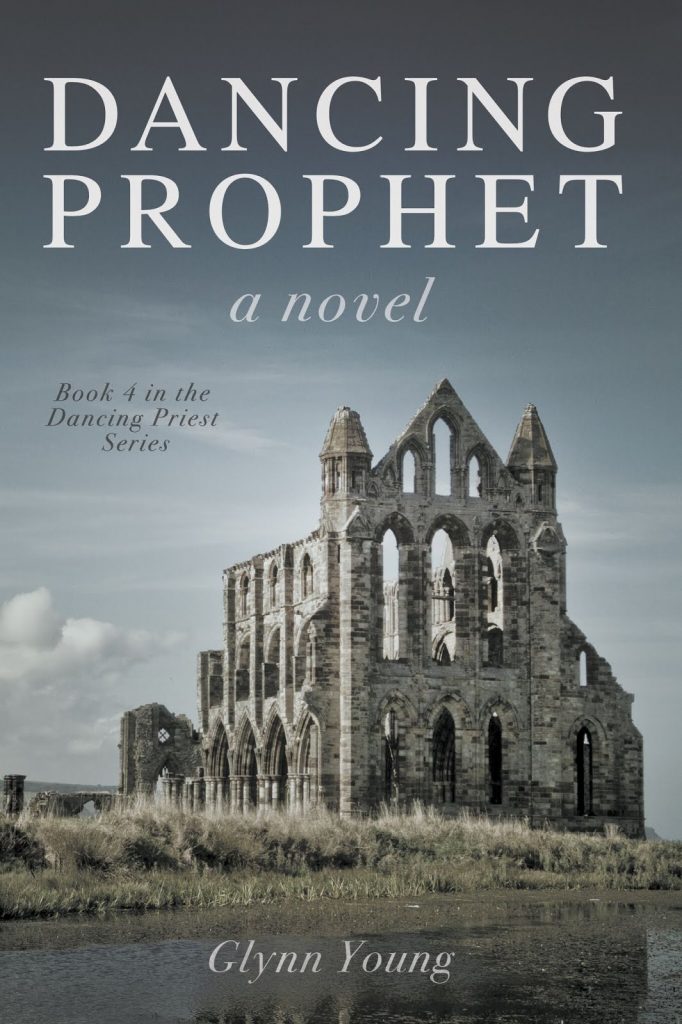
Three Reviews of “Dancing Prince”

July 17, 2020 By Glynn Young Leave a Comment

Martha Orlando has published has a lovely review of Dancing Prince today at her blog: “What I want my readers to understand is that no one comes away from reading Glynn’s works without feeling the Lord has blessed them.” You can read Martha’s entire review at Meditations of My Heart.

And over at Amazon, one reader expected to be disappointed by the novella included with the novel, because it is rather different, but was pleasantly surprised. Another reader says the Dancing Priest novels has become her favorite book series.

Dancing Prince: The Heart of a Child

July 14, 2020 By Glynn Young 2 Comments

The first four Dancing Priest novels were about Michael Kent-Hughes. In the fifth, Dancing Prince, the character who is stage center is Michael’s youngest child, Thomas, or Tommy, as he’s called by friends and family. He’s named for Michael childhood, college, and adult friend, Thomas MacFarland. 

As the novel begins, Tommy is four years old. His mother, Sarah Kent-Hughes, is painting in her studio when she discovers that the boy has slipped inside to watch. The unwritten rule of the family is that no one watches Sarah when she’s painting – not Michael, not the other children, not friends, no one. And yet there’s Tommy, quietly watching her and doing his own little drawings.

At first perturbed, Sarah looks at what Tommy’s been drawing, and she realizes that the boy might have artistic talent. She encourages him and continues to allow him in her studio while she paints. Until the day Michael comes home unexpectedly and finds them both painting in the studio. What happens next will frame the next two decades of Tommy’s life and the life of his father. It also frames the novel.

The novel shows Tommy at 4, 6, 13, 15, 19, and his early 20s. In his relationship with Michael, there is a recurring pattern, leading to the estrangement between the two. David Hughes, Sarah’s twin brother, becomes the significant male influence in Tommy’s life. Because Tommy so strongly resembles his uncle; people often think he looks more like David’s child than Michael’s. David also becomes the chief counsel to Michael on the subject of Tommy, for it is to David that Michael turns at times of crisis. 

What the story required was a boy and eventually a young man who somehow retain s the heart of a child. Tommy is known as the most devout of Michael and Sarah’s children. He’s also the most perceptive and intuitive. As his older brother Hank points out, from a young age Tommy always seems to know what is going to happen next, and he always seems to understand what is happening better than his older siblings.

Tommy was not the easiest character to develop. The section when he is 13 was actually the first part of the Tommy sections of the novel that was written. The scene of Michael accompanying Tommy and a friend to the Imperial War Museum is actually the oldest written part of the novel, having been originally drafted in 2006 and 2007 as part of a very different story about Michael and his family.

Tommy wasn’t supposed to be the main character of this novel. As the drafting got underway, Tommy kept poking his head into the story. It was almost as if I couldn’t keep him out or under control. It was a year ago that I finally threw up my hands and surrendered, completely revising the draft into something that is closer to what was finally published. Tommy turned out to be very content with being the center of attention.

Top photograph by Japheth Mast via Unsplash. Used with permission.

Heart of Darkness: “One of the Dark Places of the Earth”

July 11, 2020 By Glynn Young Leave a Comment

Five of you – friends, business colleagues, and the boss – are meandering your way down a river. It’s an early evening get-together, and you’re enjoying the company and the beverages. The sun has just set. It’s that early moment of dusk when the world becomes shades of gray. You’re feeling a bit mellow; it’s a bit of an escape from work and life in the city you just left behind.

Suddenly, you hear this: “And this also has been one the dark places of the earth.” No one responds, except perhaps for a raised eyebrow or a slight roll of the eyes. The one who said it is known for such things. He’s also known for telling long stories, and you suspect you’re in for one. 

You’re right; you are. It starts with a brief discussion of how the area you’re sailing through was first settled hundreds of years before, and what those first settlers – soldiers – experienced so far from home, right there on the edge of civilization. From that perspective, the area was a dark place. But from the perspective of the story you are about to hear, the real point of that sudden, startling, original comment, you will find yourself confronting the idea that it is still a dark place. This home you know so well, with its skyscrapers, museums, opera houses, art galleries, find neighborhoods, paved roads, medical facilities, and so much more is actually a dark place? 

And because you’re going to tell me a story about Africa? What?

I had the misfortune (or good fortune) of not reading Heart of Darkness by Joseph Conrad in high school or college. Instead, we read Lord Jim by the same author. The two books, originally published a year apart (1899 and 1900, respectively), have similar themes. But Lord Jim seems somewhat easier to read, and its narrative concerns the act of a disabled passenger ship by its crew. Heart of Darkness centers on the search for a man in the jungles of the Congo, Mister Kurtz, but it takes a while for the reader to figure that out, and a bit longer to learn that it’s about something else entirely. 

Joseph Conrad

Embedded in that first bit of dialogue, “one of the dark places of the earth,” is the theme of Heart of Darkness. As we read on, that statement seems to haunt the narrative. The narrator, a sea captain named Marlow, will describe how he had the desire to pursue such a career, how he gained the help of relatives, how he went to city that always reminded him of “whited sepulchers” (another kind of darkness), and how he gained a commission to captain a steamer on the Congo River, in that continent both stereotypically and forever known as “darkest Africa.” 

Arriving at his destination in the “dark continent,” Marlow discovers he will have to travel through the Congo to reach his boat. And he is struck of the sharp contrasts between the well-dressed Europeans and the Congolese people who are native to the region. Light, tailored clothes and rough, minimal clothes. Light skin and dark skin. Civilization and its seeming lack. 

The contrasts in Heart of Darkness are often so marked that the reader begins to understand something: Conrad might be suggesting that the contrasts may actually not exist. And if they don’t exist, the idea of darkness surely does, so where does it come from? And you go back to the first dialogue, “And this has also been one of the dark places of the earth.” Don’t forget the “has been” here; Marlow doesn’t say “was” but “has been,” implying that it still is. That the story of a jungle river journey is being told in the context of a leisurely sailing trip near London underscores that the darkness isn’t just in Africa.

And this is what Marlow is going to discover, as he begins his journey to find his boat and to find Mister Kurtz, the man whose name is on everyone’s lips, the European agent who seems to be the source of all wisdom and knowledge in this region of darkness. Marlow is going to learn that the darkness does not come from a place, a condition, or a situation, but that it resides in the human heart.

This month at Literary Life on Facebook, we’re studying Joseph Conrad’s Heart of Darkness, in an edition that includes an extensive study guide by Karen Swallow Prior. This post is a discussion of Part 1 of the short novel.

First Review for “Dancing Prince”

July 9, 2020 By Glynn Young Leave a Comment

Dancing Prince has its first review on Amazon, and it’s a five-star. Thank you, Carla!

“What does one say when you have lived so intimately with the Kent-Hughes family, suffering with them in their sorrows and rejoicing in their achievements and triumphs. Always and most importantly delighting in the way their every path in life revealed their Christian passion and commitment. I am sorry their fans don’t get to continue walking with them but pray their lives will impact many faithful and searching readers.

“As a side note, I was reluctant to read the epilogue for I expected to be disappointed with a story going in a totally different direction after so thoroughly enjoying the 5 books in the series. What a surprise awaited me. You will NOT be disappointed.”

You can see the review at the Amazon page.

  • « Go to Previous Page
  • Page 1
  • Interim pages omitted …
  • Page 41
  • Page 42
  • Page 43
  • Page 44
  • Page 45
  • Interim pages omitted …
  • Page 67
  • Go to Next Page »

Footer

GY


Meet the Man

An award-winning speechwriter and communications professional, Glynn Young is the author of six novels and the non-fiction book Poetry at Work.


 01_facebook 02_twitter 26_googleplus 07_GG Talk

Copyright © 2026 Glynn Young · Site by The Willingham Enterprise · Log in | Managed by Fistbump Media LLC