• Skip to primary navigation
  • Skip to main content
  • Skip to footer

Dancing Priest

Author and Novelist Glynn Young

  • HOME
  • BLOG
  • BOOKS
    • Brookhaven
    • Dancing Prince
    • Dancing Prophet
    • Dancing Priest
    • A Light Shining
    • Dancing King
    • Poetry at Work
  • ABOUT
  • CONTACT

writing

When You Face Too Many Ways to Open a Novel

November 16, 2022 By Glynn Young Leave a Comment

How many openings can a novel have? Let me count the ways.

I’d never experienced the problem of too many ways to open a novel. Five novels, and five fairly straightforward beginnings, meant that I never struggled over how to open a story. Somehow, I always knew, and it wasn’t an issue.

Until now.

I began to write the draft like I always had. I had an idea, and image, in my mind, and that’s how I’d start the story. I wrote it. I read it over several times. It seemed to work. I started writing beyond the opening, and I bogged down. 

Something seemed slightly off, and I knew it was the opening. So, I reworked it. And reworked it. I revised it to the point where it was almost unrecognizable from the first version. It still didn’t work. I discarded it and started over. I tried something entirely different. At one point, I thought I had it, finally, only to realize I didn’t. I went back to the first and tried it again.

To continue reading, please see my post today at ACFW. 

Photograph by Ankhesenamun via Unsplash. Used with permission.

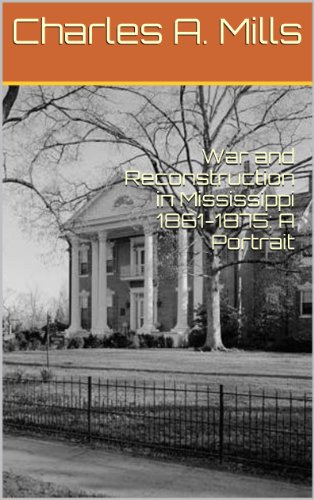
“War and Reconstruction in Mississippi, 1861-1875” by Charles Mills

September 12, 2022 By Glynn Young Leave a Comment

During the Great Depression in the 1930s, the U.S. government’s Works Projects Administration undertook a number of efforts to help the unemployed retain their skills. While critics saw it as creating a huge army loyal to President Roosevelt, the WPA did employ some 8.5 million people in a wide variety of areas. 

One of those efforts was the Writers’ Project, which, among other projects, produced travel guides to cities and states across the United States. Writers also collected oral histories of still-living Americans who had experienced extraordinary events, like the Civil War.

War and Reconstruction in Mississippi 1861-1875 was one such work. It focused on the town of Holly Springs in Marshall County, in the northern part of the state. Holly Springs was noteworthy for a number of reasons, not least of which was that it had changed hands 57 times during the Civil War. Before the war, it had been a prosperous town in a planter- and slave-based economy. During the Reconstruction period, it was occupied by a federal garrison and experienced Republican political control. 

The WPA document assembled a history of the town and its founding, its experiences during the war as recounted by still living inhabitants, the role of Freedman’s Bureau during Reconstruction, and how the former Confederates eventually regained political control by stuffing the ballot box for the Democrats. 

The document was edited and republished by Charles Mills in 2010. While some 60 to 70 years intervened between the events and how people remembered them, it still remains a valuable resource for what people on all sides experienced during the war and what followed.

Charles Mills

Mills is also the author of Gold, Murder and Monsters in the Superstition Mountains, Legends of the Superstition Mountains, Death and Delusion in the Superstition Mountains, Treasure Legends of the Civil War, Love, Sex and Marriage in the Civil War, Civil War Civilian Life: Manassas, Virginia (Battle of Bull Run), and several other works on historical subjects. He is the producer and co-host of Virginia Time Travel, a TV program seen by two million viewers in northern Virginia, which is also where he lives (on land once owned by George Washington). 

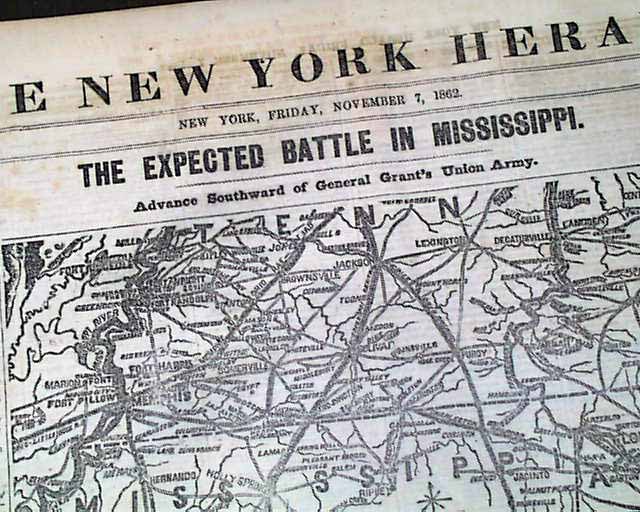
Top photograph: The New York Herald of Nov. 7, 1862, describing the expected move of Gen. Grant’s army southward toward Holly Springs. 

A History Lesson about Gettysburg, and More

June 22, 2022 By Glynn Young Leave a Comment

I’ve been reading some of the books in the battle series published by Emerging Civil War. So far, I’ve read about Shiloh (1862), Gettysburg (1863), and the Battle of the Wilderness (1864). It was while reading this third one that the author mentioned something as almost an offhand comment that threw me – and upended something I believed for 50 years.

The book was Hell Itself: The Battle of the Wilderness, May 5-7, 1864 by Chris Mackowski, but the comment was about Gettysburg. At the time of the battle in 1863, he said, “No one recognized Gettysburg as anything other than a setback, and certainly no one looked at it as the ‘High Water Mark of the Confederacy.’”

John and Elizabeth Bachelder at Gettysburg battlefield in 1888.

How it gained that reputation was due to a marketing-savvy photographer, lithographer, and Gettysburg historian named John Badger Bachelder, who was a tireless promoter of the Gettysburg Battlefield and worked to promote the site as a tourist destination.

In other words, the whole idea of Gettysburg as the turning point in the Civil War came from a promoter for the battlefield, decades after the battle was fought.

I can remember from my primary (and college) education how the Battle of Gettysburg was described – the turning point in the Civil War, the high-water mark of Robert E. Lee’s Army of Northern Virginia, and the beginning of the end of the Confederacy. And this wasn’t something that was taught and understood half a century ago, and we’ve all gotten a lot wiser since then. No, the belief still has considerable legs. See, for example, how the history site Battlefields.org describes it in the first sentence. The Wikipedia entry for the battle notes it that way as well, but includes a note about “turning points” – that there is widespread disagreement among historians. In fact, historians now point to 13 or 14 turning points in the Civil War, some of them being Confederate victories. Go figure.

Gettysburg was an important battle, to be sure. Coupled with the fall of Vicksburg at almost exactly the same time, it portended a change in the Union’s fortunes. But the war continued for almost two more years, and it still wasn’t finished until Lee surrendered at Appomattox in April 1865 and General William Johnston surrendered two weeks later in Greensboro, North Carolina.

The ”Gettysburg as turning point” story is a reminded that we should never automatically use one event as the critical one in a war, or (even worse) in a nation’s history. Our Constitution, for example, wasn’t invented from whole cloth in a room in Philadelphia one summer, but instead developed through the 1760s, 1770s, the American Revolution, and the 1780s. Elements of our Constitution can be traced back to the Magna Carta and the Roman Republic (especially the writings of Cicero). We have the First Amendment largely thanks to John Milton. 

History turns out to be more complicated than we realize, and certainly more complicated than battlefield promoters would have us believe.

Top illustration: Battle of Gettysburg by Thure de Thulstrap.

Family History as a Source for Stories

May 25, 2022 By Glynn Young Leave a Comment

A single comment by my father nearly six decades ago led to a story idea. 

“Your great-grandfather was too young to enlist in the Civil War,” he said. “So, he signed up as a messenger boy when he looked old enough to get away with it. And then he had to walk home when the war was over.” My father must have heard that from his father; he was four when his grandfather died, with no memories of him at all.

A year ago, when I decided I wanted to know more, any family member who might have known something was long buried. 

The records in the family Bible provided few clues. One of millions published by the American Bible Society in the 1870s, it included family records inserted between the Old and New Testaments. The earliest recorded date was 1803, the year of the Louisiana Purchase; it noted the birth of my great-great-grandfather. But almost all the entries, stretching from 1803 to the 1890s, were in the same hand, if different inks – my great-grandfather’s handwriting (my great-grandmother had died in the 1880s).

To continue reading, please see my post today at American Christian Fiction Writers.

When You Hit the Writing Wall

February 23, 2022 By Glynn Young Leave a Comment

I’ve learned there is more than one kind of writing block.

I’ve been blessed with never to have experienced writer’s block, that immobilization that often afflicts writers and stops them cold from writing another word. I’ve sympathized with people who’ve had it, and I know it’s real. They stare at a blank page or screen, and – nothing.

The sources of writer’s block are legion – stress, tension, deadlines, family tragedy, accidents, illness, writing one’s way into a dead end with no resolution, finances, success of a novel (creating high expectations for the next one), the end or beginning of a relationship, and more. F. Scott Fitzgerald had it. So did Herman Melville. So did composer Sergei Rachmaninoff. Writer’s block is so well known and so well-documented that there are scores of books on the subject, classes you can take, and writing coaches who can help guide you through it. 

Most writers experience it to one degree or another.

To continue reading, please see my post today at American Christian Fiction Writers.

Photograph by Ryan Snaadt via Unsplash. Used with permission.

A Leprechaun for Christmas (a short story)

December 22, 2021 By Glynn Young 1 Comment

It was the worst Christmas ever.

Eight-year-old Chris Hunter was facing the first Christmas without the person he loved most in the world, his Grandpa Malcolm O’Brien. His grandfather had died two months before from a heart attack. 

His grandparents lived in a large, two-story stucco home on East Ardennes Avenue, one of the oldest streets in Stonegate, a close-in suburb of St. Louis. Built in the 1910s, the house had tall ceilings and Frank Lloyd Wright-type mantles, lighting, and overall design. It was utterly unlike the large, contemporary ranch home his own family occupied in Woodfield, a far western St. Louis suburb some 20 miles from Stonegate and 35 miles from downtown St. Louis.

Chris loved exploring his grandparents’ house. From the attic to the basement, the home was filled with boxes, trunks, and old wardrobes full of magic. At least, that’s what his grandfather always told him. Magic was everywhere. And he’d let Chris loose to search, and sometimes join him, for the leprechaun’s pot of gold. 

Since the time when Chris was old enough to listen, his grandfather had told him stories about the leprechauns, the small little people who loved to commit mischief and kept a pot of gold at the end of a rainbow. Together, Chris and Malcolm would search the lawn for shamrocks and especially the four-leaved clovers. His grandfather would read stories about leprechauns. 

Of the three Hunter children – Ross Jr., Emma, and Chris, the youngest – it was only Chris who would listen avidly. The two older Hunter children would roll their eyes and slip away, looking for something else to do. Chris alone would stay, grinning and laughing at the Irish accent his grandfather affected when reading the stories 

“This is our secret, Chris,” his grandfather would whisper. “You and I are the only leprechauns left in St. Louis, and we have to find our pot of gold that someone’s hidden from us.” 

In looking for the gold, they’d find old clothes, books, toys, and photographs from decades earlier. Each new find prompted new stories from Grandpa Malcolm. And Chris was captivated.

Ross Jr. was older by six years, and Emma by four. Ross Jr. was tall and blond, like their father. Emma and Chris looked more like their mother’s side of the family. His father often called Chris “Little Malcolm,” which Chris wouldn’t understand until years later. The youngest Hunter strongly resembled his grandfather, with black hair and brown eyes so dark and deep they looked almost black. He didn’t know why, but Chris knew that his father and his grandfather did not get along. The boy wasn’t quite sure what to make of his father’s regular references to “Little Malcolm,” but knew his father didn’t mean it in a nice way.

The annual Christmas feast was always held at the O’Brien’s house. Chris’s mother was an only child, so the celebration would usually be his grandparents and his family. The Hunters would arrive by noon, everyone would open presents, and then they’d eat at 2 p.m. sharp. Chris’s mother and Emma would help in the kitchen, Ross Sr. and Ross Jr. would head outside to throw a football or play basketball at the hoop Grandpa Malcolm had had installed for Ross Jr. in front of the garage. Chris had once asked to play with them, but his father said that he was too little, and he could watch them.

When his father had told Chris he could watch but not play, Grandpa Malcolm had frowned.  He took Chris by the hand and led him back inside the house. “I have a story to read to you,” he’d told the boy. And that started the leprechaun stories.

Grandpa O’Brien would read from the big book of Irish folklore he kept on the shelf in his study. Except at Christmas, when he would read an original leprechaun story he’d written himself, with the main characters being Chris the Leprechaun and his sidekick Old Malcolm. And every story was about Old Malcolm always getting them into trouble, and how Chris the Leprechaun would rescue them from a fate worse than death.

Whenever Chris was at their home in Stonegate, he and his grandfather managed to find the time to explore for that mythical pot of gold, which Grandpa O’Brien insisted was hidden somewhere in the house. They never found the gold, but they would often find peppermints, candy bars, and packs of gum. Once, on Chris’s seventh birthday, they found two silver dollar coins, which Grandpa O’Brien said meant they must be getting close to the gold. “And that’s one each for Chris the Leprechaun and Old Malcolm,” he’d said.

His parents thought his grandmother, still grieving her loss, might skip the Christmas feast this year. After the funeral, she spent several days with the Hunters at their home, usually with Chris by her side. He had her smiling and even laughing when he read the Christmas stories to her, using an Irish accent like his grandfather, and told her the stories of their escapades searching for the pot of gold. 

But she insisted that the Christmas feast at her house in Stonegate would continue. The only change was that they ate at 1 p.m. and would open presents afterward. 

They arrived at 11. Ross Sr. and Ross Jr. went straight to the basketball hoop outside. Chris followed and watched them for a time, but then went inside. Emma was helping his mother and grandmother prepare the meal, so he went exploring on his own. But it wasn’t the same without his grandfather. No new leprechaun story. No searching high and low and finding something sweet to eat. No pulling of pranks on the rest of the family. The boy felt almost desolate.

They ate their dinner, with dessert being the favorite of Grandpa O’Brien and Chris – mincemeat pie with a big dollop of whipped cream on top. Then it was on to the Christmas tree and opening presents.

Even that wasn’t the same without Grandpa O’Brien. Chris liked his presents, mostly toys and books, including a set of Hardy Boys mysteries. But he could remember sitting next to his grandfather, listening to him utter a smart quip about each present. And smelling the ever-present Old Spice aftershave. 

“Well,” Grandma O’Brien said, “we’re done. Anyone for coffee or tea?”

“Wait,” said Ross Jr., sitting closest to the tree. “There’s one more.” He reached underneath and retrieved a smallish present, wrapped in a dull green paper and green ribbon. “It’s for Chris. And there’s a message. It says, ‘Look Hard.’” He handed it to his brother.

“What on earth,” Grandma O’Brien said to their mother. “I don’t remember you handing it to me when I put the presents under the tree.”

Chris’s mother shook her head. “We didn’t bring it. I’ve never seen it before.”

“It wasn’t there,” Emma said, somewhat red-faced. “I looked at all the presents before we ate. It wasn’t there.”

Ross Jr. handed the present to Chris. “Well, open it up and see what it is.”

Chris looked at the present in his hands. He handed it to his grandmother, pointing to the gift sticker. 

Grandma O’Brien gasped. “That’s Malcolm’s handwriting. I’d recognize it anywhere.” She handed the present back to Chris.

The boy carefully removed the ribbon and paper, and then he opened the plain cardboard box. 

Inside was a small metal kettle with a lid. Chris lifted it out of the box and removed the lid.

The kettle contained several chocolate coins wrapped in the gold tinfoil. Chris stared in wonder, and then grinned. “It’s the pot of gold, the one Grandpa and I were always looking for.”

He looked closely at the candy coins. He pulled out one, and then he saw something else glinting among the pieces of candy. He pulled it out and held it up between his thumb and index finger. 

“It’s a gold coin,” he said. “A real one.”

“What?” his mother said.

“Let me see it,” Ross Sr. said, and Chris handed it to him.

“It’s a $2.50 gold coin,” his father said, “with a Liberty head, dated 1842.”

“There’s another one,” Chris said, extracting a second coin. He emptied the kettle on the floor, but no other coins were mixed with the candy. 

Ross Jr. was looking at his mobile. “I googled it. People are selling them for anywhere from $2,000 to almost $100,000, depending upon the condition and where it was minted.”

“Did you say 1842, Ross?” Grandma O’Brien said.

He nodded.

“That was the year the O’Brien family came to America, fleeing the potato famine.”

The family stared at each other.

“And there are only two coins?” Ross Sr. said.

Chris examined the coins again and looked at his father. “Just two.” And then he smiled, remembering. “One for Chris the Leprechaun, and one for Old Malcolm. They always split whatever they find.”

The worst Christmas ever had become one of the best Christmases ever.

Top photograph of a leprechaun via Wikimedia Commons. Used with permission. 

Photograph of shamrock by Amy Reed via Unsplash. Used with permission.

  • « Go to Previous Page
  • Page 1
  • Interim pages omitted …
  • Page 6
  • Page 7
  • Page 8
  • Page 9
  • Page 10
  • Interim pages omitted …
  • Page 19
  • Go to Next Page »

Footer

GY


Meet the Man

An award-winning speechwriter and communications professional, Glynn Young is the author of six novels and the non-fiction book Poetry at Work.


 01_facebook 02_twitter 26_googleplus 07_GG Talk

Copyright © 2026 Glynn Young · Site by The Willingham Enterprise · Log in | Managed by Fistbump Media LLC