• Skip to primary navigation
  • Skip to main content
  • Skip to footer

Dancing Priest

Author and Novelist Glynn Young

  • HOME
  • BLOG
  • BOOKS
    • Brookhaven
    • Dancing Prince
    • Dancing Prophet
    • Dancing Priest
    • A Light Shining
    • Dancing King
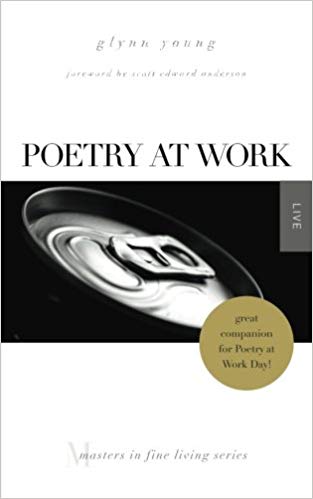
    • Poetry at Work
  • ABOUT
  • CONTACT

work

The Poetry of the Interview

August 9, 2020 By Glynn Young Leave a Comment

It was the strangest interview I’ve ever participated in – on either side of the table.

A friend had talked me, or conned me, into interviewing for a job with St. Louis Public Schools – the director of communications. 

The school district was in chaos – an outside management firm had been brought in to run the district, schools were being consolidated and closed, services were being outsourced, central office layoffs had emptied more than half of the headquarters building, and protests by parents, students, employees, former employees, teachers and the teachers’ union were daily. School board factions were fighting each other through the news media. The news media was already showing up early each morning at the district’s administration building – knowing there would always be a new crisis to report.

And I wanted to insert myself into that?

I don’t remember all of the arguments my friend used, but they must have been convincing. I sent in my application, thinking that would be the end of it. But then I was called to come in for an interview.

Poetry at Work

On the appointed day, I showed up and was escorted to a conference room at the headquarters building. Eventually, 10 of us filled the room. Every 10 to 15 minutes, one of us was called out for the interview. I was the last to be called.

I was escorted to the district’s board room. Inside, three people were seated – the interim superintendent, who was a principal with the outside consulting firm; one of his consultants; and a district officer who would be the official boss of the communications director.

I was seated at the head of the table. The questions started, and I was immediately relieved to see they were using the behavioral interview method, in which you’re asked questions like “What was your greatest failure?” I was familiar with that kind of interview; it was (and still is) broadly used by corporate America.

The superintendent was seated to my immediate left, and I could see he was increasingly impatient. He was moving around in his chair, drumming his fingers on the table, and looked ready to erupt at any moment. And then he actually did erupt.

Throwing the interview question sheets in the air, he yelled. “Why the heck do you want this job?” Except he didn’t say heck.

That was not on the list of approved behavioral questions. The other two people at the table both closed their eyes, as if they knew this would happen.

“It’s not a case of why I want this job,” I said. “It’s more a case of why you need me in this job.”

And then we talked. He calmed down, and the others gradually joined the conversation. 

When we finished, the superintendent nodded and said I’d hear something within two to three days.

That was bizarre, I thought, as I drove home. I wonder which of the 10 of us will get sucked into that?

As I pulled into my driveway in suburban St. Louis, my wife was waiting. In the driveway.

“You have to go back downtown,” she said. The school district had called, and I was to meet with one of the board members. I drove back, and learned I was to be at a restaurant at 4:30 to meet with a group of teachers for a listening session. And let them meet the district’s new director of communications.

It was poetry at work, all right – the poetry of the totally unexpected. You think you’re reading an ambiguous poem liked “Stopping by Woods on a Snowy Evening” and discover it’s turned into Alan Ginsburg’s “Howl.” The interview process had a form and even a kind of rhythm and meter about it. Until it didn’t. 

What started as formalist poetry had erupted into performance art.

The Job Interview

Tell me a poem, a story
of a favored poet or poem,
one who changed your life,
your mind, opened up
possibilities. Or made you
feel secure as your anchors,
your moorings, were removed.
Speak to me of your need;
describe the expectations
(are they great ones?), explain
how we soar together, toward
the sun, if not the moon,
tell me how I become
part of your larger self.

From Poetry at Work: “Interviews, like poetry, are ultimately about ideas, even though they are ostensibly about people. Behind the people in an interview are ideas about careers, employment, the future, and organizational goals and objectives. Behind a poem is experience, personal and group history, philosophy, how one understands the world, and even hope for a different or changed future.”

This article was prepared for the Literary Life Book of the Month discussion group on Facebook.

Top photograph by Marten Bjork via Unsplash. Used with permission.

Poetry at Work, Chapter 20: The Poetry of Retirement

May 27, 2019 By Glynn Young Leave a Comment

Poetry at Work Poetry of the Workspace

I might have retired twice from the same company.

I officially retired in 2015, and I’d had given a year’s notice. I could have continued working, but the fact was that my skills, experience, and abilities were being wasted. I could have continued for a few more years, perhaps hoping for another general downsizing and a severance package, but work had become almost painful. 

When I told the head of the department of my plan to retire, the response was surprising. He became angry. It wasn’t as if I was irreplaceable. Without really knowing, I suspect it was more a case of I was doing it on my timetable, and it wasn’t something the department was planning on its timetable.

To continue reading, please see my post today at Literary Life.

Poetry at Work, Chapter 19: The Poetry of Workplace Restoration

May 20, 2019 By Glynn Young Leave a Comment

Poetry at Work Poetry of the Workspace

For a long time, I had what several of colleagues called the most interesting office at work. Because I was a speechwriter, I was expected to (a) read everything the CEO did, (b) read a lot of business books, particularly popular ones, (c) study books about speechwriting, and (d) read books on current issues. All of which meant I was doing a lot of reading. And the CEO likcd to read the novels of John Updike, just about anything by Charles Dickens, and anything published on the subject of Winston Churchill.

For a reader like me, this was a great job. 

One end of my office was floor-to-ceiling bookshelves. Another wall had a smaller but still sizeable bookshelf. I also had a row of books on a credenza. It’s no surprise that my office was known as the building library. 

My “frequently consulted” books included poetry. That was by design. I had several old American poetry anthologies, and my Norton’s Anthology of English Literature (college textbooks) included considerable poetry by British writers. 

To continue reading, please see my post today at Literary Life.

Poetry at Work, Chapter 18: The Poetry of Electronic Work

May 13, 2019 By Glynn Young Leave a Comment

Poetry at Work Poetry of the Workspace

Think back 25 years (if you’re old enough). It sounds almost quaint today, but email was just beginning to come into its own. At the company where I was working, with more than 40,000 people, some 5,000 had been brought into the email system. Eventually, all would be, but 5,000 was enough to give us critical mass for a new communications venture – an email newsletter for employees. 

To show how new this was, only one other company in the United States had an employee email newsletter. I hoped we would be the second.

I had meetings with the people in charge of the email system – not only were there various departments, there was also an email council overseeing email operations. My proposal was a text-only newsletter to be sent to the 5,000 people on email.

The response was something akin to asking people to sit in a room full of rats infected with bubonic plague. I didn’t know what I was asking. There were too many hardware platforms. I didn’t understand the technical aspects of the work. The system could crash. The company was too diverse for people to care about what was happening in other divisions. To be fair, these objections came not only from IT people but also from my own communications colleagues.

To continue reading, please see my post today at Literary Life.

Poetry at Work, Chapter 17: The Poet Blogs the Layoff

May 6, 2019 By Glynn Young Leave a Comment

Poetry at Work Poetry of the Workspace

Layoffs were coming. The big announcement from the CEO was circulated by email. It was a masterpiece of vagueness. It didn’t say how many people would be affected. It didn’t say when the affected people would know. It did say there would be a severance program, although it included no details. 

In short, the important things people wanted to know weren’t communicated. I’m sure management congratulated itself on communicating, but the rumors had already been circulating and people were already far beyond “layoffs are coming.” What people also knew was that the people being laid off might be the fortunate ones. Those who remained would likely be reorganized, with more work and fewer people to get it done.

Having been through this before at another company, I had a better idea of what would happen and what people really cared about that colleagues who hadn’t been through it, especially younger colleagues. A small group came to me and asked if I would consider blogging about my past experience on the company’s intranet. I said I’d think about it.

To continue reading, please see my post today at Literary Life.

Poetry at Work, Chapter 16: The Poetry of Unemployment

April 29, 2019 By Glynn Young Leave a Comment

Poetry at Work

It happens to most of us, at one time or another in our careers. You’re called into the boss’s office and discover there’s an HR person waiting as well. Yep, you’re being laid off.

Sometimes you’re expecting it; sometimes you’re not. In my case, I knew it was coming. A work colleague had found out and couldn’t keep it to herself. She tried to look appropriately sad and concerned, but it didn’t work. She was actually rather gleeful (yes, there was a history here). I looked at her and said, “You won’t understand this, but a considerable amount of good will come out of this for me.” Her almost angry response: “You’re just in denial.” 

Perhaps I was. I felt my ears grow warm, a sure indication that I fully understood what was happening. And I really upset the process when I walked from her office to my boss’s office and told him I knew I was shortly to be laid off. He blew up – because it upset the usual process for these “elimination” programs. 

To continue reading, please see my post today at Literary Life.

  • « Go to Previous Page
  • Page 1
  • Page 2
  • Page 3
  • Page 4
  • Go to Next Page »

Footer

GY


Meet the Man

An award-winning speechwriter and communications professional, Glynn Young is the author of six novels and the non-fiction book Poetry at Work.


 01_facebook 02_twitter 26_googleplus 07_GG Talk

Copyright © 2026 Glynn Young · Site by The Willingham Enterprise · Log in | Managed by Fistbump Media LLC