• Skip to primary navigation
  • Skip to main content
  • Skip to footer

Dancing Priest

Author and Novelist Glynn Young

  • HOME
  • BLOG
  • BOOKS
    • Brookhaven
    • Dancing Prince
    • Dancing Prophet
    • Dancing Priest
    • A Light Shining
    • Dancing King
    • Poetry at Work
  • ABOUT
  • CONTACT

Tweetspeak Poetry

A Street Named Terpsichore

March 11, 2026 By Glynn Young Leave a Comment

A flat tire introduced me

to the sirens and their mother.

Before I knew Terpsichore

as a muse or the mother of sirens,

I knew her as a street, relatively

residential, nineteenth century

homes, called shotgun houses, 

stringing each room in succession,

front to back, because properties 

were taxed on width, not depth.

Imagine a street of homes,

sometimes duplexes, with

living room-bedroom-bathroom-

bedroom-dining room-kitchen-

back porch, a long house shaped

the like barrel of a shotgun.

Terpsichore had sister streets, all

comprising the Faubourg Lafayette

and Lower Garden District of

the Big Easy. You walked streets

named Erato, Calliope, Clio,

Thalia, Melpomene, Euterpe,

Polymnia, and Urania, and 

Terpsichore (of course),collectively

issuing their siren calls to come

home. My personal favorite was 

Erato, named for the poetry muse,

because I had a flat tire in a station

wagon on the interstate right

at the St. Charles Avenue exit,

and I guided our car full of teenagers

bound for the French Quarter down

the exit ramp, carefully, parking 

on a street named Erato. I fixed 

the flat, not knowing that decades 

later, that Erato and her mother

Terpsichore would remind me

of a flat tire.

Tweetspeak Poetry has a prompt this week, involving the muses and their siren songs. 

Photograph: A shotgun duplex on Terpsichore Street in New Orleans.

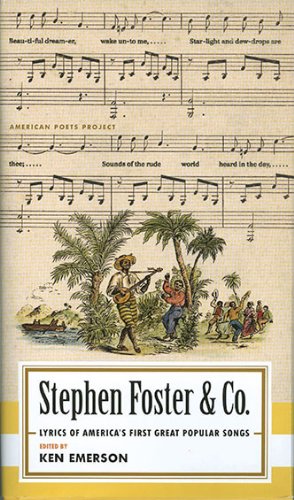
Stephen Foster: How Song Opened a Door on History

August 26, 2025 By Glynn Young Leave a Comment

You can’t research and write a novel about the Civil War, or anything else set in the mid-19th century, without quickly running into the songs people sang. As I researched what would eventually become my novel Brookhaven, I came across war songs, anthems, sung by the Irish who came to America and enlisted, hymns, songs by the home folk, and more. 

I went looking for a book about music in the Civil War, and I found ta small volume published by the Library of America in 2010, Stephen Foster & Co.: Lyrics of America’s First Great Popular Songs. It’s a small, eye-opening gem. I discovered that songs I learned in elementary school had been around for more than a century.

To continue reading, please see my post today at Tweetspeak Poetry.
What Happened to the Fireside Poets?

June 24, 2025 By Glynn Young Leave a Comment

When I first envisioned my novel Brookhaven, I focused on a family story passed down through generations, which turned out to be a legend, as in, almost entirely untrue. But two things shifted my focus. 

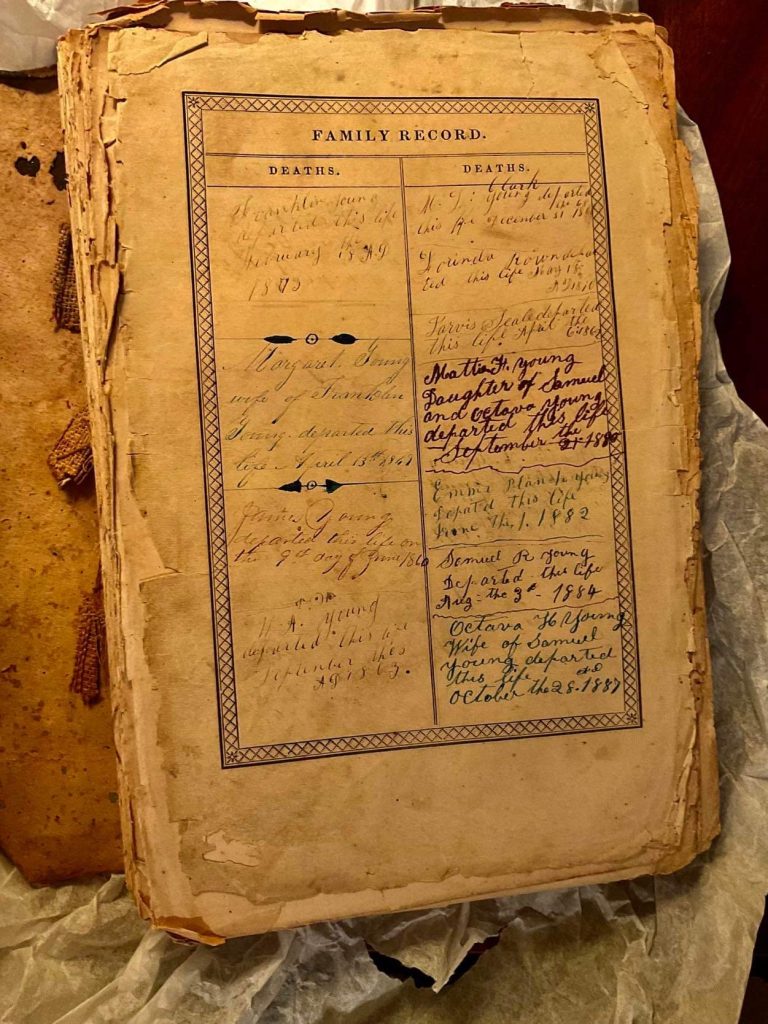
First, in 2022, I had the old family Bible conserved. It had seen better days; my father gave it to me wrapped in grocery store bag paper and tied with strong. My contribution had been to remove the paper and string, wrap it in acid-free paper, and store in an acid-free box. It sat on a closet shelf for years, until I brought it to a book conservator in St. Louis. He discovered something tucked in the Book of Isaiah that both my father and I had missed – a yellowed envelope containing a lock of auburn hair.

For various reasons, I believe the hair belonged to my great-grandmother Octavia. She died in 1888 at age 44. Unusual for the time, my great-grandfather Samuel never remarried. He died in 1920. And I thought to myself, “There’s a love story here.”

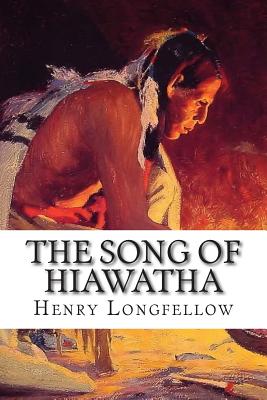
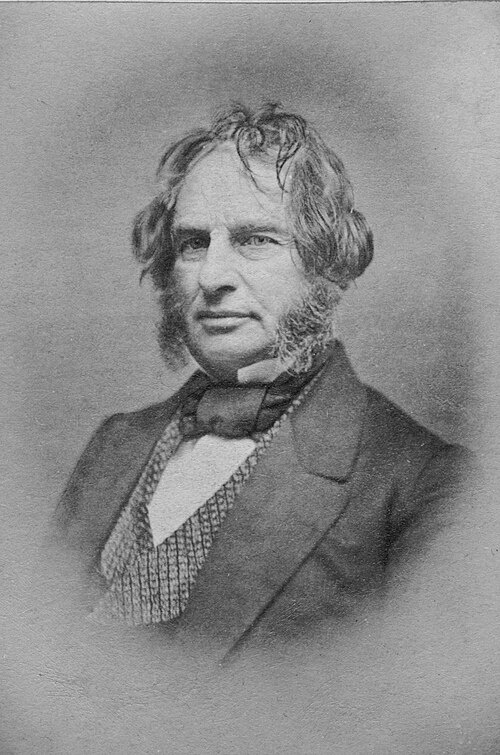
Second, also in 2022, we saw a movie entitled “I Heard the Bells.” It’s a snapshot of the life of Henry Wadsworth Longfellow (1807-1882) during the Civil War, including both the tragic death of his beloved wife and the near death from a war wound of his oldest son Charles. Both events contributed to Longfellow’s writing the poem that became a Christmas hymn, “I Heard the Bells on Christmas Day.” 

To continue reading, please see me post today at Tweetspeak Poetry.

Illustration: Henry Wadsworth Longfellow.

Longfellow’s “Paul Revere’s Ride”: Creaing a National Legend 

April 17, 2025 By Glynn Young Leave a Comment

It’s a tossup as to whether the most famous or best-known poem in America is Clement Moore”s “A Visit from St. Nicholas” (aka “Twas the Night Before Christmas”), first published in 1823, or Henry Wadsworth Longfellow’s “Paul Revere’s Ride,” (1860). My money is on “Paul Revere’s Ride.” Whole generations of schoolchildren, myself included, grew up reciting the lines that begin “Listen my children, and you shall hear…” 

Both poems are no longer taught in most of America’s public schools, but I know from my grandsons’ experience that they are taught (with great gusto) in many private schools, especially those offering a classical education. “Paul Revere’s Ride” commemorates one of the significant of the beginning of the American Revolution, a horseback ride at night to warn the cities of Lexington and Concord that British troops were coming.

That ride occurred 250 years ago tomorrow.

To continue reading, please see my post today at Tweetspeak Poetry.
Artwork: the illustration accompanying the poem in the January 1861 edition of The Atlantic Magazine.

10 Great Resources for Teaching the Civil War

March 6, 2025 By Glynn Young Leave a Comment

I was drafting and researching what would become my historical novel Brookhaven, and I looked at the census records for Pike County, Mississippi. I’d been having trouble finding my ancestor Samuel Young listed anywhere in Confederate rosters. The only one clue I’d previously found was a listing for S.F. Young, who joined a Mississippi rifles unit late in the Civil War and was sent to Texas. And I thought the census record might have another name by which he was known.

I found the list of Youngs. And the family I’m looking for. There he was – Samuel F. Young, age 13. My eye traveled up the list to his father, Franklin. And the occupation listed was farmer. The same occupation was listed for Samuel’s two older brothers. 

Something was wrong. 

To continue reading, please see my post today at Tweetspeak Poetry.
Photograph: The 1885 (first) edition of The Personal Memoirs of Ulysses S. Grant.

Relearning Civil War History to Write a Novel

March 4, 2025 By Glynn Young Leave a Comment

This image has an empty alt attribute; its file name is Butler.jpg

I was born and grew up in New Orleans, a city saturated with French, Spanish, American, and Black American history and culture. Louisiana law wasn’t based on English common law but upon Napoleonic Code. Counties are called parishes. Mardi Gras was an official holiday.

The state was, and to some extent still is, three regions, each with a distinct accent. North Louisiana, where my father came from, resembled East Texas and Mississippi, including the southern accent. Southwest Louisiana is Cajun country and where my maternal grandfather was born and raised. And then there was New Orleans, with its own distinct accent that sounds vaguely Brooklynese. My mother and her family were all born there, and that’s where I lived with my two brothers. 

If one subject tied and unified the state of Louisiana, it was history, and specifically Civil War history. 

To continue reading, please see my post today at Tweetspeak Poetry.
Photograph: General Benjamin Butler, known as “Spoons” Butler and “Beast Butler” to the citizens of occupied New Orleans.

  • Page 1
  • Page 2
  • Go to Next Page »

Footer

GY


Meet the Man

An award-winning speechwriter and communications professional, Glynn Young is the author of six novels and the non-fiction book Poetry at Work.


 01_facebook 02_twitter 26_googleplus 07_GG Talk

Copyright © 2026 Glynn Young · Site by The Willingham Enterprise · Log in | Managed by Fistbump Media LLC