• Skip to primary navigation
  • Skip to main content
  • Skip to footer

Dancing Priest

Author and Novelist Glynn Young

  • HOME
  • BLOG
  • BOOKS
    • Brookhaven
    • Dancing Prince
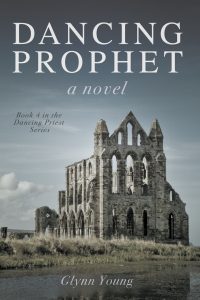
    • Dancing Prophet
    • Dancing Priest
    • A Light Shining
    • Dancing King
    • Poetry at Work
  • ABOUT
  • CONTACT

Dancing Prophet

From “Dancing Prophet” – Reformation or Re-Creation?

November 2, 2018 By Glynn Young Leave a Comment

Dancing Prophet Michael Reformation

“I’ve been going ‘round to churches,” Michael said, “talking about reformation. It was something I felt called to do, even before we left San Francisco. It was as if God was telling me that the reformation of the church was imperative. Now I wonder if I misheard what I thought God was saying. What if He was telling me to help people prepare, not for a reformation, but for the destruction and re-creation? He knew what was happening. He knew the evil that had to be stopped.”

  • from Dancing Prophet https://www.amazon.com/Dancing-Prophet-Book-Priest/dp/194971800X/ref=sr_1_1

Photograph by Linnea Sandbakk via Unsplash. Used with permission.
Authority, Responsibility, and Dancing Prophet

October 31, 2018 By Glynn Young 2 Comments

Dancing Prophet Taking Responsibility

More than one reader has pointed out to me that Dancing Prophet, the fourth novel in the Dancing Priest series, seems to be talking about the Catholic Church, even though the church is never mentioned in the book. And did I unfairly transfer the Catholic Church’s abuse scandal to the Church of England, even done for a fictional story?

And my answer has been yes, you’re right, but only partially.

I’ve noted before that the original impetus for the story that eventually became Dancing Prophet was the 2008 arrest and conviction Michael Devlin, a pizza shop manager who kidnapped and abused two boys, one of them for years. Devlin lived in my St. Louis suburb of Kirkwood; his apartment was on my route biking from my home to the beginning of Grant’s Trail. I cycled past the apartments hundreds of times. I likely saw one of the boys on his bike.

I was horrified. The only way to deal with it was to write a story, about 25,000 words, inspired by but unrelated to what happened in Kirkwood.

Devlin had nothing to do with the Catholic Church scandal involving priests sexually abusing children, but his actions were equivalent to the child sexual abuse scandal that had engulfed the Catholic Church several years before, and which ultimately led to numerous legal actions and settlements across the United States. He was a predator, like the abusing priests. And yet the situation with the Catholic Church seemed worse – men in positions of trust, responsibility, and spiritual leadership had preyed upon children, and done so for decades, often being protected by their dioceses, bishops, and cardinals.

Dancing Prophet Dancing PriestThe scandal was addressed in the Charter for the Protection of Children and Young People – the U.S. Conference of Catholic Bishops, commonly called “the Dallas Report” for the location of the meeting where the statement was developed. That report was published in 2002, and while many likely hoped it put an end to a sorry chapter in Catholic Church history, it did not, as it turned out. Just this year, the scandal flamed again, with the dismissal of a cardinal, broad accusations of abuse of seminary students, and even Pope Francis himself accused not only of participating in a cover-up but promoting of a guilty cardinal into a position of enormous influence.
There have been other scandals involving other churches and denominations, but not as broad and lasting as long as that of the Catholic Church. The root cause, like the root cause is so many institutional scandals, often seems to be what a hierarchy will do to protect itself. Circumstances, specific acts, and outcomes may be different, but similar kinds of stories can be found in government, business, non-profits, and other institutions. Hierarchies and bureaucracies can make bad situations far worse when their first thoughts and actions are to protect themselves.

As I was finishing the manuscript for Dancing Prophet, a second wave of scandal unfolded – the Pennsylvania grand jury report on the abuse by church officials and the coverup. Because it involved reports over an extended period of time, this one reached well into the bishop and cardinal ranks in the U.S. And then Archbishop Vigano’s letter went public, citing the abuse of seminary students by Cardinal Ted McCarrick and including the claim that Pope Francis was told of this some five years ago.

It’s still be sorted out. The media have tended to portray this as a conservative versus progressive theology debate within the Catholic Church, largely missing that the scandal is about the hierarchy and the steps it takes to protect one of its own and itself.

I didn’t precisely transfer the scandal to the Church of England in Dancing Prophet, although there were certainly influences. The C of E is enduring its own pedophile scandal, which appears (at this time) to be smaller in scope but is no less serious. Archbishop of Canterbury Justin Welby has taken responsibility to a greater degree than Pope Francis, but investigations are continuing. Prince Charles has been asked to provide a statement regarding what he knew (or didn’t know) about an offending bishop.

Dancing Prophet asks the question: what does it look like when a church leader takes responsibility for a scandal like this, and acts decisively to deal with it?

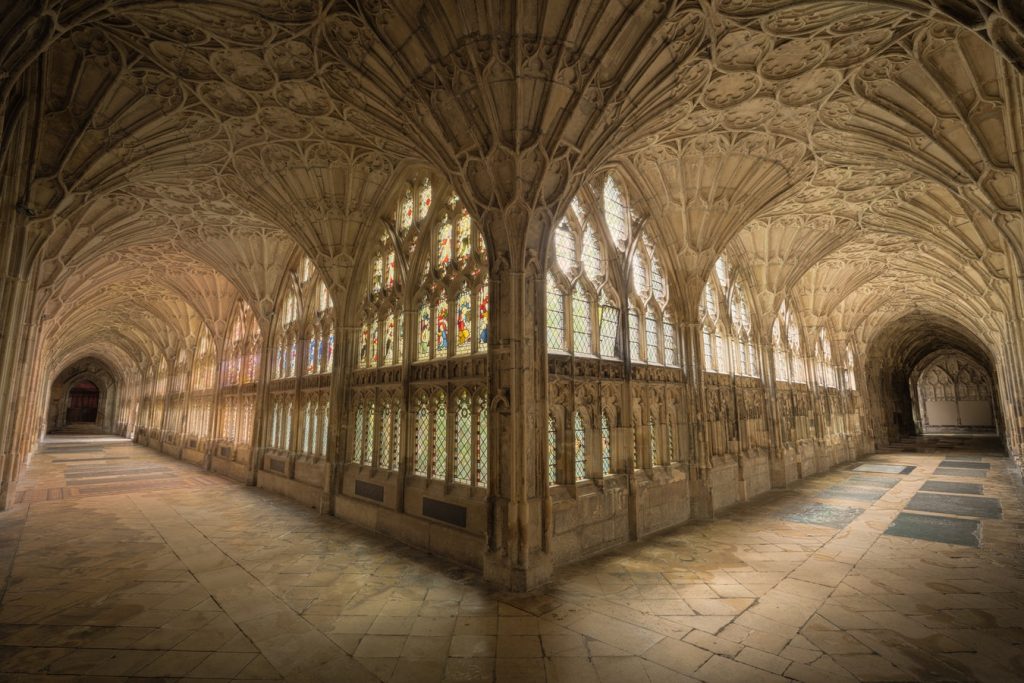
Top photograph by Michael Beckwith via Unsplash. Used with permission.

From a Review of “Dancing Prophet”

October 15, 2018 By Glynn Young Leave a Comment

Dancing Prophet Dancing Priest

First review of “Dancing Prophet” posted on Amazon: “Yes, it’s 3 am but I was reading a book that I couldn’t put down… I’ve just finished the fourth book in the ‘Dancing Priest’ series by Glynn Young, entitled, ‘Dancing Prophet.’ Wow, it lived up to the greatness of the prior three books that I’ve also read. If you haven’t read Glynn’s series, you need to get them and read them. (Book or Kindle on Amazon!) These novels are exciting, encouraging and uplifting. What is it they say in movie reviews?… “You’ll laugh, you’ll cry…” but it’s true. I don’t know how or if Glynn will follow this one up, but I hope that he does. And what a surprise and honor to have him list my name as, “A friend who’s been with him since the beginning.” That’s true but unexpected and humbling. Glynn, thank you for using the gift that God gave you to bring joy to so many.”

Where Do Our (Fictional) Characters Come From?

October 12, 2018 By Glynn Young Leave a Comment

characters Dancing Prophet

My wife has said, more than once, that the main character in my Dancing Priest novels is an idealized version of me. The first time she said it, I disagreed. There were some things I shared with that character, but I never planned to write about making an idealized version of me.

After considering it, I thought, well, maybe. I thought about it some more, and I reverted to my original thought. Nope, he’s not me.

Not one of the characters across my four novels are disguised versions of real people. Instead, they are composites of people and experiences.

In Dancing Priest, Sarah Hughes has a conversion experience that is almost exactly taken from my own.

In A Light Shining, the political operative Josh Gittings is based on several people I’ve known from the political world.

The communications man in Dancing King is based on many of my career experiences, especially in crisis communications. His uncanny ability to spot what’s happening and ferret out what’s behind a crisis is based on too many of my own experiences. (I say “too many” because sometimes I was heeded, and sometimes I was not.)

And certainly the speechwriter in Dancing Prophet comes from my own career background, including sitting with an executive for an entire day to write an emergency speech while he did other work.

I can say my characters come from experiences, but where do their personalities come from? Likely our families, our friends, people who’ve influenced us or protected us, mentors, people we’ve have bad experiences with, even casual acquaintances.

For example, the villain in Dancing King, the PR operative Geoffrey Venneman, is a composite of several people I’ve known over the years. He serves his clients, yes, but he is all about serving himself. He looks for the main chance. He has no qualms about hurting others and that, in fact, is part of the game. He can affect a wounded innocence when it’s helpful to do so. His anger becomes uncontrollable when he’s thwarted. Yes, I knew people like this and had to work with them. It was not a pleasant experience, because you always had to be on guard.

In the writing process, however, I don’t consciously create characters. They seem to emerge as the story develops or when this kind of character is needed. Sometimes I know what kind of character is needed at a particular point, but the birth is an agonizing labor, requiring rewrite after rewrite.

I’ve had one exception to my “no real people” guideline. In Dancing Prophet, one character is based on me, less his experiences and more his personality. I admit it. Almost all of his actions and reactions in the book track with mine (that’s almost all, not all). I didn’t realize this until I was in the middle of rewrite #2 or #3, and then I saw it. The character had emerged, unconsciously, from my own life. He’s not an idealized version of me. In many ways, he is me.

It was a shock. For a time, it stopped all progress on writing the book. I had to take stock. What was I trying to say here, or understand? Was I trying to tell myself something? I had to try to answer these questions and others before I could continue.

The answer I came to was this: this character feels broken. It doesn’t stop him from having a successful career and a loving marriage. But it shapes him in obvious and less-than-obvious ways. And sometimes, in the midst of that brokenness, a character has to step forward and do something courageous.

No one ever said that writing would be this hard. No one ever said it would be this revealing.

Photograph by Hudson Hintze via Unsplash. Used with permission.

Paperback Edition of “Dancing Prophet” Now Available

October 5, 2018 By Glynn Young Leave a Comment

Dancing Prophet Dancing Priest

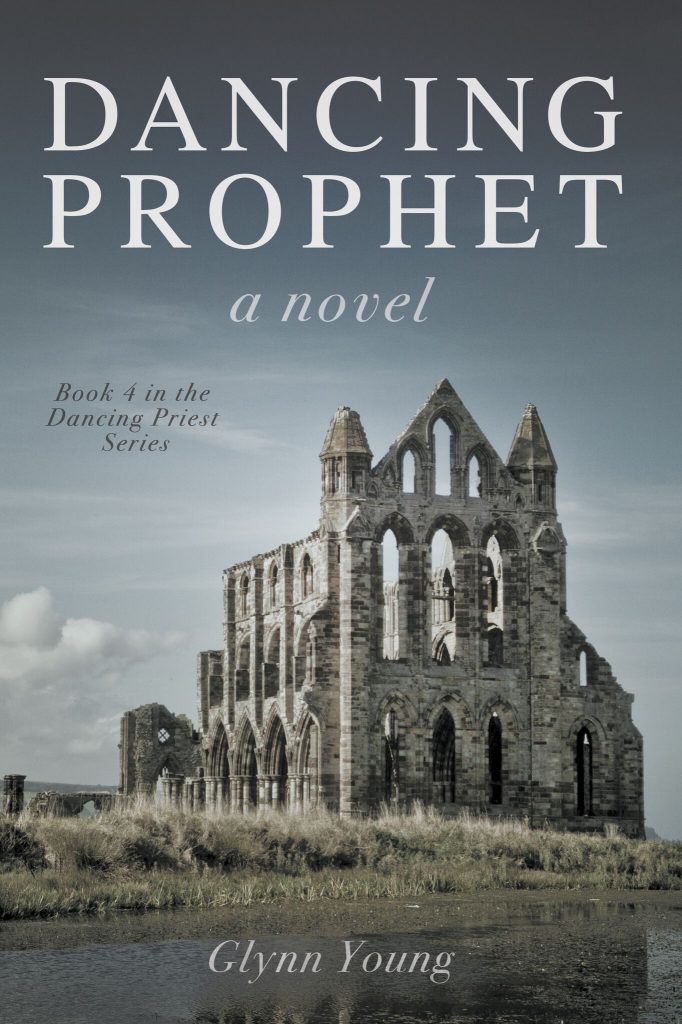
It happened about 10 days earlier than expected, but the paper edition of Dancing Prophet, fourth in the Dancing Priest series, is now available. You can find the Amazon listing here.

Amazon is still sorting through having the Kindle edition and paperback edition on the same page. In the meantime, the Kindle edition can be found here.

Two quotations from Dancing Prophet:

“Trevor Barry recognized the irony of him, an agnostic on a good day and essentially nothing on most days, being relied upon for advice and counsel by a deeply Christian king. At first surprised, Trevor had come to appreciate how much the King’s trust meant.”

“The last time the couple had seen Sarah was the beginning of her senior year in high school. She was now 26. The man figured that the crowd would be so large for her speech that there would be no chance of her seeing them. He turned out to be mistaken.”

A Novel about a Crisis

October 3, 2018 By Glynn Young 1 Comment

Dancing Prophet A Novel about a Crisis

More than once, my wife has pointed out that my 2017 novel Dancing King and my new novel Dancing Prophet tend to pick on the Anglican Church, and specifically the Church of England.

It’s a fair point; the major tension in Dancing King is between the king, Michael Kent-Hughes, and the Church of England hierarchy at Lambeth Palace. Michael is speaking at churches for the need for reformation, and then makes a blow-out speech at a conference of bishops. Lambeth strikes back, however, employing all sorts of stratagems and accusations.

In Dancing Prophet, scandal erupts. What looks contained to one church is actually broader and deeper, involving churches and dioceses across the country and well beyond. The introductory sentence reads this way: “The match that ignited the reformation of the Church of England was lit by three teenagers.”

The heart of this story was written more than a decade ago, and then rewritten (many times) over the years. In one sense I did pick on the Church of England – the idea of the scandal in Dancing Prophet is actually inspired by the real institutional crisis the Catholic Church has been struggling with. In the story, Michael will realize that the situation is beyond reformation; the church as he’s known it is gone.

Dancing Prophet Dancing PriestDancing Prophet is fiction, but like all fiction, it can’t help but reflect the times in which it’s written. When the history of our times comes to be written, it may be title (or subtitled) “The Age of Institutional Crisis.” Our government structures aren’t working; the sorry spectacle of a U.S. Senator questioning a candidate for the Supreme Court about the references to body noises in his high school yearbook isn’t even funny as much as it is tragic.

Our language has become the language of extremes, suggesting a mutual contempt that’s hard for me to fathom. I’ve stopped reading the editorial and op-ed pages of my hometown newspaper; there’s virtually nothing in it that one could call a reasoned argument. Lots of polemics, to be sure; lots of barely disguised contempt for any opinion, belief, or value other than what the editorial and op-ed writers agree with. Snark rules.

The church universal is in crisis as well. Mainline Protestant denominations in the United States are in membership free fall. Evangelical megachurches are afflicted by their leaders abusing women and elder boards refusing to believe it, until significant damage is done. The Catholic Church is being torn apart. This looks like a winnowing of the church to me, a winnowing that will leave a smaller and perhaps stronger church.

This isn’t the time for reasoned arguments. This is the time for rule by the mob. I watch the news coverage, and I see the mob racing through the halls of Congress, screaming at senators and congressman. This is rhetorical violence approaching physical violence.

Some have compared this to the declining days of the Roman Empire; it’s closer, I think, to the declining days of the Roman Republic.

Dancing ProphetThis is the world partially depicted in Dancing Prophet. Michael Kent-Hughes has been thrust into a position he never expected and never sought. He is not only dealing with ecclesiastical failure; he is also dealing with politicians increasingly reluctant to take responsibility and a London governing authority that ceases to work due to political disfunction.

Early in the story, two of the leading characters in Dancing Prophet are discussing how Michael came to occupy his position. Here was Michael, with no military background, no royal upbringing, and in fact nothing to recommend him for the position of king. He was a Church of England priest, and a young one at that, without any hierarchal experience.

And here’s what one of the characters says:

“God picks the man needed for the job at hand. And isn’t it fascinating that Michael had essentially been exiled to the hinterlands as a child, reared completely away from anything even remotely royal, felt called into the priesthood when he was relatively young, and was then sent to the outer edges of the Anglican world, away from the center and all that the center implied. God was preparing Michael, as surely as you and I are sitting here. And He was less interested in military and palace experience and far more interested in raising up a man after His own heart.”

And that’s the hope of Dancing Prophet, that even in the darkest times, God is raising up men and women after His own heart.

Top photograph by Micah Williams via Unsplash, and lower photograph by Oliver Sjostrom, also via Unsplash. Used with permission.

  • « Go to Previous Page
  • Page 1
  • Page 2
  • Page 3
  • Page 4
  • Go to Next Page »

Footer

GY


Meet the Man

An award-winning speechwriter and communications professional, Glynn Young is the author of three novels and the non-fiction book Poetry at Work.


 01_facebook 02_twitter 26_googleplus 07_GG Talk

Copyright © 2025 Glynn Young · Site by The Willingham Enterprise · Log in | Managed by Fistbump Media LLC