• Skip to primary navigation
  • Skip to main content
  • Skip to footer

Dancing Priest

Author and Novelist Glynn Young

  • HOME
  • BLOG
  • BOOKS
    • Brookhaven
    • Dancing Prince
    • Dancing Prophet
    • Dancing Priest
    • A Light Shining
    • Dancing King
    • Poetry at Work
  • ABOUT
  • CONTACT

Uncategorized

“White Week and Other Stories” by Wojciech Chmielewski

November 19, 2025 By Glynn Young 2 Comments

The Polish writer Wojciech Chmielewski isn’t exactly a household name in America, and for a very good reason. Up to now, none of his writing has been published in English. Wiseblood Books has changed that with the publication of White Week and Other Stories, translated by Katarzyna Bylow. 
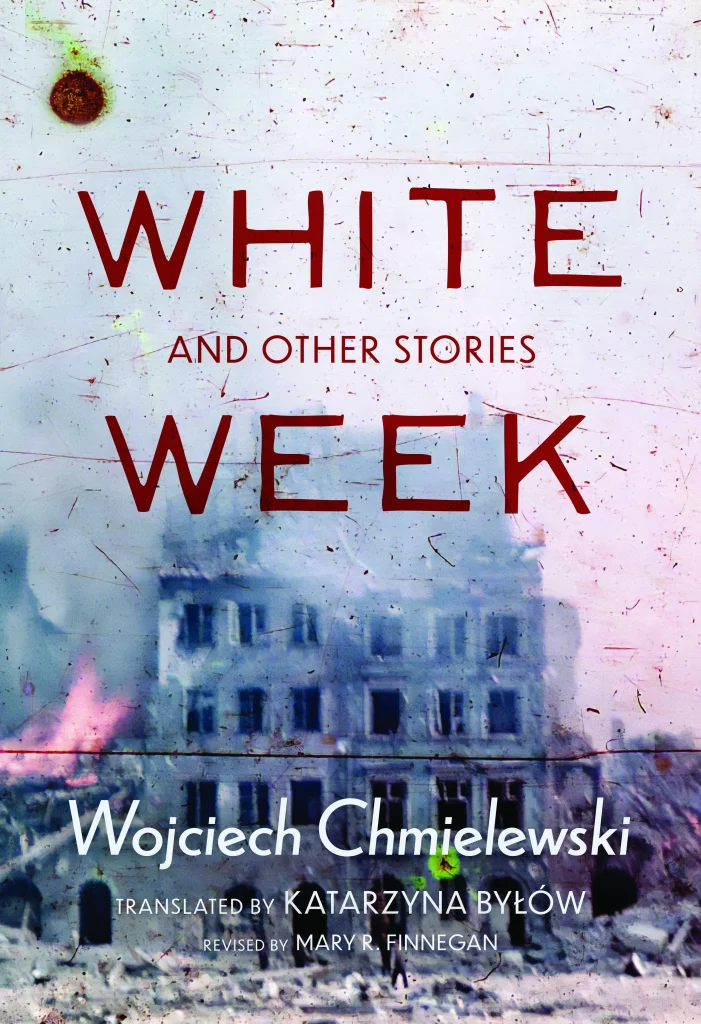
Chmielewski is best known in Poland for his short stories, which have won awards in his home country. But he’s also an essayist, literary critic, and playwright for Polich Radio Theatre. This collection of stories, many previously published in Polish literary journals and anthologies. Re largely about Warsaw, a Warsaw that is there and the city that used to be. (Much of the city was destroyed during World War II and then rebuilt under communist rule.)

The stories are, in a word, haunting. The opening story is about the area near Grzybowski Square, with its church on one side and construction underway nearby. We see scenes of a marketplace, a boy selling strawberries (“Polish strawberries…all freesh”), an alleyway full of peonies, a group of drunken men arguing, a young woman waiting for someone, and the empty park with its playground. The story contains no named characters or dialogue; the character is the urban landscape itself. Slowly the reader comes to understand that this area was once part of the Warsaw Ghetto, which tens of thousands of Jews were confined before deportation to Auschwitz.
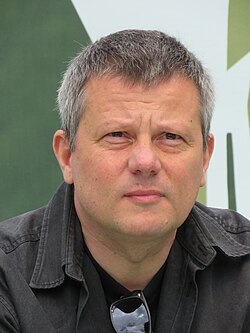
And so the stories go. Chmielewski will return to this theme of the Warsaw Ghetto, but along the way we’ll experience a religious procession (with a man dreaming about snakes), a woman working on her new novel (with some of the characters becoming parts of other stories), a man with an unfaithful wife who finds solace in eating dog food, a village that exists beneath the sand of a beach area, a man who pays a visit and seems to enjoy reading in a madhouse, conversations in a restaurant during a rainstorm, a saint awake in the dark, a young man in love with a girl whose face experiences allergic reactions, the title story about remembering a religious confirmation celebration, and others.

Like that opening story of the visible landscape not seeming to remember the history, all of the stories have that sense of “missing the context.” We’re there, but we don’t understand. We undertake our daily life, but we’re ignorant of what these streets and buildings have seen, what’s come before us, what has shaped this landscape just as it’s shaping us. 

Yes, haunting is the operative word for these stories.

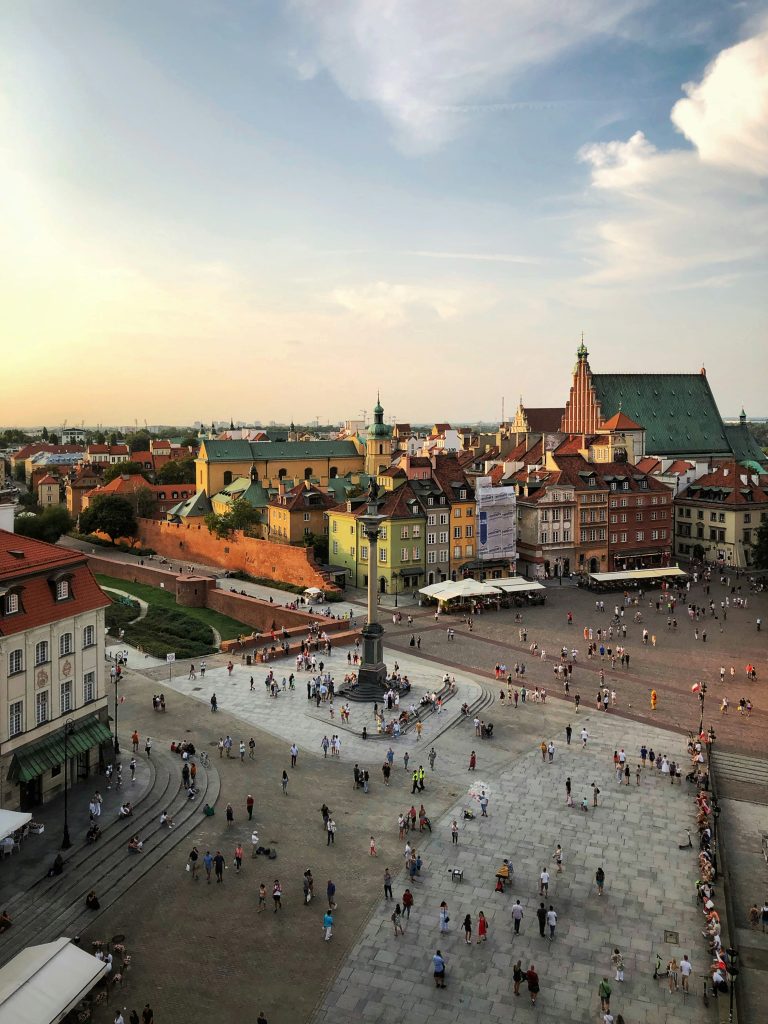
Top photograph: A scene of Old Town Warsaw by Victor Malyushev via Unsplash. Used with permission.
Meeting the Author of “Matisse at War”

November 10, 2025 By Glynn Young Leave a Comment

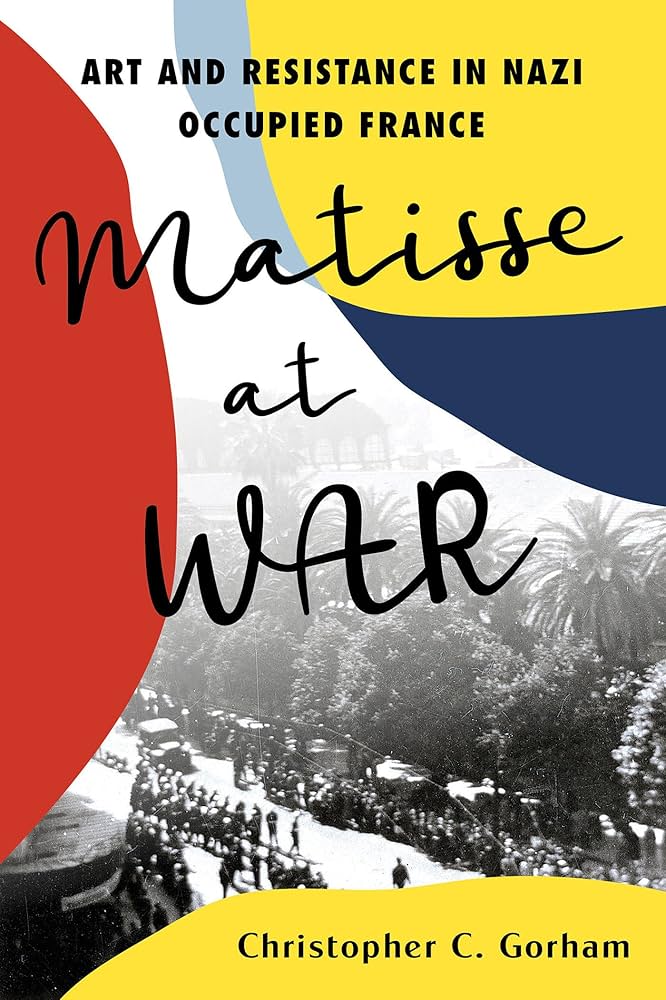
On Nov. 4, I had just finished reading Matisse at War: Art and Resistance in Nazi-Occupied France by Christopher Gorham when I received an email from the St. Louis Art Museum. In partnership with the St. Louis Jewish Book Festival, the art museum would be hosting a lecture by Gorham on Thursday, Nov. 6. 

I loved the book. When news of its publication first happened, I pre-ordered the book. I suspected – correctly, as it turned out – that a book about art, World War II, Nazis, Vichy France, and Henri Matisse (1869-1954). Last year, we had seen an exhibition at the art museum on Matisse and the Sea, and many of the paintings would have been completed in the period leading up to the war.

I didn’t need convincing. I bought my ticket for the lecture.

Christopher C. Gorham

I arrived at the art museum early, to walk through Sculpture Hall to get a quick view of the five massive paintings featured in the new Anselm Kiefer exhibition on Becoming the Sea. (Obviously, the art museum, like the rest of us. is fascinated by the sea.) I was finally making my way down the hall’s big stairs when I realized that Christopher Gorham was walking right in front of me, accompanied by an art museum staffer. No, I didn’t interrupt them to introduce myself. 

I had an excellent seat in the theater, equivalent to orchestra center at the symphony or a play. The audience had about 150 people. After introductory remarks by representatives of the art museum and the Jewish Book Festival, Gorham spoke for about 45 minutes.

For 45 minutes, he told the story in the book and of the book. If you hadn’t read it, you wouldn’t realize that he was giving an oral summary of the entire book, and his talk was just as fascinating as the book itself. He added a few details, like elaborating on the Degenerate Art Show organized by the Nazis which toured Germany in 1937 and 1938, and which included a few of Matisse’s paintings. There was much about Matisse’s art that the Germans and the Vichy French hated.

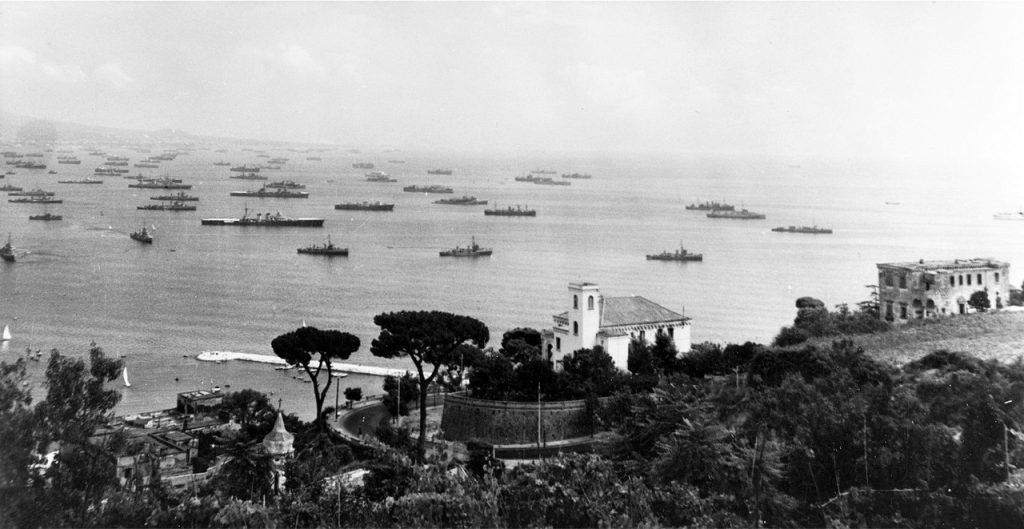
Allied invasion of Nice and Provence, 1944

Gorham also tracked several of Matisse’s famous scissor “cut-outs” with both events in his personal life and developments in the war. His famous “The Wolf” (or “Le Loup”) was completed about the time his ex-wife Amelie and his daughter Marguerite were arrested by the Gestapo for involvement in the Resistance. He also described the “second D-Day” in France, when the Allies bombed and invaded Nice and Provence. Increasing danger from the war prompted Matisse to move to a country house about 10 miles from Nice. Nice itself was bombed, with 500 people dying in the raid.

He pointed out the just passed Monday, Nov. 3, was the 71st anniversary of Matisse’s death.

After the lecture and a question-and-answer period, Gorham signed copies of the book just outside the main gift shop next door to the theater. I’d brought my copy with me but didn’t intend to get his autograph. As I was leaving, the signing was just getting underway, and only one person was in line. I thought, “Well, why not?” and joined the line, which quickly filled up after me.

I told Gorham how much I’d enjoyed the book. We chatted for a minute or so, and then I mentioned I’d had no idea how important Pierre Matisse had been to the art scene in New York City until I read the book.

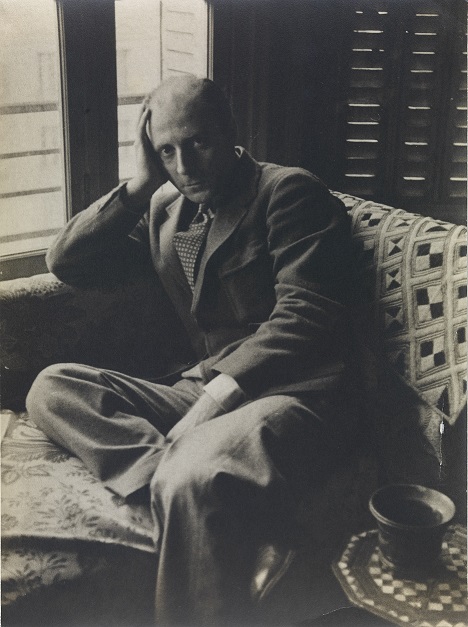
Pierre Matisse, about 1942

“Pierre essentially started modern art in New York,” Gorham said. “And much of it had to do with the artists who’d fled Europe for safety in the United States. Otherwise, they would have been killed outright or sent to a death camp. Instead, they created an art movement in America, and Pierre Matisse was at the center of it.”

Pierre did more than simply organize exhibitions of these artists’ works. He found apartments for them, often paying their rent. He paid them stipends so they could feed themselves and their families and still paint. He helped them establish their names and reputations. 

Matisse’s daughter Marguerite put herself in personal danger. She carried coded messages, including one to Brittany in the spring of 1944 that provide information to the Resistance about the coming D-Day invasion. That was when she was arrested by the Gestapo. She was imprisoned, tortured, and then deported by train to a camp in Germany. Miraculously, she survived the war.

Gorham’s lecture was every bit as fascinating as the book. I loved the book (my review posted today at Faith, Fiction, Friends), and I’m glad I made time to attend the lecture. The author expanded my understanding of both the book and its subject. And I learned a little about the history of modern art in America. 

“Your Accent! You Can’t Be from New Orleans!”

October 9, 2025 By Glynn Young Leave a Comment

When you’re born and raised in a city like New Orleans, you become aware of certain things very early on.

First, there’s food. The basic New Orleans food groups are red beans and rice (on Mondays), crawfish, shrimp, beignets, and drive-thru daiquiris to go. A fifth food group might be the muffuletta. When I’d stay with relatives in Shreveport in north Louisiana, one aunt would make sure she fixed rice, because she worried I might be homesick.

Second, there’s weather. You’ve never met humidity like what saturates New Orleans. When you live in a place bounded by a lake, a river, and a gulf not too far away, and it’s built on swamp and bayous, then you will know what real humidity is like.

Third, there’s the accent. It’s not exactly unique; there are echoes of the New Orleans accent in Brooklyn and even south St. Louis. It’s a multicultural gumbo of influences, including French, Spanish, Cajun, Black American, Jewish, Italian, and German, embedded within American English. New Orleanians would be completely at home ordering in a crowded deli in Brooklyn.

To continue reading, please see my post today at Tweetspeak Poetry.

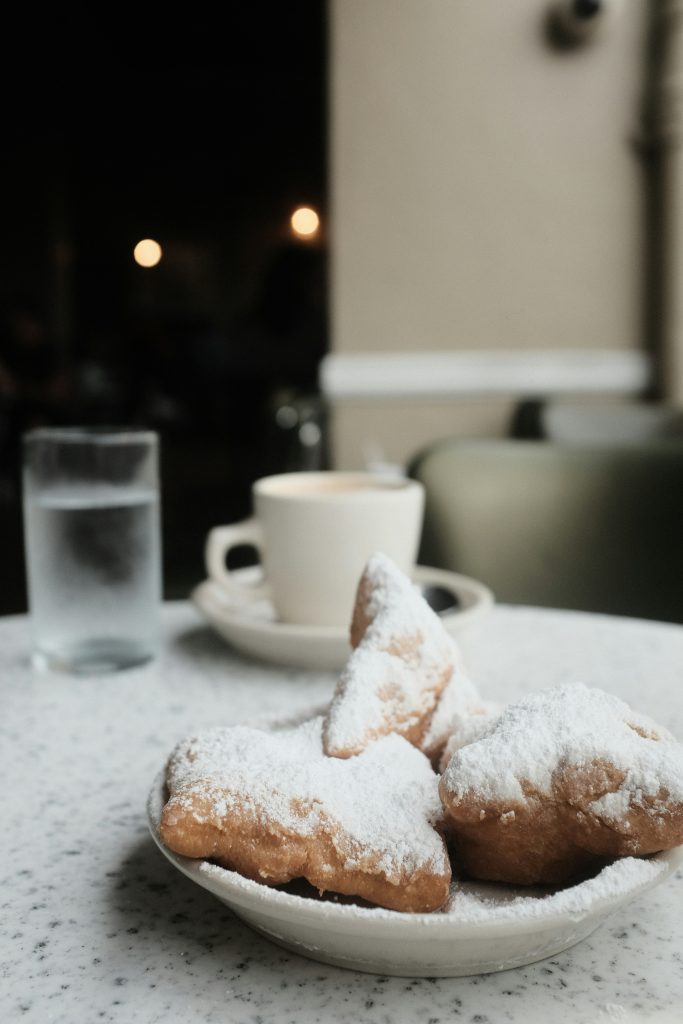
Photograph: Beignets by Julian Rosser via Unsplash. Used with permission.
Footsteps at St. Bride’s

October 16, 2024 By Glynn Young 1 Comment

During a recent trip to England, we took advantage of our trip coinciding with London Open House, two successive weekends where citizens and tourists alike can view many buildings usually closed to the public, or take walking tours, or get behind the scenes views of many places that are open to the public. 

One of the places we visited was St. Bride’s Church on Fleet Street, known as “the journalists’ church.” Fleet Street as the home to Britain’s big newspapers is a memory; the newspapers and the journalists moved to other parts of the city decades ago. But St. Bride’s remains, and it’s still known as the place where journalists worshipped. 

A church has stood on this spot since the late Roman / early Briton period. It gets its name from St. Bride, or Bridget, a nun who lived in the late fifth century but who may never have visited London or England.  Several church buildings have been erected on the site. The old medieval church was destroyed in the Great Fire of 1666 and then rebuilt by Sir Christopher Wren. It was destroyed again, on December 29, 1940, during an incendiary raid by German bombers. But it was rebuilt as close to the Wren building as possible and reopened in the late 1950s.

It’s a beautiful church. We were able to descend through 2,000 years of history to see the crypt, with its old Roman wall, the nameplates found on old coffins, and two chapels, including a small medieval chapel whitewashed and made into an intimate worship space. 

I had some to time to sit in that chapel, and I did. And it was there that I thought I could hear footsteps above and around me. 

Footsteps at St. Bride’s

I hear footsteps here, overhead
and around, echoes of Celts.
and around. echoes of Celts
and Romans, Britons and
Saxons, Vikings intent on loot
and pillage. And the builders
and architects, bricklayers
and monks, whispering of
the Irish saint inspiring it
all. Footsteps become
louder, years passing,
building and tearing down,
rebuilding and reconstructing,
and footsteps running,
accompanied by screams
and the roar of fire. And more
rebuilding, with the Architect
himself stacking the spire
like tiers of wedding cake,
standing in splendor over
the newspapers of growth
and empire so pervasive they
defined generations. I hear
more footsteps, first those
running from the bombs and
then those running to fight
the fire, but above me is ruins.
Yet new architects and
new builders return, workmen,
intent on recreating what
was once there. Newspapers
move on, but the footsteps
remain. They never go away.

A Confederate Recipe Book for the Civil War

February 7, 2024 By Glynn Young 2 Comments

It’s well known that the Union blockade of Southern ports during the Civil War reduced imports of luxuries and basic necessities to a virtual trickle. A considerable number of common foodstuffs were soon in short supply, including coffee and salt. Southerners had to develop creative approaches for common foods; for example, chicory became a common substitute for coffee beans (and you can still drink coffee and chicory in New Orleans as well as find it on the interest and specialty food stores). 

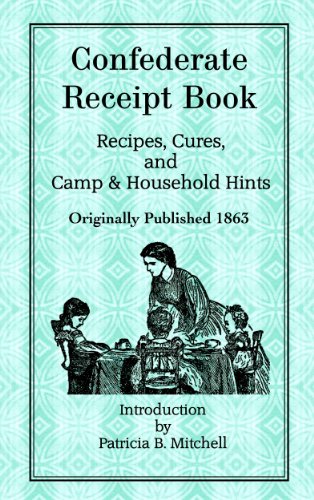
In 1863, the only cookbook compiled and published in Confederacy during the Civil War was entitled, aptly enough, The Confederate Receipt Book. The book included more than 100 receipts (or recipes), but recipes adapted for war-time conditions for soldiers and the home front alike. The book also included recipes for homemade ink and other necessities, cures for various ailments for which traditional medicines were not available, and homemade toothpaste (it’s difficult for me to imagine brushing my teeth with charcoal, but the procedure is included).

Food writer Patricia Mitchell unearthed the recipe book and provided an introduction to a contemporary edition. 

You can find instructions for raising bread without yeast and making your own yeast; how to used potatoes for pie crusts; apple pies without the apples; using corn to create fried oysters without the oysters; making tomato catsup; producing your own soap; and making a “Confederate candle.” Several entries in an appendix explain how to use rice flour instead of wheat flour for various breads and bakery items.

Remedies and cures covered instructions for dealing with dysentery (particularly useful in military camps), chills, asthma, croup, scarlet fever, headache and toothache, burns, camp itch, and even warts and corns. The book also provided instructions for preserving meat without salt, curing bacon and bad butter, clarifying molasses, and using acorns to brew coffee.

Do-it-yourself home repairs covered preserving steel pens, cementing home china or glass, purifying water, charcoal tooth powder, sealing wax, preventing rust, and drying herbs. 

Patricia Mitchell

Patricia Mitchell’s in food and food history began when she was a writer for the Community Standard magazine in New Orleans. Back home in Virginia, she and her husband operated a bed-and-breakfast inn, and guests asked her to compile some of her recipes in a book, which she produced as a pamphlet. A museum director asked for copies to sell in his museum shop, and the rest, as they say, is food history. She’s written and compiled more than a hundred titles, selling hundreds of thousands of copies in bookstores, museums, historic sites, and shops. 

We can’t fully know how well received the book was in 1863, but many must have welcomed its instructions and advice. Common foods and household necessities taken for granted before the war had almost disappeared, and the use of substitutes was widespread. The book provides a window on home life and camp life, and how people adapted to shortages. 

Top illustration: The Richmond Bread Riot, April 2, 1863.

A Review of All 5 Dancing Priest Novels

December 11, 2023 By Glynn Young Leave a Comment

a

Dancing Priest

Bill Grandi is a pastor in Indiana, cyclist, and regular blogger (two blogs, Cycleguy’s Spin and Living in the Shadow). Cycleguy’s Spin is about whatever might happen to be on Bill’s mind, and it’s always worth reading. Living in the Shadow is about his pastoral work, written largely for his flock but applicable to the rest of us as well. He often discusses what he’s working on for his sermons, inviting comment and commentary.

He also turns out to be a faithful reader of the Dancing Priest novels. 

Bill has reread all five of the books, and today at Cycleguy’s Spin he’s posted a summary of each and an overall review. A writer can’t ask for a greater kindness and encouragement than that. You can read his review here.

  • Page 1
  • Page 2
  • Page 3
  • Go to Next Page »

Footer

GY


Meet the Man

An award-winning speechwriter and communications professional, Glynn Young is the author of three novels and the non-fiction book Poetry at Work.


 01_facebook 02_twitter 26_googleplus 07_GG Talk

Copyright © 2025 Glynn Young · Site by The Willingham Enterprise · Log in | Managed by Fistbump Media LLC