• Skip to primary navigation
  • Skip to main content
  • Skip to footer

Dancing Priest

Author and Novelist Glynn Young

  • HOME
  • BLOG
  • BOOKS
    • Brookhaven
    • Dancing Prince
    • Dancing Prophet
    • Dancing Priest
    • A Light Shining
    • Dancing King
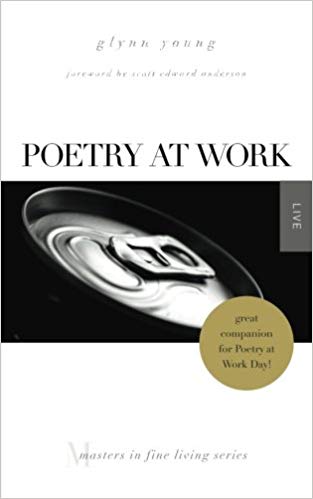
    • Poetry at Work
  • ABOUT
  • CONTACT

Poetry at Work

The Poetry of the Boss

August 14, 2020 By Glynn Young 1 Comment

More than 40 years ago, I was handed my college diploma and, two days later, showed up for work at my first official job. I didn’t realize it until much later, but I walked into the doors of my employer that day carrying an assumption. I believed that people in positions of authority – bosses – always knew what they were doing. Why else would they be bosses?

Slightly more than a decade later, my assumption continuing to take body blow after body blow, I was presented incontrovertible evidence that my assumption had been flat-out wrong.

A group of us were sitting in a conference room, waiting for the news to go public that one of the company’s top products had a problem. The first indication would be the stock market. We all knew the news was imminent, and we had prepared for it as if a tsunami was about to strike, which, metaphorically, turned out to be true. The call came, confirming that the news was public, and for a very brief moment we experienced a silence.

We were all a bit shook, but I knew we were prepared. We had thought through all kinds of scenarios. We had planned for every eventuality. The pace of the planning had been exhausting for weeks. But I knew we were ready, as ready as any company could possibly be.

And then the executive to whom we had all looked for leadership, for guiding us through what would become a very difficult time, spoke. “What do we tell our people?” he said. “What do we tell our customers?” His voice was filled with emotion. He was nearly in tears. 

Poetry at Work

We were all a bit stunned. And then my immediate boss, sitting next to me, looked at me and said, “Go!” That was the signal. Without excusing myself, I bolted from the room, ran to the building next door, and found the team of people waiting. Everyone knew exactly what they were to do. And all I did was repeat my own boss’s word. “Go!”

Statements were issued. Communications were sent to customer organizations. Media calls were made and returned. Faxes were sent. (This happened in the days before email and electronic communications.) This would be my life for the next week, interrupted only by the Thanksgiving holiday, and it would continue for the next month.

But in that brief moment at the very beginning, I had seen two extremes of leadership. A senior executive’s worst fears had happened, and he foundered. My own boss, well down the corporate totem pole, had given me a one-word command, a simple word that was like a hyperlink to a massive amount of preparation and a plan to be implemented. 

Later I would come to explain it to myself as a kind of epic poem. It was as if Beowulf didn’t slay Grendl, but instead had fallen, replaced by a younger, less-experienced subordinate who went on to slay the monster. The world as that executive had known it had come to a rather abrupt end, and he didn’t know how to navigate his way, or ours, going forward. We were going to have to invent what that way would be.

My assumption about bosses died that day. A few years later, struggling to lead my own team through the unchartered waters of corporate upheaval, I read The Heart Aroused: Poetry and the Preservation of the Corporate Soul in Americaby poet David Whyte. And I realized that poetry could be more of a guide that all of the management science and self-help books put together.

From Poetry at Work, Chapter 5: It is the soul—that place in the depths of our existence—where storms often rage, and chaos is more the norm than the exception. We don’t just bring our skills, talents, experience, and physical bodies to the workplace; we also bring our souls, as much as systems management tries to deny and fight it.

Top photograph by Ameer Basheer via Unsplash. Used with permission.

This article was prepared for the Literary Life Book of the Month discussion group on Facebook.

The Poetry of the Interview

August 9, 2020 By Glynn Young Leave a Comment

It was the strangest interview I’ve ever participated in – on either side of the table.

A friend had talked me, or conned me, into interviewing for a job with St. Louis Public Schools – the director of communications. 

The school district was in chaos – an outside management firm had been brought in to run the district, schools were being consolidated and closed, services were being outsourced, central office layoffs had emptied more than half of the headquarters building, and protests by parents, students, employees, former employees, teachers and the teachers’ union were daily. School board factions were fighting each other through the news media. The news media was already showing up early each morning at the district’s administration building – knowing there would always be a new crisis to report.

And I wanted to insert myself into that?

I don’t remember all of the arguments my friend used, but they must have been convincing. I sent in my application, thinking that would be the end of it. But then I was called to come in for an interview.

Poetry at Work

On the appointed day, I showed up and was escorted to a conference room at the headquarters building. Eventually, 10 of us filled the room. Every 10 to 15 minutes, one of us was called out for the interview. I was the last to be called.

I was escorted to the district’s board room. Inside, three people were seated – the interim superintendent, who was a principal with the outside consulting firm; one of his consultants; and a district officer who would be the official boss of the communications director.

I was seated at the head of the table. The questions started, and I was immediately relieved to see they were using the behavioral interview method, in which you’re asked questions like “What was your greatest failure?” I was familiar with that kind of interview; it was (and still is) broadly used by corporate America.

The superintendent was seated to my immediate left, and I could see he was increasingly impatient. He was moving around in his chair, drumming his fingers on the table, and looked ready to erupt at any moment. And then he actually did erupt.

Throwing the interview question sheets in the air, he yelled. “Why the heck do you want this job?” Except he didn’t say heck.

That was not on the list of approved behavioral questions. The other two people at the table both closed their eyes, as if they knew this would happen.

“It’s not a case of why I want this job,” I said. “It’s more a case of why you need me in this job.”

And then we talked. He calmed down, and the others gradually joined the conversation. 

When we finished, the superintendent nodded and said I’d hear something within two to three days.

That was bizarre, I thought, as I drove home. I wonder which of the 10 of us will get sucked into that?

As I pulled into my driveway in suburban St. Louis, my wife was waiting. In the driveway.

“You have to go back downtown,” she said. The school district had called, and I was to meet with one of the board members. I drove back, and learned I was to be at a restaurant at 4:30 to meet with a group of teachers for a listening session. And let them meet the district’s new director of communications.

It was poetry at work, all right – the poetry of the totally unexpected. You think you’re reading an ambiguous poem liked “Stopping by Woods on a Snowy Evening” and discover it’s turned into Alan Ginsburg’s “Howl.” The interview process had a form and even a kind of rhythm and meter about it. Until it didn’t. 

What started as formalist poetry had erupted into performance art.

The Job Interview

Tell me a poem, a story
of a favored poet or poem,
one who changed your life,
your mind, opened up
possibilities. Or made you
feel secure as your anchors,
your moorings, were removed.
Speak to me of your need;
describe the expectations
(are they great ones?), explain
how we soar together, toward
the sun, if not the moon,
tell me how I become
part of your larger self.

From Poetry at Work: “Interviews, like poetry, are ultimately about ideas, even though they are ostensibly about people. Behind the people in an interview are ideas about careers, employment, the future, and organizational goals and objectives. Behind a poem is experience, personal and group history, philosophy, how one understands the world, and even hope for a different or changed future.”

This article was prepared for the Literary Life Book of the Month discussion group on Facebook.
Top photograph by Marten Bjork via Unsplash. Used with permission.

The Poet at Work

August 4, 2020 By Glynn Young Leave a Comment

I was working in communications for a Fortune 500 company. A large portion of the day-to-day work was meetings. We had a team-based culture, and to our work, our teams had to meet. 

The teams, and the meetings, proliferated. We had departmental meetings. We had cross-functional meetings. We had committee and subcommittee meetings. We had telephone meetings, video meetings, and online chat session meetings. We had one-on-one meetings. We had staff meetings. We had briefing sessions, strategy discussions, and crisis planning meetings. We often had meetings to plan meeting agendas.

I often wondered if the curse placed upon Adam and his work for eating of the Tree of Knowledge possibly included meetings.

One day, sitting in yet another meeting, I heard what sounded like repetition. People around the table were having a discussion, and I realized I had heard the same discussion before, with the same arguments, the same supporting evidence, the same objections. I kept hearing the discussion as a refrain, or a chorus for a song or hymn. 

Poetry at Work

Just like that, I walked into the poetry of the workplace. I didn’t even know poetry existed in the workplace, and yet there it was. How had I not seen this before, me, a speechwriter who often read poetry while writing a speech? That question surprised me as well, because it was clear that I had been unknowingly or unwittingly employing poetry to do my work. It wasn’t a work tool; it was the actual music that made the workplace work.

Another way to say it is, the workplace has a literary life. 

I was in my 30s before I discovered the poetry in work, and in my 50s before I understood it. Others saw the poet in me long before I did; perhaps it was my habit of walking around, soundlessly mouthing words, phrases, sentences, and paragraphs, as I was writing speeches. Some executives did management by walking around; I did speechwriting by walking around. More than once I was stopped and asked if I was feeling okay.

Poets at work always tend to be oddities. They’re introverts in a business culture that worships teamwork. They point out the things that everyone sees but no one else will say. They can often be politically incorrect. They see the flaw, or flaws, in the grand project the entire organization has embraced as its reason for existence (at least the one for this week). When feeling charitable, colleagues think of poets as conscientious objectors. It’s better than the terrible and career-suffocating judgment of “not a team player.”

But the poets at work are also the ones who articulate the higher aspirations we have buried within us, who speak to the everyday but lift us to the heavens. They speak to the nobility of work, why it’s important, and why it is good. The workplace becomes dreary and gray without them.

Have you met the poet at work? He or she is there, even if they’re not particularly obvious; not all of them wander around mouthing words to themselves. They are usually the people who make you realize that what you do is worthwhile and that you yourself have intrinsic value because you were made that way.

It’s right there on the table,
a piece of skunky roadkill,
and we go to great lengths
not to talk about it,
not to acknowledge it,
to act in spite of it,
to plan and decide,
pretending it’s not there.
But it is, isn’t it, safely
ignored until the poet
wanders in, mumbling,
and spots it.

From Poetry at Work: “The poetry of William Carlos Williams, for example, cannot really be separated from his work as a physician. I suspect that his work as a physician cannot be separated from his poetry, either. Both are faces of the same person, a whole person—a man who wrote poetry with a doctor’s eye and practiced medicine with the compassion of a poet.”

This article was prepared for the Literary Life group on Facebook.

Top photograph by Matthew LeJune via Unsplash. Used with permission.

Interview with Wombwell Rainbow

August 15, 2019 By Glynn Young Leave a Comment

I was interviewed by Wombwell Rainbow, a U.K.-based site that features interviews with local, regional, national, and international writers. The discussion ranged from reading and writing poetry to work ethics, writing, and favorite authors.

You can read the entire interview at Wombwell Rainbow.

Poetry at Work, Chapter 20: The Poetry of Retirement

May 27, 2019 By Glynn Young Leave a Comment

Poetry at Work Poetry of the Workspace

I might have retired twice from the same company.

I officially retired in 2015, and I’d had given a year’s notice. I could have continued working, but the fact was that my skills, experience, and abilities were being wasted. I could have continued for a few more years, perhaps hoping for another general downsizing and a severance package, but work had become almost painful. 

When I told the head of the department of my plan to retire, the response was surprising. He became angry. It wasn’t as if I was irreplaceable. Without really knowing, I suspect it was more a case of I was doing it on my timetable, and it wasn’t something the department was planning on its timetable.

To continue reading, please see my post today at Literary Life.

Poetry at Work, Chapter 19: The Poetry of Workplace Restoration

May 20, 2019 By Glynn Young Leave a Comment

Poetry at Work Poetry of the Workspace

For a long time, I had what several of colleagues called the most interesting office at work. Because I was a speechwriter, I was expected to (a) read everything the CEO did, (b) read a lot of business books, particularly popular ones, (c) study books about speechwriting, and (d) read books on current issues. All of which meant I was doing a lot of reading. And the CEO likcd to read the novels of John Updike, just about anything by Charles Dickens, and anything published on the subject of Winston Churchill.

For a reader like me, this was a great job. 

One end of my office was floor-to-ceiling bookshelves. Another wall had a smaller but still sizeable bookshelf. I also had a row of books on a credenza. It’s no surprise that my office was known as the building library. 

My “frequently consulted” books included poetry. That was by design. I had several old American poetry anthologies, and my Norton’s Anthology of English Literature (college textbooks) included considerable poetry by British writers. 

To continue reading, please see my post today at Literary Life.

  • « Go to Previous Page
  • Page 1
  • Page 2
  • Page 3
  • Page 4
  • Interim pages omitted …
  • Page 6
  • Go to Next Page »

Footer

GY


Meet the Man

An award-winning speechwriter and communications professional, Glynn Young is the author of three novels and the non-fiction book Poetry at Work.


 01_facebook 02_twitter 26_googleplus 07_GG Talk

Copyright © 2026 Glynn Young · Site by The Willingham Enterprise · Log in | Managed by Fistbump Media LLC