• Skip to primary navigation
  • Skip to main content
  • Skip to footer

Dancing Priest

Author and Novelist Glynn Young

  • HOME
  • BLOG
  • BOOKS
    • Brookhaven
    • Dancing Prince
    • Dancing Prophet
    • Dancing Priest
    • A Light Shining
    • Dancing King
    • Poetry at Work
  • ABOUT
  • CONTACT

Blog

The Sacredness of the Ordinary

April 18, 2020 By Glynn Young Leave a Comment

I’m reading Vintage Saints and Sinners: 25 Christians Who Transformed My Faith by Karen Wright Marsh, and I’m struck by how ordinary all these famous Christians actually were. I ponder the thought that perhaps it’s our celebrity culture than permeates my thinking about people known as heroes and heroines of the faith. 

Consider Christians like Mother Teresa, one of the most famous saints in our own lifetimes. She was a woman who dedicated her life to God, and then wondered why God had stopped speaking to her. For decades. She lived with constant doubt, because, as she often said, God doesn’t call us to success; He only calls us to faithfulness.

Brother Lawrence started adult life as a soldier, was eventually crippled, and had to find something else to do with his life. He washed up on the shores of faith. And it took him almost his entire life to realize that washing dishes was a way to practice the presence of God.

To continue reading, please see my post today at Literary Life.

Poems for Holy Week

April 11, 2020 By Glynn Young Leave a Comment

The lull before

After Mark 14:12-31

It is the usual meal,
the annual observance
of deliverance from
the angel of death
in the land of pharaoh,
the last and ultimate
plague foretold,
the death of the firstborn.
It is a celebration, yet
quiet and somber,
an annual thanksgiving
for salvation, redemption.

And yet. And yet.
This is different.
No plans are made.
It’s all last minute,
almost haphazard,
but directed, the man
with the water jug
will lead them 
to the house,
to the upper room.
Imagine the surprise
of the two disciples
told to do this.

They prepare the meal.

He talks of many things.
Betrayal by one present.
Betrayal by one who dips
bread.
He talks of the bread,
with a threefold command:
take it, eat it, understand it
as my body.
He talks of the wine,
with a threefold command:
take it, drink it, understand it
as my blood poured out.

They sing. They go 
to the olive groves
to rest, to pray.
The night begins.
It is the lull before.

Photograph by James Coleman via Unsplash. Used with permission.

The darkness

After Mark 15

The day that begins 
in darkness
and ends in darkness,
the day of arrest,
the day of trials,
the day of beatings,
the day of ridicule,
the day of mocking,
the day of scourging,
the day of jeering,
the day of carrying
a cross through crowds,
the day of spikes 
driven through hands,
the day of thirst,
that terrible thirst,
the day the father
who loves him
turns away,
the death of death.

The sky cracks open,
the earth shakes,
the darkness engulfs,
the curtain tears.

It is done.

Photograph by Jason Blackeye via Unsplash. Used with permission.

Saturday silence

After Mark 15:42-47

It is not the nothing day,
although it’s common 
to think of it as that,
a bridge between
the Friday of death
and the Sunday of life.
But it is preparation day,
actually, the time to be
used to prepare for Sabbath.
The body is sought.
The body is granted,
The body is taken down.
The body is wrapped in linen.
The body is taken to the tomb.
The body is placed there.
The stone is rolled to seal the tomb.
The body is left in darkness.
It is the day of preparation.
It is the day before Sabbath.

It is the day they hide themselves away,
the day they tremble in fear,
the day they expect the pounding
on the door, the day their fate
becomes what his has been.
But it is not that day, yet.

It is the day of preparation,
and the Sabbath comes.

Photograph by Maithilee Shetty via Unsplash. Used with permission.

Just a few words

After Mark 16:1-13

A decision made to go
and anoint meets the reality
of a stone blocking the way.
“But who will move it
for us?” they ask.
A legitimate question, 
answered by the new reality:
the stone was already
rolled away. No one
needed to do it for them;
it was already done.

And inside the cave
they find a young man,
sitting calmly, waiting
for them, dressed
in white, and pointing
to the empty shroud.
His few words explain
and give direction
to the new reality.

The heavens had split,
the earth had shook,
the curtain had torn,
and now time itself
had cracked wide open.

Photograph by Robert Koorenny via Unsplash. Used with permission.

Top photograph by Stephanie LeBlanc via Unsplash. Used with permission.

The Etiquette of the Walk (in the Days of the Coronavirus)

March 24, 2020 By Glynn Young Leave a Comment

In the days of the coronavirus,
we may be self-isolated or
we may be quarantined, but
one thing we’re encouraged
to do is walk.

Walk in the neighborhood.
Walk in the park (even if
facilities are closed).
Walk in the vacated downtown
streets so empty, streets framed
by silent concrete canyons.

Walk in the forest, if one
is close by; even a woodland
trail will suffice.

But in these days of the coronavirus,
a process has quickly put itself
in place, a process we might call
the Etiquette of the Walk.

If you walk faster than
the walker ahead, you pass
on the left or the right
by a good six feet.

If you encounter 
a walker coming 
toward you, follow
the etiquette of the walk.

If the walker is 
older than you, 
you yield and 
swerve left
or right by your
6 or 8 feet.

If the walker is
a mother or father
with children or
a baby carriage,
you yield. Always.
No exceptions.

Dog walkers yield 
to all others;
no exceptions.
Dog walkers 
encountering
dog walkers
yield to each
other; both 
swerve, no matter
how badly the dogs
seek acquaintance.

Singles encountering
couples always yield,
unless the single
is older.

If you cannot swerve
by your 6 or 8 feet, 
you swerve by as much
space as possible.

In all cases,
you smile and
say hello.

You will know
the apocalypse
has arrived
when cyclists
yield to walkers
in crosswalks.
It happened
to me yesterday,
and I expected
the sky to split
open and 
the four horsemen
to appear.

They didn’t, but
you know what
I mean, in these days
of the coronavirus.

Photograph by Iwoji Iwata via Unsplash. Used with permission.

When the Story is Not What You Think It Is

March 14, 2020 By Glynn Young Leave a Comment

I suppose you could call me a Les Mis fan. I’ve seen the stage version of Les Misérables twice. I’ve seen the movie twice. I’ve watched the anniversary specials on PBS (the ones they show during fundraising months). I know the words to the big songs. I am deeply enthralled with the character of Jean Valjean. My heart breaks for Fantine. I laugh at and secretly adore watching the comic and grasping Thenardiers.

What I haven’t done is read the book by Victor Hugo. Perhaps it was the size – 1,222 pages of the “complete and unabridged” edition we have. Perhaps it was my wife telling me, as she read it, “There must be 300 pages describing the sewers of Paris. It goes on for page after page about the sewers.” Eewww. She surprised me when she said she loved the book.

Last year, I spotted a book at the local bookstore, and only saw the title on the spine first: The Novel of the Century by David Bellos. Ah, I thought, a book about David Copperfield, or Great Expectations, or Vanity Fair. Uh, no. It was subtitled “The Extraordinary Adventure of Les Misérables.” That book about sewers. Perhaps watching the movie version yet again would suffice; the sewer scene in the movie is the vastly abbreviated version of what the book contains.

The Grace of Les Misérables by Matt Rawle has changed my mind. 

To continue reading, please see my post today at Literary Life.

Fiction and Faith: The Importance of Stories

March 9, 2020 By Glynn Young Leave a Comment

(This is the text of my remarks at the Artists of Central Concert, Central Presbyterian Church, St. Louis, Mo., on Feb. 29, 2020.)

I’m one of those fortunate people who can tell you exactly when and where I became a Christian. It was Jan. 26, 1973, about 8:30 p.m. I was standing in a hallway of the basement of the main lecture building at Louisiana State University, when I prayed to receive Christ. 

Many Christians don’t have those specifics. My wife, for example, was raised in a Christian home, and she can’t remember when she wasn’t a believer. She remembers her baptism in a local river, not the least because she saw a snake swim by. 

Many writers of faith can tell you exactly when they felt called by God to write. Others can’t. I was a writer before I was a Christian. I wrote my first story, a mystery, when I was 10. I wrote James Bond satires at 14. At 15, I was rewriting fairy tales into contemporary settings. At 17, I was writing poetry – really bad poetry. In college, I wrote a one-act play for an exam in Chinese history. I majored in journalism, spending a lot of time writing for the campus newspaper. After college, I made my living by writing, especially corporate speechwriting. Writing has always been a part of my life and career.

The school in Erfurt where the shooting occurred

In 2002, I was part of a short-term mission team to Eastern Europe, a three-person communications crew – a trip manager, a video guy, and me, the writer. Our job: interview and film missionaries to help publicize the overall mission effort in the area and create videos and articles that the missionaries could use with support-raising. It was a packed schedule, and it was immediately upended by an event in Erfurt, Germany – a school shooting where 13 people were killed.

We were diverted to Erfurt to help support a young pastor, who’d been ministering non-stop to the grieving for four days. What happened during the interview with him is a long story – but I can summarize it by saying that he, the video guy, and I were overwhelmed by the Holy Spirit. Even now it’s hard to describe the experience.

Five months later, I was flying to San Francisco for a conference. Reading while listening to one of the music programs, I heard a Greek tenor who sang in five languages. He sang one song in Italian, called “Red Moon.” I was clueless as to what he was singing about, but an image formed in my mind, of a priest dancing barefoot on a beach. When I reached downtown San Francisco, I found a bookstore and bought the CD.

The CD I bought in San Francisco

That night in my head, I began imagining a story about that priest. Over time, he changed from Catholic to Anglican and then to a theology student. Italy changed to a university in Edinburgh. He was English but raised by a middle-class Scot veterinarian. He was a cyclist. And he fell in love with an American exchange student. His name was Michael Kent. His story would occupy my head for the next 18 years. Only this past week, while putting these thoughts together, did I realize that the inspiration for Michael came from that young pastor in Erfurt.

For three years, the story existed only in my head, getting longer and more elaborate. No one knew, including my wife. What finally moved it to the computer screen was something out of left field – Hurricane Katrina, and what it took to extricate my mother from New Orleans. I came out on the other side of that intense experience knowing I had to write the story down or I’d lose it.

I started writing, and I didn’t stop until more than 250,000 words later, something akin to the length of War and Peace. I split the manuscript into three pieces, and focused on the first part, writing and rewriting. I went to a writer’s conference, where an editor and an agent called my story “good.” The agent also said I needed to include werewolves, because they were hot at the moment with publishers. I assembled and mailed book proposals, minus the werewolves. The manuscript was rejected, many times, although a few rejections were encouraging.

In early 2010, a small specialty publisher said he’d heard about my manuscript and he’d like to read it. I said no; it wasn’t ready. He gently persisted for six months. I finally relented. Within days, he said he wanted to publish it. And I said no. Another six months passed before I agreed. We might call this “The Case of the Reluctant Author.”

Dancing Priest was born in December of 2011. This story of Michael Kent is about a young man who believes he understands his future as a priest, because it’s what he’s been called to do. Then he’s thrust, or shoved, into the center of dramatic, life-changing events, not unlike that pastor in Erfurt. That’s how I understood the story.

Then I heard from readers. 

A pastor of a megachurch in Kentucky sent an email, telling me he’d ordered copies of Dancing Priest for his staff and his Elder Board. He called it “the best description of lifestyle evangelism” he’d ever seen. My first thought was, “What on earth is he talking about?” Until I’d read the book again and found it.

An executive with Microsoft sent a letter, saying that the book should be required reading for teenaged boys, because it described the nobility of behaving like men and fighting for good.

Two readers, both men who said they didn’t read fiction, told me they had to stop reading the book several times to control their tears. 

A woman wrote that the book was so well-rendered that it could qualify as alternate history. 

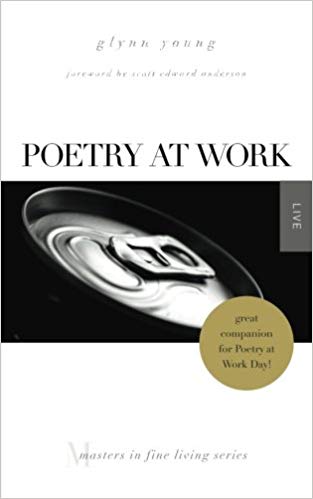
A sequel, A Light Shining, followed in December of 2012. A non-fiction book, Poetry at Work, came in 2013. Exhaustion from three books in three years, while holding down a full-time job, plus the final illness and death of my mother, meant that five years would pass before the third novel, Dancing King, was published. Dancing Prophet was published in 2018. The fifth and final story in the series, Dancing Prince, will be published in about three months.

The reactions speak to more than my Michael Kent stories. The reading of fiction has been declining for the past 30 to 40 years. There are reasons for that, but it’s a trend that impoverishes all of us. Speechwriting taught me that stories connect people to each other. I could spend weeks writing logical arguments and marshaling reams of evidence for a speech, and what the audience invariably remembered was the stories. And the jokes.  If nothing else, that kept me humble.

But we’re constructed for stories. We’re built to be part of something bigger than ourselves, because God made us precisely to be a part of a bigger story. And when we read or hear a good story, something speaks to our hearts, and tells us that God is in control, He knows what He’s doing, and we’re a part of that.

Top photograph by Štefan Štefančík via Unsplash. Used with permission.

Five Things You Can Do After the Writing Storm

February 19, 2020 By Glynn Young Leave a Comment

The manuscript sits with the publisher. A fifth novel, it’s the last of a series. The story arc that began with listening to an airplane music program in 2002 is coming to an end some 18 years later.

You’ve lived with the characters for almost two decades. Sometimes it feels like you know the characters better than your family and friends. You know their history, their quirks, and their strengths and weaknesses. You know their pasts. You know their stories because you’ve written their stories, and you’ve written the ongoing story they’re part of. You know how an agnostic, what today might be called a “none,” became a believer. You know when the hero was ridiculed and disparaged. You know when characters had nothing but faith and courage to go on. 

Now the story is ending. The story you had to tell, that dominated your waking hours and many of your sleeping hours, that story that often drove you crazy, is now finished. The characters who seemed so real to you and your readers are now turning out their lights.

To continue reading, please see my post today at the ACFW blog.

Photograph by Radu Florin via Unsplash. Used with permission.

  • « Go to Previous Page
  • Page 1
  • Interim pages omitted …
  • Page 42
  • Page 43
  • Page 44
  • Page 45
  • Page 46
  • Interim pages omitted …
  • Page 66
  • Go to Next Page »

Footer

GY


Meet the Man

An award-winning speechwriter and communications professional, Glynn Young is the author of six novels and the non-fiction book Poetry at Work.


 01_facebook 02_twitter 26_googleplus 07_GG Talk

Copyright © 2026 Glynn Young · Site by The Willingham Enterprise · Log in | Managed by Fistbump Media LLC