• Skip to primary navigation
  • Skip to main content
  • Skip to footer

Dancing Priest

Author and Novelist Glynn Young

  • HOME
  • BLOG
  • BOOKS
    • Brookhaven
    • Dancing Prince
    • Dancing Prophet
    • Dancing Priest
    • A Light Shining
    • Dancing King
    • Poetry at Work
  • ABOUT
  • CONTACT

Blog

The Poetry of the Boss

August 14, 2020 By Glynn Young 1 Comment

More than 40 years ago, I was handed my college diploma and, two days later, showed up for work at my first official job. I didn’t realize it until much later, but I walked into the doors of my employer that day carrying an assumption. I believed that people in positions of authority – bosses – always knew what they were doing. Why else would they be bosses?

Slightly more than a decade later, my assumption continuing to take body blow after body blow, I was presented incontrovertible evidence that my assumption had been flat-out wrong.

A group of us were sitting in a conference room, waiting for the news to go public that one of the company’s top products had a problem. The first indication would be the stock market. We all knew the news was imminent, and we had prepared for it as if a tsunami was about to strike, which, metaphorically, turned out to be true. The call came, confirming that the news was public, and for a very brief moment we experienced a silence.

We were all a bit shook, but I knew we were prepared. We had thought through all kinds of scenarios. We had planned for every eventuality. The pace of the planning had been exhausting for weeks. But I knew we were ready, as ready as any company could possibly be.

And then the executive to whom we had all looked for leadership, for guiding us through what would become a very difficult time, spoke. “What do we tell our people?” he said. “What do we tell our customers?” His voice was filled with emotion. He was nearly in tears. 

Poetry at Work

We were all a bit stunned. And then my immediate boss, sitting next to me, looked at me and said, “Go!” That was the signal. Without excusing myself, I bolted from the room, ran to the building next door, and found the team of people waiting. Everyone knew exactly what they were to do. And all I did was repeat my own boss’s word. “Go!”

Statements were issued. Communications were sent to customer organizations. Media calls were made and returned. Faxes were sent. (This happened in the days before email and electronic communications.) This would be my life for the next week, interrupted only by the Thanksgiving holiday, and it would continue for the next month.

But in that brief moment at the very beginning, I had seen two extremes of leadership. A senior executive’s worst fears had happened, and he foundered. My own boss, well down the corporate totem pole, had given me a one-word command, a simple word that was like a hyperlink to a massive amount of preparation and a plan to be implemented. 

Later I would come to explain it to myself as a kind of epic poem. It was as if Beowulf didn’t slay Grendl, but instead had fallen, replaced by a younger, less-experienced subordinate who went on to slay the monster. The world as that executive had known it had come to a rather abrupt end, and he didn’t know how to navigate his way, or ours, going forward. We were going to have to invent what that way would be.

My assumption about bosses died that day. A few years later, struggling to lead my own team through the unchartered waters of corporate upheaval, I read The Heart Aroused: Poetry and the Preservation of the Corporate Soul in Americaby poet David Whyte. And I realized that poetry could be more of a guide that all of the management science and self-help books put together.

From Poetry at Work, Chapter 5: It is the soul—that place in the depths of our existence—where storms often rage, and chaos is more the norm than the exception. We don’t just bring our skills, talents, experience, and physical bodies to the workplace; we also bring our souls, as much as systems management tries to deny and fight it.

Top photograph by Ameer Basheer via Unsplash. Used with permission.

This article was prepared for the Literary Life Book of the Month discussion group on Facebook.

The Poetry of the Interview

August 9, 2020 By Glynn Young Leave a Comment

It was the strangest interview I’ve ever participated in – on either side of the table.

A friend had talked me, or conned me, into interviewing for a job with St. Louis Public Schools – the director of communications. 

The school district was in chaos – an outside management firm had been brought in to run the district, schools were being consolidated and closed, services were being outsourced, central office layoffs had emptied more than half of the headquarters building, and protests by parents, students, employees, former employees, teachers and the teachers’ union were daily. School board factions were fighting each other through the news media. The news media was already showing up early each morning at the district’s administration building – knowing there would always be a new crisis to report.

And I wanted to insert myself into that?

I don’t remember all of the arguments my friend used, but they must have been convincing. I sent in my application, thinking that would be the end of it. But then I was called to come in for an interview.

Poetry at Work

On the appointed day, I showed up and was escorted to a conference room at the headquarters building. Eventually, 10 of us filled the room. Every 10 to 15 minutes, one of us was called out for the interview. I was the last to be called.

I was escorted to the district’s board room. Inside, three people were seated – the interim superintendent, who was a principal with the outside consulting firm; one of his consultants; and a district officer who would be the official boss of the communications director.

I was seated at the head of the table. The questions started, and I was immediately relieved to see they were using the behavioral interview method, in which you’re asked questions like “What was your greatest failure?” I was familiar with that kind of interview; it was (and still is) broadly used by corporate America.

The superintendent was seated to my immediate left, and I could see he was increasingly impatient. He was moving around in his chair, drumming his fingers on the table, and looked ready to erupt at any moment. And then he actually did erupt.

Throwing the interview question sheets in the air, he yelled. “Why the heck do you want this job?” Except he didn’t say heck.

That was not on the list of approved behavioral questions. The other two people at the table both closed their eyes, as if they knew this would happen.

“It’s not a case of why I want this job,” I said. “It’s more a case of why you need me in this job.”

And then we talked. He calmed down, and the others gradually joined the conversation. 

When we finished, the superintendent nodded and said I’d hear something within two to three days.

That was bizarre, I thought, as I drove home. I wonder which of the 10 of us will get sucked into that?

As I pulled into my driveway in suburban St. Louis, my wife was waiting. In the driveway.

“You have to go back downtown,” she said. The school district had called, and I was to meet with one of the board members. I drove back, and learned I was to be at a restaurant at 4:30 to meet with a group of teachers for a listening session. And let them meet the district’s new director of communications.

It was poetry at work, all right – the poetry of the totally unexpected. You think you’re reading an ambiguous poem liked “Stopping by Woods on a Snowy Evening” and discover it’s turned into Alan Ginsburg’s “Howl.” The interview process had a form and even a kind of rhythm and meter about it. Until it didn’t. 

What started as formalist poetry had erupted into performance art.

The Job Interview

Tell me a poem, a story
of a favored poet or poem,
one who changed your life,
your mind, opened up
possibilities. Or made you
feel secure as your anchors,
your moorings, were removed.
Speak to me of your need;
describe the expectations
(are they great ones?), explain
how we soar together, toward
the sun, if not the moon,
tell me how I become
part of your larger self.

From Poetry at Work: “Interviews, like poetry, are ultimately about ideas, even though they are ostensibly about people. Behind the people in an interview are ideas about careers, employment, the future, and organizational goals and objectives. Behind a poem is experience, personal and group history, philosophy, how one understands the world, and even hope for a different or changed future.”

This article was prepared for the Literary Life Book of the Month discussion group on Facebook.

Top photograph by Marten Bjork via Unsplash. Used with permission.

The Poet at Work

August 4, 2020 By Glynn Young Leave a Comment

I was working in communications for a Fortune 500 company. A large portion of the day-to-day work was meetings. We had a team-based culture, and to our work, our teams had to meet. 

The teams, and the meetings, proliferated. We had departmental meetings. We had cross-functional meetings. We had committee and subcommittee meetings. We had telephone meetings, video meetings, and online chat session meetings. We had one-on-one meetings. We had staff meetings. We had briefing sessions, strategy discussions, and crisis planning meetings. We often had meetings to plan meeting agendas.

I often wondered if the curse placed upon Adam and his work for eating of the Tree of Knowledge possibly included meetings.

One day, sitting in yet another meeting, I heard what sounded like repetition. People around the table were having a discussion, and I realized I had heard the same discussion before, with the same arguments, the same supporting evidence, the same objections. I kept hearing the discussion as a refrain, or a chorus for a song or hymn. 

Poetry at Work

Just like that, I walked into the poetry of the workplace. I didn’t even know poetry existed in the workplace, and yet there it was. How had I not seen this before, me, a speechwriter who often read poetry while writing a speech? That question surprised me as well, because it was clear that I had been unknowingly or unwittingly employing poetry to do my work. It wasn’t a work tool; it was the actual music that made the workplace work.

Another way to say it is, the workplace has a literary life. 

I was in my 30s before I discovered the poetry in work, and in my 50s before I understood it. Others saw the poet in me long before I did; perhaps it was my habit of walking around, soundlessly mouthing words, phrases, sentences, and paragraphs, as I was writing speeches. Some executives did management by walking around; I did speechwriting by walking around. More than once I was stopped and asked if I was feeling okay.

Poets at work always tend to be oddities. They’re introverts in a business culture that worships teamwork. They point out the things that everyone sees but no one else will say. They can often be politically incorrect. They see the flaw, or flaws, in the grand project the entire organization has embraced as its reason for existence (at least the one for this week). When feeling charitable, colleagues think of poets as conscientious objectors. It’s better than the terrible and career-suffocating judgment of “not a team player.”

But the poets at work are also the ones who articulate the higher aspirations we have buried within us, who speak to the everyday but lift us to the heavens. They speak to the nobility of work, why it’s important, and why it is good. The workplace becomes dreary and gray without them.

Have you met the poet at work? He or she is there, even if they’re not particularly obvious; not all of them wander around mouthing words to themselves. They are usually the people who make you realize that what you do is worthwhile and that you yourself have intrinsic value because you were made that way.

It’s right there on the table,
a piece of skunky roadkill,
and we go to great lengths
not to talk about it,
not to acknowledge it,
to act in spite of it,
to plan and decide,
pretending it’s not there.
But it is, isn’t it, safely
ignored until the poet
wanders in, mumbling,
and spots it.

From Poetry at Work: “The poetry of William Carlos Williams, for example, cannot really be separated from his work as a physician. I suspect that his work as a physician cannot be separated from his poetry, either. Both are faces of the same person, a whole person—a man who wrote poetry with a doctor’s eye and practiced medicine with the compassion of a poet.”

This article was prepared for the Literary Life group on Facebook.

Top photograph by Matthew LeJune via Unsplash. Used with permission.

Bill Grandi Reviews “Dancing Prince”

July 29, 2020 By Glynn Young Leave a Comment

Pastor Bill Grandi has published a review of Dancing Prince at his blog, Cycleguy’s Spin. 

“What I want to say deals more with my personal emotions,” he writes. “I found myself twisting and turning with each turn of the plot. Unexpected twists. Unprepared-for turns. I simply had trouble putting the book down. If it hadn’t been for Glynn I might have gotten more stuff done at home. I might have decided to cut the grass instead of saying, “It’s too hot to do much of anything.” And doggone it if he didn’t make it hard to put the book down and go to bed!”

You can read the entire review at Cycleguy’s Spin. 

Dancing Priest: What You Learn at a Group Book Discussion

July 28, 2020 By Glynn Young Leave a Comment

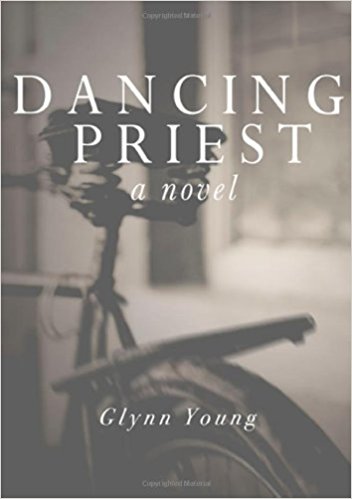
In February, a woman at church asked me if I would be interested in talking with her book discussion club about Dancing Priest. She had read it, and the three published after it, and said she had recommended it to the club. The question became, how fast could I say yes?

Then came coronavirus, and everything went into hibernation. But Dancing Priest hadn’t been forgotten, and once our county emerged from lockdown (or sort of emerged), the discussion was back on. Last week, I sat for two hours with the club’s members, about eight or nine people in all, and talked about Dancing Priest, its successor novels in the series, and the new and final novel in the series, Dancing Prince. 

Virus note: Yes, we wore masks and sat in a socially-distanced-approved manner.

The members are people who love to read. They’ve been meeting for several years and have become good friends. They take their books seriously, and they read a broad range of fiction and non-fiction. (Their next book is Team of Rivals: The Political Genius of Abraham Lincoln by Doris Kearns Goodwin.) Two of the people in the group had read all five of the Dancing Priest novels. Two had read the first two, Dancing Priest and In A Light Shining. The rest had read only the first one.

Any author loves to talk about his or her books. The best part of a discussion like this one is to hear directly from readers, particularly readers who love books. They ask questions, they make observations, and they offer deep insights and comments. They take what you’ve written very seriously. 

Here are a few of the questions and comments.

Where did the idea of Michael Kent come from? A song, “Luna Rossa” by Mario Frangoulis. I heard it on an airplane flight to San Francisco, and the song evoked the image in my mind of a priest dancing on a beach (it’s an older song, popular in the 1950s, sung in Italian; I have no idea what it’s actually about). Music infuses all five of the books. The first two were written while I listened rather incessantly to two Frangoulis CDs, “Sometimes I Dream” and “Follow Your Heart.” The last three owe a debt to two instrumental albums by Michael W. Smith, “Freedom,” and “Glory.”

How many times have you been to Edinburgh? Since a good part of Dancing Priest and the others have a significant Edinburgh component, it’s a good question. The answer is – I have never been to Scotland or its capital city. But I have spent so much time on the internet doing research, and especially visual research, and I feel live a virtual resident. The home where Michael is raised outside Edinburgh is based on a real house, An Calla, just transported from an island on the western side of Scotland to the eastern side of the country. I used real buildings at the University of Edinburgh, real coffeeshops, and real theater venues. 

In the last three novels, the scenes in London were all based on first-person visits – my own. During trips in 2012, 2013, 2014, 2015, and 2017 to London and England, I took a ton of photographs. I stood at the front of Southwark Cathedral and imagined what it would be like to preach a sermon there. I’ve done the tour at Buckingham Palace twice. I’ve stayed at a hotel on Buckingham Gate. I know the bus lines and the tube lines, and how to get from Hyde Park to Kings Cross Station. We had considered going to Edinburgh in 2020, but the virus disposed of that idea. Perhaps next year.

Who was your intended reading audience for Dancing Priest? My original idea was to write a romance that men could read. Yes, men. And, for the first two books, readers were about evenly divided between men and women. The reality is, though, that it’s mostly women who read fiction, including both Christian and general fiction. Interestingly, most of the emails and social media messages about the books have come from men. 

Have you thought about turning Dancing Priest into a movie script? Yes, actually, I have, but I have zero experience in scriptwriting. In fact, it was the publisher who first brought the subject up, back in 2011. He even sent the book to a film production friend in California, who read it and said, “It’s a novel. I thought you were sending me a script.” The question comes from how visual the book seems to be. Even when I reread it, it seems like I’m watching a movie. But that’s how the book was born – in my imagination. I wrote the manuscript in my head for four years before the first landed on the computer screen, and in that sense, it was a visual story. This has been noted by some of the very first readers almost a decade ago. 

How Sarah Hughes comes to faith is exactly how it happens for a lot of people. In Dancing Priest, Sarah and Michael have a major conflict over faith; it’s the central conflict of the story. When she returns to Los Angeles, her experience at UCLA is lifted almost exactly from my own experience at LSU. For the book club members, this deeply resonated; some have had similar experiences or have family members with similar experiences. One called it “completely realistic.” 

Photograph by You X Ventures via Unsplash. Used with permission.

Dancing Prince: The Exhibition at the Tate Modern

July 21, 2020 By Glynn Young 1 Comment

An exhibition at the Tate Modern plays a critical role in the story of Dancing Prince. 

Readers first met Jason Kent-Hughes Dancing Priest as Jason Bannon. Then 16, he was one of the “warehouse children” living near St. Anselm’s Church in San Francisco. He’s drawn to Michael Kent’s outreach program, a coffeehouse with live music. In A Light Shining, Jason is taken in by Michael and Sarah Kent-Hughes and eventually adopted. Almost accidentally, Michael and Sarah discover the boy has a gift for painting. 

By the time of Dancing Prince, Jason is in his early 30s, married and with two sons of his own. He’s an assistant curator at the Tate Modern. As Sarah recognizes in the story, their San Francisco street child has become an artist with a gift for art administration. As part of a regular staff activity, he gives a talk on the two paintings by Sarah owned by the museum. The interest is so great that the museum has to move the venue from a lecture room to Power Hall, the large interior space that helps define the Tate Modern’s architecture (see the top photograph). 

The interest is so intense, in fact, that the museum asks Jason to curate an exhibition of Sarah’s paintings for 18 months out. It’s an ambitious timetable; Jason not only has to find the paintings and their owners and negotiate contracts to borrow them, he also has to plan the exhibition itself, arrange for an exhibition catalog, and arrange for corporate sponsors. And then there the negotiations with three other museums which will host the exhibition after it closes at the Tate Modern. Eighteen months is an almost impossible timetable, but Jason somehow pulls it off.

I first visited the Tate Modern in 2012, during a vacation trip to England. Our hotel was on the South Bank, near Westminster Bridge, and I discovered I could walk to the museum by taking a more-or-less straight-line route through back streets. The alternative was to follow the south embankment along the Thames, past the London Eye, the Southbank Centre, the National Theatre, and eventually to the Tate, next door to the Globe Theatre. Because the of the curve of the river, the back-street route was much shorter, and took me through a neighborhood called The Cut, the Old Vic Theatre, the New Vic Theatre, various and sundry business areas, and then the rear of the museum property (you still have to enter from the front entrance on the river). 

The museum is something of an architectural wonder. A one-time power generation station, the structure has an interesting history. Closed as a power station, it was renovated and reopened as the Tate Modern in 2000. It is the major repository for the modern and contemporary art works in the Tate’s collection. 

In 2012, I visited three times; my wife likes to sleep in and I kept getting drawn back to the building and its collection. It also provided some great walking exercise. The exhibition that was on when I visited was “Edvard Munch and the Modern Eye,” and it was excellent. In 2015, I also viewed the Agnes Martin exhibition, which I liked, but it did inspire a comment about wallpaper by Jim Kent-Hughes in Dancing Prince. The museum expanded with a large, adjacent building, and I was able to see it in 2017. 

In the novel, dissatisfied with the rather perfunctory articles written by the experts, Jason eventually writes the catalog himself, an almost first-person account of his own knowledge of and experience with his adopted mother’s artwork. The exhibition also leads to the discovery of two unknown paintings by Sarah, a critical development in the relationship between Michael Kent-Hughes and his youngest child Thomas, and a fleeting first meeting between Michael and Mary Penniman, who assumes a large role later in the book.

Top photograph by Dil via Unsplash. Photograph of Tate Modern expansion by Jay Mullings also via Unsplash, Both used with permission.

  • « Go to Previous Page
  • Page 1
  • Interim pages omitted …
  • Page 39
  • Page 40
  • Page 41
  • Page 42
  • Page 43
  • Interim pages omitted …
  • Page 66
  • Go to Next Page »

Footer

GY


Meet the Man

An award-winning speechwriter and communications professional, Glynn Young is the author of six novels and the non-fiction book Poetry at Work.


 01_facebook 02_twitter 26_googleplus 07_GG Talk

Copyright © 2026 Glynn Young · Site by The Willingham Enterprise · Log in | Managed by Fistbump Media LLC