• Skip to primary navigation
  • Skip to main content
  • Skip to footer

Dancing Priest

Author and Novelist Glynn Young

  • HOME
  • BLOG
  • BOOKS
    • Brookhaven
    • Dancing Prince
    • Dancing Prophet
    • Dancing Priest
    • A Light Shining
    • Dancing King
    • Poetry at Work
  • ABOUT
  • CONTACT

Blog

“The Collected Breece D’J Pancake”

May 28, 2025 By Glynn Young Leave a Comment

Up to a point, the similarities between John Kennedy Toole and Breece D’J Pancake are uncanny.

Toole (1937-1969) wrote two novels. The first was The Neon Bible, which was published a decade after the second novel, A Confederacy of Dunces. Both received repeated rejections from publishers. Toole would eventually commit suicide in 1969. His mother, Thelma, was determined to see A Confederacy of Dunces published, and she pestered publishers and writers for years, finally wearing down Walker Percy who read it and was blown away. It took Percy three years to find a publisher, and it was LSU Press. A Confederacy of Dunces was a bestseller and won the Pulitzer Prize for Fiction. 

Pancake (an unusual but real last name) wrote 12 short stories and a few fragments of others. Born in 1952 in West Virginia, he managed to graduate from Marshall University. and taught at two military academies. He enrolled in the creative program at the University of Virginia, where he sensed a “class” consciousness between those who held only a B.A. degree and those who had more advanced degrees. But Pancake was the one selling stories to The Atlantic, which made a typographic error when they printed his stories, changing his middle initials “D.J.” to D’J; he kept it. 

He killed himself in 1974 at age 26. His 12 stories represented his entire literary output, but his mother Helen was determined to see them published in book form, which they were in 1983. In 2020, the Library of America republished the 12 stories, along with fragments of other stories and his letters as The Collected Breece D’J Pancake. The introduction is by novelist and short story writer Jayne Anne Phillips, who would go on to win the 2024 Pulitzer Prize for Fiction for Night Watch. The collection also includes the 1983 introduction by James Alan McPherson, who was a director of the creative writing program at Virginia. 

The stories are absolute gems, and even the fragments are excellent. For all of the stories, Pancake drew upon his knowledge of and upbringing in West Virginia. These are the stories of the people left behind America’s growth and prosperity. A farmer trying to keep a dying farm alive. A coal miner who somehow still has work, drinks, and shoots pool. A man who encounters an underage girl working as a prostitute. The death of two teenagers that’s meant to look accidental. A snowplow driver who gives a lift to a hitchhiker. Men who fight for money while onlookers bet. A man on parole out for revenge. And more.

Breece D’J Pancake

The stories aren’t minimalist, which was a quite popular writing movement in the 1970s and early 1980s), but they are written sparingly, with no word superfluous or wasted. Pancake had an ear for authentic conversation; you know you are reading words that sounded exactly like people of the time and place spoke. 

Both Toole and Pancake died way too young. Both left an impressive if limited literary estate. Both were so good one has to wonder what else they might have written had they lived. But both left us with something important and valuable. And both are well worth reading.

Related:

“Time and Again” – short story by Breece D’J Pancake at The Short Story Project.

Top photograph: New River Gorge National Park, West Virginia, by Ryan Arnst via Unsplash. Used with permission.

“The Southern Tradition at Bay” by Richard Weaver

May 21, 2025 By Glynn Young 2 Comments

It’s something of an obvious truism to say that “winners write history.” That’s my starting point for considering The Southern Tradition at Bay: A History of Postbellum Thought by Richard Weaver.

First published in 1968, the work was republished in 1989, and then again in the past year. It is a thoughtful examination, or re-examination, of the mind of the South after the Civil War and how Southerners interpreted their defeat. Weaver isn’t about defending the “Lost Cause” as much as is he focused on what was in the mind of the South before the war, what was driving those thoughts, how it developed during the war and after.

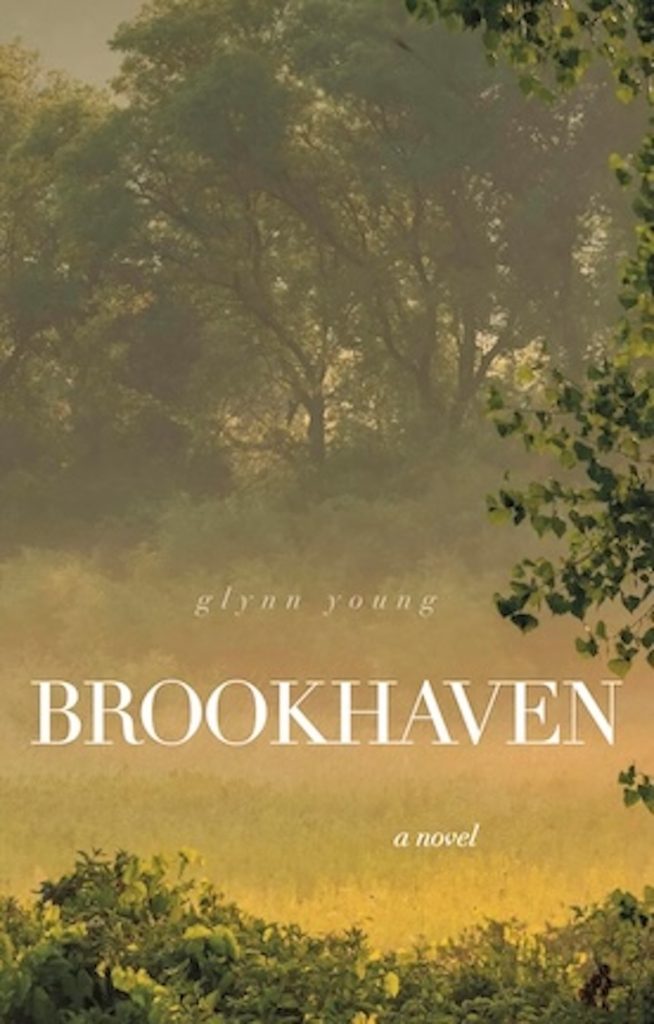
If you read the vast majority of histories and commentaries on the Civil War and its causes (and I read more than my fair share during the research for my novel Brookhaven), the vast majority will tell you that the cause, THE cause, was slavery. That determination, however, ignores considerable evidence. Even most northerners believed that the war was about preserving the Union, not to eradicate slavery. Slavery certainly moved more into the driver’s seat with the 1863 Emancipation Proclamation.

Henry Grady, who coined “The New South”

Weaver takes a different approach. He spent considerable time and effort examining memoirs, letters, journals, and other “first-hand” materials and concluded that what drove secession and war for the South, and in reverse for the North, was the clash of what was essentially a feudal society motivated by a romantic idealism and the egalitarian, more mechanized ideas born during the French Revolution and eventually finding their way into industrialization. Notions of chivalry were no match for the industrial juggernaut the Northern states were becoming. 

These ideas are not merely historical; they still are playing themselves out in culture, politics, and even religion. Consider the writings of Wendell Berry about localism, community, and agriculture, and the research writer Paul Kingsnorth has been doing on what he calls “the machine.” We’re still grappling with many of the same ideas that Weaver saw as bringing on the Civil War and what followed. After the war, Southerners, he says, were outraged at being called traitors; they saw the North as having betrayed the constitution and its principles. This belief seasoned their defenses, eventually leading to the “Lost Cause” idea. 

He considers the background or heritage of the war, what the apologists said, what both Southern and Northern soldiers themselves said in letters and memoirs, the fiction that came from the war, what notable figures like Henry Grady (the Atlanta publisher who coined the phrase “the New South”) said and defended, and the writings of the critics of the Southern feudal tradition. 

Rochard Weaver

His conclusion: “The South possesses an inheritance which it has imperfectly understood and little used. It is in the curious position of having been right without realizing the grounds of its rightness. I am conscious that this reverses the common judgment; but it may yet appear that the North, by its ready embrace of science and rationalism, impoverished itself, and that the South by clinging more or less unashamedly to the primitive way of life prepared itself for the longer run.”

Weaver (1910-1963) taught English at the University of Chicago, yet he was mostly known for his work on intellectual history, rhetoric, and politics. A native of North Carolina, he received his A.B. degree in English from the University of Kentucky and his M.A. degree from Vanderbilt University.  Before the University of Chicago, he taught at Auburn and Texas A&M universities and then returned to school to earn a Ph.D. degree from Louisiana State University. He was influenced by the so-called Agrarians, which included Cleanth Brooks, Robert Penn Warren, and John Crowe Ransom. 

His thesis was titled “The Confederate South, 1865-1910: A Study in the Survival of a Mind and a Culture.” It would eventually be published as this book, The Southern Tradition at Bay. Throughout his life, he was strongly associated with political and social conservatives. Having reading the work, it seems that Weaver thoughtfully, quietly, and comprehensively made his case.

The Stamp of Generosity

May 12, 2025 By Glynn Young Leave a Comment

The spring issue of Cultivating Oaks Press is online, and I have a short story, entitled “The Stamp of Generosity,” included with all the other articles that explore the topic of generosity. My story is based on an event from my own experience, when I was about 12 or 13 years old. A stamp store really did exist in that location, but it was known under another name. 

You can read my story here.

You can access the entire issue here.

Photograph by Krista Bennett via Unsplash. Used with permission.

Research Doesn’t Stop with Publication

May 7, 2025 By Glynn Young Leave a Comment

It was a year ago that the manuscript for my historical novel was attached to an email and sent to the publisher who requested it. I felt an incredible sense of relief. The thing was done. I could take a break from literally years of reading and research about the Civil War. Nine years of reading and research. 

I had started this even before I’d thought about writing a historical novel. I started reading about the Civil War because I was interested in it. It was only when I stumbled across an event called Grierson’s Raid, a Union cavalry raid in 1863 that the idea for a novel arose. The raid began at the border between Mississippi and Tennessee, swept down through the state, and eventually ended at Baton Rouge in Louisiana. It was designed as a diversion for Ulysses S Grant to quietly move his Union army across the Mississippi and attack Vicksburg from the east.

My ancestors had experienced that raid. They lived in the Brookhaven, Mississippi, area, one of sites that Grierson’s raiders had visited.

I researched everything I could about the raid and the broader war. Once I knew I would be writing a novel, my research intensified. By the time I sent the email to the publisher, I was close to exhausted, at least mentally.

To continue reading, please see my post today at the ACFW Blog.

The Biography of a Civil War Regiment

April 30, 2025 By Glynn Young 1 Comment

In my historical novel Brookhaven, the elderly Sam McClure recalls his experience with the Iron Brigade in the Civil War. It was of short duration, only about three weeks, but he attached himself to the brigade’s soldiers after the Battle of Gettysburg. He was following his orders; he was all of 13 years old, but he was working as a spy for a Confederate group called Colby’s Rangers.

Sam admits he never really learned anything of importance; what he did was to run errands and keep the soldiers entertained with recitations of poetry by Henry Wadsworth Longfellow. The brigade suffered a high casualty rate during the war; it was known for its fearlessness. Sam meets up with a bare handful of survivors at the Gettysburg Reunion of 1913, but he never reveals his identity. He listens as the veterans eventually discuss “the boy who recited Mr. Longfellow’s poems.” 

He tells his listeners that he’s always felt bad for misleading the men; the reporter Elizabeth Putnam gives him another insight, that he provided a respite to the men from the horrors of war. Her words move Sam to such an extent that he spends time alone in the woods.

Historian James Marten has written a somewhat unusual history of a key part of the Iron Brigade. The Sixth Wisconsin and the Long Civil War: The Biography of a Regiment is not an history of all of the battles the regiment fought in. The battles are included, of course, because they played such an important role in the lives of regiment’s men. But Marten uses the word “biography” very deliberately; he’s not telling the story of the regiment’s history so much as he’s telling the story of men who comprised the regiment. As he writes, the book is a story of “how men made war and what the war made of those men.”

Marten’s subject: the 2,000 men who served in the regiment at one point or another. The men wore distinctive black hats; in fact, they because known as the “Black Hat Brigade” as well as the “Iron Brigade” for their seemingly utter fearlessness. And the regiment was changing fairly constantly; the often horrendous losses suffered required a constant infusion of recruits. And his study goes well beyond the war years of 1861-1865, because while the fighting may have stopped, the impact went on for decades. One could argue that we still feel the impact of the American Civil War.

He addresses four areas: the men’s military history as well as their lives as veterans; what they survived as veterans; how the generation of Civil War men “invented the very idea of war,” and the kind of “constructed community” that the Sixth Wisconsin became. It’s a fascinating way to tell a well-known story.

James Marten

Marten in a professor emeritus of history at Marquette University. His academic work has focused in two areas: the Civil War and the histories of children and youth. His more than 20 books includes The Children’s Civil War, Sing Not War: The Lives of Union and Confederate Veterans in Gilded Age America, America’s Corporal: James Tanner in War and Peace, and Buying and Selling Civil War Memory in Gilded Age America. He is a past president f the Society of Civil War Historians and the Society for the History of Children and Youth. 

The Sixth Wisconsin and the Long Civil War is an extraordinarily well-research account of a famous Civil War regiment, not only through the war years but in the long decades that followed. And it explains why war isn’t only what happens on the battlefield.

Top photograph: Men of the Sixth Wisconsin in their famous black hats.

He’s Got Me Rereading My Own Books

April 27, 2025 By Glynn Young Leave a Comment

Pastor Bill Grandi has three posts last week on his rereading of my Dancing Priest series. On Tuesday, Bill discussed the difficulty of reading the fourth book in the series, Dancing Prophet, because of what it was about. It was a difficult book to write, and it became somewhat prophetic, including when the Archbishop of Canterbury resigned for helping to cover up a scandal in the Church of England.

On Wednesday, Bill discussed a conversation between Michael and Sarah Kent-Hughes in Dancing Prophet, in which Sarah observes how hard it is to be one of the workers sent in “to clean out the pipes.” And on Thursday, Bill writes about a scene in the fifth and last in the series, Dancing Prince, in which Michael’s two sons, Henry and Thomas (or Hank and Tommy, as they’re known by the other characters), are discussing “calling,” or being called by God as described in I Samuel 16:1-13, the rejection of Saul and the anointing of David.  Coincidentally, the pastor at my church used that passage as the text for his sermon this morning. 

Bill’s post led me to start rereading my own books. I’ve already finished the first two, Dancing Priest and A Light Shining. (Amazon has the Dancing Priest pages messed up; the Kindle version is here; the cheaper paperback price is here, but it’s still more than it’s supposed to be.)

Originally, I had planned on doing only those two books. They were written as one (huge) manuscript of about 150,000 words. But the publisher and I had a conversation about what might happened after Michael and Sarah returned to Britain, and it was in that conversation that I described what could be the plot lines for several more books, including what would become Dancing Prophet and its difficult subject. Two weeks later, the publisher sent me a short news clip; the difficult subject had become a horrific reality. That reality continues 13 years later, with the resignation last year of the Archbishop of Canterbury.

After rereading A Light Shining, it is my prayer that its subject – religious violence that nearly tears Britain apart – never becomes reality. 

  • « Go to Previous Page
  • Page 1
  • Interim pages omitted …
  • Page 8
  • Page 9
  • Page 10
  • Page 11
  • Page 12
  • Interim pages omitted …
  • Page 67
  • Go to Next Page »

Footer

GY


Meet the Man

An award-winning speechwriter and communications professional, Glynn Young is the author of six novels and the non-fiction book Poetry at Work.


 01_facebook 02_twitter 26_googleplus 07_GG Talk

Copyright © 2026 Glynn Young · Site by The Willingham Enterprise · Log in | Managed by Fistbump Media LLC