• Skip to primary navigation
  • Skip to main content
  • Skip to footer

Dancing Priest

Author and Novelist Glynn Young

  • HOME
  • BLOG
  • BOOKS
    • Brookhaven
    • Dancing Prince
    • Dancing Prophet
    • Dancing Priest
    • A Light Shining
    • Dancing King
    • Poetry at Work
  • ABOUT
  • CONTACT

Glynn Young

A Speechwriter for a King: A Story

August 28, 2018 By Glynn Young 1 Comment

Dancing Prophet Speechwriter

Jonathan Crowe stood on the sidewalk along Buckingham Palace Road, staring at the security entrance for the palace. He glanced at his watch. He was 10 minutes early for his interview with Jay Lanham, head of communications for Buckingham Palace who, at only 30, was already becoming legendary in UK public relations and media circles. Lanham was the communications man for King Michael and had successfully fended off a series of almost brutal public attacks on the king.

Lanham, and the king, were looking for a speechwriter.

Jonathan was 26 and a reporter at The Guardian. He was five foot ten, with closely cropped hair, a slight beard, and a medium-dark complexion. The only person he had ever written a speech for was himself, and that was for presentations he had made at university. But Lanham had seen Jonathan’s newspaper stories, and had read dozens of them, in fact. During the initial phone interview, Jonathan had been impressed with just how well Lanham had read his stories. Lanham also knew a considerable amount of Jonathan’s background, including his family’s Jamaican heritage, where his parents worked, that he still lived with his parents (a reporter’s salary alone wasn’t sufficient for almost anything in London), and that he attended St. Paul’s Church in Brixton.

Lanham had both reassured him and slightly alarmed him when he said that palace security had already done background checks.

Buckingham Palace Dancing Prophet
Buckingham Palace

“It’s standard procedure, Jonathan,” Lanham had said on the phone. “But it’s also more than that. This speechwriting job reports to me, but you’re going to have ongoing access to the king. He takes his words seriously, and he doesn’t want bureaucratic layers between him and his speechwriter. In fact, he’s made that a condition of the job. We have to make sure that all of his staff pass security checks.”

Jonathan had already had a videoconference interview with Josh Gittings, the king’s chief of staff. Gittings was also legendary, but it was of a different kind than Lanham. He’d served for years as the prime minister’s hatchet man and chief political operative, until he was dispatched to San Francisco by the PM to help Michael Kent-Hughes and his family during The Violence. And Gittings seemed to have had a fundamental change of heart – some called it a religious conversion – while in California.

Jonathan shuddered at his memories of that weekend the previous October. The royal family had been assassinated, and what amounted to open warfare between Muslim extremists and British nationalists had turned London and the country into a war zone. Trying to cover the story, Jonathan had been chased and shot at by a Muslim group and almost caught by a skinhead group looking to attack anyone they thought might be a Muslim.

Somehow, palace security had learned about that as well.

He had dressed carefully for the interview, keeping in mind that he would eventually interview with the king as well. He was wearing a blue suit, white shirt with a muted red tie, and tan shoes (he had polished them just that morning.) He hadn’t said anything to his parents or his sister, or anyone else, about the interview. At breakfast, his mother had noticed he looked a bit spiffier than usual but kept her words to how nice he looked. She hadn’t asked any questions, but he could see she suspected more was afoot than just another day at The Guardian.

He’d tell them if things worked out. He didn’t expect to be offered the job. He believed he was likely the diversity candidate. Michael might be new to the monarchy and being a royal, but this was still old-boys network Britain. Still, he knew that they’d gone to significant lengths to learn about his background.

It was time. He walked inside the security station, gave his name, and presented his identification. The woman security officer checked a list, nodded, and smiled. A second officer assisted him in providing a basket for his watch, wallet, and whatever was in his pockets. His portfolio was sent through x-ray, as was Jonathan himself. Everything went smoothly.

The security officer walked him through a hallway. He expected to be escorted to Lanham’s office, but Lanham suddenly appeared through a doorway, smiling and holding his hand out to shake Jonathan’s.

“It’s good to meet you, Jonathan,” Lanham said. “And call me Jay. My office is close; we’re actually in the administrative wing now. Do you want a coffee or tea, or water?”

“Black coffee would be fine,” Jonathan said.

They entered an area containing a suite of several offices. Lanham introduced him to several communication staffers in the area and then walked to the small kitchen included in the suite. He poured the coffee for Jonathan and fixed a tea for himself.

St. Matthew's Church Brixton Dancing Prophet
St. Matthew’s Church Brixton

Lanham’s office was spacious and comfortable but not opulent. One wall included several screens of television news channels, newsfeeds for twitter, Facebook, and Instagram, and a scrolling list of news stories from Reuter’s, Bloomberg, the Associated Press, and several other wire services. One screen contained a scrolling list of stories from all the major UK newspapers, including The Guardian.

“How is your time today?” Lanham said.

“It’s fine,” Jonathan said. “I’d holiday time and some comp time stored up, so I took the day off.”

“No other appointments?” Lanham said.

Jonathan shook his head. “No. “

“Well, that’s great, then,” Lanham said. “I hope you can stay for lunch. His Majesty asked me to check to see if you might be available.”

Jonathan felt his heart pound. “That should be fine.”

“It will be just the two of you,” Lanham said. “I have a luncheon and the king usually likes to have some time alone with people he’s interviewing.” He smiled. “Don’t let this throw you. The king likes to move quickly. And he’s fairly certain that we’ve found the right candidate.” Lanham sipped his tea. “Based on our background and reference checks, and our phone conversations, both Josh Gittings and I have recommended you to the king as the best candidate. Josh and I have interviewed others, but you’re the only candidate to talk with the king. We’re that convinced. I’m that convinced.”

“I’m surprised,” Jonathan said. “I didn’t expect this. I thought my meeting with you today was a step in the process.”

“It is,” Lanham said, “but as far as we’re concerned, it’s close to a final step.”

“Can I ask an impertinent question?” Jonathan said.

Lanham laughed. “Absolutely.”

“Am I here because of my Jamaican heritage?”

Lanham shook his head. “No, you’re not. We’re not asking you to join the staff here at the palace because you’re a black man. Let me explain how we did this.”

Lanham sipped his tea. “We never advertised this position. We put feelers out to people who might know good candidates for speechwriting. A lot of names came back, and we screened them carefully. We put out more feelers and received more names. We narrowed the list to three, and then we went about collecting samples of their writing – articles, blog posts, newspaper stories, speeches, whatever we could find. We then gave each a designated letter, A, B, and C, and we removed any and all personal references. We gave the three sample sets to the king. He saw no resumes or anything else that would identify the writers. This was about as blind a test as we could devise. What he knew was that all three were well qualified; it was my responsibility to make sure of that.

“When he came back to us, it was your writing set he singled out. And what he told me was that all three were technically and professionally excellent, but it was the samples for candidate A he felt the most comfortable with. And more than that, it was candidate A’s writing that demonstrated someone writing from his heart.”

For a moment, Jonathan said nothing. Then he spoke. “You’re doing a terrible job of convincing me not to accept this position.”

Lanham laughed. “To continue. After he picked the samples of candidate A, then we showed him your resume. He read it, and he personally called one of your references.”

“The king called one of my references?” Jonathan said.

Buckingham Palace Terrace
The terrace at the rear of Buckingham Palace

Lanham nodded. “He called your vicar at St. Matthew’s. And he was circumspect. He didn’t say you were being considered for one of the top communications positions at the palace. He asked the vicar what he could tell him about this young man who had come to his attention. I was there when he made the call. And so you know, your vicar said nothing about your race. He talked about your service at the church and two ministries you were involved in, tutoring of at-risk children and the choir. When he’d hung up, the king looked at me and said, “’See, I was right about him writing from his heart.’

“And that, Jonathan, is how you came here today,” Lanham said. He then summarized Jonathan’s starting salary and benefits. “Your office will be next door here to mine. We have normal 9 to 5 working hours, but there are times for various emergencies, crises, and things that suddenly happen. You should expect to see a lot of the king, sometimes with me and sometimes on your own. And I know this is all rather overwhelmingly, so we don’t expect an immediate answer. But you are officially being offered the position of speechwriter to King Michael.”

Lanham stood, and Jonathan followed suit. “It’s time for you to see the king,” he said. “If you have questions, we can talk on the way or you can call me afterward. I’ll be off site when you finish lunch, and a security officer will see you out.”

They walked down a hallway toward the back of the palace.

“The king is currently in the library,” Lanham said, “His office is still be renovated; the construction manager discovered an old broken pipe and some rotted wood, and Mr. Epworth, the master of the House, has been having to jump through hoops to get approval from the landmarks commission to make the repairs. Have you been to the palace before?”

“No, I haven’t,” Jonathan said.

“The library is actually two rooms across from each other, underneath the Music Room. The area gives out on to the terrace, and I believe that’s where the king said he’d be for lunch.”

They turned a corner and continued to the library area, where Lanham stopped.

One of the front gates of Buckingham Palace

He handed Jonathan an envelope. “This is the official offer,” Lanham said. “If you find the terms acceptable and decide to accept, simply sign one copy and return it to me.” He turned and continued walking. Jonathan followed him up a short flight of steps and through the door to the terrace.

It was a brilliant June day. The sky was blue without even a hint of a cloud.

“By the way,” Jonathan said, “I accept the position, assuming the king approves.”

“Good,” said Lanham, smiling. “I’m very pleased. And I think King Michael will be very pleased as well. I’ll let you tell him.”

Jonathan could see a man sitting at a table set for lunch. His back was to them and he was reading something.

“Sir?” said Lanham.

Michael turned and stood up, a huge smile on his face.

“You’re Jonathan,” the king said, extending his hand. “I am so pleased to meet you.”

Jonathan shook the king’s hand and remembered to bow.

Later, Jonathan was again one the sidewalk on Buckingham Palace Road. He stood for a minute next to the gate, out of the way of the pedestrians and the lines waiting to buy tickets for the palace tours, beginning at the end of June.

He knew he had just spent the most remarkable three hours of his young professional life. He and the king of Great Britain had just finished talking and developing a rough scheme for speeches. He would need to give notice at The Guardian today; he would start working at Buckingham Palace in two weeks.

He thought about his vicar, who had said such kind things. He thought about working for one of the top communication operatives in the country. He thought about the man he would be working with and writing speeches for.

And he thought about the looks on his papa’s and mama’s face when he told them about his new job. His father the janitor. His mother the worker at the dry cleaners. He thought about what they had sacrificed for him and his sister. He thought about the position of trust he’d been given, and, there at the fence, he said a prayer of praise and thanksgiving.

This story is about one of the characters in my upcoming novel, Dancing Prophet, to be published this fall.

Top photograph by Ian Baldwin via Unsplash. Used with permission.

What Do You Do in the Calm After the Storm?

August 21, 2018 By Glynn Young Leave a Comment

It’s the calm after the storm.

For months, it’s been days and weeks of intense writing, rewriting, editing, re-editing, adding to, and subtracting from. I thought novel #4 would be a relative slam dunk, since large chunks of it have existed for more than a decade. All I had to do was add a few thousand words and polish it up, and then it would be ready, correct?

Well, no.

What finally emerged as a completed manuscript draft bears little resemblance to the text I started with. The story idea remained the same, but along the way a supplementary narrative was added, characters changed, new conflicts emerged, and the original text was rewritten at least three times. Then it was editing and proofing and fact-checking.

To continue reading, please see my post today at the ACFW blog.

Photograph by Keenan Constance via Unsplash. Used with permission.
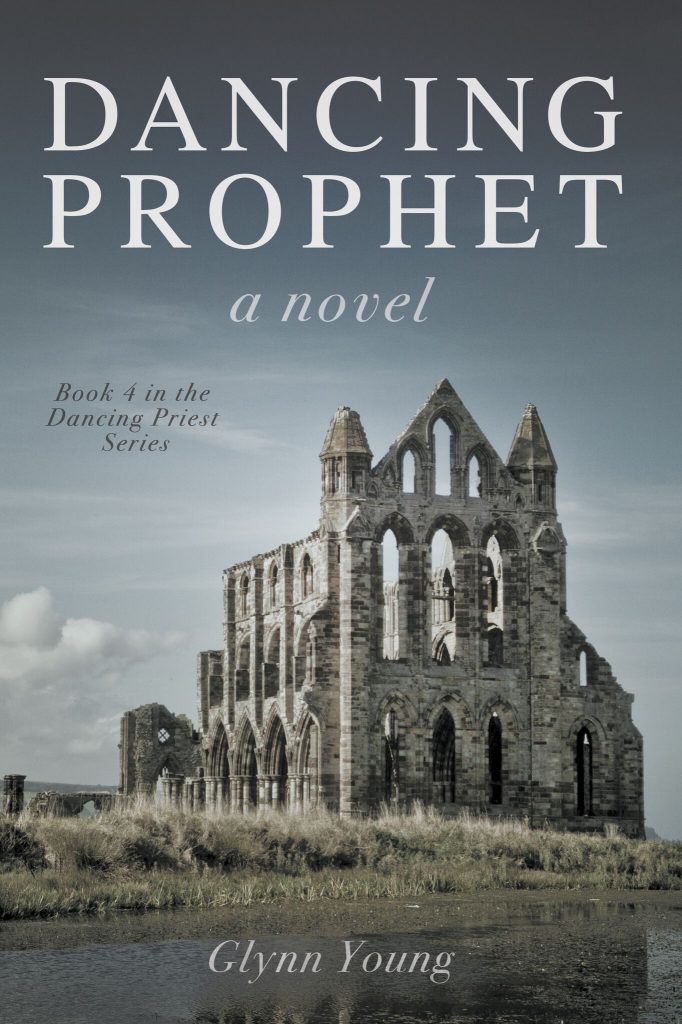
Writing a Fiction Series

August 14, 2018 By Glynn Young Leave a Comment

Writing a fiction series

My introduction to series fiction happened in college. I was checking the sale table at a B. Dalton’s Bookstore and found God is an Englishman by R.F. Delderfield, a novel about the Swann family set in mid-19thcentury England. Not long after, I realized there was a second volume, entitled Theirs Was the Kingdom. And a couple of years later, the third and final volume, Give Us This Day, in the series was published.

I loved those stories. Delderfield had created an entire world built around the coming of the railroads and how one man realized that there was opportunity in the routes not connected by the railroads. He builds a business empire upon that realization. It was (and is) good, old-fashioned storytelling at its best. I still have those three books.

God is an EnglishmanWriting a fiction series seems to have become popular in the 19thcentury. It’s not the same thing as serial publication, which is how Charles Dickens published his novels – a chapter per issue of a periodical. One of the best-known series in the 19thcentury was the Chronicles of Barsetshire by Anthony Trollope, comprised of six related novels. Trollope also write the six-volume Palliser series.

The currently popular Poldark television program on PBS is based on the 12 novels written by Winston Graham, written in two periods, four from 1945 to 1953 and the rest from 1973 to 2002. And a beloved series still being published are the Mitford novels of Jan Karon.

Fiction series are not limited to adults; in anything, they’re even more popular among children. I grew up on the Hardy Boys. Other popular children’s series at the time were Nancy Drew, The Dana Sisters, the Bobbsey Twins, Trixie Belden, and others. Today, my 8-year-old grandson is deep into the Boxcar Children series.

Having written three novels in a series, with the fourth now in editorial production, I can explain why fiction authors tend to write related books. Dancing Priest began its manuscript life as some 250,000 words, almost enough for three novels. (For a word-count comparison, War and Peace by Leo Tolstoy is 587,000 words.) (Tolstoy could get away with that. Few if any novelists could get away with that today.) I ended up splicing it into a novel of 92,000 words, a manuscript of 70,000 words that was eventually expanded to become A Light Shining, a manuscript (a really rough manuscript) of 45,000 that grew to become Dancing King, and some 35,000 words that eventually made their way into the fourth novel in the series, tentatively entitled Dancing Prophet.

Dancing KingWhat happened was this: as I constructed what became the world of Michael and Sarah Kent-Hughes, the construction grew, it expanded over time, it became more elaborate and detailed, and it became too big to be contained in only a single book. What was one rather large manuscript was transformed into four novels.

There are potentially more. I have story ideas and even extended fragments and outlines for additional books. I’m not sure if I will go there, although it’s difficult to resist when you’ve connected with a character who won’t appear for another two or three books. Perhaps what will happen, or what should happen, is that these fragments and outlines will make it into a story collection.

But I know what it is for an author to publish a series. You come to inhabit a fictional world, one of your own creation. It becomes incredibly familiar. You see things in the real world and almost without thinking apply them to your fictional world. You read a newspaper story and translate it to your fictional world. Sometimes you get surprised and discover that something you wrote becomes reality. That’s happened to me at least three times during the writing of the Dancing Priest novels.

Little did I know when I picked up that copy of God is an Englishman.

Top photograph by Jake Hills via Unsplash. Used with permission.

Dancing King Stories: Writing as an Act of Faith

August 6, 2018 By Glynn Young Leave a Comment

Southwark Cathedral

We writers would all love to be Stephen King, James Patterson, J.K. Rowlings, and other successful people who turn everything to gold simply by their touch. For most of us, writing is difficult, frustrating, depressing, discouraging, and lacking any kind of return even remotely like the effort we put into our work. We pour ourselves into what we write, often for a very long time, and once it sees the light of day, the world yawns and moves on to books that are badly written, semi- (or totally) pornographic, or so lacking in anything of value that we wonder why we continue to do what we do.

Writing can be a slog. For most of us, writing is a slog.

A scene inDancing King unintentionally speaks to writers, what we write, our platforms (or lack thereof), and the whole question of “why do we write.” I wasn’t thinking of writers when I wrote it, but I believe it applies to what we writers try to do.

It’s two days before Christmas. Michael Kent-Hughes flies from Scotland, where he’s on holiday with his family, to London. He’s giving the first in a series of sermons on the need to reform the church, and he’s at Southwark Cathedral. It’s an old church, dating back to early Anglo-Saxon times, but it’s a church that has managed to flourish. (Southwark is an overlooked gem for tourists, likely overshadowed by its much larger and better-known brethren like Westminster Abbey and St. Paul’s Cathedral.)

Dancing KingMichael gives the sermon. He has friends and staffers visiting among the 400 people in the congregation – his chief of staff, his communications leader, and his security people. People are taken aback, first by the fact of the king giving the regular Sunday sermon, and second, by what he says and how he says it. Jay Lanham, Michael’s communications man, is narrating what is happening. And he learns that Michael is speaking with an authority that seems to come from outside him. Lanham’s there in his communications capacity; he’s what might be called a “cultural Christian.” He can recall the order of the worship service from his childhood, but he finds himself overwhelmed by the truth he hears in the sermon.

Afterward, Michael treats the staff people in attendance to lunch at a nearby pub. His chief of staff, Josh Gittings, asks him if he has any expectations as to how many people might attend the Bible study the next evening being organized by the church, which Michael had just encouraged the congregation to attend.

“I don’t know, Joshua,” Michael says. “And the number doesn’t matter. God can do wonders with one or two just as easily as 400.”

The response will actually be something a bit more than one or two; Michael’s sermon will spark something of a revival in the diocese. But Michael knows that this is less about what he says and how many may or may not respond, and more about what God puts in people’s hearts. Michael is a vessel; he’s not what pours into and out of the vessel.

That is the “how” and the “why” of what I write. Do I want thousands and tens of thousands to buy my books? Sure. But if that was the goal, I would not be writing the kinds of books I write.

And while the number may matter to a publisher, the number of readers doesn’t, in the end, matter. Wonders can be worked with one or two as with 400, or 10,000. We write to tell a story; what happens to that story is someone else’s business.

Top photograph: Southwark Cathedral, with the office building known as “The Shard” in the background.

The Novel That Wasn’t Meant to be Written

July 30, 2018 By Glynn Young 4 Comments

Dancing Priest

For roughly 14 months, from September 2005 to November 2006, a story idea that had been in my head for four years began to pour out on the computer screen. Once it came, it gushed, some 250,000 words of the roughest sort of rough draft. It would be spliced, diced, rewritten, divided into three parts, added to, and subtracted from, eventually published as Dancing Priest (2011), A Light Shining (2012), and Dancing King (2017), the three novels in the Dancing Priest series.

In November 2006, I stopped, and rested. Two months later, a story from my small suburban town of Kirkwood in metropolitan St. Louis became international headlines. A boy kidnapped in nearby Franklin County had been found by police in Kirkwood. With him was found a boy kidnapped in 2002.

Dancing PriestThe kidnapper was a man named Michael Devlin, a manager at a local pizza parlor. He had kept both boys at his apartment, on the far east side of Kirkwood and across the street from the town of Oakland. The apartment complex was just north of the trailhead for Grant’s Trail, which I had ridden hundreds of times. Which meant I had ridden past that apartment hundreds of times. I likely had seen the older boy, who after a couple of years had been allowed outside to ride his bike.

This was, and is, every parent’s nightmare. Your child is taken, and you don’t know if the child is dead, abused, or raised as someone else’s child.

I didn’t feel personal responsibility. I felt something else: a deep sense of horror at a great evil happening a few yards away from where I regularly rode my bicycle.

I did the only thing I knew to do. My writing rest came to an end.

I didn’t write the story of Michael Devlin. Instead, I poured the horror of that story into fiction. Some 40,000 words later, I felt I could stop. I had dropped any reference to Devlin or even a character like him. I had moved the story to England. I moved the crime within the Church of England, most likely being influenced by all of the revelations from the Catholic Church in the United States. I added seminary connections.

And then I set the story aside. It had done what it needed to do. It was a kind of exorcism of the horror represented by Michael Devlin and what he had done.

A Light ShiningIn 2012, in a conversation with my publisher about writing life after A Light Shining, I mentioned this story. A few days later, he sent me a press story from England. A small pedophile ring had been uncovered within the Church of England. He wanted to know if I had “pre-written history.”

In late 2017, I returned to the story and began to work it over. It grew; new elements and characters were added. The abuse story remained at the center; two additional story lines were added – one about a city government collapse and the other about a mother showing up after eight years. Only when the draft was done in early July did I realize that this had become a story about the collapse of institutional authority – family, church, government. It was exactly the institutions that Michael Kent-Hughes, the hero of Dancing King, had committed himself to during his coronation ceremony.

I’m not sure why I chose to develop the original manuscript into a full-blown novel. But I did. It was a story that was never intended or imagined to be written, but it was, because of the shock of a hometown horror.

The manuscript is now in the hands of the publisher for consideration.

Top photograph by Warren Wong via Unsplash. Used with permission.

Dancing King Stories: Researching a Novel

July 16, 2018 By Glynn Young 2 Comments

I’m looking at a web site called English Historical Fiction Authors. Its audience is authors who write period historical novels. The various posts are written by the authors themselves. So, you can learn about how ice cream was made in the 18thcentury, what pieces of furniture would have been found in an upper-class hoe in the 16thcentury, who the Lord Proprietors of Carolina were in the 17thcentury, the friendship between the British Saxon Osulf and one of Charlemagne’s sons; and similar kinds of really detailed information. If you want your period novel to show authenticity, you need authentic historical details.

I don’t write historical novels. Mine fall into the more contemporary genre; actually, they’re set a few years ahead of our own times. So, I don’t have to be concerned with a lot of historical detail, like what Osulf really thought of his friend Charles a thousand years ago.

But it doesn’t mean I’ve escaped the research yoke. Far from it.

I do two kinds of research for my novels. The first is the reading kind – books, articles, web sites, blogs, even social media. The second is the foot-power kind – research by walking around.

A section of A Light Shining is set in Tuscany and Umbria; I’ve never been but I almost went in 2007, and had read so much and studied so much that I had the map of Florence memorized. For Dancing Priest, I had so many books and travel guides on Edinburgh and the University of Edinburgh that I could have opened a travel library. That’s the reading and study kind of research.

bookshelf Dancing King
The bookshelf above my computer

And then a crucial scene in Dancing King happens in Southwark Cathedral; I’ve been there three times, walked around, bought and read the guidebook, took pictures, and talked with the nice lady in the gift shop. I stood in the pulpit and looked at where people would be sitting in the nave. And that hill in downtown San Francisco where Michael Kent rides his bike in Dancing Priest? I’ve walked up that hill.

Walking-around research is extremely valuable. You see and feel what the streets look like, you peer into windows, you see a barrister’s gown and wig on sale for 550 pounds, you notice how Essex Street slopes toward the Thames River. A pub in London may superficially resemble a pub in St. Louis, but if you sit long enough, you begin to notice the differences.

Both kinds of research are critical, even for a contemporary novel.

On the bookshelf above my computer sit the guidebook to Buckingham Palace; four volumes of Peter Ackroyd’s history of England (the fifth is to be published later this year), a guidebook to London, a book entitled Crown, Orb & Sceptre which will tell you everything you want to know about every coronation in English history, a history of St. Martin-in-the-Fields Church, a booklet on the royal line of succession, a guide to Southwark Cathedral, a brochure about the guards associated with Buckingham Palace, and related books. I turn to them often.

I been to England five times in the last six years, and every trip has been both vacation and research. Whatever place we visit – the British Museum, Canterbury Cathedral, the Museum of London, All Hallow’s by the Tower Church, the Imperial War Museum – I buy the official guidebook, which is always packed with information. I see art exhibitions to enjoy the exhibitions and to imagine what they would be like in a novel. I take photos of favorite paintings.

And I take walks. I’ve walked London’s South Bank countless times, along with Piccadilly, the City, Westminster, Hampstead, Pimlico, Belgravia, Mayfair, the Temple, Lambeth, Covent Garden, Charing Cross Road, the West End, and Spitalfields. I’ve walked Oxford, Cambridge, Salisbury, and Windsor. Every walk is research.

I pay attention to contemporary British artists and writers. I read novelists like Paul Kingsnorth (Beast) and Mark Haddon (The Curious Incident of the Dog in the Night-Time). I read contemporary British plays. Contemporary literary culture provides a take on the pulse of the country and insights you can’t get from non-fiction.

It’s not just the historical or period novels that demand research. Contemporary ones do, too. And I think I’d rather eat ice cream in 21stcentury England than what the Georgians considered ice cream in the 18thcentury.

Top photograph by Gaelle Marcel viaUnsplash. Used with permission.

  • « Go to Previous Page
  • Page 1
  • Interim pages omitted …
  • Page 55
  • Page 56
  • Page 57
  • Page 58
  • Page 59
  • Interim pages omitted …
  • Page 67
  • Go to Next Page »

Footer

GY


Meet the Man

An award-winning speechwriter and communications professional, Glynn Young is the author of six novels and the non-fiction book Poetry at Work.


 01_facebook 02_twitter 26_googleplus 07_GG Talk

Copyright © 2026 Glynn Young · Site by The Willingham Enterprise · Log in | Managed by Fistbump Media LLC