I was on a multi-day business trip to Washington, D.C. I had a free afternoon, so I walked from the hotel to the National Gallery on the Mall. And then, for reason or reasons unknown, I walked across the street to the National Archives. And there it was – the original Declaration of Independence.
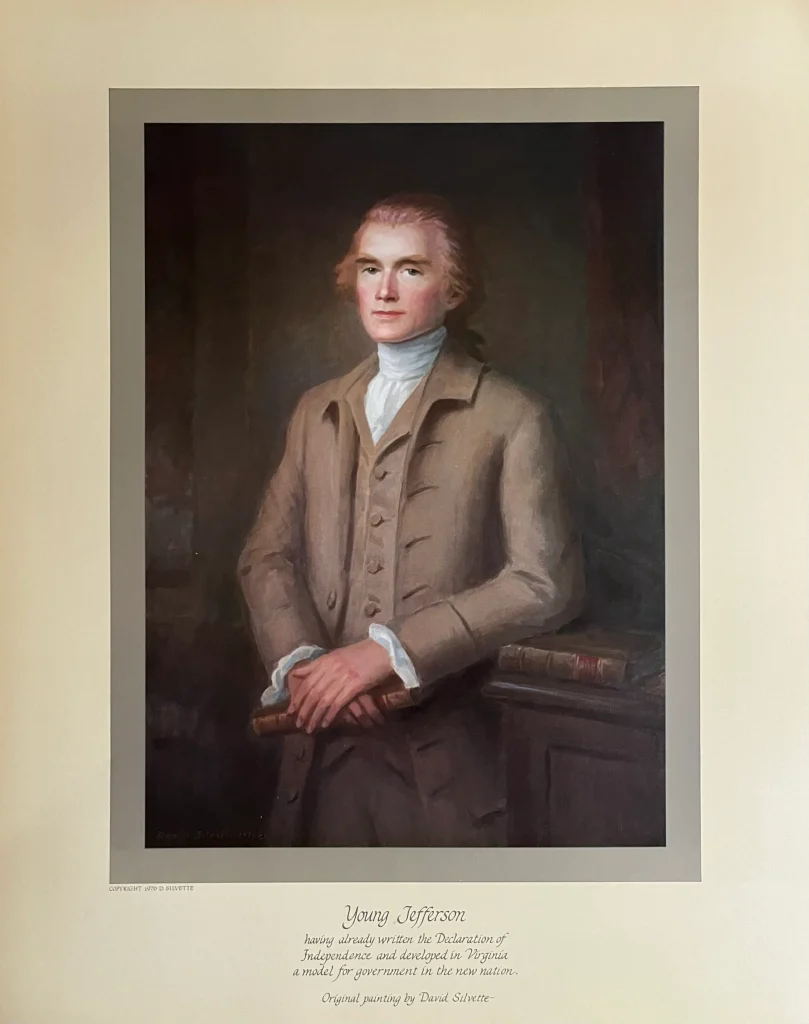
Drafted mostly if not entirely by Thomas Jefferson, the Declaration is to America what the Magna Carta is to England. The statement of beliefs. The citation of grievances against an unjust ruler (also an English king, no less). The signatures.
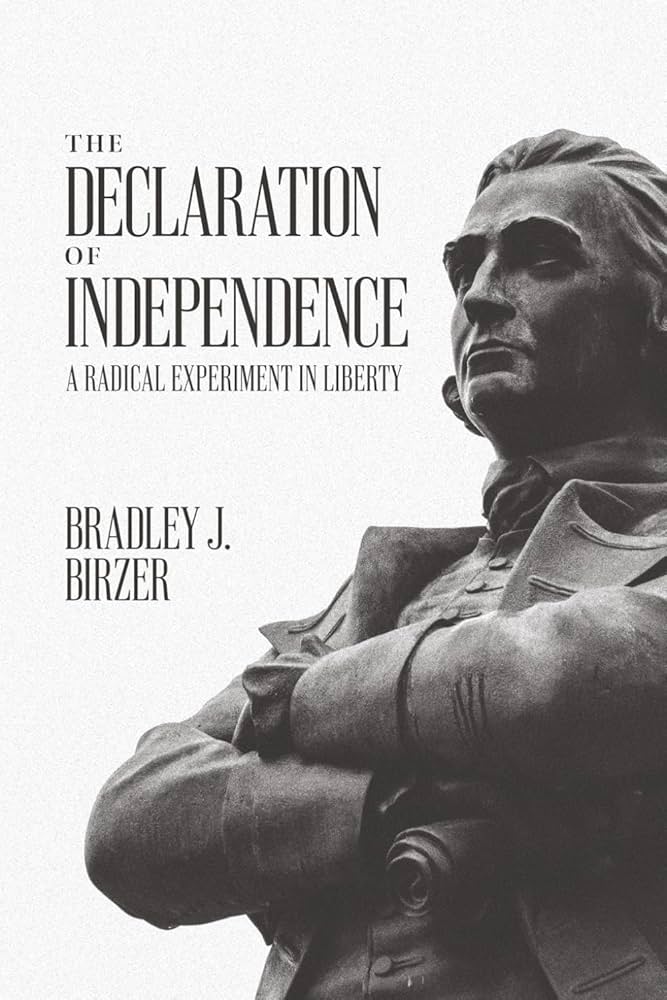
As Bradley Birzer points out in The Declaration of Independence: A Radical Experiment in Liberty, the Declaration is all these things. And it is more. Like the Revolutionary War that was already underway, the Declaration was about ideas. One of the most radical ideas it contained was the rights come not from a king or a government, but naturally from a creator.
How the Declaration came about is a thrilling story, and Birzer tells it accurately and contextually without losing any of the thrill or drama. Straws in the wind began as early as the 1740s, and the British government’s determination to make the colonies pay, or help pay, for the French and Indian War began to accelerate momentum. By the 1770s, whether it was rebellion (as many British defined it) or liberation and freedom, the war of ideas was moving into a real war. And Birzer says that war started when the first colonist was killed at Lexington outside Boston.
Birzer also provides the lesser-known context. The colonies were already beginning the rupture well before the Declaration was signed in July 1776 in Philadelphia during the Second Continental Congress. New Hampshire issued its own declaration, as did other colonies like Virginia. The tide was rising, and the British kept making one mistake after another in not recognizing the reality on the ground.
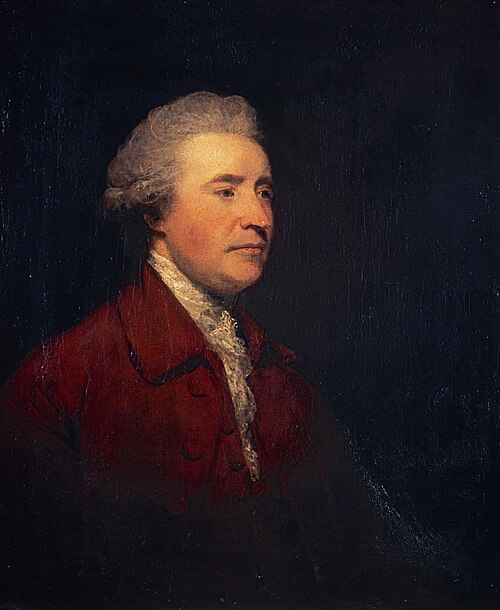
But not all the British. Edmund Burke, for one, championed the rights of the colonies in Parliament. Set against Burke in the war of ideas (if not Parliament) was Samuel Johnson, the author of the great dictionary, who was almost extreme in upholding the position of king and Parliament. Those debates, too, are concisely included by Birzer.

Birzer holds the Russell Amos Kirk Chair in American Studies and is a professor of history at Hillsdale College in Michigan. He received a B.A. degree from the University of Notre Dame and his Ph.D. degree from Indiana University. He serves on the boards of the Free Enterprise Institute and the Center for Cultural Renewal and is a fellow or scholar with the Foundation for Economic Education, Intercollegiate Studies Institute, The McDonnell Center, and the Center for Economic Personalism. His books include In Defense of Andrew Jackson, Russell Kirk: American Conservative, J.R.R. Tolkien’s Sanctifying Myth, Sanctifying the World: The Augustinian Life and Mind of Christopher Dawson, American Cicero: The Life of Charles Caroll, Neal Peart: Cultural (Re)Percussions, and Beyond Tenebrae: Christian Humanism in the Twilight of the West.
The Declaration of Independence is a well-researched, highly readable account of the seminal document in U.S. history. The Declaration is now 250 years old, still projecting its radical ideas about governments, people, and natural rights. It still is one of the most revolutionary documents written by man. And it remains as vital and current as it was when it emerged from Jefferson’s pen in 1776.
Related: