• Skip to primary navigation
  • Skip to main content
  • Skip to footer

Dancing Priest

Author and Novelist Glynn Young

  • HOME
  • BLOG
  • BOOKS
    • Brookhaven
    • Dancing Prince
    • Dancing Prophet
    • Dancing Priest
    • A Light Shining
    • Dancing King
    • Poetry at Work
  • ABOUT
  • CONTACT

research

When Research for Your Historical Novel Changes Your Understanding

March 8, 2023 By Glynn Young Leave a Comment

For more than a year, I’ve been researching / writing/ researching / writing a historical novel set during the American Civil War. It’s loosely based on the experiences of my great-grandfather, but the more I write and research, the looser it becomes.

I thought I knew the basic story of the war. What I soon learned is that, for a very long time, historians focused on the war in the East, which specifically meant Virginia, Maryland, Georgia, and Gettysburg in Pennsylvania. But in the last two of three decades, the war in the West – in particular, Tennessee and Mississippi – has come to be recognized as almost as significant as that in the East.

It was certainly significant for both sides of my family. My father’s family experienced the Battle of Shiloh and Grierson’s Raid (the basis for the 1959 movie The Horse Soldiers, starring John Wayne). My mother’s family experienced the Union occupation of New Orleans (starting in 1862), both the Creole French and German immigrant sides of the family. 

To continue reading, please see my post today at the American Christian Fiction Writers blog.

Photograph: John Clem, who “enlisted” in the Union army at age 9 in 1861 and became a soldier at age 12.

How Research Fills the Gaps in a Family Story

August 24, 2022 By Glynn Young Leave a Comment

The idea has been in my head for years – a story about my great-grandfather. But I knew only a few facts about him, passed down by my father. Research has filled it in – a little bit.

Too young to enlist as a regular soldier, he’d been a messenger boy in the Civil War. He’d lost two brothers and a brother-in-law in the war, leaving him the youngest and surviving son. When the war ended in 1865, he had been “someplace east,” likely North Carolina rather than Appomattox. He had to walk home to southern Mississippi. When he arrived, he discovered his family was gone, having fled to Texas.

That was as much as I knew. When I finally decided to consider a story about him, I turned first to the family Bible, with its records of births, deaths, and marriages.  The records, written over a period of 50 years, were in the same hand – my great-grandfather’s. They proved more revealing that I’d realized.

To continue reading, please see my post today at the ACFW blog. 

Research a Contemporary Novel?

February 17, 2020 By Glynn Young Leave a Comment

The four, soon to be five, novels in the Dancing Priest series are set in the near future, at least far enough away from the actual present to avoid any notion that the characters are based on real people. But they’re essentially contemporary fiction, falling into the space between general fiction and Christian fiction.

Why would contemporary novels require extensive research? Lots of reasons.

You’re writing about a country or culture not your own. You’re writing about people who do things you’ve never experienced. You write about a painter when you’re not one. You’re writing about an institution you’ve never been part of. You’ve put your characters into a geography, even if ever so briefly, you’ve never visited. 

Many people – historians and novelists alike – write about the American Civil War, or World Wars I and II, but were never part of it. Some write mysteries set a generation before they were born. Some write about peoples and cultures that aren’t their own (an often-dangerous thing to do these days).

When Dancing Priest first started in my head, I didn’t know a lot of things about what I was writing about. But other people did, and other people had written about them, published books about them, even created online courses about them. All these sources were readily available.

Here’s a partial list of the reading I did, the web sites I visited, and the courses I took to create the Dancing Priestseries. It does not include an untold number British novels, play scripts, and poetry collections, but they, too, were part of the research effort.

History and Biography

Crown, Orb & Sceptre: True Stories of English Coronations – David Hillam

King John – Marc Morris.

Queen Victoria’s Buckingham Palace – Amanda Foreman and Lucy Peter.

The King’s Speech – Mark Logan and Peter Conradi.

Victoria & Albert: Our Lives in Watercolour.

A Brief History of the Bodleian Library – Mary Clapinson.

Behind the Throne: A Domestic History of the British Royal Household – Adrian Tinniswood.

The History of England series: Foundation, Tudors, Rebellion, Revolution, and Dominion – Peter Ackroyd.

London: The Biography – Peter Ackroyd.

How the Scots Invented the Modern World – Arthur Herman.

London: The Illustrated History – Cathy Ross and John Clark.

Windsor Castle – John Martin Robinson.

A History of the English-Speaking Peoples Since 1900 – Andrew Roberts.

God’s Secretaries: The Making of the King James Bible – Adam Nicholson.

Tyndale – David Teems.

The Life and Prayers of St. Patrick.

St. Martin-in-the-Fields – Malcolm Johnson.

Current Affairs

Reimagining Britain: Foundations for Hope – Justin Welby.

Reinventing the Idea of a Christian Society – R.R. Reno.

This is London – Ben Judah.

Painting

J.M.W. Turner – Michael Bockemuhl.

J.M.W. Turner: Painting Set Free – David Brown.

Whitechapel at War: Isaac Rosenberg and His Circle – Rachel Dickson.

Nothing But the Clouds Unchanged: Artists in World War I.

Lowry and the Painting of Modern Life – T.J. Clark and Anne Wagner.

Anselm Kiefer – Exhibition at the Royal Academy.

Travel Books

Various London, England, and Britain guidebooks by Rick Steeves, Eyewitness Travel, Knopf Map Guides, National Geographic Traveler, and American Express.

On Glasgow and Edinburgh – Robert Crawford.

London Walks, London Stories – David Tucker.

London – A View from the Streets – Anna Maude.

Anglotopia’s Dictionary of British English.

Night Walks – Charles Dickens.

A Guide to Dickens’ London – Daniel Tyler.

Walking Dickens’ London – Lee Jackson.

Souvenir Guides

Buckingham Palace.

The Royal Line of Succession.

Imperial War Museum Guidebook

Wallace Collection. 

The British Library.

Christ Church, Oxford – A Brief History.

Discover Kensington Palace.

Westminster Cathedral Guidebook.

Canterbury Cathedral Guidebook.

Charles Dickens Museum.

Tate Modern and Tate Britain guidebooks.

A Guide to the National Gallery.

National Portrait Gallery Guidebook.

Online Courses

Propaganda and Ideology in Everyday Life – University of Nottingham.

England in the Time of Richard III – University of Leicester.

Robert Burns: Poems, Songs, and Legacy – University of Glasgow.

A History of Royal Fashion – University of Glasgow.

Introduction to the U.K. Parliament: People, Processes, and Public Participation – Houses of Parliament.

Wordsworth: Poetry, People, and Place – Lancaster University.

World War I Heroism: Through Art and Film – University of Leeds.

The Tudors – University of Roehamption / London.

Blogs

Spitalfields Life.

A London Inheritance.

London Wlogger. 

English Historical Fiction Authors.

Books and research specifically related to Dancing Prince, last in the series

Anglo-Saxon Kingdoms – Claire Breay and Joanna Story.

Mercia – Annie Whitehead.

Ivory Vikings – Nancy Marie Brown.

The Lewis Chessmen – British Museum.

The Lewis Chessmen – Caldwell, Hall, & Wilkinson.

The World of the Vikings.

Dragon Lords: The History and Legends of Viking England – Eleanor Parker.

Online course: Hadrian’s Wall – Life on the Roman Frontier – Newcastle University.

Archaeology: From Dig to Lab and Beyond – University of Reading.

Top photo by Clay Banks via Unsplash. Used with permission.

Dancing King Stories: Researching a Novel

July 16, 2018 By Glynn Young 2 Comments

I’m looking at a web site called English Historical Fiction Authors. Its audience is authors who write period historical novels. The various posts are written by the authors themselves. So, you can learn about how ice cream was made in the 18thcentury, what pieces of furniture would have been found in an upper-class hoe in the 16thcentury, who the Lord Proprietors of Carolina were in the 17thcentury, the friendship between the British Saxon Osulf and one of Charlemagne’s sons; and similar kinds of really detailed information. If you want your period novel to show authenticity, you need authentic historical details.

I don’t write historical novels. Mine fall into the more contemporary genre; actually, they’re set a few years ahead of our own times. So, I don’t have to be concerned with a lot of historical detail, like what Osulf really thought of his friend Charles a thousand years ago.

But it doesn’t mean I’ve escaped the research yoke. Far from it.

I do two kinds of research for my novels. The first is the reading kind – books, articles, web sites, blogs, even social media. The second is the foot-power kind – research by walking around.

A section of A Light Shining is set in Tuscany and Umbria; I’ve never been but I almost went in 2007, and had read so much and studied so much that I had the map of Florence memorized. For Dancing Priest, I had so many books and travel guides on Edinburgh and the University of Edinburgh that I could have opened a travel library. That’s the reading and study kind of research.

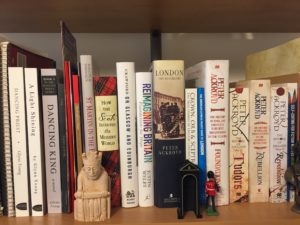
bookshelf Dancing King
The bookshelf above my computer

And then a crucial scene in Dancing King happens in Southwark Cathedral; I’ve been there three times, walked around, bought and read the guidebook, took pictures, and talked with the nice lady in the gift shop. I stood in the pulpit and looked at where people would be sitting in the nave. And that hill in downtown San Francisco where Michael Kent rides his bike in Dancing Priest? I’ve walked up that hill.

Walking-around research is extremely valuable. You see and feel what the streets look like, you peer into windows, you see a barrister’s gown and wig on sale for 550 pounds, you notice how Essex Street slopes toward the Thames River. A pub in London may superficially resemble a pub in St. Louis, but if you sit long enough, you begin to notice the differences.

Both kinds of research are critical, even for a contemporary novel.

On the bookshelf above my computer sit the guidebook to Buckingham Palace; four volumes of Peter Ackroyd’s history of England (the fifth is to be published later this year), a guidebook to London, a book entitled Crown, Orb & Sceptre which will tell you everything you want to know about every coronation in English history, a history of St. Martin-in-the-Fields Church, a booklet on the royal line of succession, a guide to Southwark Cathedral, a brochure about the guards associated with Buckingham Palace, and related books. I turn to them often.

I been to England five times in the last six years, and every trip has been both vacation and research. Whatever place we visit – the British Museum, Canterbury Cathedral, the Museum of London, All Hallow’s by the Tower Church, the Imperial War Museum – I buy the official guidebook, which is always packed with information. I see art exhibitions to enjoy the exhibitions and to imagine what they would be like in a novel. I take photos of favorite paintings.

And I take walks. I’ve walked London’s South Bank countless times, along with Piccadilly, the City, Westminster, Hampstead, Pimlico, Belgravia, Mayfair, the Temple, Lambeth, Covent Garden, Charing Cross Road, the West End, and Spitalfields. I’ve walked Oxford, Cambridge, Salisbury, and Windsor. Every walk is research.

I pay attention to contemporary British artists and writers. I read novelists like Paul Kingsnorth (Beast) and Mark Haddon (The Curious Incident of the Dog in the Night-Time). I read contemporary British plays. Contemporary literary culture provides a take on the pulse of the country and insights you can’t get from non-fiction.

It’s not just the historical or period novels that demand research. Contemporary ones do, too. And I think I’d rather eat ice cream in 21stcentury England than what the Georgians considered ice cream in the 18thcentury.

Top photograph by Gaelle Marcel viaUnsplash. Used with permission.

  • « Go to Previous Page
  • Page 1
  • Page 2
  • Page 3

Footer

GY


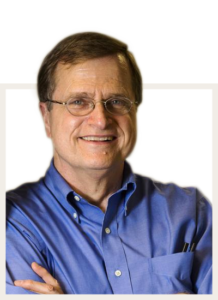
Meet the Man

An award-winning speechwriter and communications professional, Glynn Young is the author of three novels and the non-fiction book Poetry at Work.


 01_facebook 02_twitter 26_googleplus 07_GG Talk

Copyright © 2026 Glynn Young · Site by The Willingham Enterprise · Log in | Managed by Fistbump Media LLC