• Skip to primary navigation
  • Skip to main content
  • Skip to footer

Dancing Priest

Author and Novelist Glynn Young

  • HOME
  • BLOG
  • BOOKS
    • Brookhaven
    • Dancing Prince
    • Dancing Prophet
    • Dancing Priest
    • A Light Shining
    • Dancing King
    • Poetry at Work
  • ABOUT
  • CONTACT

prophecy

When Fiction Seems to Predict Fact

November 18, 2024 By Glynn Young 3 Comments

The Dancing Priest novels seem to be back in the fiction-becomes-fact business.

Last week, after saying he would not resign, Archbishop of Canterbury Justin Welby did, in fact, resign. This followed the release of the Makin Report, which documented the failings of the Church of England (COE) in a cover-up of an abuse scandal. The scandal went back to the 1980s when a barrister named John Smyth abused young teens at COE church camps, slipped out of England when it appeared the law was onto him, and went on to victimize more boys in Zimbabwe and South Africa.

Welby’s sin: he learned about the abuse in 2013 but failed to report it to authorities. Smyth could have been brought to justice at that time; he died in 2018.

One as-of-yet-unanswered question is if Welby was the only COE official to know. It’s unlikely that others, including people high in the hierarchy, also didn’t know. The scandal may not be over. And lest we think this type of scandal only happens to the big established denominations like the Church of England or the Roman Catholic Church, there are lessons here for all of us. A church I’ve attended had a member of the staff get involved in an inappropriate and illegal relationship; the difference was that the head pastor, as soon as he was told, called the police. That’s how it’s supposed to work, no matter how damaging it might be to an organization’s reputation. Righteousness trumps reputation, as Bernard Howard wrote for the Gospel Coalition.

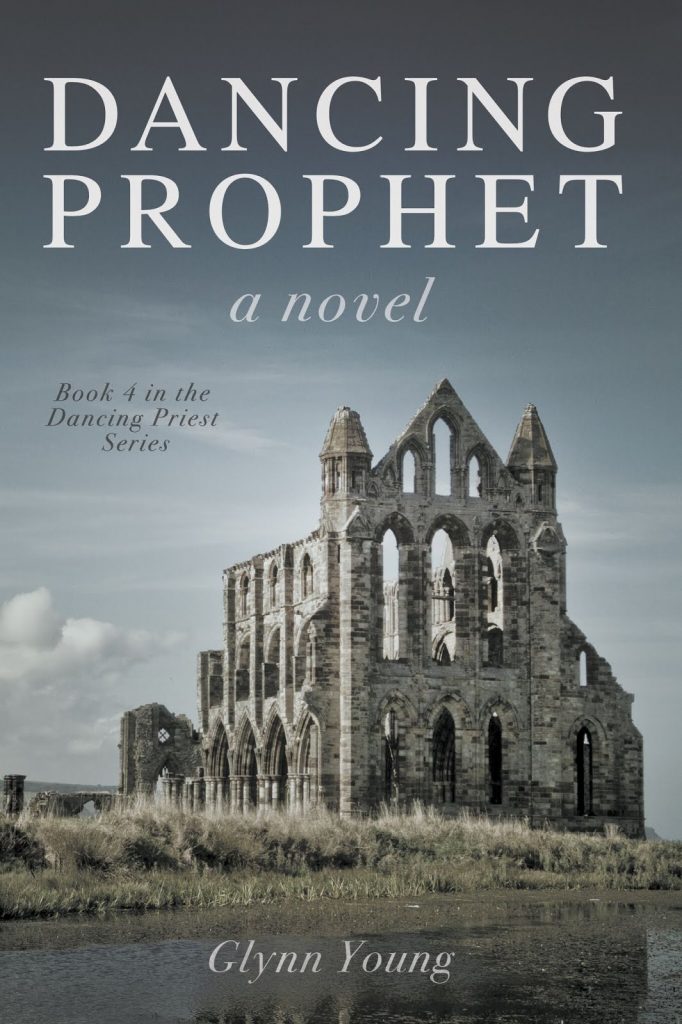
In Dancing Prophet (2018), the fourth of the Dancing Priest novels, Michael Kent-Hughes has an abuse scandal thrust upon him. He’s a former COE priest and now the king, and he’s simultaneously dealing with a developing church scandal and a collapse of the government of Great London. His church nemesis is the Archbishop of Canterbury, Sebastian Rowland, who has spent considerable time covering up an abuse scandal that threatens to blow the church apart.

During the research for the book, I learned that the Archbishop of Canterbury, along with the rest of the hierarchy and the church itself, is subject to the monarch. That’s how Henry VIII set it up in the 1530s during the English Reformation. And the archbishop functions at the pleasure of the monarch. That the current prime minister, Keir Starmer, refused to back Justin Welby publicly was of less importance than the silence that was coming from King Charles. Welby’s announcement noted that King Charles has graciously accepted his resignation. That’s how it works. The Catholic pope tells God and the church; the Archbishop of Canterbury tells the king (or the king asks for it).

In Dancing Prophet, Michael tells Sebastian Rowland he must resign. Rowland at first refuses, until Michael, in the presence of the police, explains the evidence against the archbishop, all of which will be made public. It’s worth noting, too, that Michael went to the police as soon as he became aware of the activities of one priest, which would soon explode into a global crime. And Michael, when he speaks to the British people, will tell them that the Church of England may not survive. Righteousness trumps reputation.

Dancing Prophet was written long before the John Smyth scandal was known publicly. What I did know concerned a COE abuse scandal involving some priests; it had first surfaced in the news in 2012. For the novel, I adapted the abuse scandal that has rocked (and continues to rock) the Roman Catholic Church to the COE.

I’m not a prophet; I can’t and don’t predict the future. But I’ve learned that, when you’re doing research for a book like any of the Dancing Priest novels (“future history,” one reader called them), you pick up on issues, concerns, trends, and ideas that are being discussed. You read about past events and troubles. You learn how people, especially people in authority, respond to what they see as threats. And you know what humans naturally tend to do: wish it would all go away, ignore it, make it worse, try to contain it, or cover it up. It might work for a time, but it usually doesn’t work forever.

We forget that lesson: righteousness trumps reputation.

Related:

Can Fiction Predict the Future?

Did Dancing Prophet Become Prophetic?

Top photograph by Ruth Gledhill via Unsplash. Used with permission.

Did “Dancing Prophet” Become Prophetic?

October 13, 2020 By Glynn Young 5 Comments

In 2012, I had a conversation with my publisher about the future novels planned in the Dancing Priest series. Dancing Priest had been published in late 2011, and the publication of A Light Shining was imminent. I walked him through what I saw as the main subjects and themes of several additional books (another six, if I remember correctly, which eventually became another three). 

The fourth book was to focus on the conflict between Michael Kent-Hughes and the Church of England hierarchy, which would eventually lead to a reformation. The catalyst would be a child sexual abuse scandal, happening over decades and facilitated (as in, covered up) by the church. The inspiration for this was the scandal in the Roman Catholic Church; what I did was to transfer the Catholic scandal to the Church of England. Or so I thought.

Two weeks after that conversation, my publisher sent me an article that had just been published in Britain. It looked like the Church of England had its own, homegrown child abuse scandal, and didn’t need any fictional help from the Catholic church. 

Dancing Prophet, the fourth novel in the Dancing Priest series, was published in 2018. That year, more revelations were unfolding about the Church of England. In 2019, an independent inquiry was established to look at what had happened and why. Last week, the inquiry panel released its study. 

It sounded like the story line in Dancing Prophet. My wife says I need to stop writing about things that become true.

It gives me no particular joy that real events seem to follow several of the key events in the Dancing Priest stories. (Sometimes, the correlations aren’t horrific, like the DNA study made of Vikings that sounded a lot like what happens in Dancing Prince.) But it does seem uncanny at times. I don’t have the gift of prophecy, but I’ve asked myself, how do real events happen that mirror the stories I wrote in my five novels?

I don’t have a solid answer. I have an idea of what happens, and it has to do with the research I do for the stories and the work experience I’ve had.

The Dancing Priest novels are not historical novels in the strict sense. They’re not about the past. They are more futurehistorical novels, because they’re set in the soon-to-happen future. (One reviewer has called them alternative historical novels.) But they are based on considerable reading and research and first-hand experiences on visits to London and England.

The streets Sarah’s car has to take from Buckingham Palace to the Tate Britain (Dancing Prophet)? I’ve walked them. The visit Michael makes with the two boys to the Imperial War Museum and the Guards Museum Shop (Dancing Prince)? I’ve done both. Taking a train from King’s Cross Station (Dancing Prince)? Been there, done that. A tube ride from South Kensington to the Tower of London (Dancing King)? Yep. And the books I’ve read have ranged from Peter Ackroyd’s multi-volume History of England and a history of coronations to a domestic history of the British royal household and a history of the Church of England.

My work experience has also served as a resource. Working for two Fortune 500 companies, a Fortune 1000 company, a public institution, a newspaper, and my own business has taught me a lot about how organizations respond to crises. Almost by default, the initial response is self-protection. The ongoing response tends to be self-protection. And that response can put public relations people in very difficult positions. The fact that the Church of England responded to its child sex abuse crisis almost exactly like the Roman Catholic Church did is no surprise.

You don’t have to be a prophet when basic human nature never changes. 

Top photograph by Cajeo Zhang via Unsplash. Used with permission.

Footer

GY


Meet the Man

An award-winning speechwriter and communications professional, Glynn Young is the author of three novels and the non-fiction book Poetry at Work.


 01_facebook 02_twitter 26_googleplus 07_GG Talk

Copyright © 2026 Glynn Young · Site by The Willingham Enterprise · Log in | Managed by Fistbump Media LLC