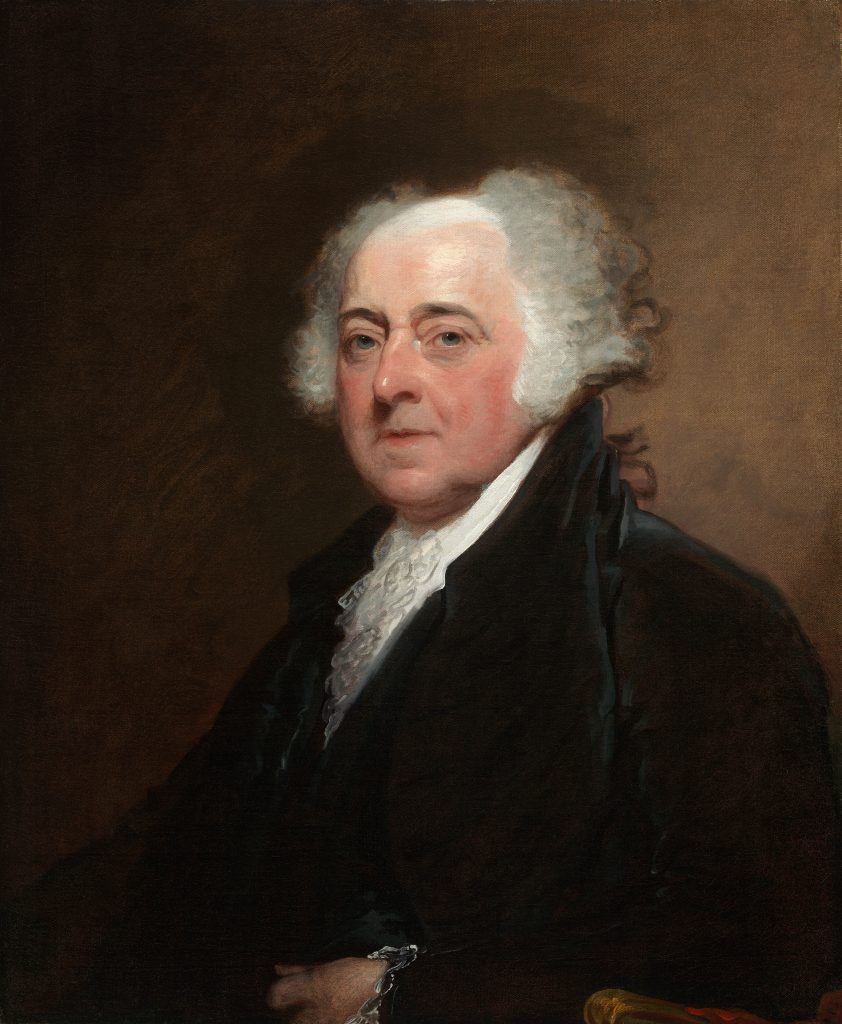
If I had a mental image of John Adams, it was of a rather dour individual who bridged the presidencies of George Washington and Thomas Jefferson, whom my history teachers in high school and college seemed to find much more interesting.
Then came the 2008 miniseries John Adams, with Paul Giamatti in the title role and Laura Linney as his wife Abigail. I almost skipped it, but we decided to watch it. And I began to understand that my teachers and I had all missed the boat on this major figure of the American Revolution. I sought out some biographies and histories, and I discovered my understanding of the second U.S. president was seriously misguided.
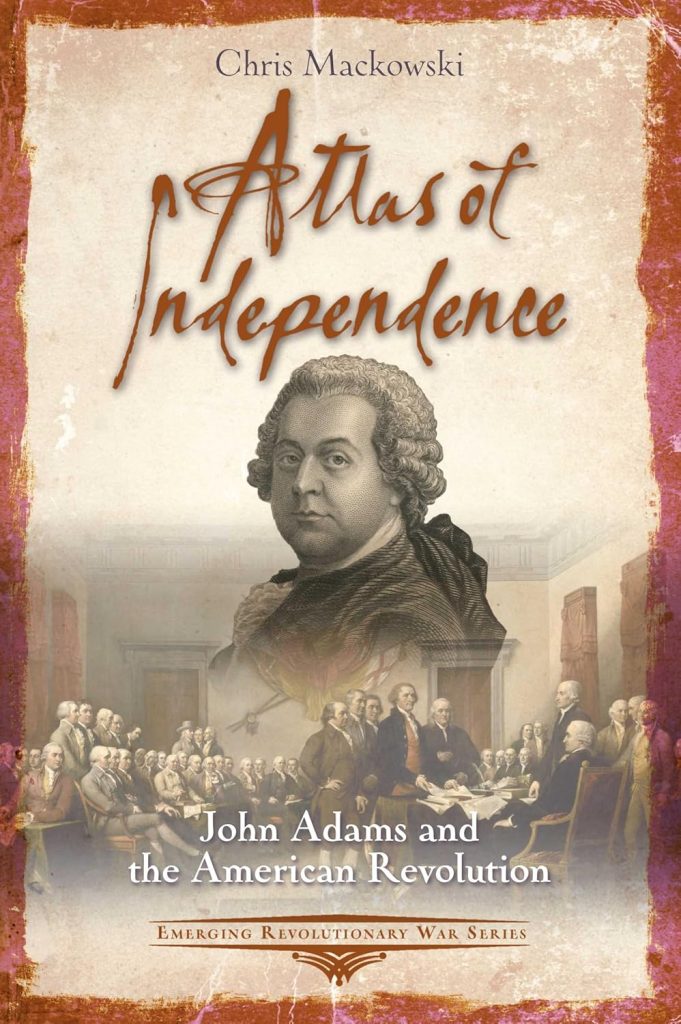
It was with that improving understanding that I began reading Atlas of Independence: John Adams and the American Revolution by Chris Mackowski. Now it all clicked. John Adams wasn’t some relatively minor character; he’d played a major role in the Second Continental Congress, the one that eventually adopted the Declaration of Independence.
Adams gave speeches. He argued. He cajoled. He chaired committees (he chaired a lot of committees). He wrote letters. And as Mackowski points out, he paid a steep price. As radical as Adams was in his politics, he was equally devoted to his wife Abigail and his family. And his work with the congress and later his appointment as part of the diplomatic mission to France kept his away from his family for long periods of time.
Atlas of Independence concisely tells the story of John Adams. It’s a highly readable, fascinating account, and it gives Adams the attention and understanding he merits. John Adams himself saw his cousin Sam Adams as the central figure of the American Revolution, but by the time of the Second Continental Congress, “John would begin to eclipse his cousin as the main engine driving the movement.”

John Adams, the main engine driving the movement to American independence. Yes, my understanding had been seriously flawed.
A professor at St. Bonaventure University, Mackowski has received B.A., M.A., M.F.A., and Ph.D. degrees in communication, English, and creative writing. The author of some nine books, he’s written extensively on the Civil War for a number of publications. He also worked for the National Park Service and gave tours of the Civil War battlefields at Fredericksburg, Chancellorsville, Wilderness, and Spotsylvania.
Atlas of Independence is well-researched, and it provides a solid summary of what Adams did to move the country toward independence and then declare it, as well as what he did to serve the cause of independence afterward.
Painting: John Adams, oil on canvas by Gilbert Stuart.