• Skip to primary navigation
  • Skip to main content
  • Skip to footer

Dancing Priest

Author and Novelist Glynn Young

  • HOME
  • BLOG
  • BOOKS
    • Brookhaven
    • Dancing Prince
    • Dancing Prophet
    • Dancing Priest
    • A Light Shining
    • Dancing King
    • Poetry at Work
  • ABOUT
  • CONTACT

Brookhaven

When It’s a Thrill to be No. 2

January 1, 2026 By Glynn Young 2 Comments

During this past week, the Emerging Civil War web site has been posting its countdown of the 10 most read articles on its site in 2025. The articles are typically written by historians, national park officials, and other experts in the field of Civil War history.

Which I am decidedly not. 

But.

The site welcomes articles by guests, and you don’t need to be an expert or historian to submit one. The articles, however, are all peer-reviewed. 
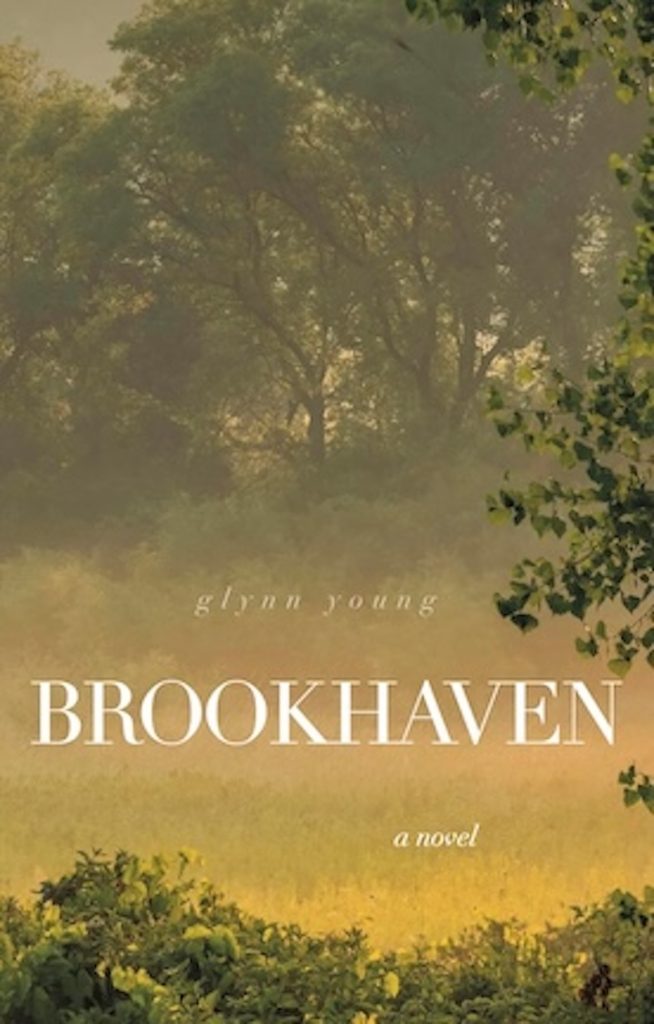
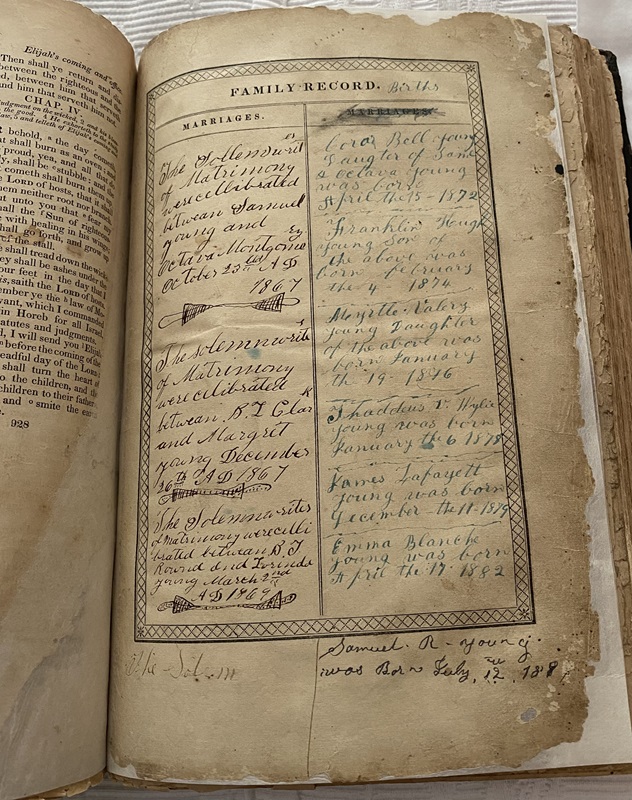
In January, I submitted an article explaining how a family story told through at least generations about my ancestor’s involvement turned out to about as far from the truth as you might imagine. I’d been researching the Civil War and an ancestor’s role in it, for my novel Brookhaven, when I stumbled over what he really did and what actually happened. (The story turned out to be far better, and I stuck with it for the novel.)

My article passed the peer review committee and was duly published in January. And it turns out to have been the second-most read article on the site for 2025. 

You can read the article, “Research for a Novel Upended a Family Legend,” at the site.

Photograph: A page of the family records in the Young Bible.
Forgetting All the Illustrations I Studied for a Non-Illustrated Book

November 5, 2025 By Glynn Young Leave a Comment

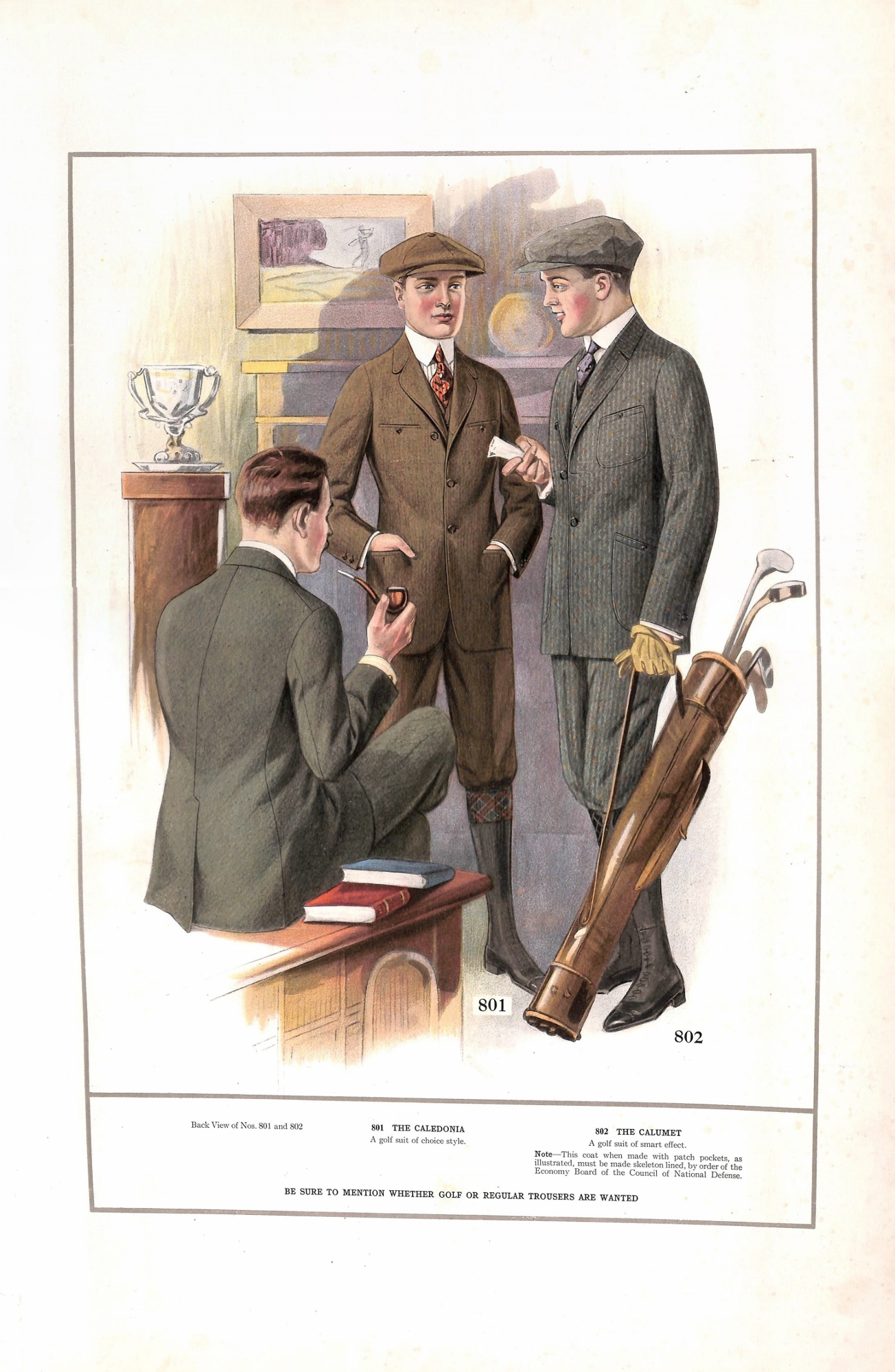
My historical novel Brookhaven has no illustrations. I spent an estimated third of my research time hunting for them.

The novel is set in two different time periods – the Civil War and immediately after, and then 50 years later, in 1915. From the beginning of the first draft, I quickly learned that I had to see both periods. I had to see what people wore, what they ate, how they traveled, what their homes were like, what their streets and communities were like, and more. 

From early on, I had to spend far more time looking than reading, and vastly more time looking than writing. Thos 50 years were some of the momentous in American history – rapid industrialization during the war and after, wagons and carriages giving way to automobiles, the advent of flight, the rapid spread of newspapers supported by wire services like Associated Press, rapid changes in the position of women in society, and mechanized agriculture becoming the rule rather than the exception.

To continue reading, please see my post today at the ACFW Blog.

Illustration: Men’s golfing fashions in 1915.

“Brookhaven” and the Pearl River Lumber Company

October 15, 2025 By Glynn Young Leave a Comment

A reader of Brookhaven sent n email, asking if I modeled the McClure Lumber Company in the novel on the Pearl River Lumber Company. A great-grandfather had worked there, the reader said, and she wondered.

That I had to research the Pearl River Lumber Company to respond to her should answer the question. Or, more briefly, no. 

The company was founded in 1899, building a large mill on the outskirts of Brookhaven, Mississippi. A community grew up around it and was called Pearlhaven. A rail line was built, appropriately named the Brookhaven & Pearl River Railway, and extended from Brookhaven to Monticello in the next county to the east. Coincidentally, int he novel this is roughly the road or direction that the young Sam McClure travels to reach home some months after the Civil War has ended. I even mention Monticello by name in the book. 

The lumber company was eventually acquired by the Goodyear Syndicate, and the rail line was sold to the Illinois Central in 1910. The mill was closed that same year. The rail line operated for another 18 years, finally shut down in 1928. 

In Brookhaven, from the 1850s Sam McClure’s family has been operating a grain mill, a lumber mill, and the general store across from the railroad depot in downtown Brookhaven. The grain mill, facing consolidation in the industry because of the growth of the big milling conglomerates like General Mills, was eventually closed and the property converted to racing racehorses. The lumber mill continued to operate, and the war in Europe increases demand for lumber and wood. I included a short scene about British and French representatives signing a contract with Sam, a contract which would lead to a major expansion of lumber operations. 

The Illinois Central deport in Brookhaven about 1903.

But I didn’t know anything about the Pearl River Lumber Company or the associated railroad operations. The genesis of including a lumber yard in the story came from the fact that Brookhaven is part of the Great Piney Woods of Mississippi, and natural resources like wood and lumber would come to characterize the “New South” after the Civil War and Reconstruction. The South had enormous natural resources, and while agriculture would remain the major industry, it was industries like lumber that helped pulled the South out of post-war economic devastation. 

While the novel had been published, the reader’s question took me back into research. I was rather tickled to discover what little I knew actually aligned very closely with the real story. 

Top photo: Operations at the Pearl River Lumber Company.

Two Reviews of “Brookhaven”

September 5, 2025 By Glynn Young Leave a Comment

One day, I’ll figure out how Amazon works. Here are two reviews of Brookhaven, both dated December of 2024 (the month it was published), but which didn’t show up until the last week. Still, I thank both reviewers for their kind comments.

From Dec. 26, 2024:

 Immensely Satisfying

A quick admission, I usually have to be drug kicking and screaming to read new novels. So, when this book was placed into my hands, I’m now glad my tantrum was brief and that I settled in to both read and enjoy Brookhaven. The novel is lovely, sad, joyful, redemptive, and all around a thoroughly satisfying example of entertaining storytelling. Without giving away the plot, the author artfully weaves in the awful complexity of the Civil War, along with its immediate aftermath, into the lives of the generations that came after, and all with a most satisfying conclusion.

And from Dec. 31, 2024:

 “Brookhaven” kept me up late wondering what would happen next!

“Brookhaven” is a retrospective novel set amidst the grim realities of the American Civil (and often not-so-civil) War and its aftermath. While Young’s descriptions of the war feel so authentic and in the moment, it is his love story—one of romantic love and, even more, love of a place and its people—that drew me in. Young’s writing is clear and concise, and he weaves together a complicated tale that is engaging, endearing, and enlightening. I don’t have a lot of time to read, but the book managed to keep me up late at night wondering what would happen next. I expect it will do the same for many other readers.

A Bible Verse and a Fictional Scene

July 30, 2025 By Glynn Young Leave a Comment

For the past few months, our church pastors have been preaching a series on the Gospel as seen in the life of David. We’re nearing the end of the series. The sermons have focused on some of the highlights of David’s life, including his anointing by the prophet Samuel, the confrontation with Goliath, the growing animosity of King Saul, the friendship with Saul’s son Jonathan, David becoming king, and Bathsheba. 

Last Sunday, the sermon centered on the end of the rebellion by David’s son Absalom (2 Samuel 18). The army gathered by Absalom has been defeated and scattered; Absalom himself, trying to escape, is caught by his trademark flowing hair in the branches of a tree. He’s dangling there when found by David’s general, who wastes no time in ignoring David’s earlier command to spare Absolom’s life and putting the young man to the sword. 

I’m familiar with the account. I’ve read it many times, my attention caught by the image of Absalom dangling from the tree limb. It is a truism that you can read a book of the Bible, a passage, a chapter, and even a verse scores of times and not see something that will suddenly catch your attention during an additional reading.

This is what I had overlooked: “The battle spread over the face of all the country, and the forest devoured more people that day than the sword” (2 Samuel 18:8, English Standard Version; italics added for emphasis). The penultimate example of this was Absalom himself, but I wondered what had happened to everyone else.

My mind strayed 2,800 years forward to the American Civil War, the Battle of the Wilderness in 1864 near Richmond, Virginia. No rain had fallen for weeks, and the dense brush of the woods was tinder-dry. When the Union army began firing its artillery, the resulting explosions ignited the woods. Soldiers on both sides found themselves not only fighting the enemy but also and even worse foe – a quickly spreading forest fire. (It’s said that the Union artillery killed more of its own men than anything the Confederates did.) 

For my novel Brookhaven, I read extensively about this battle. It’s the setting for the second of three encounters between Captain John Haygood and the young teenager Samuel McClure. Haygood has been wounded and can’t walk unassisted. Not recognizing Sam at first, at gunpoint he orders Sam to take him back to the Union line, dodging animals like snakes fleeing the fire, dying soldiers, and the sounds of single gunshots as the dying and wounded killed themselves rather than be knowingly consumed by the raging fire. It was a fictional scene based entirely on what really happened.

From all accounts, the Wilderness was a horrific battle. If there was a “winner,” it was General Lee’s Confederates. But Ulysses Grant, now in command of the Union army attacking Lee, had something Lee did not – an almost endless supply of recruits – and he was not shy about using them. The Battle of the Wilderness extended for weeks, and it grew to include the Battle of Spotsylvania Courthouse.

It’s a crucial scene in the novel. A year after Grierson’s Raid came to Sam’s hometown of Brookhaven, Mississippi, he again meets the man who had a huge impact on his mother’s life and, indirectly, his own. They will meet once more during the final Battle of Petersburg in 1865.

Absolom’s army was fleeing woods burning from artillery fire, but one can sense the desperation of men who will be judged traitors to King David. They would have met obstacles  like lack of paths, ditches and ravines, wild animals, sudden drop-offs, and, like their leader, unexpected low-hanging branches. 

Researching and writing that scene in Brookhaven gave me a better understanding of that Bible verse. Even when it’s me, I’m fascinated in the way a writer’s mind can work.

Related:

Bear in the Wilderness by Donald Waldemar.

The Battle of the Wilderness by Gordon Rhea.

Diary of a Confederate Tarheel Soldier by Louis Leon.

Hell Itself: The Battle of the Wilderness May 5-7, 1864 by Chris Mackowski.

Photograph by Filip Zrnzevic via Unsplash. Used with permission.

Three Fictional Encounters in Three Factual Events

July 16, 2025 By Glynn Young Leave a Comment

In my novel Brookhaven, the teenaged Sam McClure has three fateful encounters with John Haygood. The three happen in successive years, and each of the three involve Civil War military operations.

I was reminded of this when Emerging Civil War posted articles on two of the three operations a week apart this month.

The first encounter happens during Grierson’s Raid, an operation ordered by Ulysses S. Grant to distract the Confederates during his siege of Vicksburg in 1863. Some 1,700 Union cavalrymen rode through Mississippi, starting at the Tennessee border and finishing in Union-occupied Louisiana. They tore up railroad track and caused considerable havoc, but more importantly, they kept the Confederates focused away from Grant transferring his army across the river to besiege Vicksburg from the east.

One of the towns visited by Grierson’s cavalrymen was Brookhaven, where they burned the train station and tore up track. In the novel, Captain Haygood meets Sam in the McClure General Store, where Sam’s grandfather is accidentally pushed against a counter and dies in the boy’s arms. Sam later hears a conversation between Haygood and Sam’s mother Louisa, and he realizes what their relationship had been years before. It’s that knowledge which sets the story of Sam’s enlistment in the Confederate Army into motion.

An artist’s depiction of trying to escape the fires with wounded during the Battle of the Wilderness. (Library of Congress)

The second encounter happens a year later, during the Battle of the Wilderness near Richmond. Samis carrying messages between generals, and in the thick of the fighting, he meets John Haygood once again, this time at the point of a pistol. 

This battle was horrendous, even in the context of all the other Civil War battles. The Wilderness was dense scrub forest. The weather had been dry for weeks, and Union artillery shells ignited the dense, dry woods into a blazing inferno. The Union guns are said to have killed more of their own army’s men than anything the Confederates did. Wounded men, unable to escape on foot, often shot themselves rather than be burned alive.

The Emerging Civil War story I read on July 3 was about an Australian general in World War I, Sir John Monash, who is considered to be one of the best generals of that war. One reason is how closely he studied the American Civil War’s Battle of the Wilderness and how Grant modified his strategic objectives. I’m neither a veteran nor a military historian, but I read so much about the battle for the novel that I think I felt like one. 

A depiction of the Union breakthrough at Petersburg, April 2, 1865. (Library of Congress)

The third encounter between young Sam McClure and John Haygood happens during another military encounter, the final Battle of Petersburg. Petersburg, south of Richmond, was an important railroad junction to keep Richmond and Lee’s army supplied. It had been under Union pressure for a considerable period, and the pressure was finally working. Petersburg’s fall forced Lee (and the Confederate government) to abandon Richmond. Lee fled west, reaching the town of Appomattox Courthouse, where he surrendered. 

Sam, still running messages between armies, takes cover in the woods during a Union cavalry charge. And it is the mortally wounded John Haygood whose horse collapses there, almost at Sam’s feet. This third and final encounter will lead to a meeting two years later.

I don’t such a cavalry charge took place in fact, but Emerging Civil War published an article July 11 that described the final piercing of Petersburg’s defense on April 2, 1865. That would be the date of Sam’s final meeting with Haygood. A week later, Lee surrendered. (I deliberately chose April 9 as Sam’s birthday; the surrender happened the day Sam turned 15.)

I probably shouldn’t be surprised; this is what happens with historical novels. But I find myself still taken with how factual reports continue to bring me right back to the story I wrote.

Related:

Bloody Promenade by Stephen Cushman.

The Battle of the Wilderness by Gordon Rhea.

Echoes of the Wilderness: Grant, Lee, and Monash’s Art of War – Leigh Goggin at Emerging Civil War.

Petersburg Breakthrough – Edward Alexander at Emerging Civil War. 

Top illustration: Major Benjamin Grierson and his cavalry make a triumphant entry into Union-controlled Baton Rouge at the conclusion of their famous raid through Mississippi. (Library of Congress)

  • Page 1
  • Page 2
  • Page 3
  • Interim pages omitted …
  • Page 5
  • Go to Next Page »

Footer

GY


Meet the Man

An award-winning speechwriter and communications professional, Glynn Young is the author of three novels and the non-fiction book Poetry at Work.


 01_facebook 02_twitter 26_googleplus 07_GG Talk

Copyright © 2026 Glynn Young · Site by The Willingham Enterprise · Log in | Managed by Fistbump Media LLC