• Skip to primary navigation
  • Skip to main content
  • Skip to footer

Dancing Priest

Author and Novelist Glynn Young

  • HOME
  • BLOG
  • BOOKS
    • Brookhaven
    • Dancing Prince
    • Dancing Prophet
    • Dancing Priest
    • A Light Shining
    • Dancing King
    • Poetry at Work
  • ABOUT
  • CONTACT

American Revolution

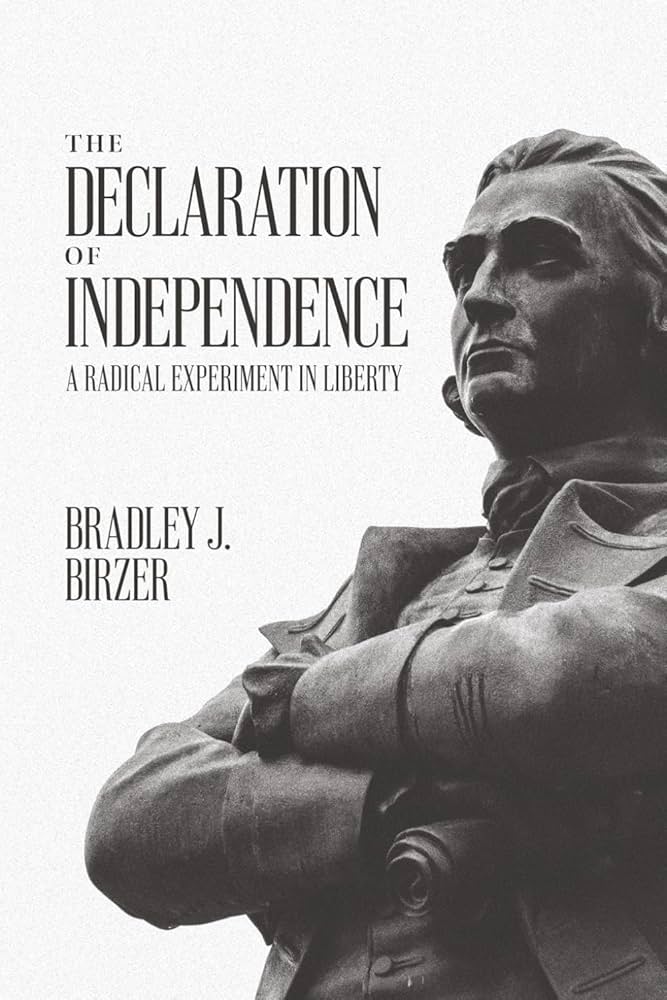
“The Declaration of Independence” by Bradley Birzer

June 17, 2026 By Glynn Young Leave a Comment

I was on a multi-day business trip to Washington, D.C. I had a free afternoon, so I walked from the hotel to the National Gallery on the Mall. And then, for reason or reasons unknown, I walked across the street to the National Archives. And there it was – the original Declaration of Independence. 

Drafted mostly if not entirely by Thomas Jefferson, the Declaration is to America what the Magna Carta is to England. The statement of beliefs. The citation of grievances against an unjust ruler (also an English king, no less). The signatures. 
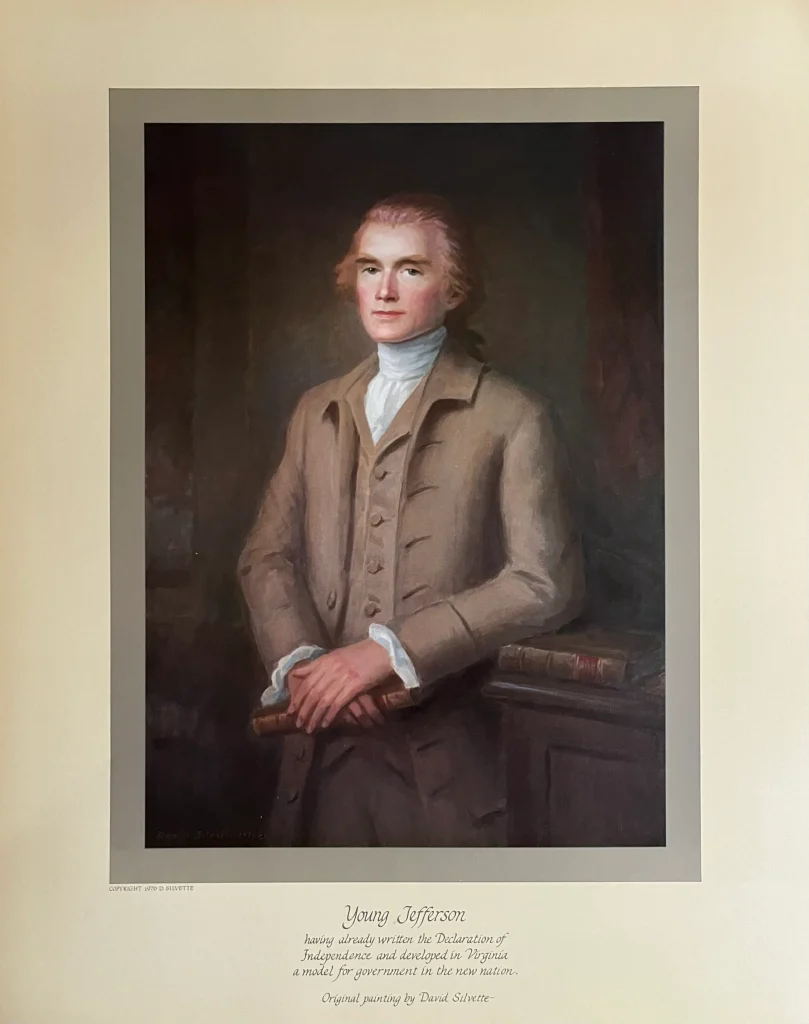
Jefferson about 1776.

As Bradley Birzer points out in The Declaration of Independence: A Radical Experiment in Liberty, the Declaration is all these things. And it is more. Like the Revolutionary War that was already underway, the Declaration was about ideas. One of the most radical ideas it contained was the rights come not from a king or a government, but naturally from a creator. 

How the Declaration came about is a thrilling story, and Birzer tells it accurately and contextually without losing any of the thrill or drama. Straws in the wind began as early as the 1740s, and the British government’s determination to make the colonies pay, or help pay, for the French and Indian War began to accelerate momentum. By the 1770s, whether it was rebellion (as many British defined it) or liberation and freedom, the war of ideas was moving into a real war. And Birzer says that war started when the first colonist was killed at Lexington outside Boston.
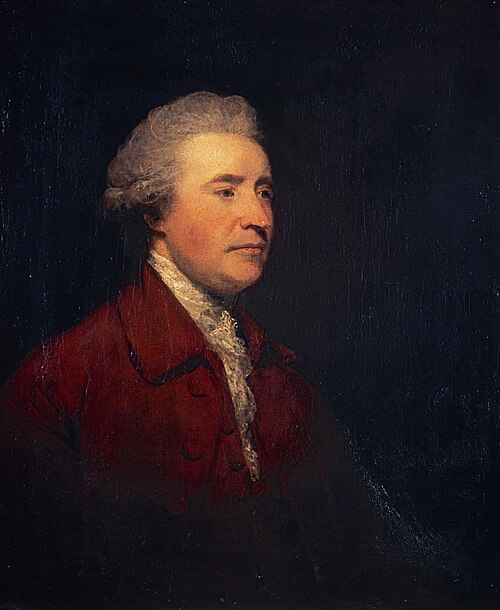
Edmund Burke in 1774, by Sir Joshua Reynolds

Birzer also provides the lesser-known context. The colonies were already beginning the rupture well before the Declaration was signed in July 1776 in Philadelphia during the Second Continental Congress. New Hampshire issued its own declaration, as did other colonies like Virginia. The tide was rising, and the British kept making one mistake after another in not recognizing the reality on the ground.

But not all the British. Edmund Burke, for one, championed the rights of the colonies in Parliament. Set against Burke in the war of ideas (if not Parliament) was Samuel Johnson, the author of the great dictionary, who was almost extreme in upholding the position of king and Parliament. Those debates, too, are concisely included by Birzer.

Bradley Birzer

Birzer holds the Russell Amos Kirk Chair in American Studies and is a professor of history at Hillsdale College in Michigan. He received a B.A. degree from the University of Notre Dame and his Ph.D. degree from Indiana University. He serves on the boards of the Free Enterprise Institute and the Center for Cultural Renewal and is a fellow or scholar with the Foundation for Economic Education, Intercollegiate Studies Institute, The McDonnell Center, and the Center for Economic Personalism. His books include In Defense of Andrew Jackson, Russell Kirk: American Conservative, J.R.R. Tolkien’s Sanctifying Myth, Sanctifying the World: The Augustinian Life and Mind of Christopher Dawson, American Cicero: The Life of Charles Caroll, Neal Peart: Cultural (Re)Percussions, and Beyond Tenebrae: Christian Humanism in the Twilight of the West. 

The Declaration of Independence is a well-researched, highly readable account of the seminal document in U.S. history. The Declaration is now 250 years old, still projecting its radical ideas about governments, people, and natural rights. It still is one of the most revolutionary documents written by man. And it remains as vital and current as it was when it emerged from Jefferson’s pen in 1776.

Related:
Beyond Tenebrae by Bradley Birzer. 

Mythic Realms by Bradley Birzer.

“The Atlas of Independence” by Chris Mackowski

June 10, 2026 By Glynn Young Leave a Comment

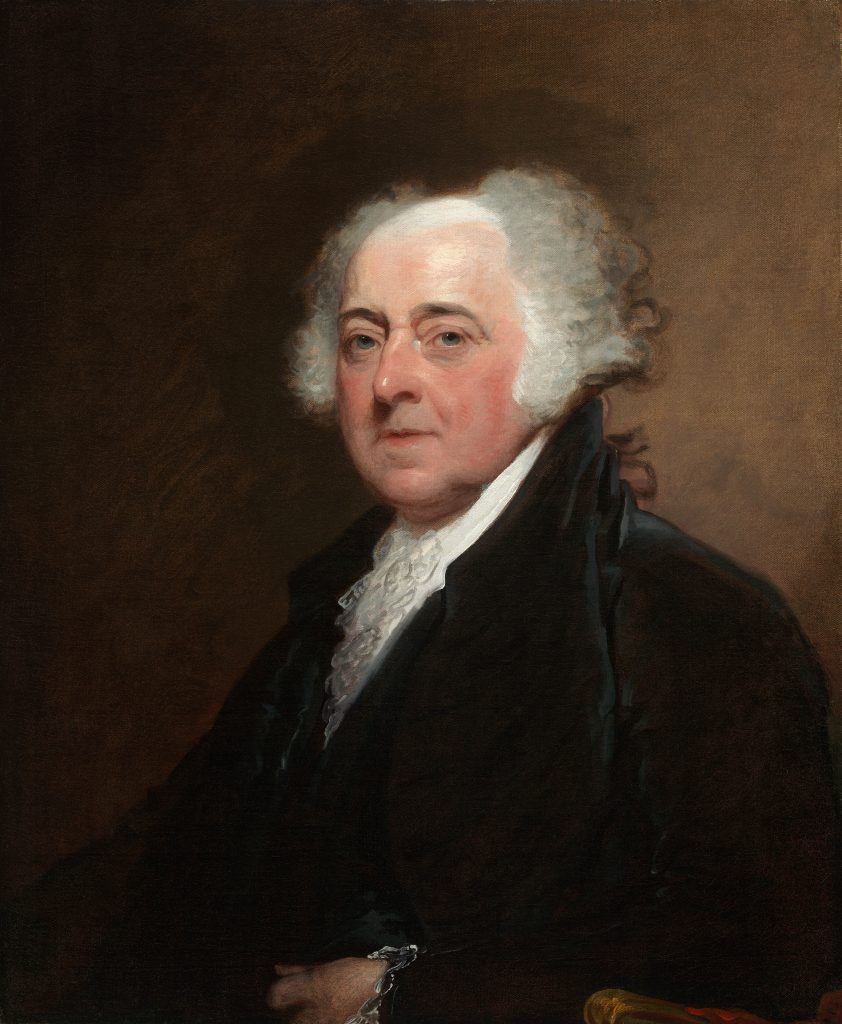
John Adams by Gilbert Stuart

If I had a mental image of John Adams, it was of a rather dour individual who bridged the presidencies of George Washington and Thomas Jefferson, whom my history teachers in high school and college seemed to find much more interesting.

Then came the 2008 miniseries John Adams, with Paul Giamatti in the title role and Laura Linney as his wife Abigail. I almost skipped it, but we decided to watch it. And I began to understand that my teachers and I had all missed the boat on this major figure of the American Revolution.  I sought out some biographies and histories, and I discovered my understanding of the second U.S. president was seriously misguided.

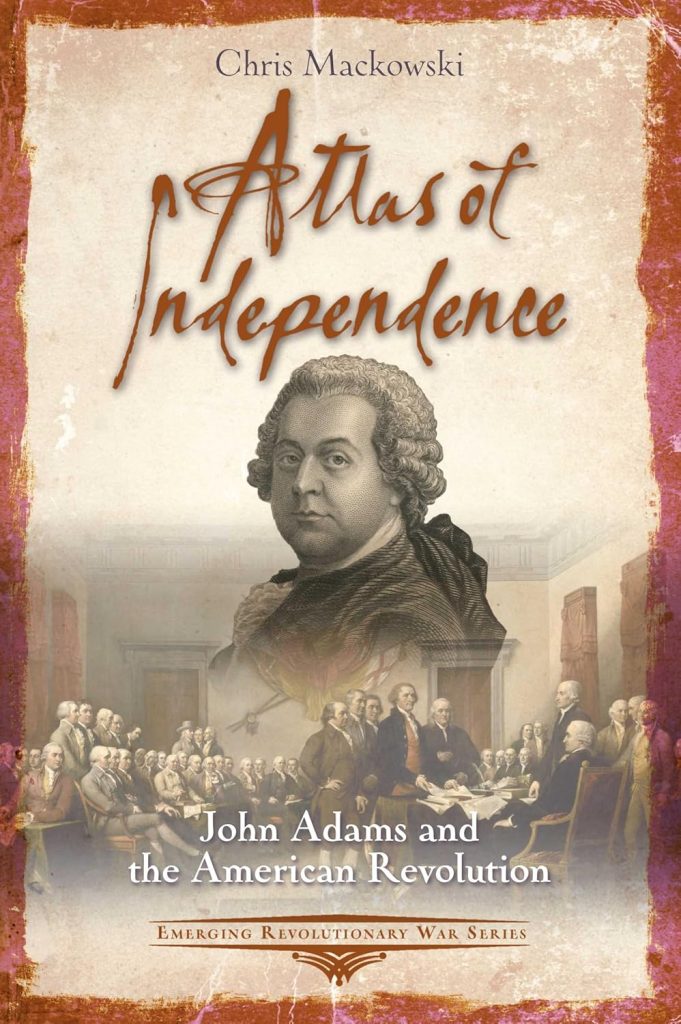
It was with that improving understanding that I began reading Atlas of Independence: John Adams and the American Revolution by Chris Mackowski. Now it all clicked. John Adams wasn’t some relatively minor character; he’d played a major role in the Second Continental Congress, the one that eventually adopted the Declaration of Independence. 

Adams gave speeches. He argued. He cajoled. He chaired committees (he chaired a lot of committees). He wrote letters. And as Mackowski points out, he paid a steep price. As radical as Adams was in his politics, he was equally devoted to his wife Abigail and his family. And his work with the congress and later his appointment as part of the diplomatic mission to France kept his away from his family for long periods of time. 

Atlas of Independence concisely tells the story of John Adams. It’s a highly readable, fascinating account, and it gives Adams the attention and understanding he merits. John Adams himself saw his cousin Sam Adams as the central figure of the American Revolution, but by the time of the Second Continental Congress, “John would begin to eclipse his cousin as the main engine driving the movement.”

Chris Mackowski
Chris Mackowski

John Adams, the main engine driving the movement to American independence. Yes, my understanding had been seriously flawed.

A professor at St. Bonaventure University, Mackowski has received B.A., M.A., M.F.A., and Ph.D. degrees in communication, English, and creative writing. The author of some nine books, he’s written extensively on the Civil War for a number of publications. He also worked for the National Park Service and gave tours of the Civil War battlefields at Fredericksburg, Chancellorsville, Wilderness, and Spotsylvania. 

Atlas of Independence is well-researched, and it provides a solid summary of what Adams did to move the country toward independence and then declare it, as well as what he did to serve the cause of independence afterward.

Painting: John Adams, oil on canvas by Gilbert Stuart.

Footer

GY


Meet the Man

An award-winning speechwriter and communications professional, Glynn Young is the author of six novels and the non-fiction book Poetry at Work.


 01_facebook 02_twitter 26_googleplus 07_GG Talk

Copyright © 2026 Glynn Young · Site by The Willingham Enterprise · Log in | Managed by Fistbump Media LLC